
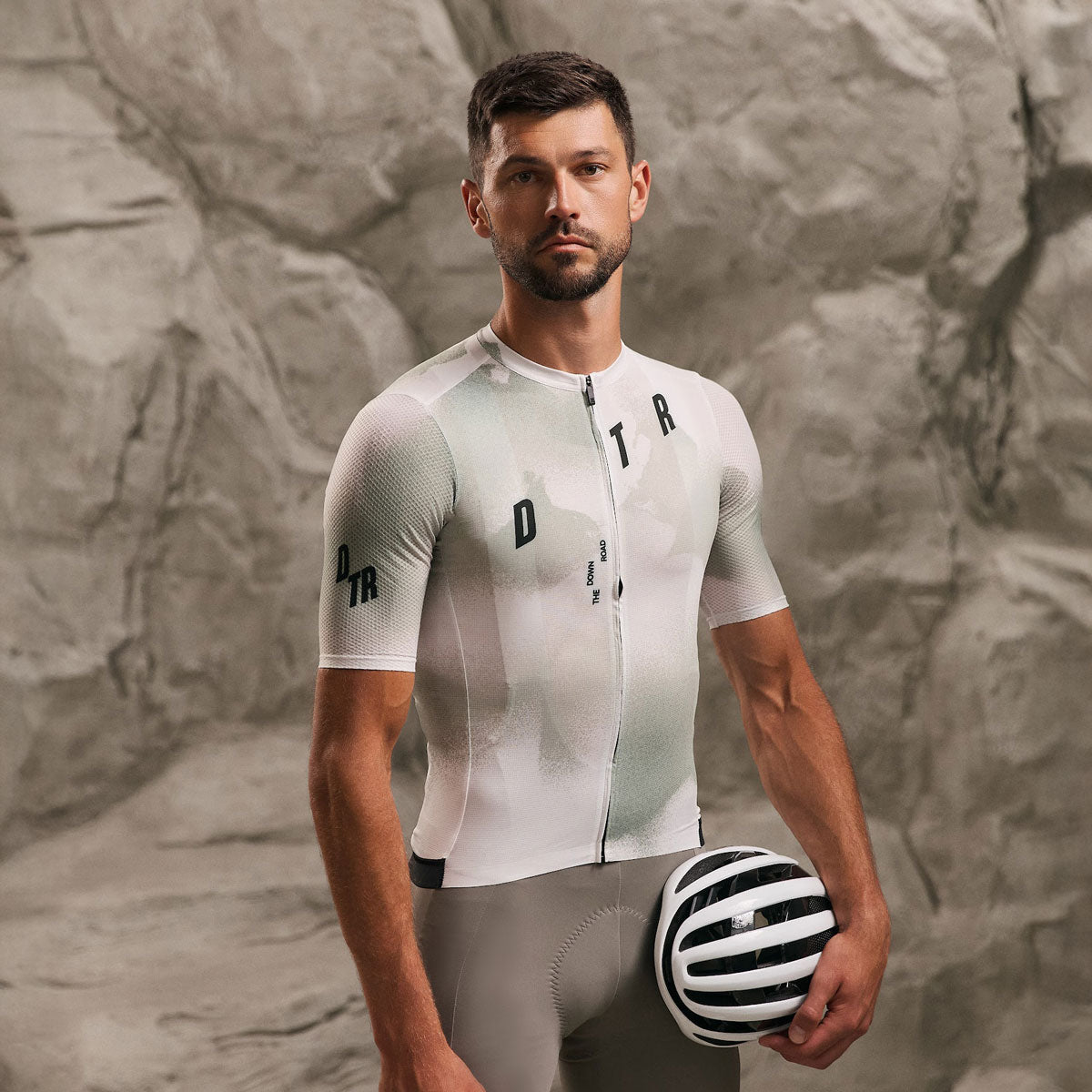
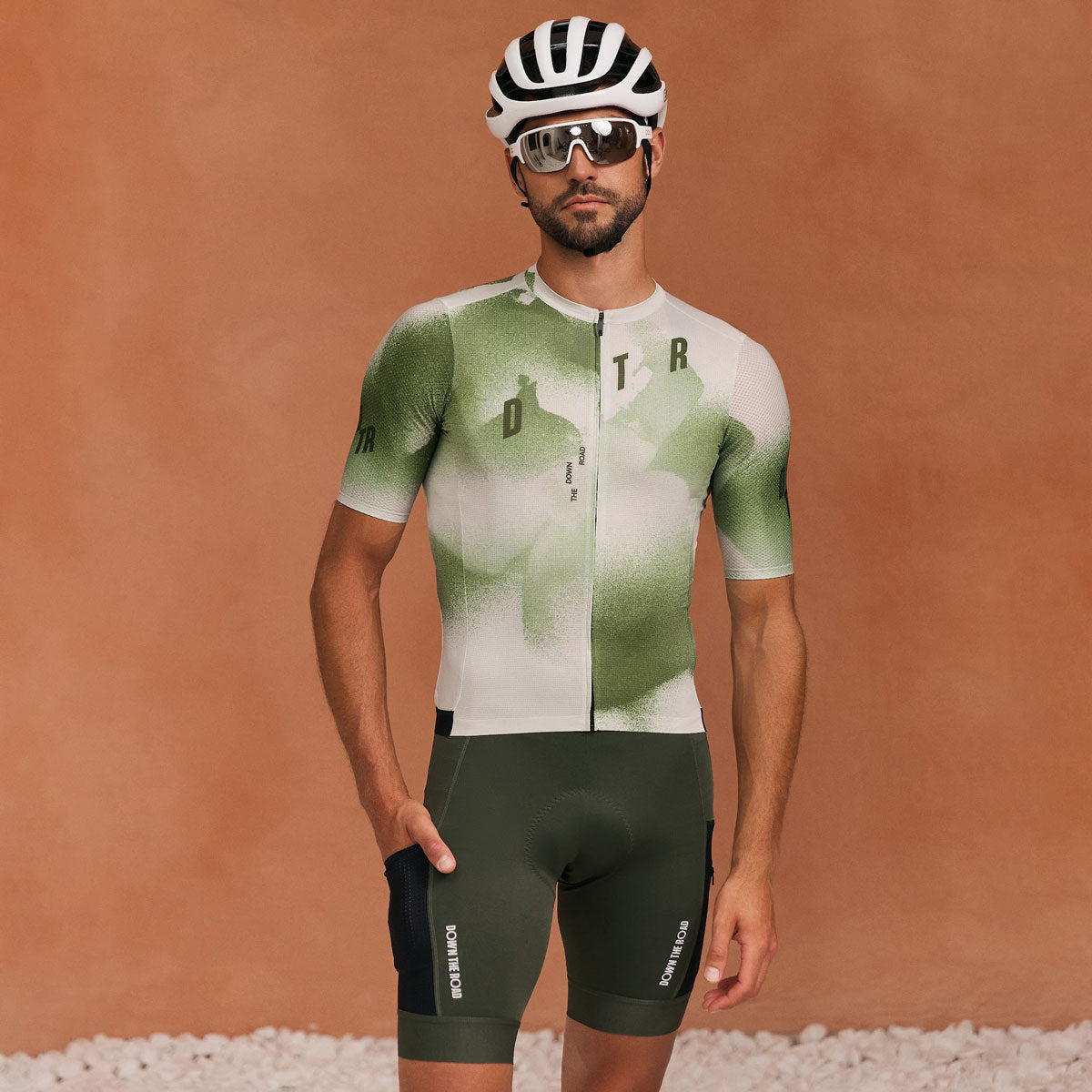
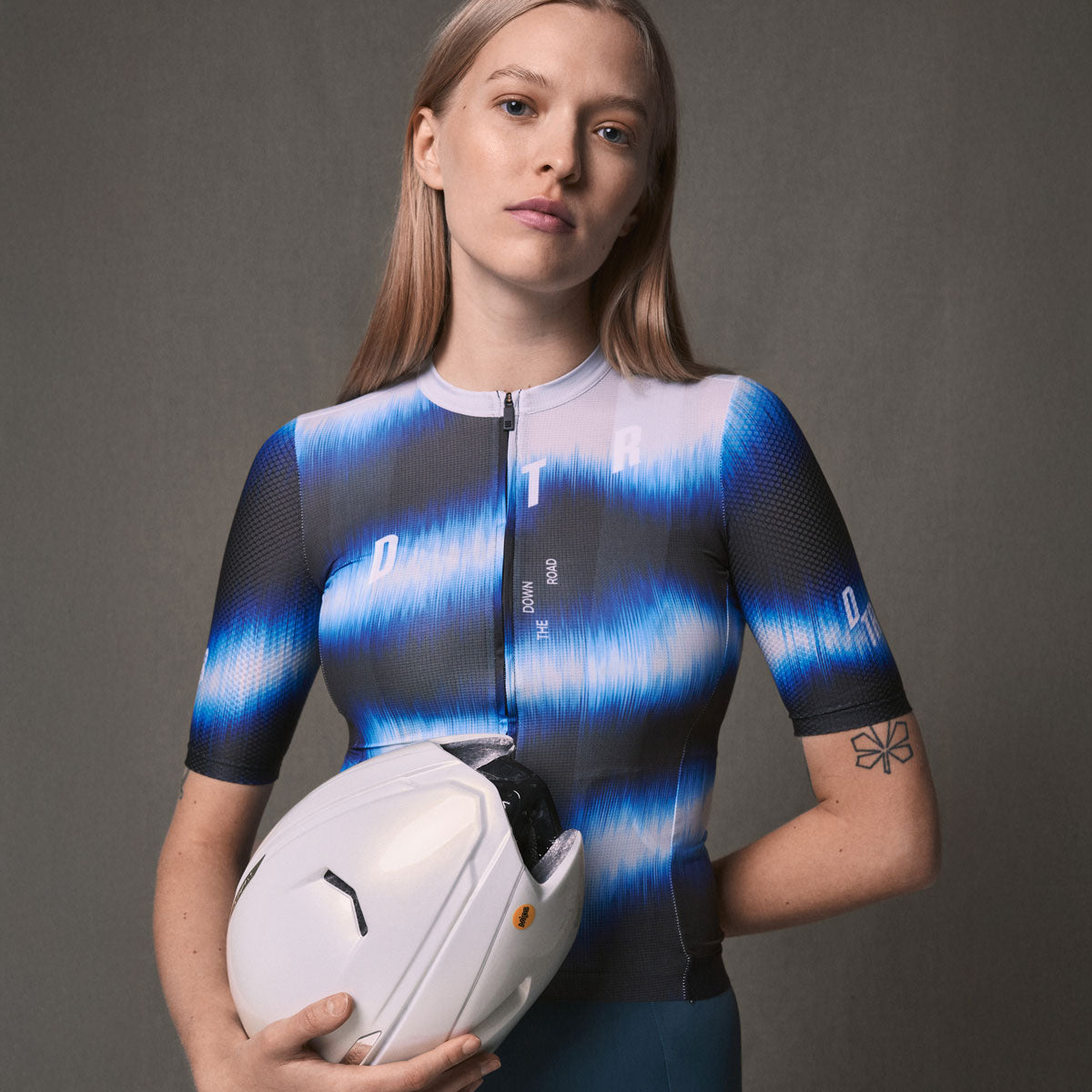
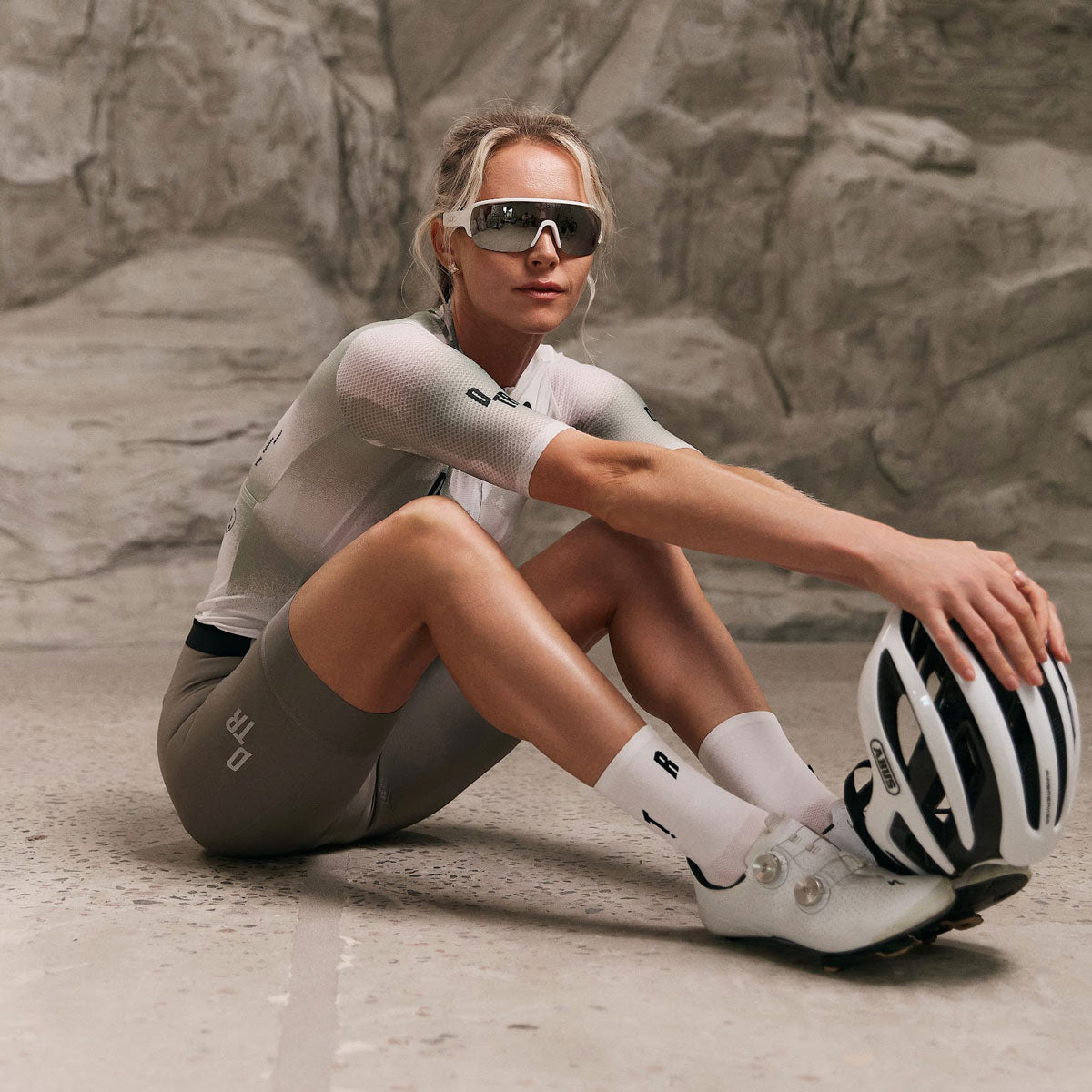
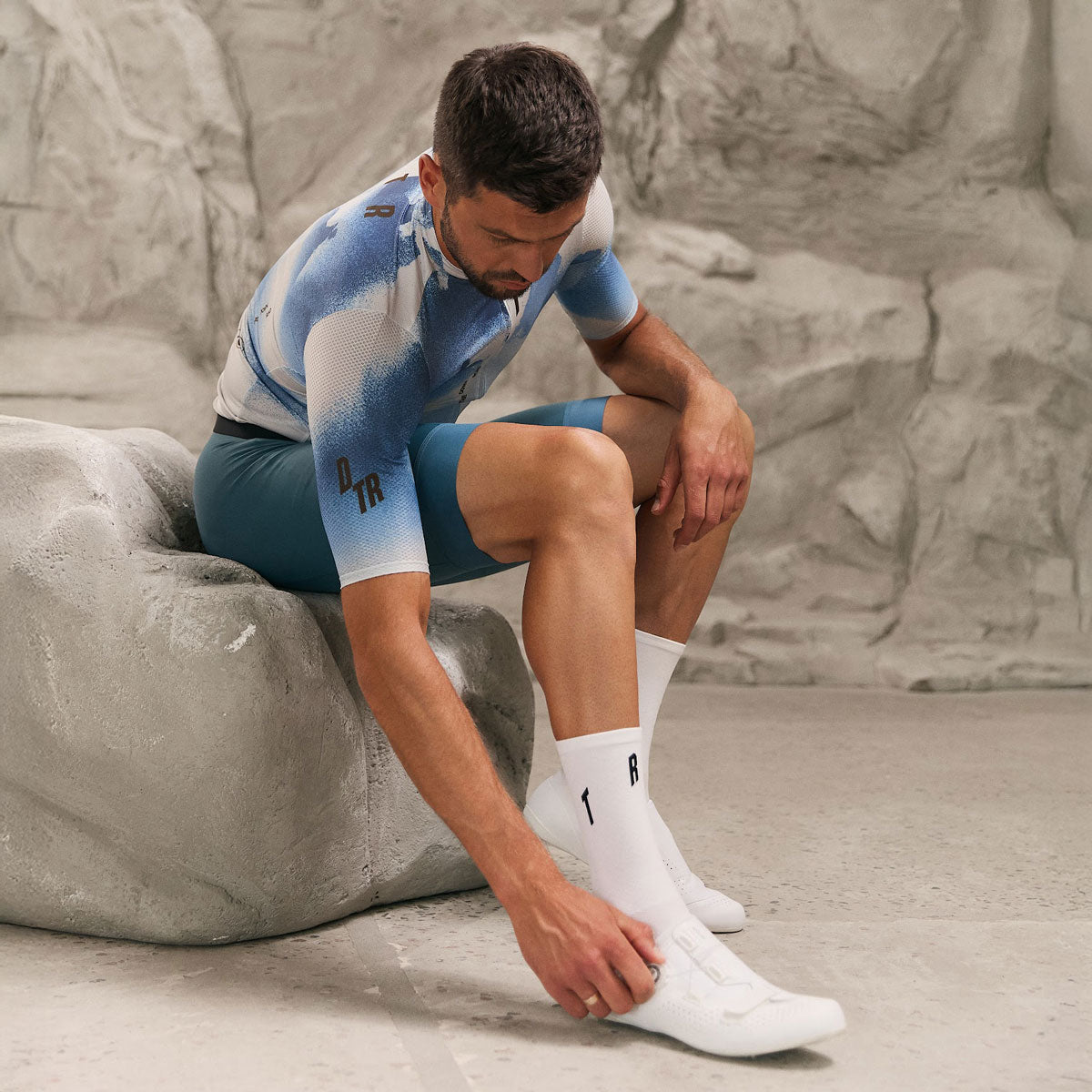
Custom cycling jerseys are jerseys made in your own colours and logo — fully sublimated, so your design is dyed into the fabric rather than printed on top or stitched on as a patch. At DTR they're built on the same jerseys we sell at retail: race-proven fit, technical fabrics, and the construction that holds up over long hours, from five pieces per design with free design support and a typical six-to-eight-week turnaround. This guide covers what you can do with a custom jersey, the styles and cuts available, how the design process works, and what to get right so your club actually wants to wear it.
What makes a custom jersey different
A custom jersey isn't a logo pressed onto a stock jersey. Every DTR custom piece is fully sublimated: the design is dyed into the fabric itself, so your colours and logo can sit anywhere on the jersey — across a shoulder, down a sleeve, wrapped around a side panel — rather than being confined to a patch. Because the ink becomes part of the cloth, there's nothing to crack, peel or fade the way a printed transfer does, and the fabric keeps its breathability where the design sits.
Just as importantly, it's a real jersey. The custom range is the same performance apparel DTR produces for retail, in the same factory — so a club jersey behaves like race kit on a long, hot ride, rather than like merchandise that photographs well and disappoints on the road.
Styles and cuts you can order
A jersey isn't one thing, and a good club order usually spans a few:
- Short-sleeve jerseys — the year-round staple, and the piece most orders are built around.
- Long-sleeve jerseys — for cold and shoulder-season riding, in the same design so the kit stays coherent.
- Race-fit and club-fit cuts — a closer, aero cut for racing, a slightly more forgiving cut for club riders who want the same design without the race fit.
- Men's and women's cuts — genuinely different patterns, not a resized version of the same jersey.
- Mixed sizing across one order — a full size range counts toward the same design.
You can put the same design across several styles in one order, which is how most clubs end up with a jersey, a gilet and a bib short that all match.
Designing the jersey: what to think about
The jersey is the most visible piece of kit a club owns, so a few decisions do most of the work.
Colour and contrast matter more than detail. A design that reads clearly at 30kph from across a road is one built on strong blocks of colour, not fine linework that dissolves at distance. Consider where sponsor logos sit: the chest and the back panel are the highest-visibility surfaces, the sleeves and side panels give you secondary space, and the rear pockets are visible in every following-rider photograph. Remember the jersey is worn in motion and often half-covered — a design that only works flat on a screen may vanish under a gilet.
If you're starting from nothing, our guide on how to design custom cycling kit for your club walks through colours, logo placement and the mockup process in detail.
How the process works
You don't need a finished design to start. You share a brief — your colours, your logo files, and a rough idea of what you want. DTR's design team builds two to three routes on real jersey templates, you give feedback, and most orders are signed off within a couple of rounds. Nothing goes to production until you approve it.
Once approved, your design is kept on file, so a second batch for new members needs no redesign — the jersey your club orders next season is the jersey it has now. Production runs in the same factory as the retail line, invoicing is on agreed terms, and shipping goes worldwide, either to one address or split across members.
Minimum order, turnaround and pricing
The minimum is five pieces per design — five of the same jersey design across a mix of sizes meets it. That keeps a custom jersey realistic for a small club or a handful of teammates, not just a large order.
Turnaround is typically six to eight weeks from approved design to delivery, though it varies with the season, so confirm the current lead time when you enquire — especially if you're working back from a race calendar or a season opener.
Pricing is quote-based, because it depends on the styles, quantities and finish you choose. Send the brief and you'll get a figure built around your order.
FAQ
What is a custom cycling jersey? A jersey made in your own colours and logo, fully sublimated so the design is dyed into the fabric rather than printed or stitched on. At DTR it's built on the same performance jerseys sold at retail, so it rides like race kit rather than merchandise.
What's the minimum order for custom jerseys? Five pieces per design — five of the same jersey design across a mix of sizes meets the minimum. That keeps custom workable for small clubs and teams.
Can we order men's and women's jerseys in the same design? Yes. Men's and women's cuts are genuinely different patterns, and both can carry the same design in a single order, with mixed sizing throughout.
How long do custom jerseys take? Typically six to eight weeks from approved design to delivery, though it varies by season. Confirm the current lead time when you enquire, particularly ahead of a race calendar.
Will the design fade or peel? No. Because the jersey is fully sublimated, the design is dyed into the fabric rather than sitting on top of it, so there's nothing to crack or peel, and the colour holds season after season.
The bottom line
A custom cycling jersey is the piece that turns a group of riders into a recognisable team — and because DTR's custom jerseys are the same performance apparel it sells at retail, it's a jersey people actually want to train and race in. Fully sublimated design, men's and women's cuts, from five pieces per design, saved on file for reorders. Request a custom quote and DTR will take it from your brief.
—
DTR — performance cycling and triathlon apparel, designed and developed in Ukraine.

Leave a comment
This site is protected by hCaptcha and the hCaptcha Privacy Policy and Terms of Service apply.