

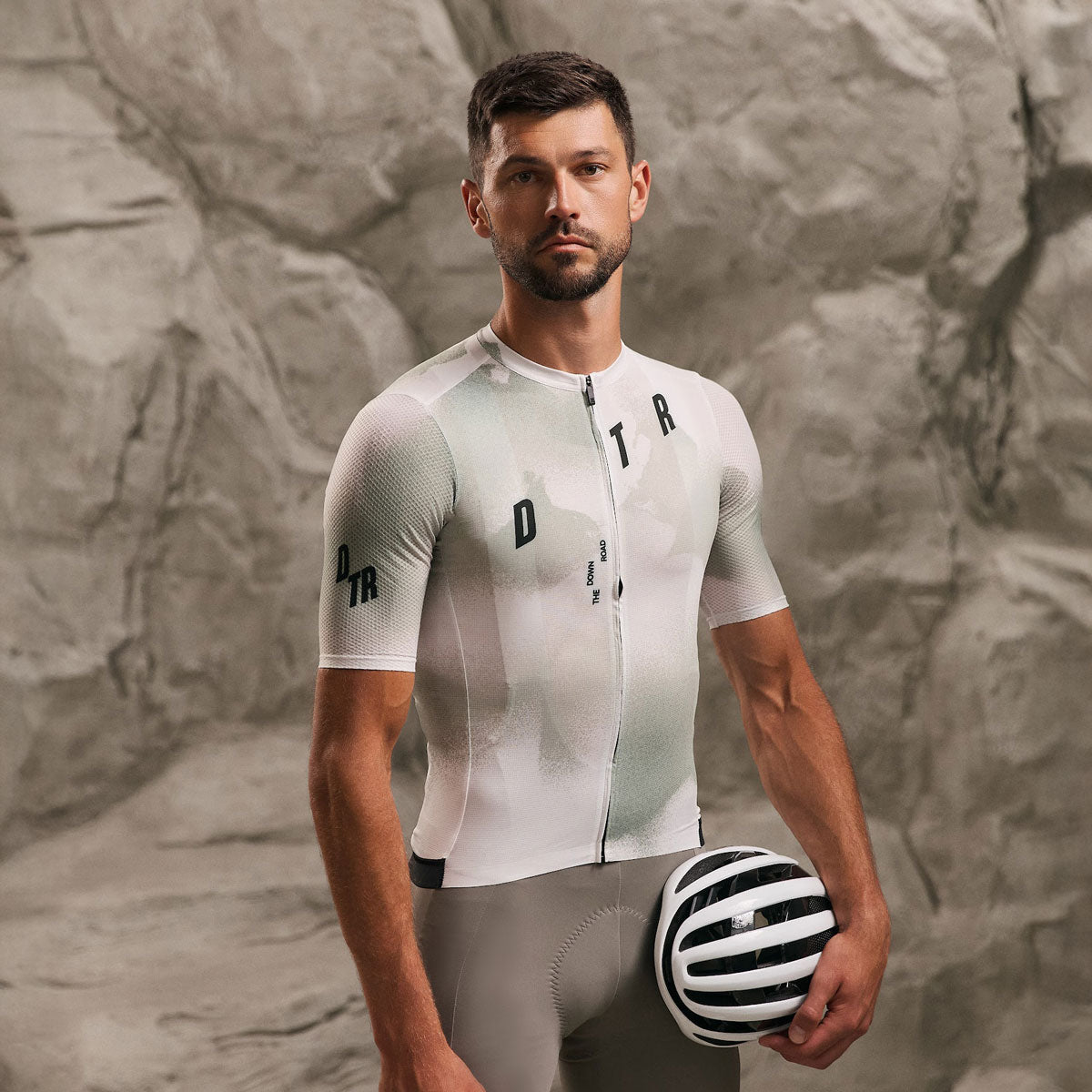
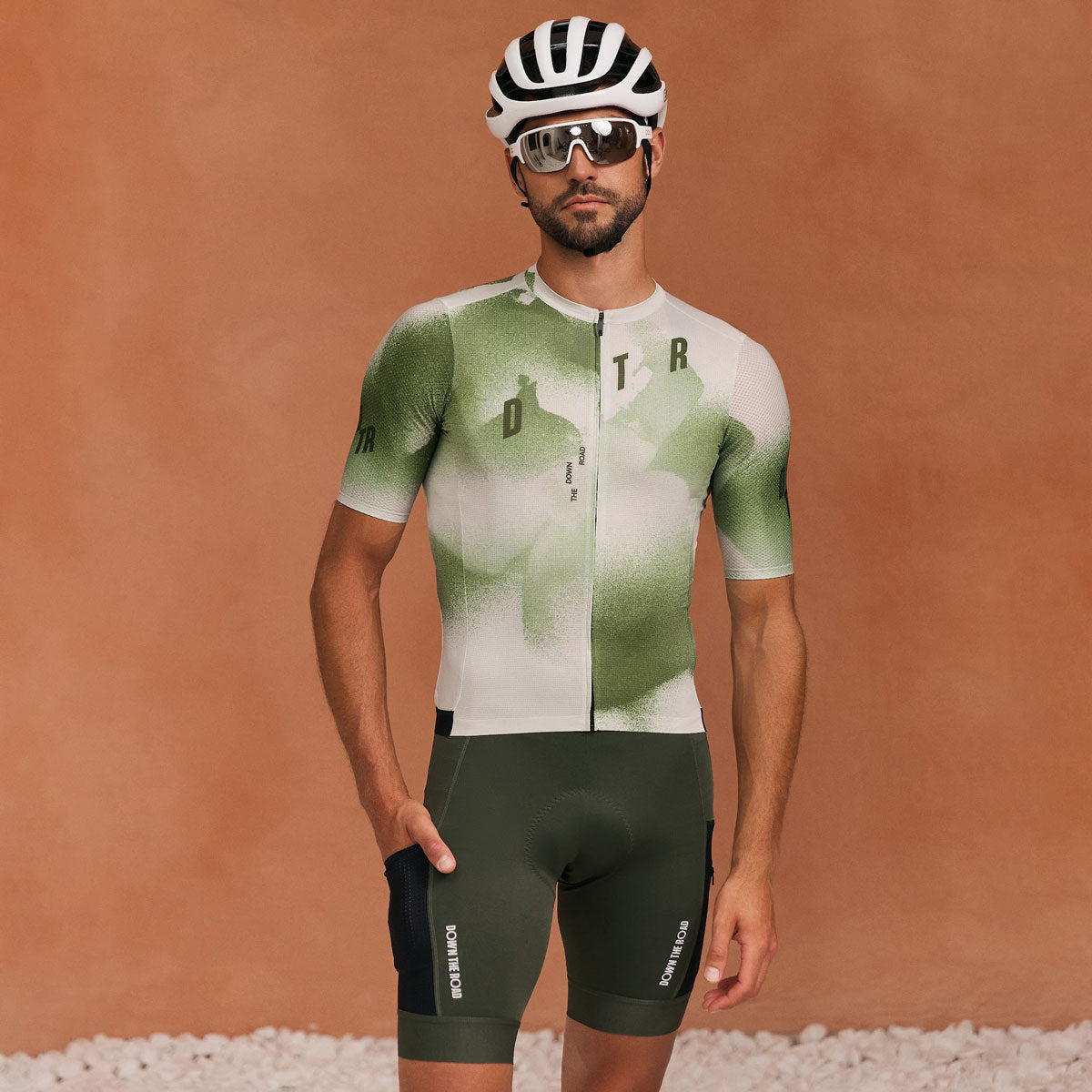
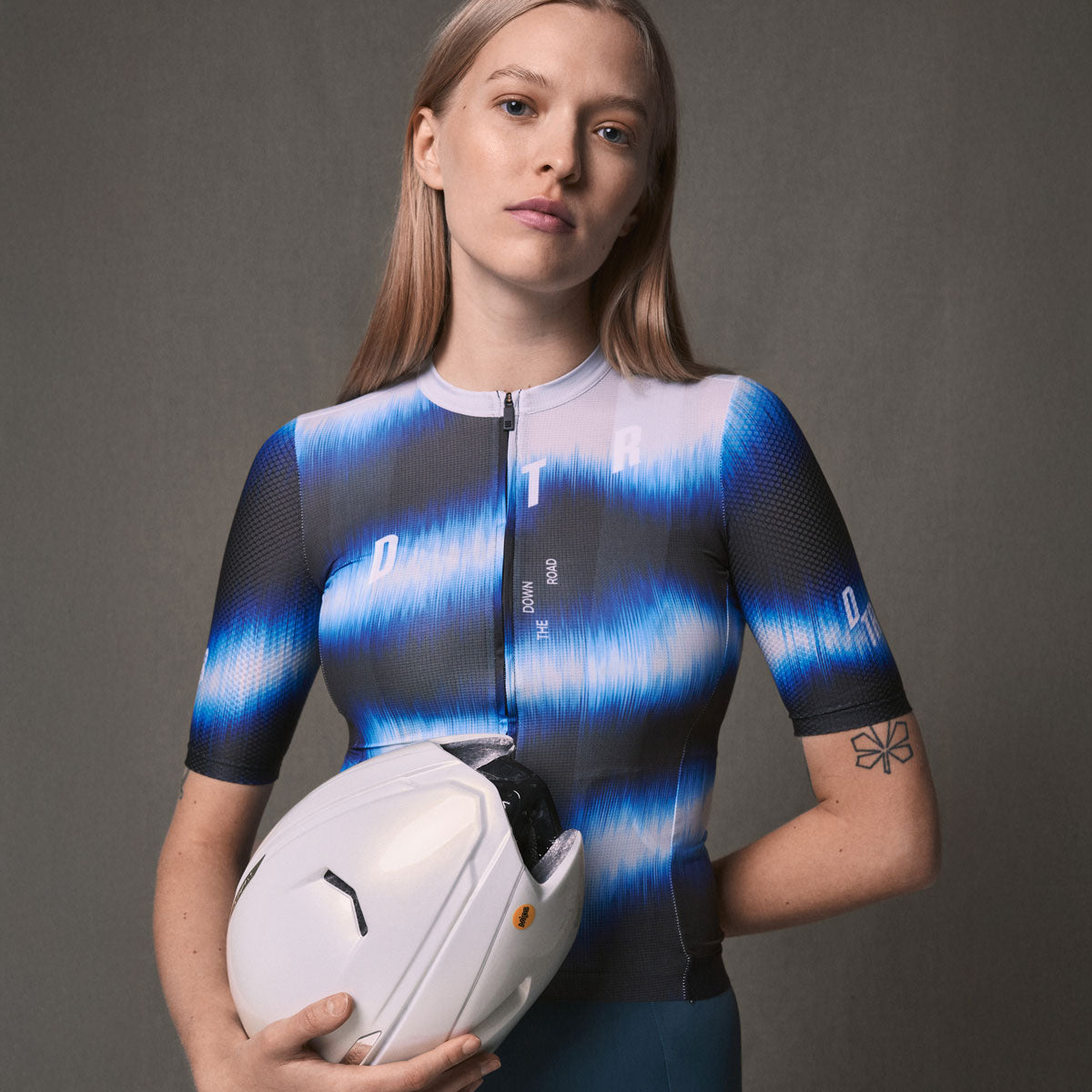
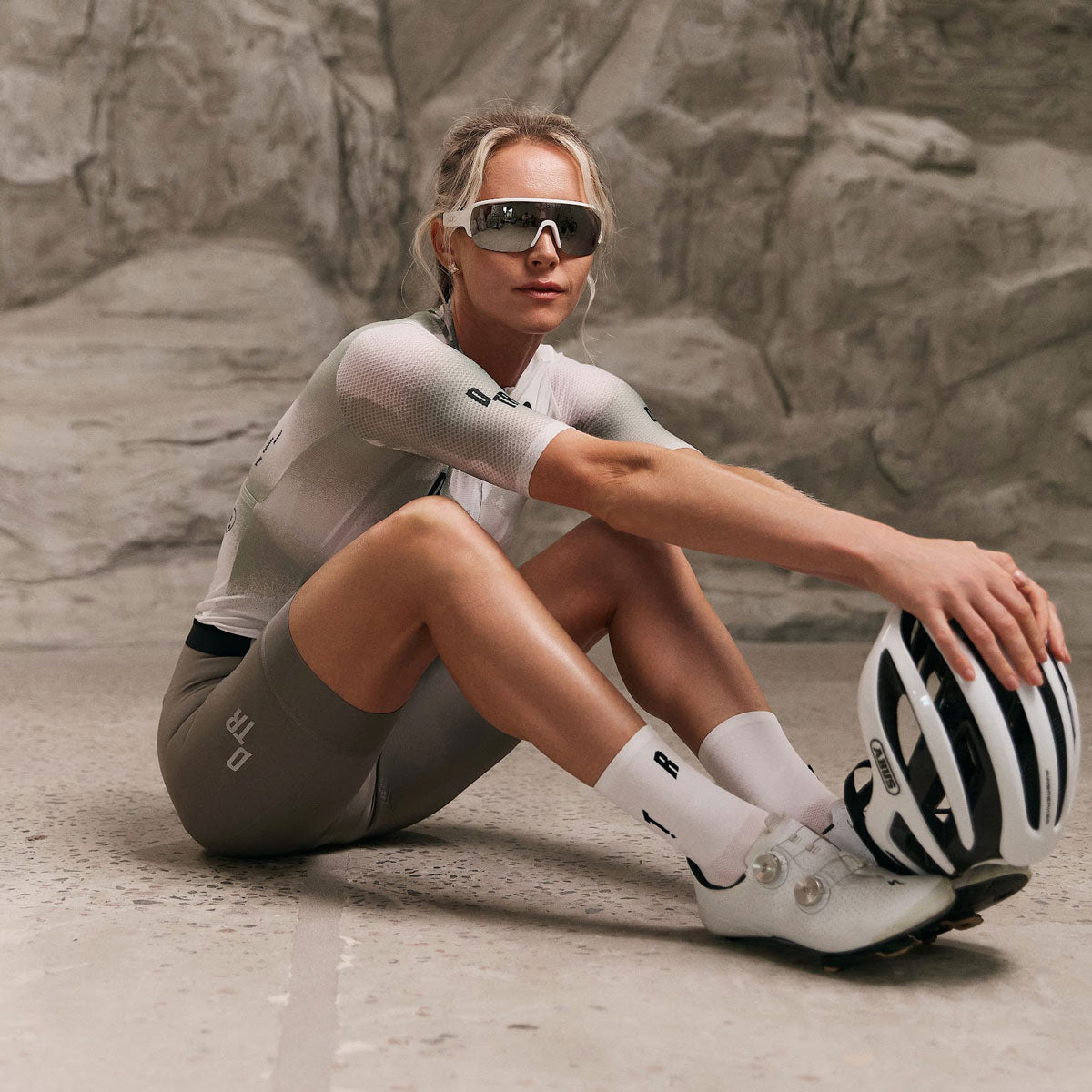
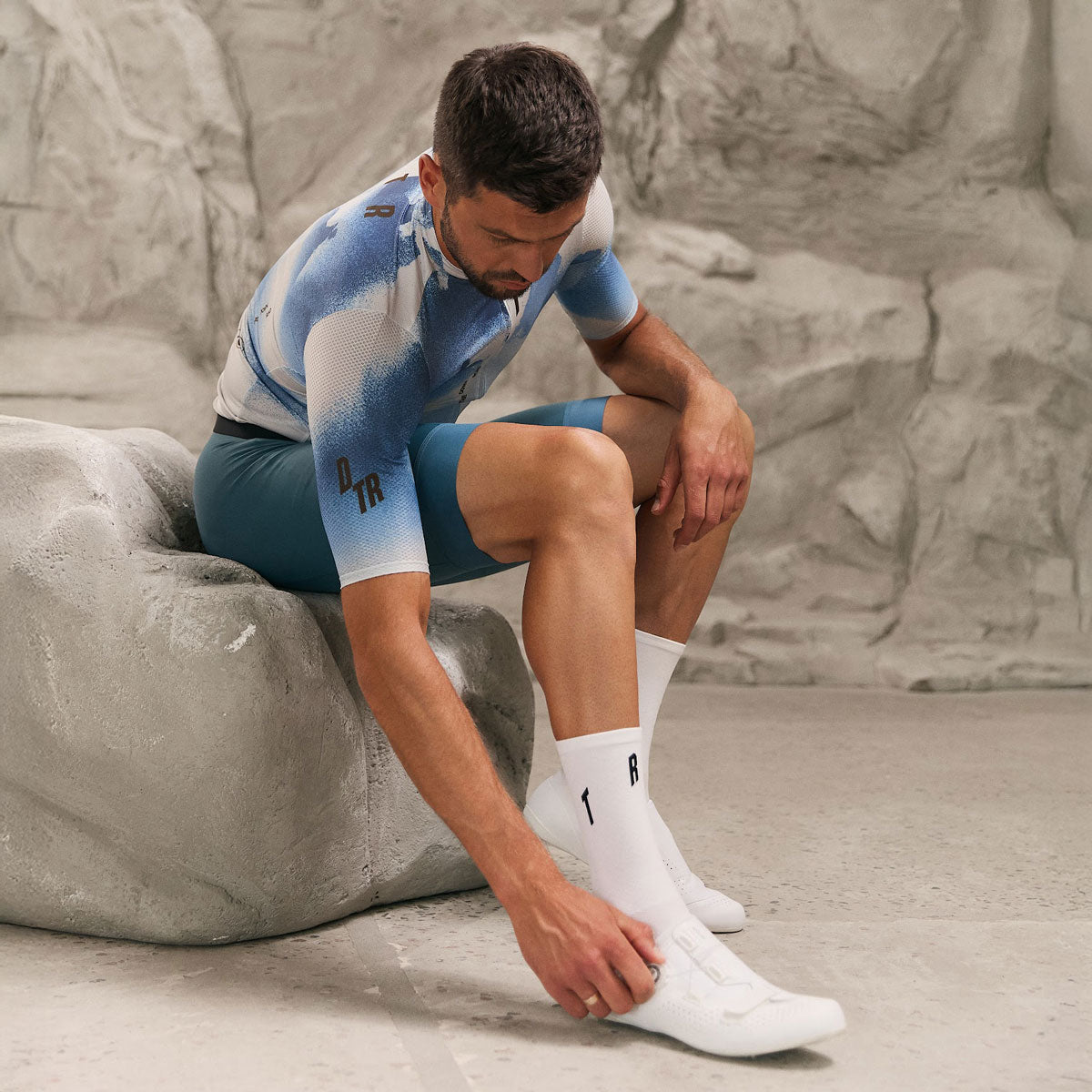
Choose custom kit fabric weight by the conditions most of your riding happens in, then cover the extremes with layers rather than one compromise jersey. Lighter fabric suits heat and ventilation; heavier fabric suits cool and cold; a club riding across a mixed season usually needs both.
This guide covers what fabric weight is, how climate and season point to a weight, how to plan an order for a club that buys once a year, and what to put in your brief. Custom kit is quote-based, so pricing is covered in your quote rather than here.
What does fabric weight mean in cycling kit?
Fabric weight is how heavy and thick the material is, usually measured in grams per square metre. Lighter fabric moves air and dries fast, which suits heat. Heavier fabric holds warmth and blocks more wind, which suits cool weather. Weight is not quality: a light fabric and a heavy fabric can be equally well made, and each is right in different conditions.
How do climate and season point to a weight?
Start from where your riders spend most of their time. A club in a hot, dry climate leans light and ventilated. A club in a cool, wet one leans heavier and layers up. Then look at the season: a summer racing team, a year-round club and a winter training group need different jerseys even in the same town. Our guide to custom kit for cycling clubs covers how clubs usually plan the range.
What if your club rides across a mixed season?
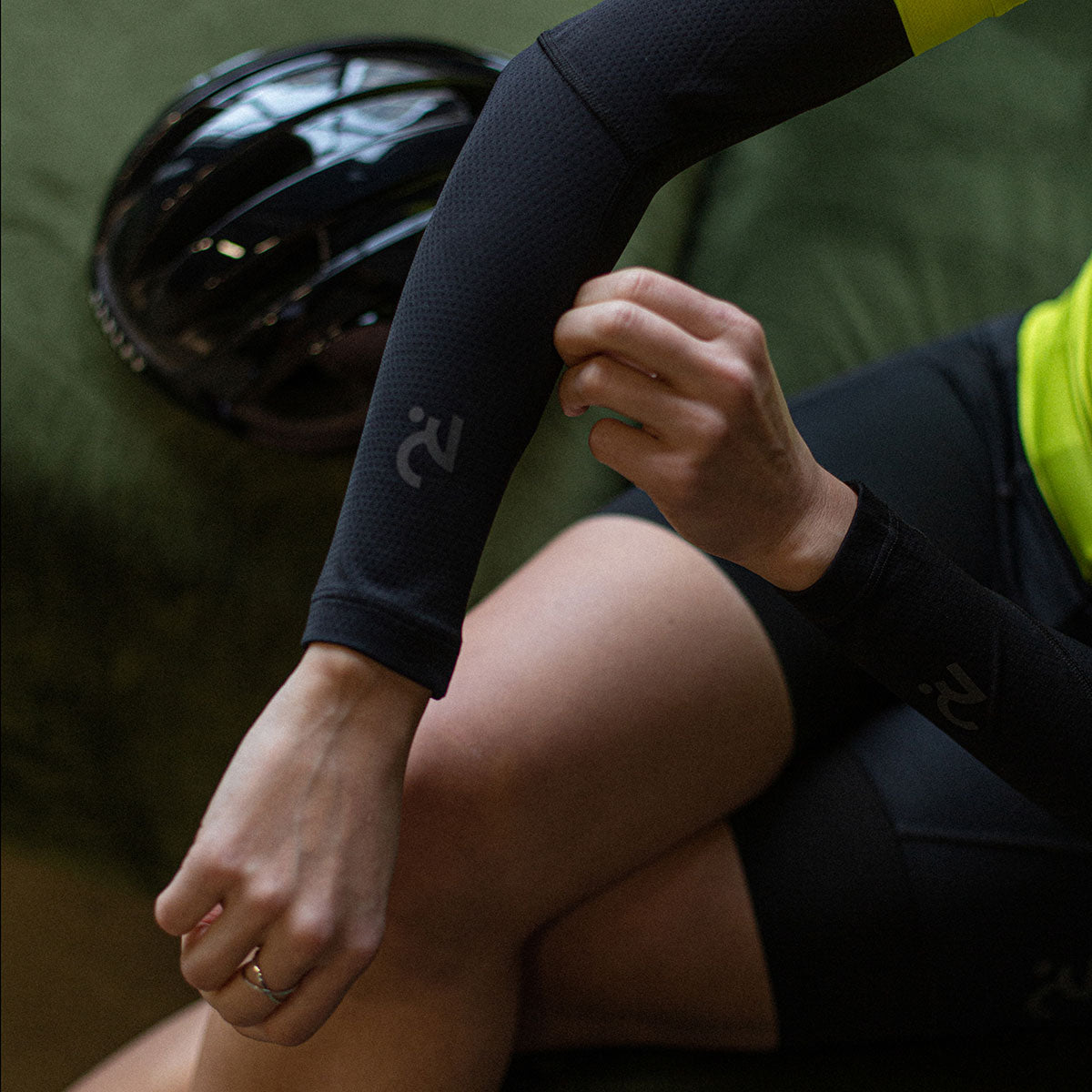
Order a core jersey for your most common conditions, then extend it with a base layer and warmers instead of buying one weight that is wrong in both heat and cold. Layers give one club kit design that works across a wide temperature range, and they keep the printed jersey visible in team colours. See custom base layers and arm and leg warmers for how they fit into a club order.
How does weight affect your jersey choices?
Short sleeve in a lighter fabric is the summer workhorse; long sleeve in a heavier fabric covers the cooler months. Read custom cycling jerseys for the options, and how to design custom kit for your club for how the choice fits the wider design. Weight also affects how colour reads: the same artwork can look slightly different on different fabrics, which we cover in custom kit artwork.
What should you put in your brief?
Tell us where your riders live, the months you ride most, the mix of road, gravel or racing, and how many riders need summer and winter pieces. Add your minimum order and timeline questions early: minimum order quantities and the order timeline both affect how you split a single yearly order across seasons.
How do you avoid ordering the wrong weight?
Order sizing samples in the fabric you intend to use, and ask riders to test them in real conditions before the full order. Collect sizes with our club sizing guide so a weight change does not leave riders in the wrong size.
FAQ
What fabric weight is best for custom cycling jerseys?
It depends on your climate and season. Choose lighter fabric for heat, heavier for cool weather, and cover the extremes with base layers and warmers.
Can one custom jersey work all year?
Rarely. A mid-weight jersey with base layers and warmers covers a wide range, but a club riding in both heat and cold usually benefits from two jersey weights.
Does fabric weight change how the artwork looks?
It can. Fabrics differ in how they carry colour, so ask about the fabric when you send artwork and check a sample first.
Tell us your brief and we will take it from there: request a quote at /pages/cycling-triathlon-custom-apparel.
DTR — performance cycling and triathlon apparel, designed and developed in Ukraine.

Leave a comment
This site is protected by hCaptcha and the hCaptcha Privacy Policy and Terms of Service apply.