

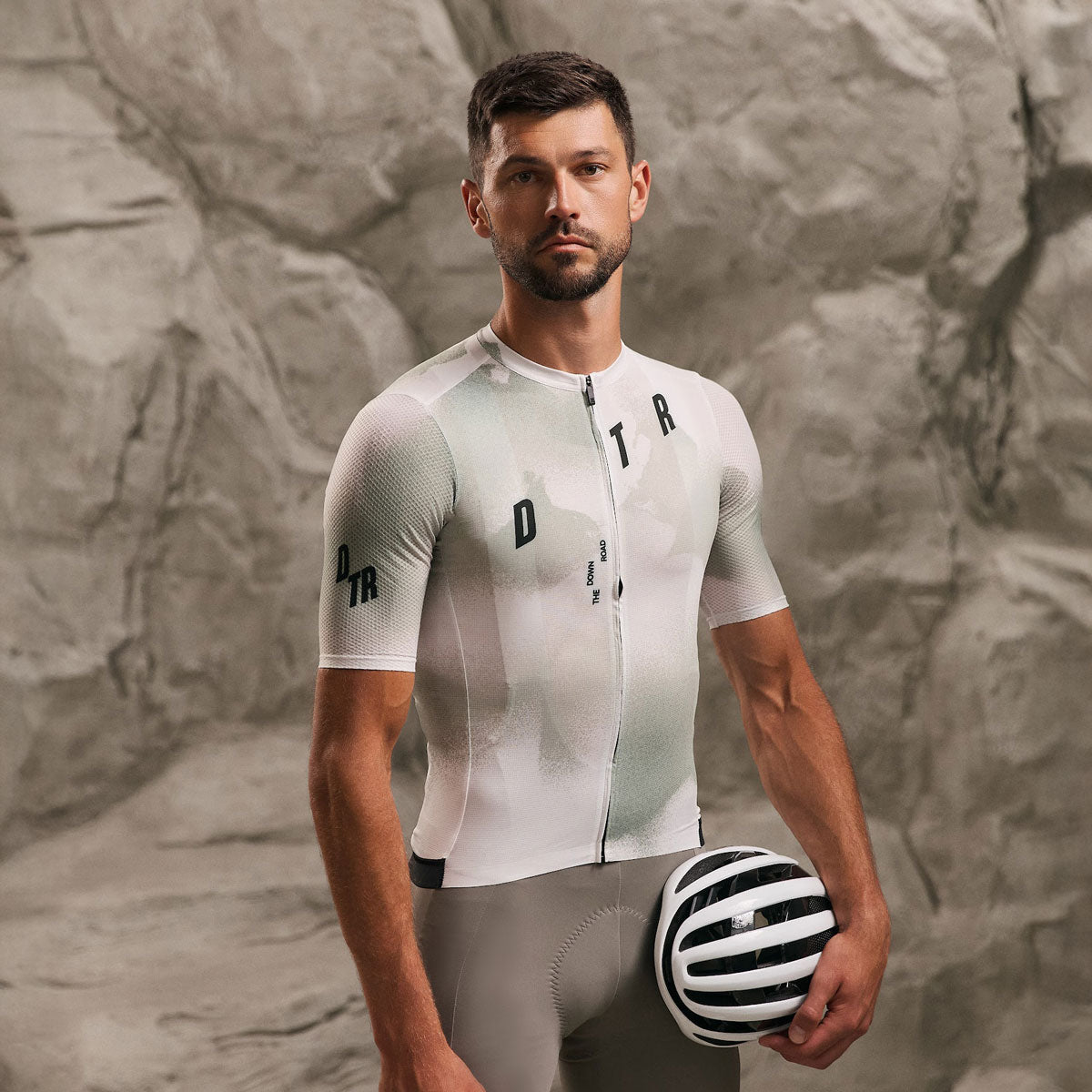
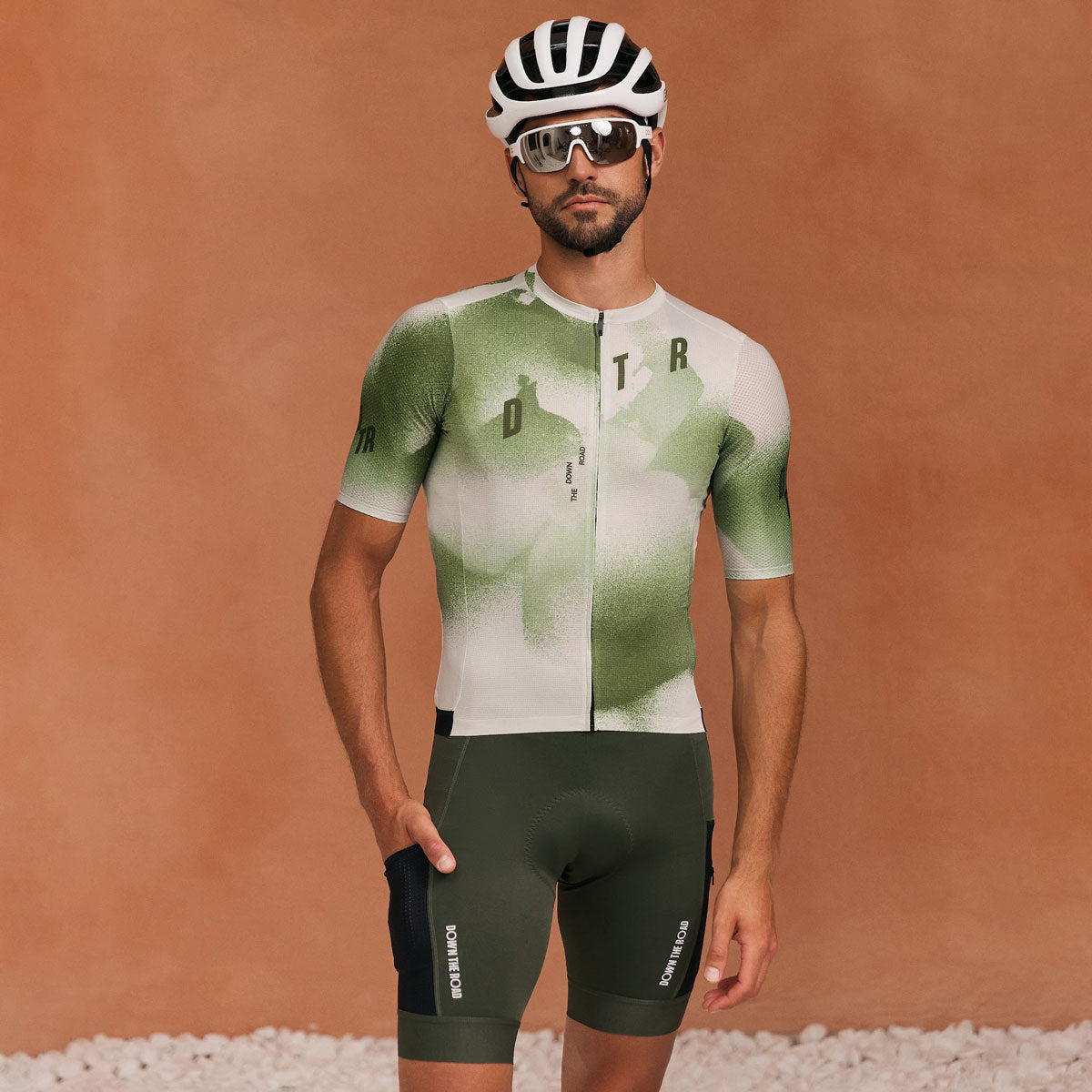
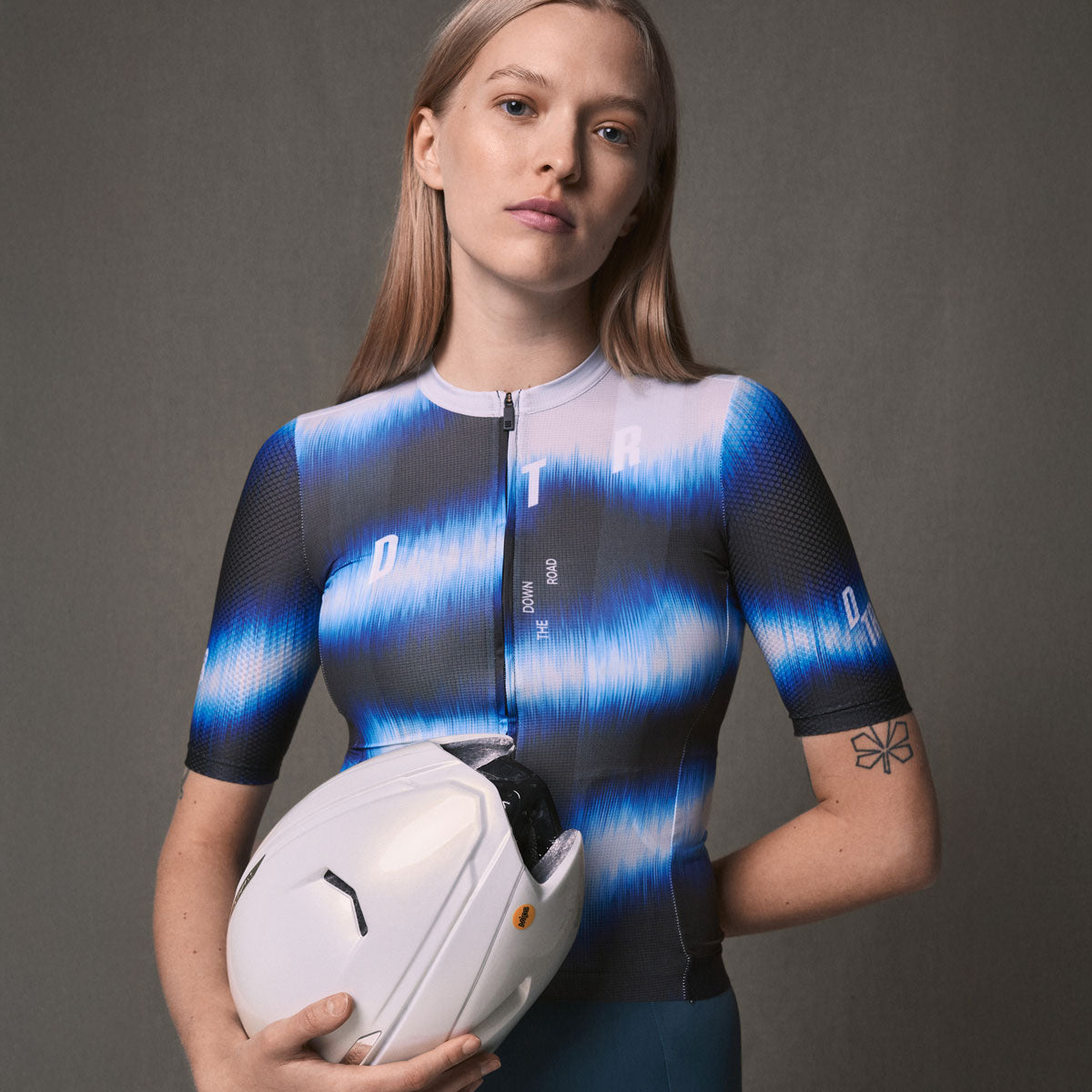
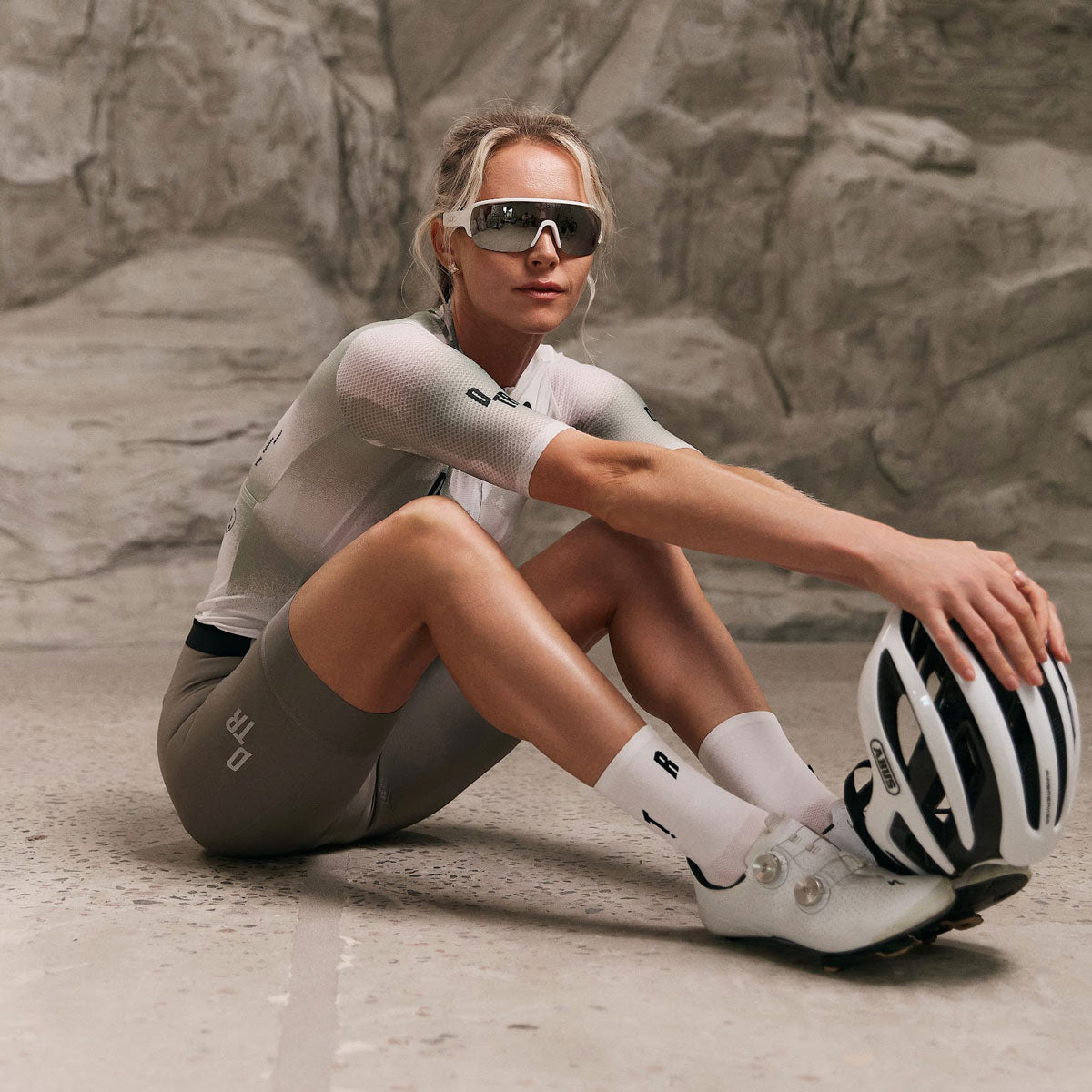
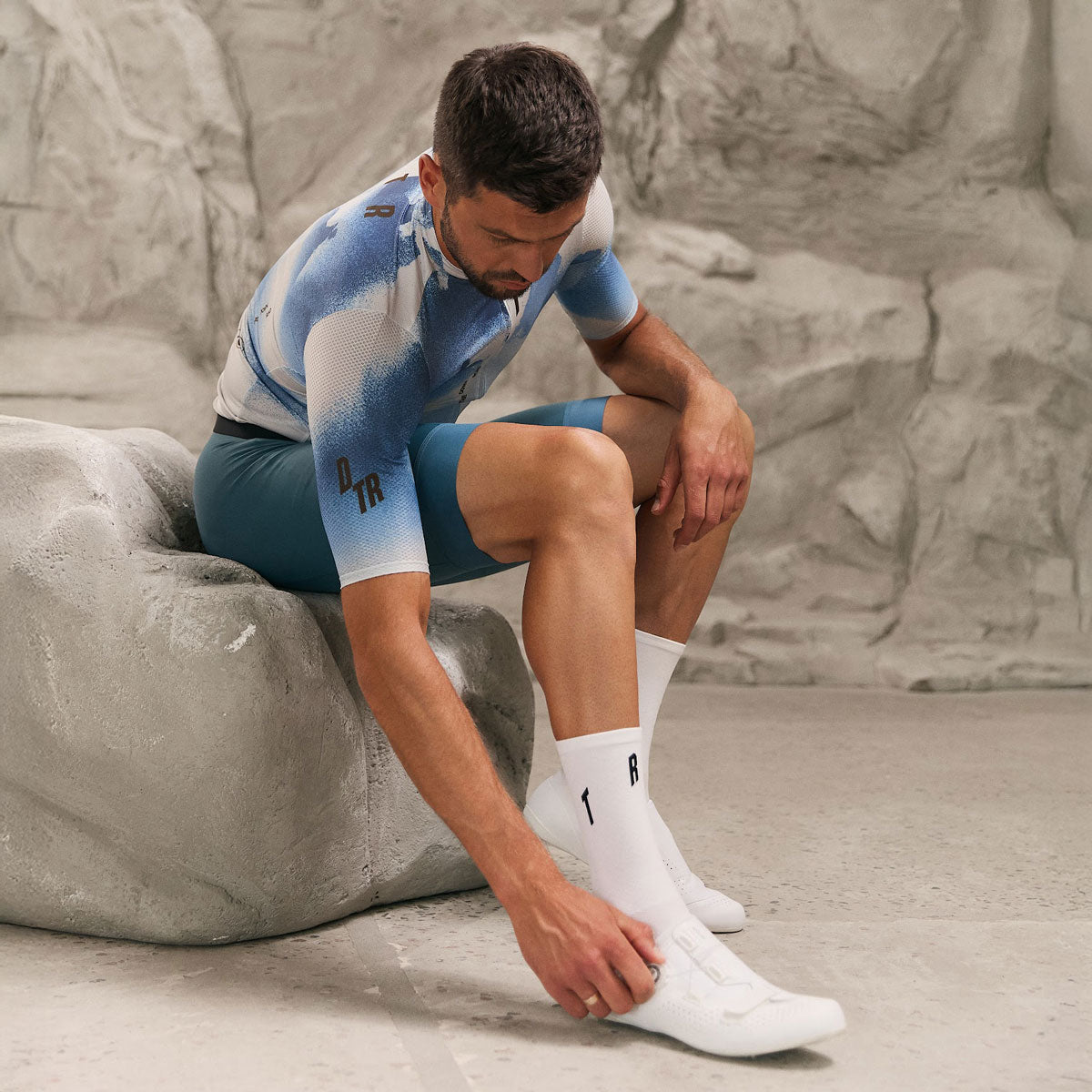
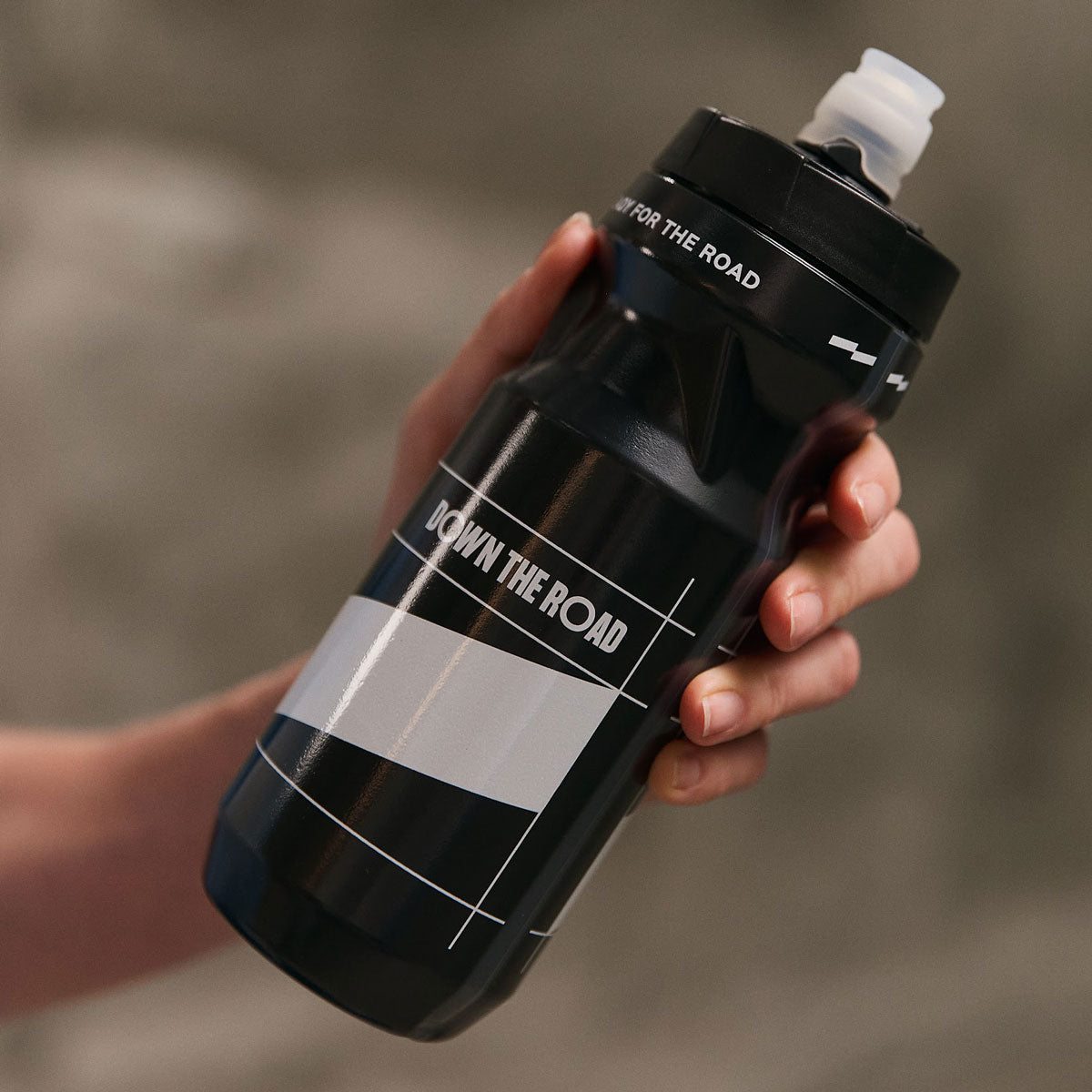
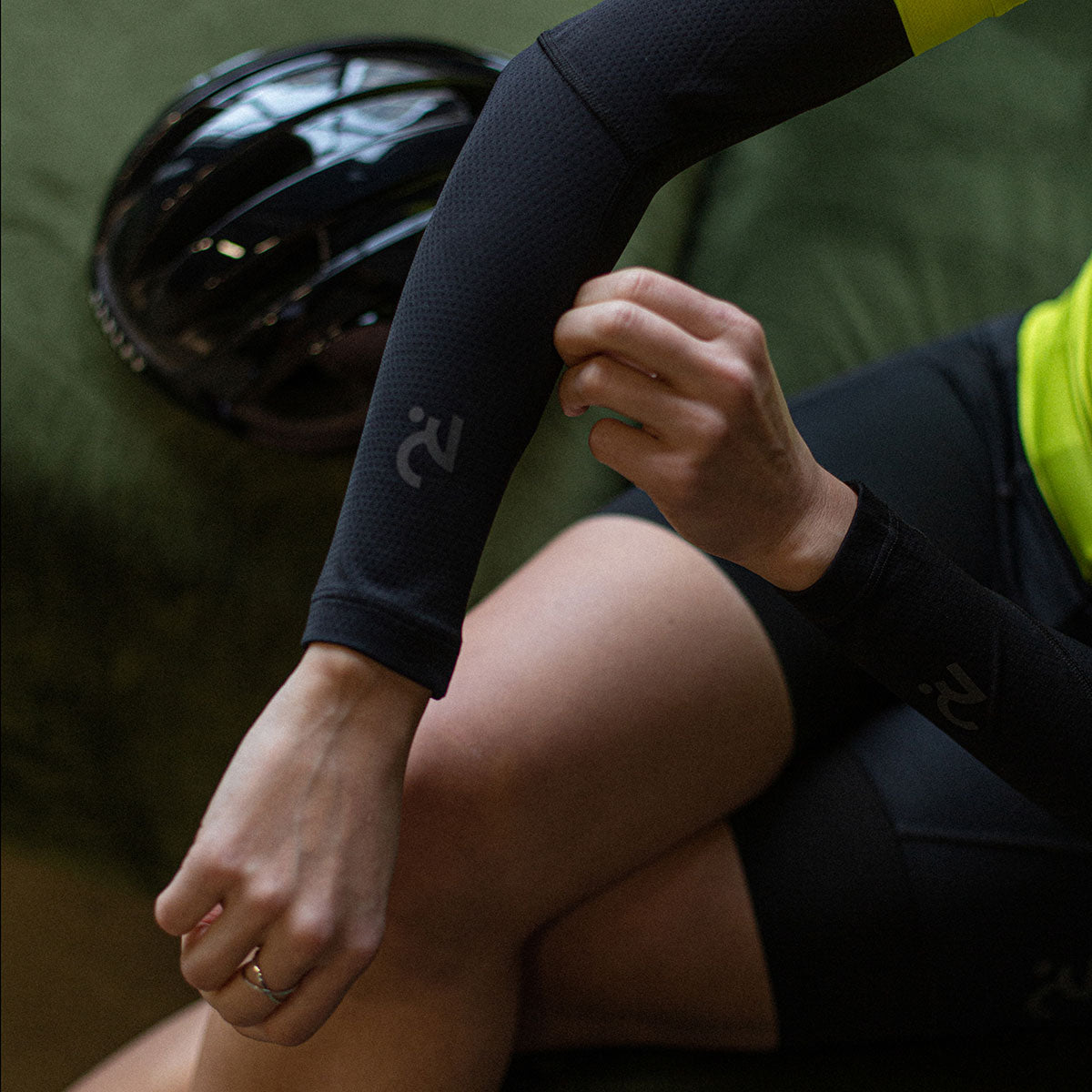
A cycling kit is the matched set of technical clothing you ride in — at its core a jersey and bib shorts, worn next to the skin and cut to hold their shape in the riding position. Everything else layers around that core. This guide covers what each piece does, what to buy first, and how the setup changes with temperature and ride length.
What "kit" means on the bike
Kit is the cycling word for what you wear, not what you carry. A repair kit is tools; a kit is clothing. Used precisely it means a coordinated jersey and bib shorts, which is why a club kit or team kit describes that pairing in one design rather than a single garment.
The distinction matters when you shop. Asking for a jersey gets you one piece. Asking about kit gets you the whole system — the layers, how they sit against each other, and the order they go on in. Riders talk about kit as a setup because that is how it works on the road.
The two pieces that carry the setup
The jersey and bib shorts do the work everything else supports. A jersey moves sweat off the skin and carries what you need in three rear pockets. Bib shorts hold a chamois in one fixed position underneath you, anchored by shoulder straps instead of a waistband. Get these two right and the rest is adjustment.
A jersey is cut close because loose fabric flaps, drags and holds sweat against you. A race-fit cut sits tight across the chest and back with a longer tail that stays down when you reach for the drops. The pockets should sit above the saddle line and hold weight without sagging into your lower back.
Bib shorts solve a problem plain shorts cannot. A waistband either digs in when you fold forward or slides down when you pedal, and either way the chamois moves with it. Straps take the tension up over the shoulders, so the chamois stays exactly where it was fitted for the whole ride. That is the entire argument for bibs, and it is why almost nobody goes back.
The chamois itself is the part that decides whether four hours is comfortable. Multi-density means the foam is firmer where your weight lands and softer at the edges — more density is not more thickness, and a thicker chamois is not automatically a better one. We cover this in detail in what a chamois actually is and how bib shorts should fit.
What goes underneath
A base layer sits directly against the skin and pulls sweat off it into the jersey, where it can evaporate. Its job is moisture management, not warmth, which is why a lightweight one earns its place in summer as well as winter. Skipping it leaves damp fabric sitting on you at every descent.
Weight is the variable. A mesh or lightweight base layer for heat, a thicker one under 10°C, long sleeves when the wind gets into the equation. It should be snug — a loose base layer traps a pocket of wet air instead of moving it. Our base layer guide breaks down weights by temperature.
The layers that extend your range
Arm warmers, leg warmers, a vest and a windbreaker turn one summer setup into a three-season one. Each is removable mid-ride and packs into a jersey pocket, which is what makes them more useful than a second full outfit for the shoulder months when the morning and the afternoon want different things.
Arm warmers and leg warmers cover the limbs without committing you to a long-sleeve jersey or thermal bib tights. Roughly 8°C to 16°C is where they earn their keep: bib shorts alone leave your knees cold, thermal tights are too much. Below about 8°C, move to thermal bib tights. See arm warmers and leg warmers for the detail.
A vest and a windbreaker do the same job on the torso at different intensities. A vest blocks wind on the chest and leaves the arms free, which suits early starts and long descents. A windbreaker adds sleeves and a bit more protection for genuinely cold or wet air. Our windbreaker guide covers where the line sits.
Socks, headwear and the small pieces
Cycling socks are cut higher than everyday socks and made from thin technical fabric, because a bunched sock inside a stiff shoe becomes a hot spot within an hour. Above that, a cap under the helmet keeps sweat and sun out of your eyes, and a thin skull cap does the same job for cold.
Gloves are the other piece people underestimate. Mitts take pressure off the hands on long days and give you something to wipe a face with; full-finger gloves handle cold and rough surfaces. None of this is expensive relative to the difference it makes over a four-hour ride.
What you actually need to start
Three pieces get you riding properly: bib shorts, a jersey and cycling socks. Buy the bib shorts first and buy them well — they are the single item that decides whether a three-hour ride is enjoyable, and no jersey compensates for a chamois that does not suit you.
After that, add a base layer, then arm and leg warmers, then a vest. That order tracks how much each piece extends what you can do. A second pair of bib shorts comes before almost any other upgrade, because it means you are never choosing between riding and doing laundry. If you are starting from nothing, our beginner kit guide covers the same ground with a shopping order.
How many jerseys and bib shorts is enough?
Two pairs of bib shorts and three jerseys covers most riders through a normal week. Bib shorts need washing after every ride without exception, so two lets one dry properly while the other is in use. Jerseys are more forgiving, and three gives you a summer weight, a mid weight and a spare.
Riding volume moves the number more than anything else. Four or more rides a week makes a third pair of bib shorts worth it. Racing or riding through winter adds thermal pieces on top rather than more of the same.
Why cycling kit costs what it does
Most of the cost sits in the chamois and the panel construction, not the fabric surface. A multi-density chamois is a moulded, multi-layer component; a race-fit short is built from many separate panels joined with flatlock seams so nothing rubs in the riding position. Both are labour, not marketing.
Fabric accounts for the rest. Four-way stretch lycra has to hold compression through thousands of pedal strokes and repeated washes without going baggy or sheer, and cheaper knits fail that test in a season. The practical read: cost per ride on a good pair of bib shorts is usually lower than on a cheap pair you replace twice as often.
How the setup changes with temperature
Temperature decides the layers, not the season. Above roughly 20°C, a short sleeve jersey and bib shorts with a lightweight base layer. From 16°C down, add arm warmers and a vest. From 12°C, leg warmers join them. Below 8°C, thermal bib tights and a long sleeve thermal jersey replace the summer core.
Wind and rain shift those numbers more than most people expect — a dry 12°C and a wet, windy 12°C are different rides. Our temperature guide gives the full range in degrees.
Frequently asked questions
What is the difference between a cycling kit and cycling clothing?
Cycling clothing is the general category. A kit is a specific, coordinated set — normally a jersey and bib shorts designed together. Every kit is cycling clothing; not every piece of cycling clothing is part of a kit.
What is a cycling top called?
A jersey. Short sleeve, long sleeve or sleeveless, it is always a jersey, and the defining features are the close cut, the technical fabric and the three rear pockets.
Do you wear underwear under bib shorts?
No. The chamois is designed to sit directly against the skin. Underwear adds seams, holds moisture and is the fastest route to chafing on a long ride.
How long does a cycling kit last?
Bib shorts typically last 8,000 to 15,000 km with regular washing; jerseys usually outlast them. The chamois generally goes before the fabric does — when it stops recovering its shape between rides, it is finished.
Can you wear a cycling kit for indoor training?
Yes, and bib shorts are worth wearing indoors for the same reason as outdoors. A jersey matters less without airflow, so many riders train in a base layer alone and wash the shorts straight after.
Start with the jersey range at /collections/cycling-jerseys.
DTR — performance cycling and triathlon apparel, designed and developed in Ukraine.

Leave a comment
This site is protected by hCaptcha and the hCaptcha Privacy Policy and Terms of Service apply.