

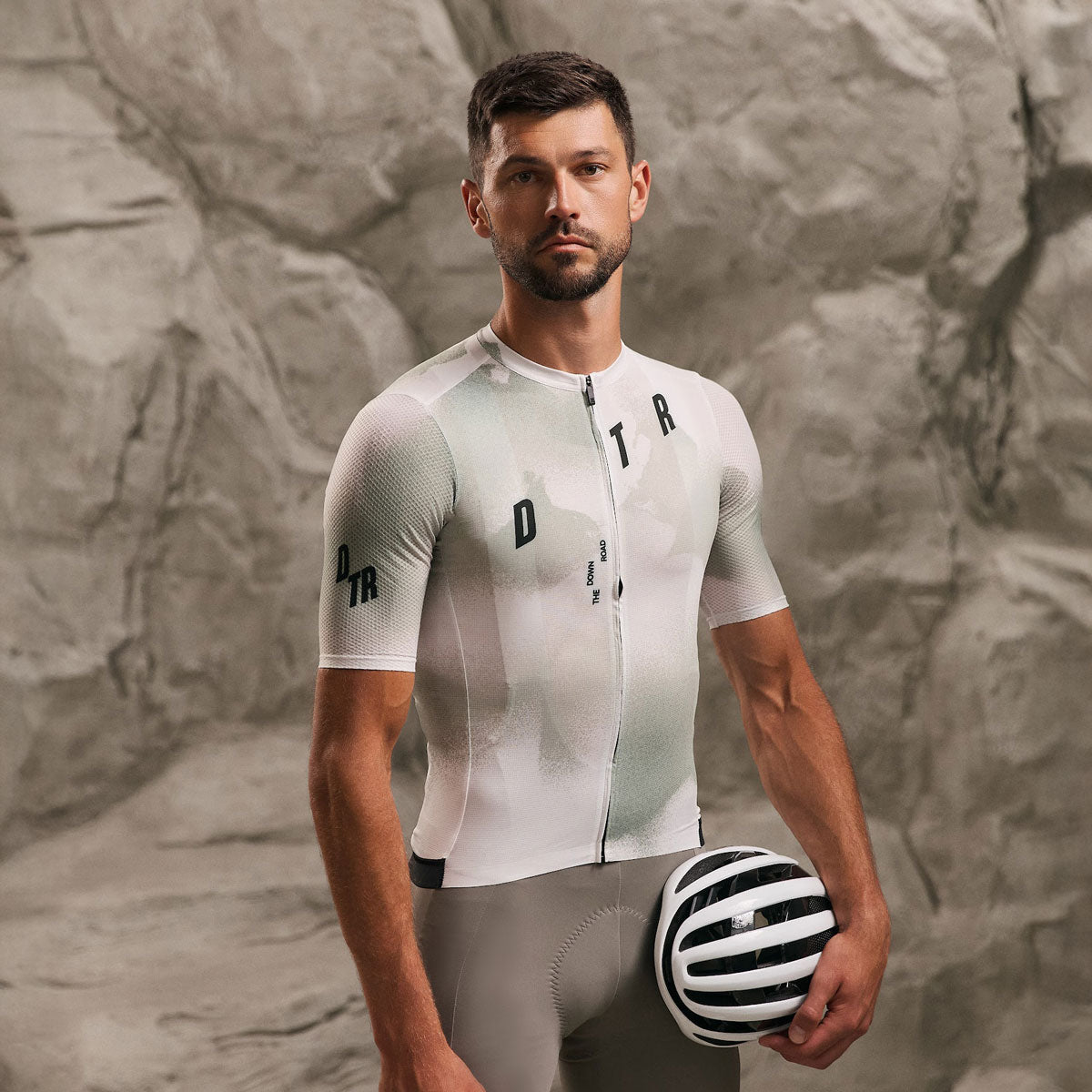
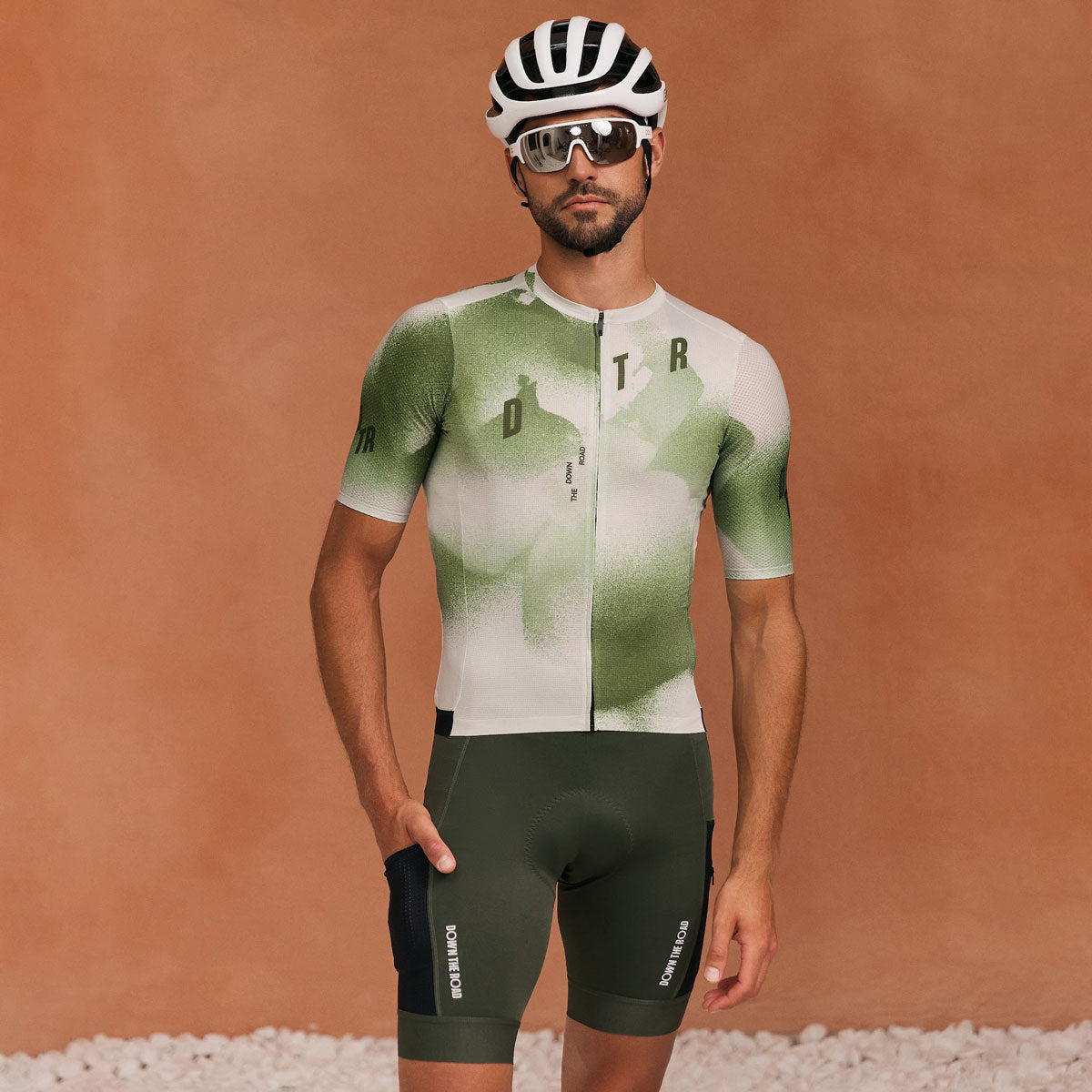

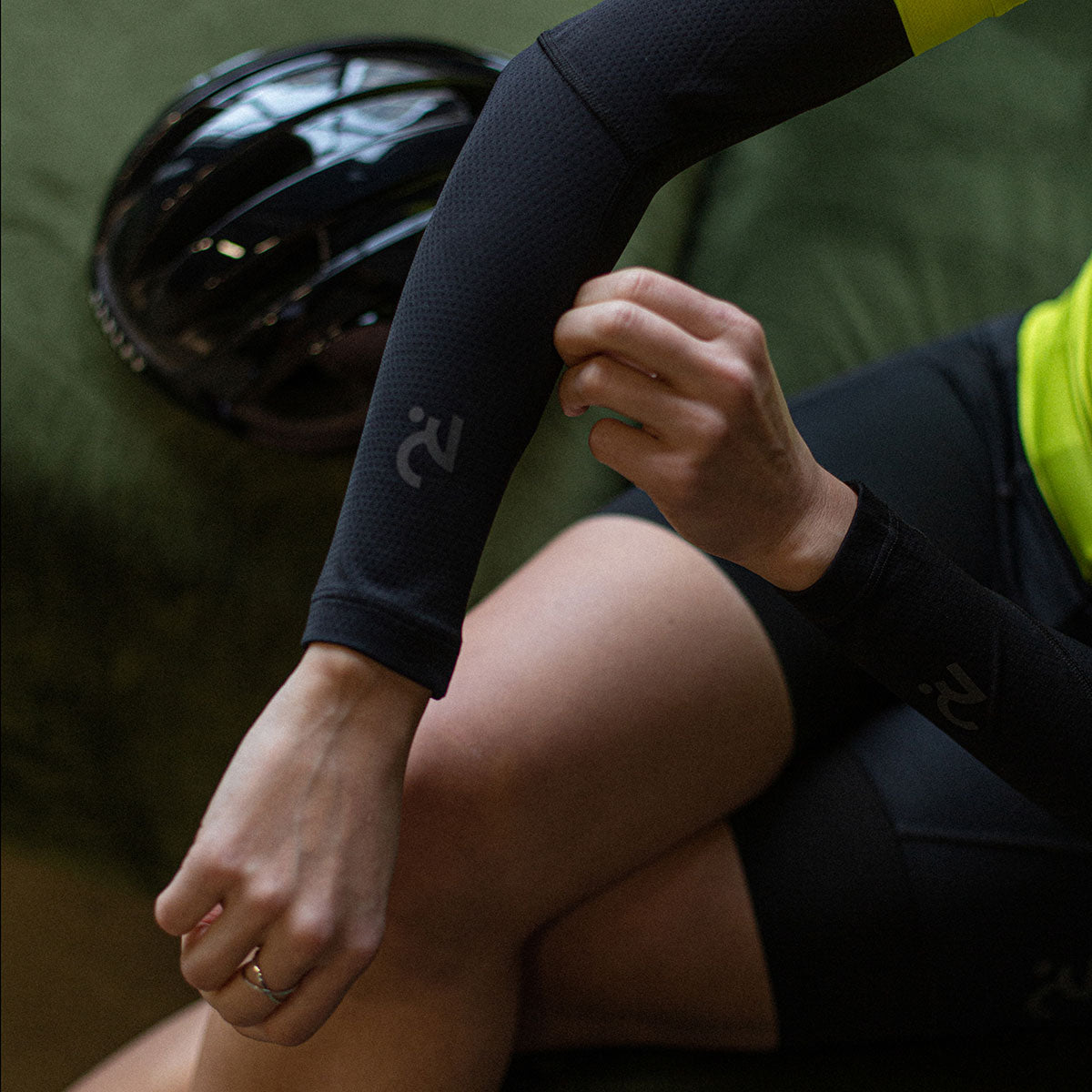
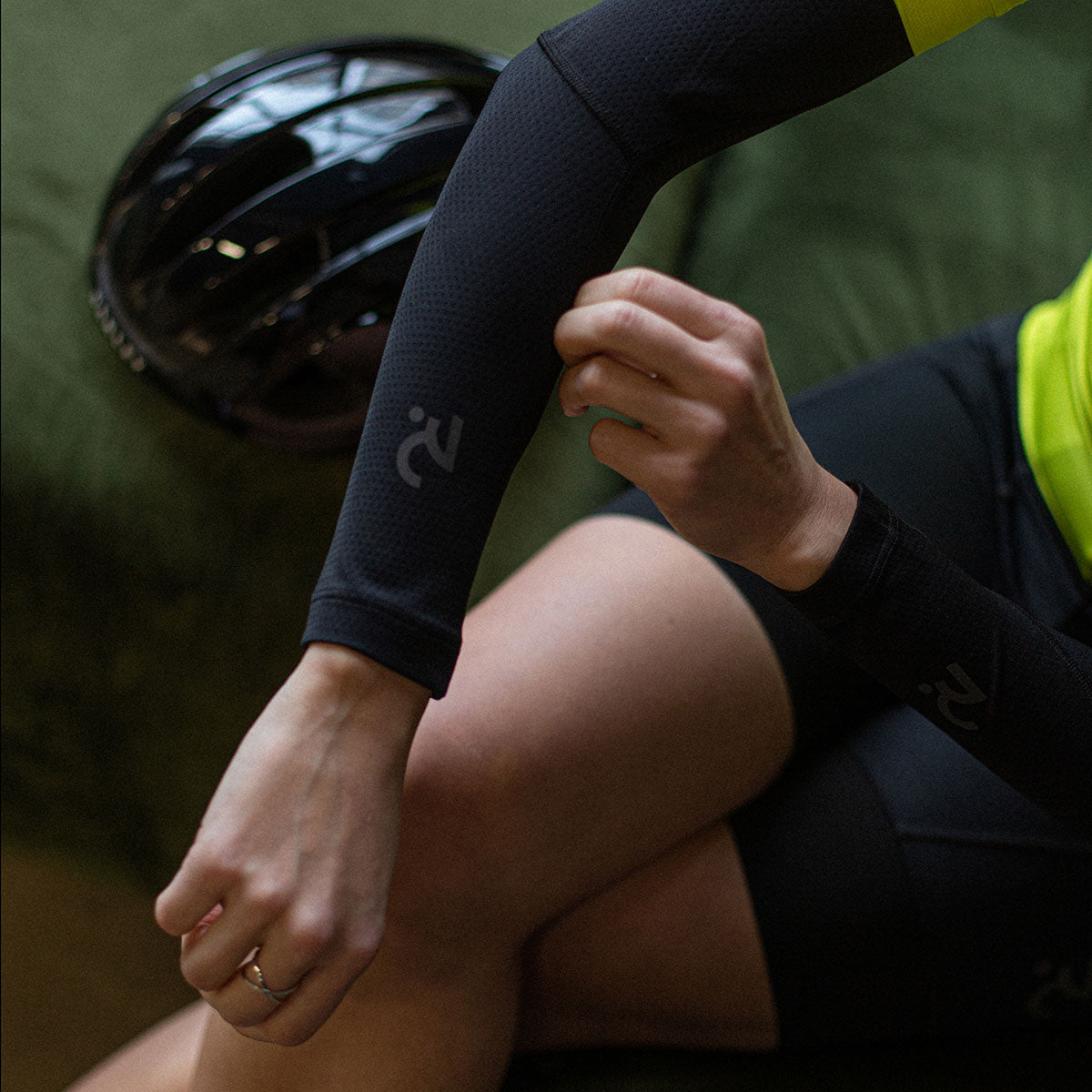
Cycling arm warmers cover roughly 8°C to 16°C — cool enough that bare arms sting on a descent, mild enough that a long sleeve jersey cooks you on the climb. This guide covers when to put them on, how standard and fleece versions differ, what stops them sliding, and how to size them.
What they do that a long sleeve jersey can't
Arm warmers are close-fitting sleeves worn over a short sleeve jersey, running from the wrist to just above the bicep. Their real advantage is reversibility: you can strip them at the top of a climb, roll them into a rear pocket and carry on. A long sleeve jersey commits you to the whole ride.
That makes them a control, not a garment. On a morning that starts at 9°C and finishes at 18°C, they are the difference between one comfortable ride and three hours of being wrong.
When to put them on
Use air temperature as the first filter, then adjust for wind and duration. Above 18°C most riders go without. Between 14°C and 18°C they are optional and depend on intensity. From 8°C to 14°C is the core range. Below 8°C, move to a fleece pair or a long sleeve jersey.
Wind chill moves those numbers more than people expect. A 14°C day into a strong headwind rides like 8°C, and a long descent is colder again than the climb that earned it. If the forecast sits anywhere near the edge, take them — a packed pair costs you nothing. The same temperature band is the working window for cycling leg warmers, so most riders reach for both together.
Standard or fleece?
Standard warmers use lightweight technical lycra and cover roughly 10°C to 16°C. Fleece warmers have a brushed inner face that traps warm air and work from about 4°C to 10°C. Standard packs smaller and comes off easily; fleece is warmer and stays on.
The practical answer for most riders in a temperate climate is both. Standard for spring and autumn, when conditions change inside a single ride. Fleece for winter, when the cold is steady and you are not taking anything off. Between them they cover 4°C to 16°C, which is the majority of the riding year.
Do they stay up?
A good pair stays put for a full ride. The gripper at the bicep does the work: a wide silicone band holds without cutting in, a narrow or hardened one lets the sleeve creep down. If yours are sliding, the gripper has usually lost its elasticity — or the size is one too large.
Fit is the other half of it. Warmers sized up for comfort will migrate, because there is nothing for the gripper to hold. Sizing down one step solves most sliding complaints on a pair that is otherwise sound.
Over the jersey sleeve, or under?
Over. The top of the warmer overlaps the jersey sleeve by a couple of centimetres, which seals the junction against cold air and keeps both pieces anchored. Tucking the warmer under the sleeve leaves a gap that opens every time you move on the bars.
Getting the size right
Measure your bicep at its widest and your arm length from wrist to armpit, then use those numbers rather than your jersey size. Arm warmer sizing runs on circumference, not on general build, and the two do not always agree.
A correct pair sits from the wrist to just above the bicep with no bunching at the elbow. Too short and the gripper sits on the narrowest part of the arm, where it has nothing to grip. Too long and the fabric folds behind the elbow, which is where it will chafe on a long ride.
Racing and triathlon training
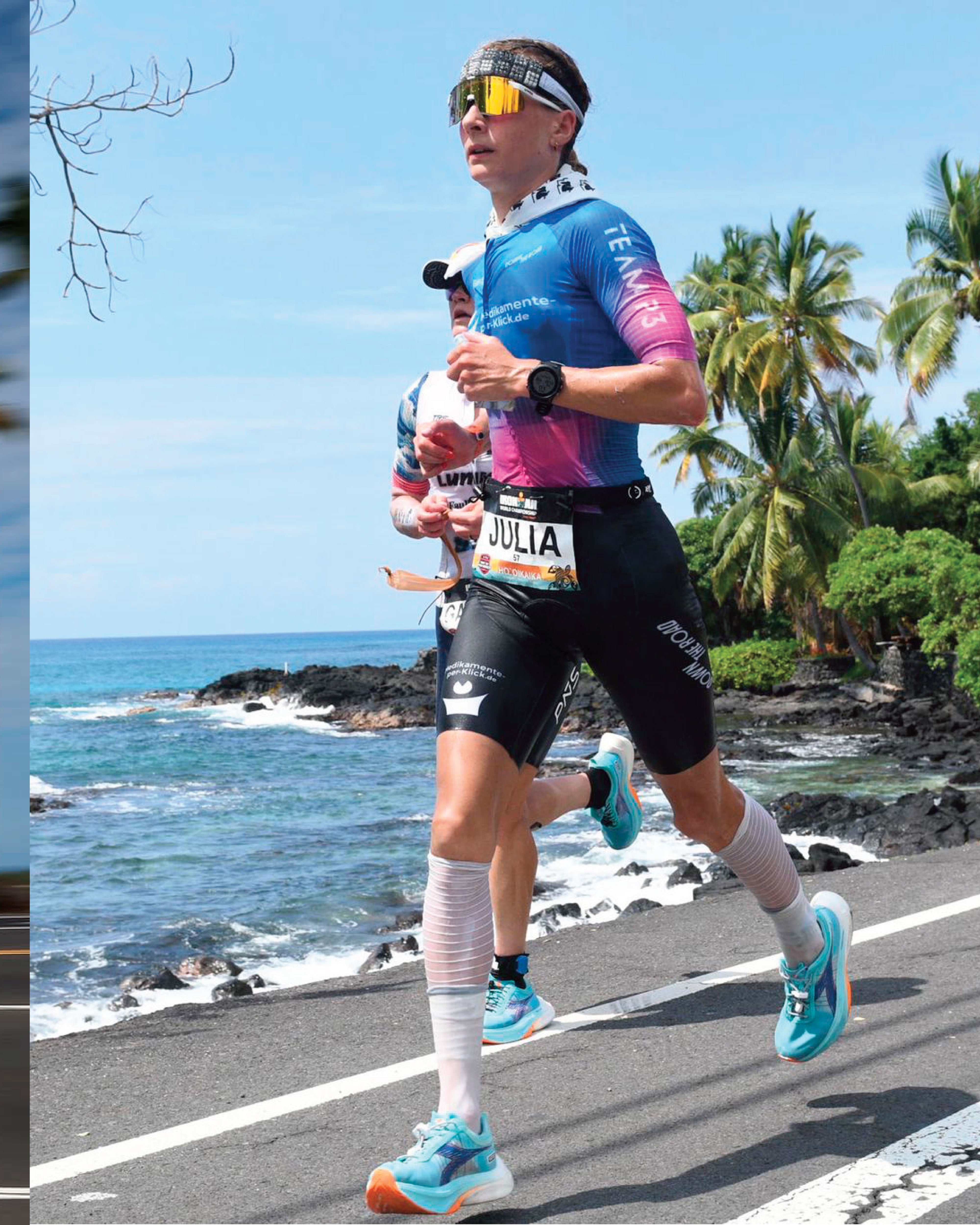
Arm warmers work over a trisuit exactly as they do over a jersey, which makes them useful for early-season bike sessions and cold morning starts. Most triathletes leave them off on race day unless conditions are genuinely cold.
If you do race in them, rehearse the removal. Peeling a warmer off at 35km/h with one hand on the bars is a skill, not a given, and transition is a better place to do it.
Keeping a pair alive
Wash cold on a gentle cycle after each ride, skip the fabric softener, and never tumble dry — heat is what kills the silicone gripper and the elastic. Hang them flat or over a rail.
Treated that way, a good pair lasts three to five seasons. The gripper almost always fails before the fabric does, so that is the part to watch.
FAQ
At what temperature should I wear arm warmers? Roughly 8°C to 16°C for a standard pair. Below 8°C, fleece. Above 18°C, most riders go bare-armed.
What is the difference between standard and fleece? Standard is lightweight and packable for changeable conditions. Fleece has a brushed inner face for steady cold below 10°C.
How do I stop them sliding down? Check the silicone gripper for wear, then check the size. A pair one size too large will always migrate.
Do they go over or under the jersey sleeve? Over, with a small overlap at the shoulder.
Can I wear them over a trisuit? Yes — they fit a trisuit the same way they fit a jersey, and they are a useful cold-morning training layer.
How long should a pair last? Three to five seasons with cold washes and no tumble drying. The gripper usually goes first.
Build out your transitional kit: the DTR arm and leg warmer range.
DTR — performance cycling and triathlon apparel, designed and developed in Ukraine.

Leave a comment
This site is protected by hCaptcha and the hCaptcha Privacy Policy and Terms of Service apply.