



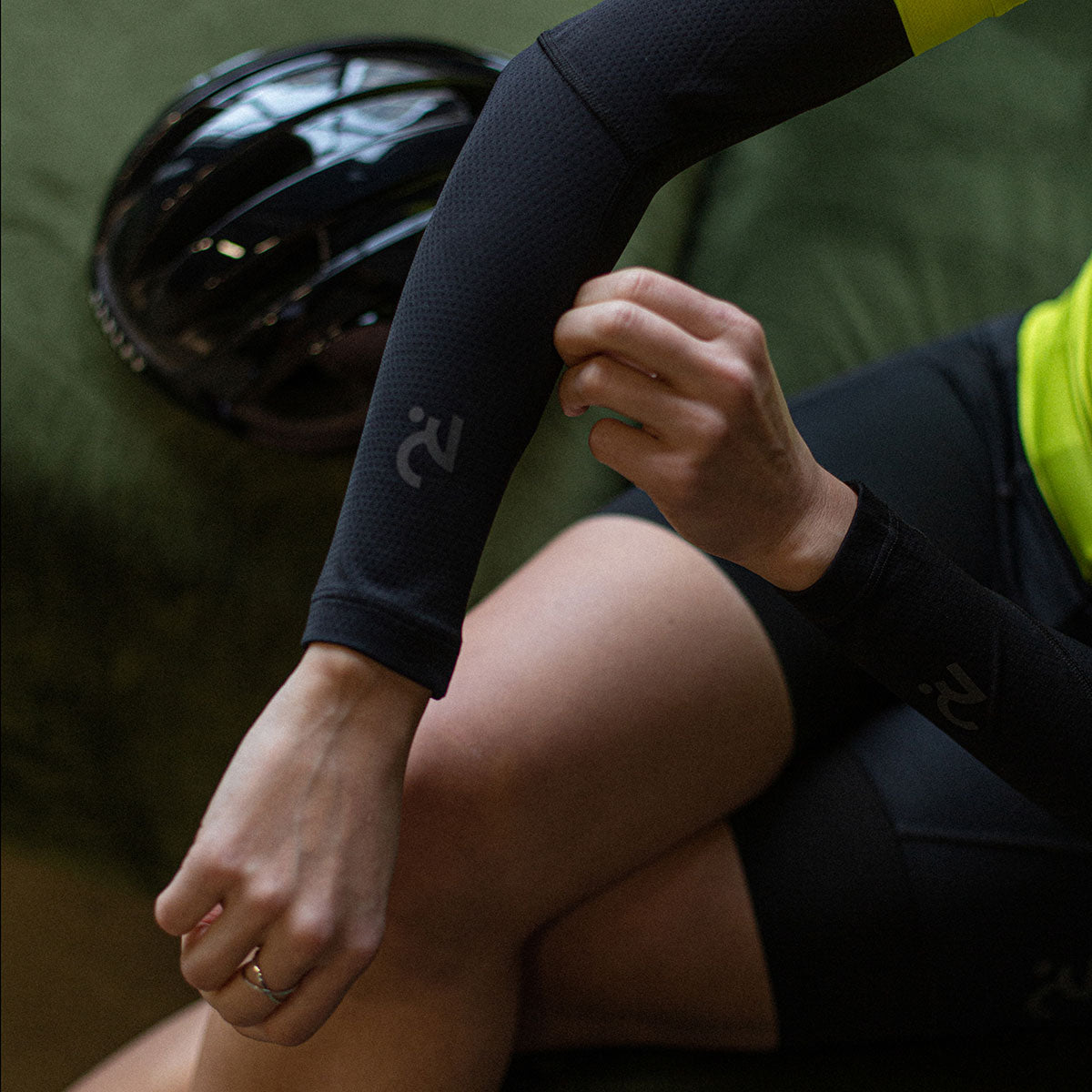
Gravel kit differs from road kit in four specific ways: tougher fabric, more storage carried on the body, more coverage at the points that take a beating, and a slightly less aggressive cut. Everything else — the chamois, the base layer logic, the temperature rules — carries straight over. This guide covers what genuinely changes and what does not.
Do you need a separate set for off-road?
For most riders, no. Road kit works on gravel, and plenty of people race on it. What changes is the failure rate: on loose surfaces you crash more, brush past more, and ride further from a shop, so the pieces that fail first are the ones worth upgrading. Buy for the difference, not a second wardrobe.
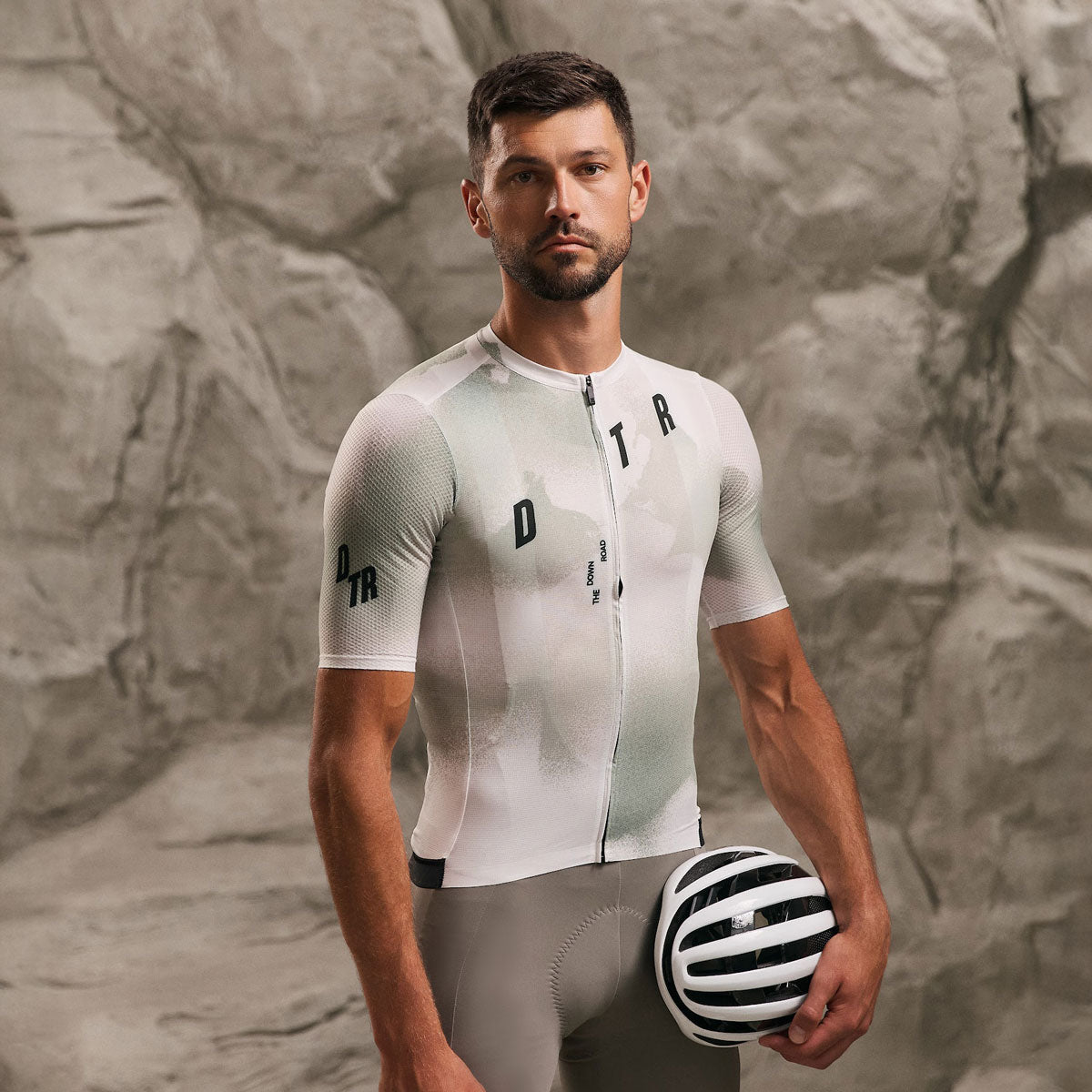
The distinction is worth making because gravel gets sold as a separate category more often than it is one. A well-made road jersey and a well-made gravel jersey share the same fabric family and the same cut logic. The gravel version adds durability and storage, and gives back a little aerodynamic tightness in exchange.
Fabric: why durability moves up the list
Off-road, fabric fails from abrasion rather than wear. Loose surfaces mean low-speed slides, overgrown lanes mean thorns and branches, and dust works into the weave and grinds at it from the inside. A gravel-oriented jersey uses a denser knit with more recovery, which trades a small amount of breathability for a much longer life.
The same logic applies to bib shorts, and it lands on the panels rather than the whole garment. Hip and outer-thigh panels are the ones that meet the ground first, so heavier fabric there is worth more than heavier fabric everywhere. Four-way stretch and flatlock seams stay non-negotiable — the seams still have to sit flat under a hip bag or a hydration pack.
Dust and grit also make washing more frequent, and frequent washing is what kills cheap lycra. If you ride gravel weekly, fabric recovery matters more than it does on the road, because you are putting the kit through two or three times as many cycles a year.
Carrying things when there is no support vehicle
Storage is the clearest difference. Road riding assumes a café stop and a phone; gravel assumes food, tools, a spare layer and enough water for a stretch with nothing on it. Three jersey pockets fill up fast, and a loaded jersey sags into your lower back over rough ground.
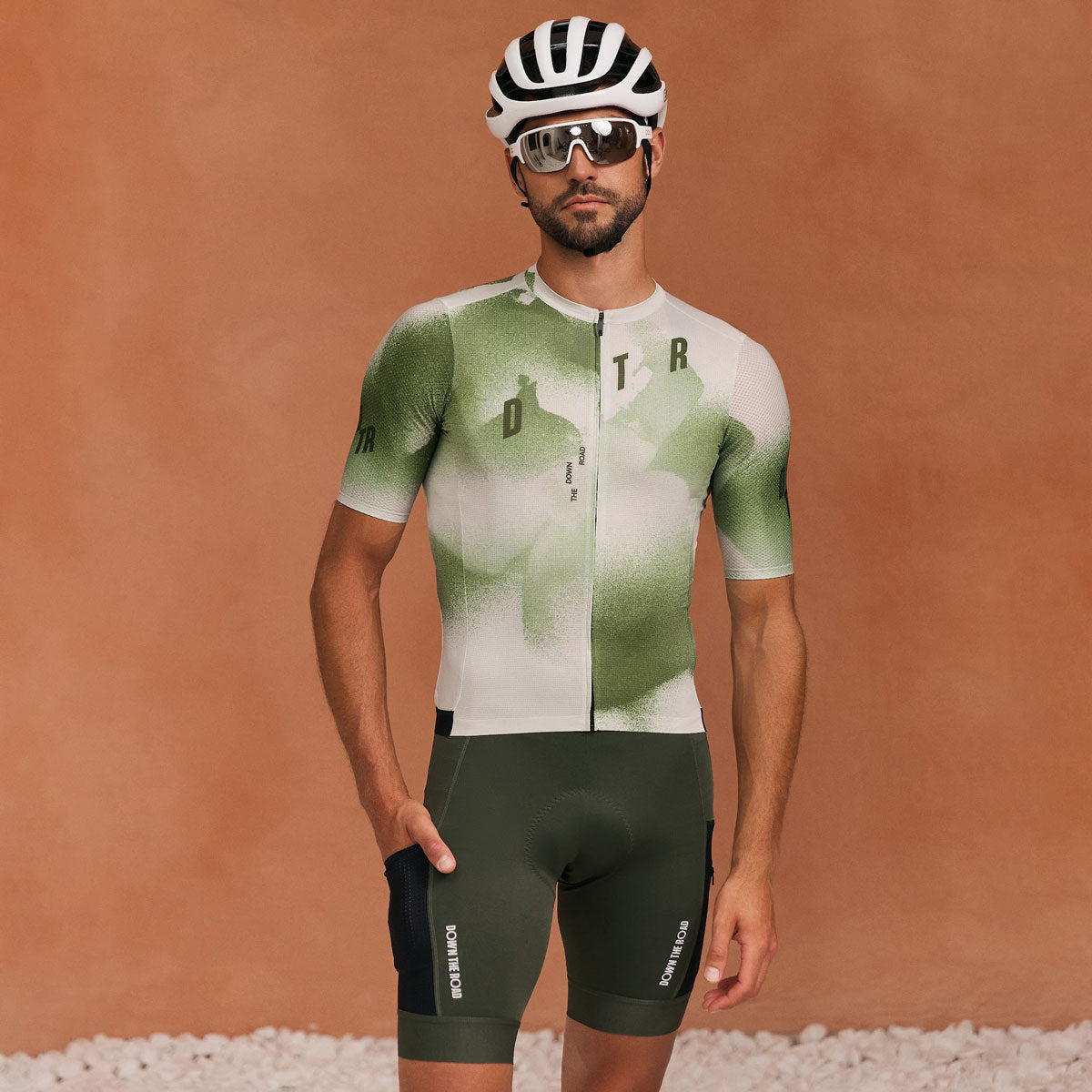
Cargo bib shorts are the fix. Mesh side pockets on the thighs and a larger pocket at the back move weight off your shoulders and onto your legs, where it barely registers and does not bounce. Gels, a phone, a mini pump and a spare tube can all come off the jersey, which stops it dragging down over four or five hours.
The practical split: keep what you need while moving in the leg pockets, and what you need at a stop in the jersey. We cover the detail in what cargo bib shorts are for and whether you need them.
Does the chamois change off-road?
The chamois requirement goes up with time in the saddle, not with surface roughness. A four-hour gravel ride and a four-hour road ride ask the same thing of it. What rough ground adds is movement — you shift position constantly — so the chamois has to stay put through repeated weight changes rather than absorb impact.
That points to a multi-density chamois with a wide, stable platform rather than a thicker one. More density is not more thickness: the firmer zones carry your sit bones while the softer edges stop the transition from becoming a pressure line. A thick, soft chamois moves under you on rough ground and is the wrong answer. Our chamois density guide goes deeper.
Coverage at the points that take a beating
Hands, legs and feet collect the damage off-road, and each has a straightforward answer. Gloves with a padded palm take the buzz out of a rigid front end over washboard. Slightly longer bib short legs with a wide silicone gripper protect the outer thigh in a slide and stay put when you are out of the saddle on a loose climb.
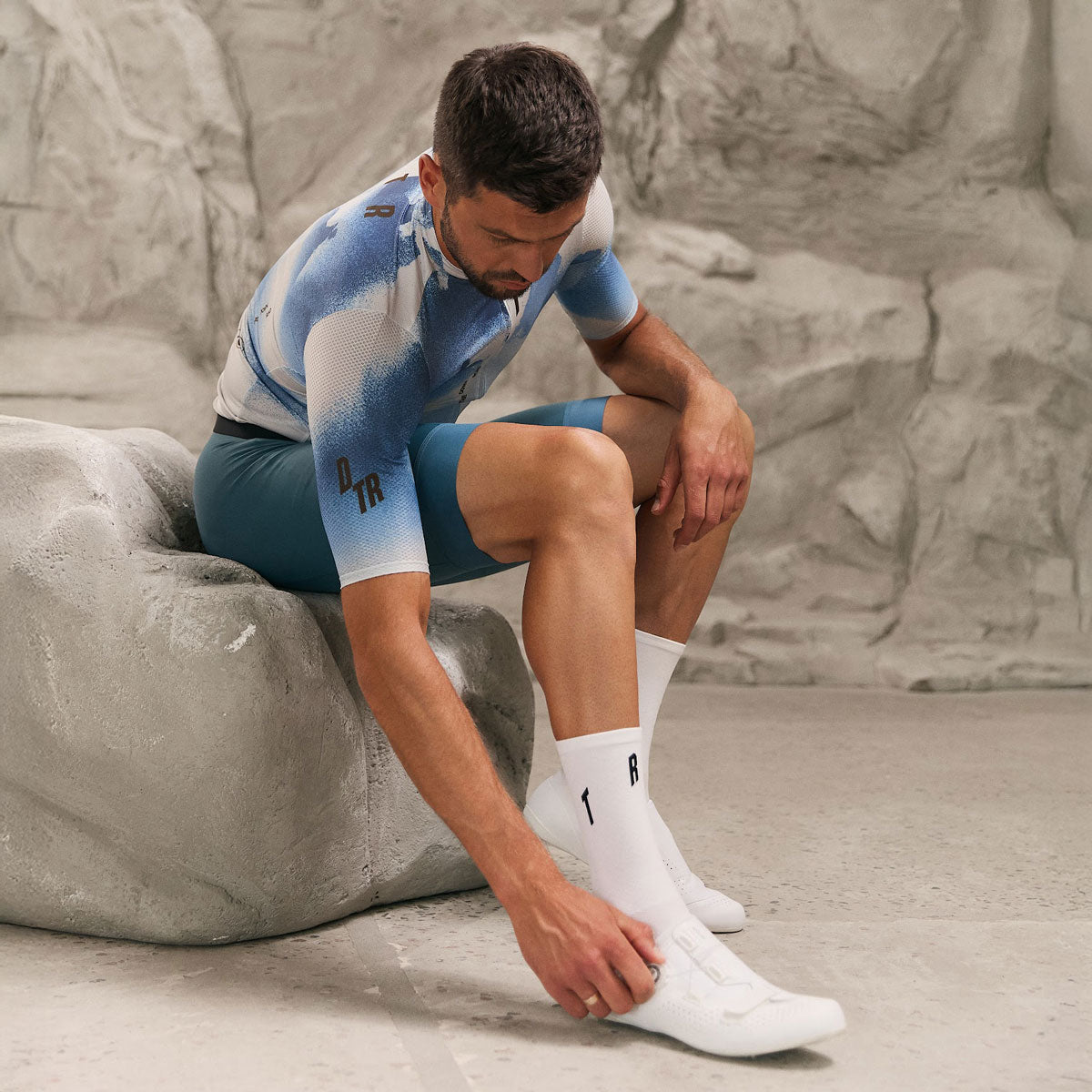
Socks matter more than they sound. A taller cycling sock keeps grit out of the shoe and stops the top of the shoe cutting into the ankle on long descents, and thin technical fabric still beats anything cushioned. Our socks guide covers height and fabric.
Eyewear and a cap are the last two. Dust from a wheel in front is constant, and a cap peak under the helmet keeps the worst of it out of your line of sight on a fast descent.
Why the cut sits slightly looser
Gravel speeds are lower and positions change more often, so the aerodynamic penalty of a slightly relaxed jersey is smaller than the comfort gain. A gravel cut keeps the close fit through the chest and shoulders — flapping fabric is still a problem — but adds room through the waist for a full day and for eating on the bike.
Where it should not loosen is the shoulders and the sleeve. A sleeve that rides up leaves the exact patch of arm that meets the ground first uncovered, and loose shoulders bunch under a pack strap. If you are choosing between a road cut you already like and a looser gravel cut, ride length is the deciding factor: under three hours, stay with what fits closest.
Racing versus riding all day
Gravel racing pulls the kit back toward road: closer fit, lighter fabric, storage on the bike rather than the body, because you are handing off at feed zones. Long unsupported days pull the other way, toward cargo shorts, more coverage and fabric that survives being slept in at a bikepacking stop.
Most riders do both, and the honest answer is that one set covers both if you choose it for the longer of the two. A cargo bib short raced is a minor penalty; a race-cut short on an unsupported 200 km is a real problem. For event-specific packing, see our long gravel rides guide and the bikepacking kit list.
Moving from road to gravel: what to change first
Change the bib shorts first. Cargo bib shorts solve the storage problem and add the leg coverage in one purchase, and they are the piece you will notice on every ride over two hours. Everything else in your road setup can come along unchanged for a season.
Second, add taller socks and gloves — low cost, high return on rough surfaces. Third, a jersey with a denser knit if you are riding overgrown or dusty routes weekly. A vest or windbreaker stays exactly as useful as it is on the road, because exposed gravel routes get windy and descents get cold in the same way.
Frequently asked questions
Can you wear road kit for gravel riding?
Yes. It works, and the only real compromises are storage and abrasion resistance. If you ride gravel occasionally, road kit is fine; if you ride it weekly, the durability difference starts to show up in your replacement cycle.
Do you wear lycra for gravel?
Most riders do, for the same reasons as on the road — no chafing seams, no flapping fabric, and a chamois that stays where it was fitted. Baggy shorts over a liner are a valid alternative on shorter, slower rides, but the liner still has to be a proper chamois.
What is different about a gravel jersey?
A denser, more abrasion-resistant knit, a slightly roomier waist, and usually a deeper or more secure pocket layout. The chest, shoulder and sleeve fit stay close, because loose fabric there causes problems on any surface.
Are cargo bib shorts worth it for gravel?
On rides over about three hours, yes. Moving food, tools and a phone off the jersey stops the back pockets sagging and keeps weight low and stable, which matters more the rougher the surface gets.
What should you wear for gravel riding in winter?
The same layering logic as road, shifted a little warmer for lower average speed. Thermal bib tights or bib shorts with leg warmers below 8°C, a long sleeve thermal jersey, and a windbreaker that packs down — exposed gravel routes rarely give you shelter to change in.
Start with the cargo range at /collections/cargo-bib-shorts.
DTR — performance cycling and triathlon apparel, designed and developed in Ukraine.

Leave a comment
This site is protected by hCaptcha and the hCaptcha Privacy Policy and Terms of Service apply.