

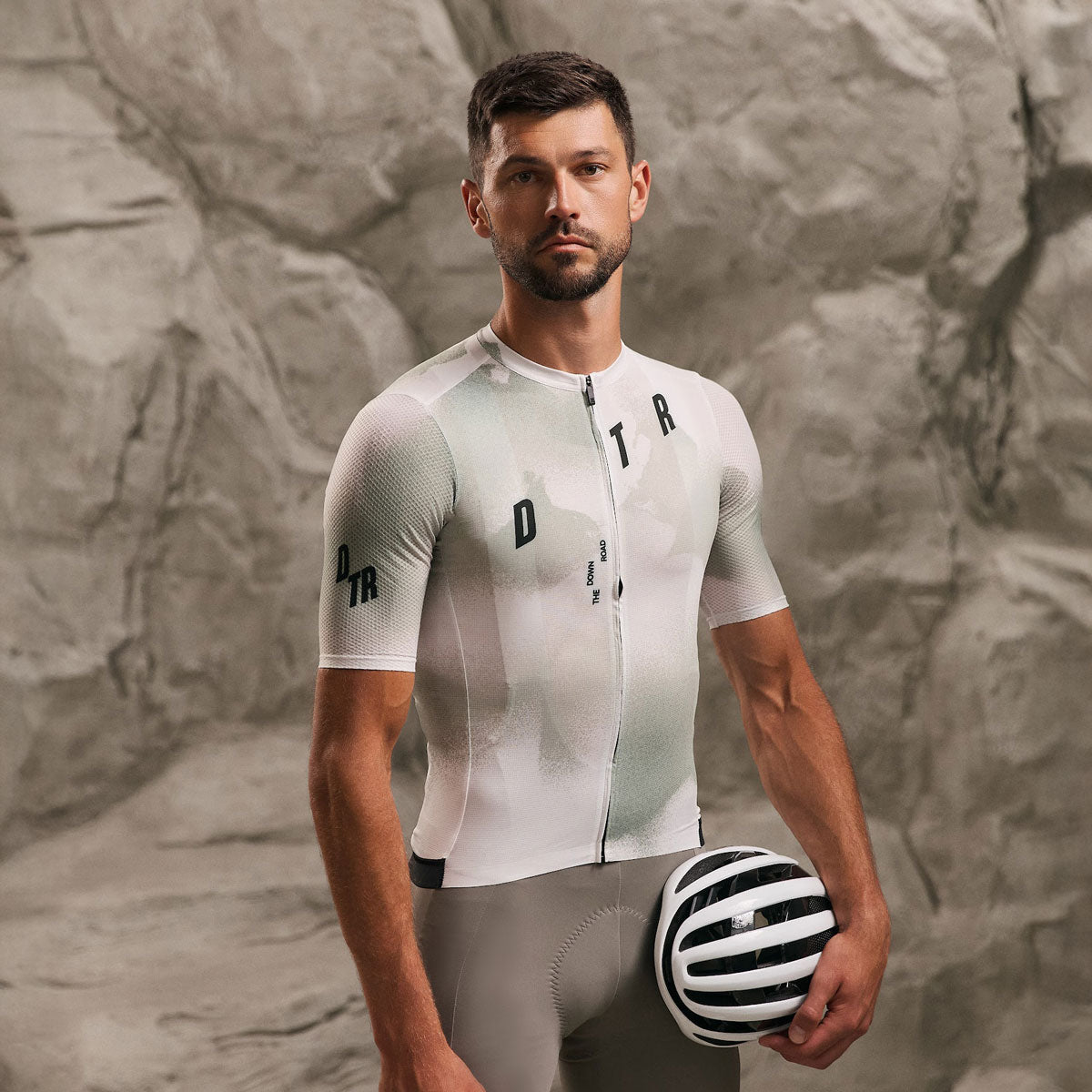
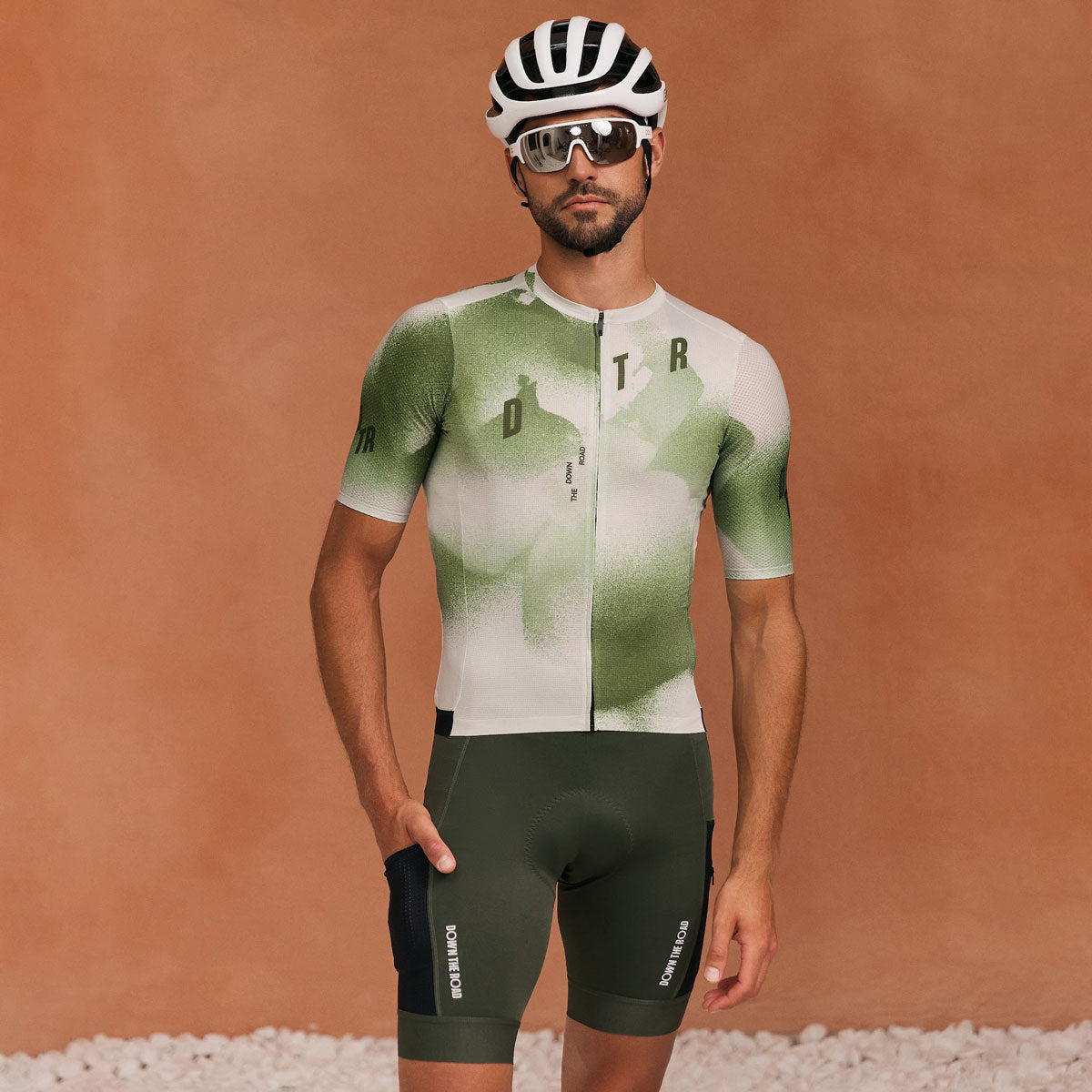
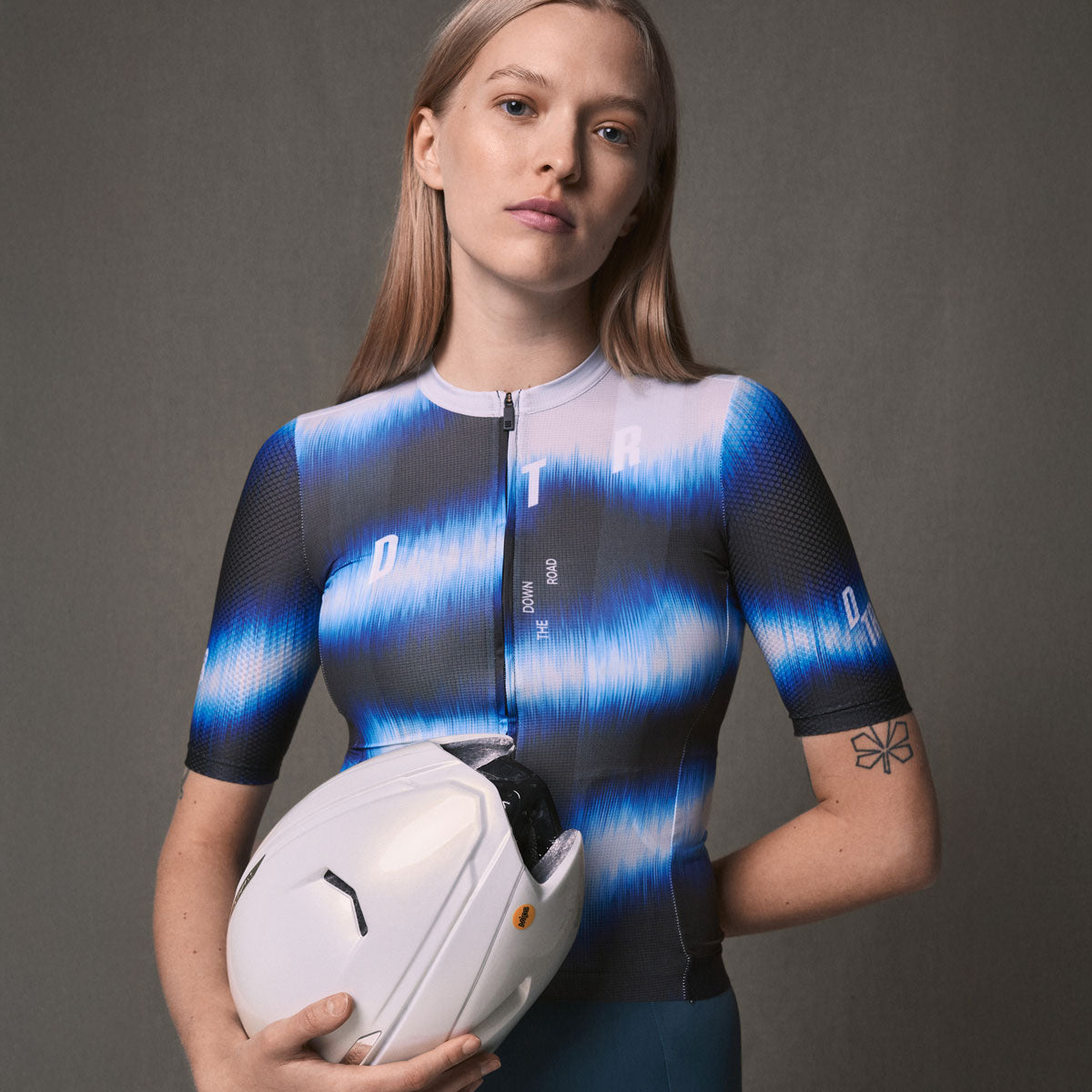
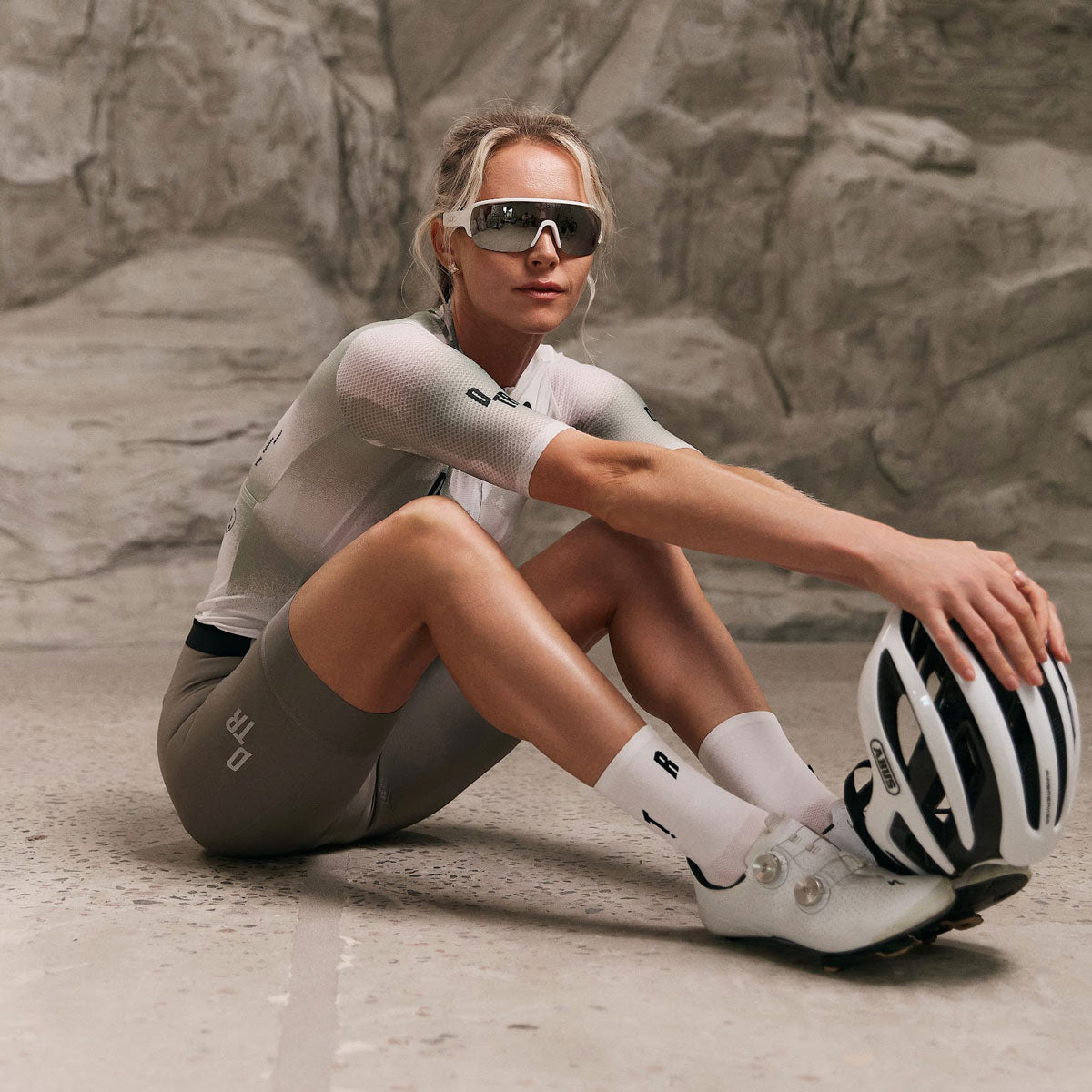
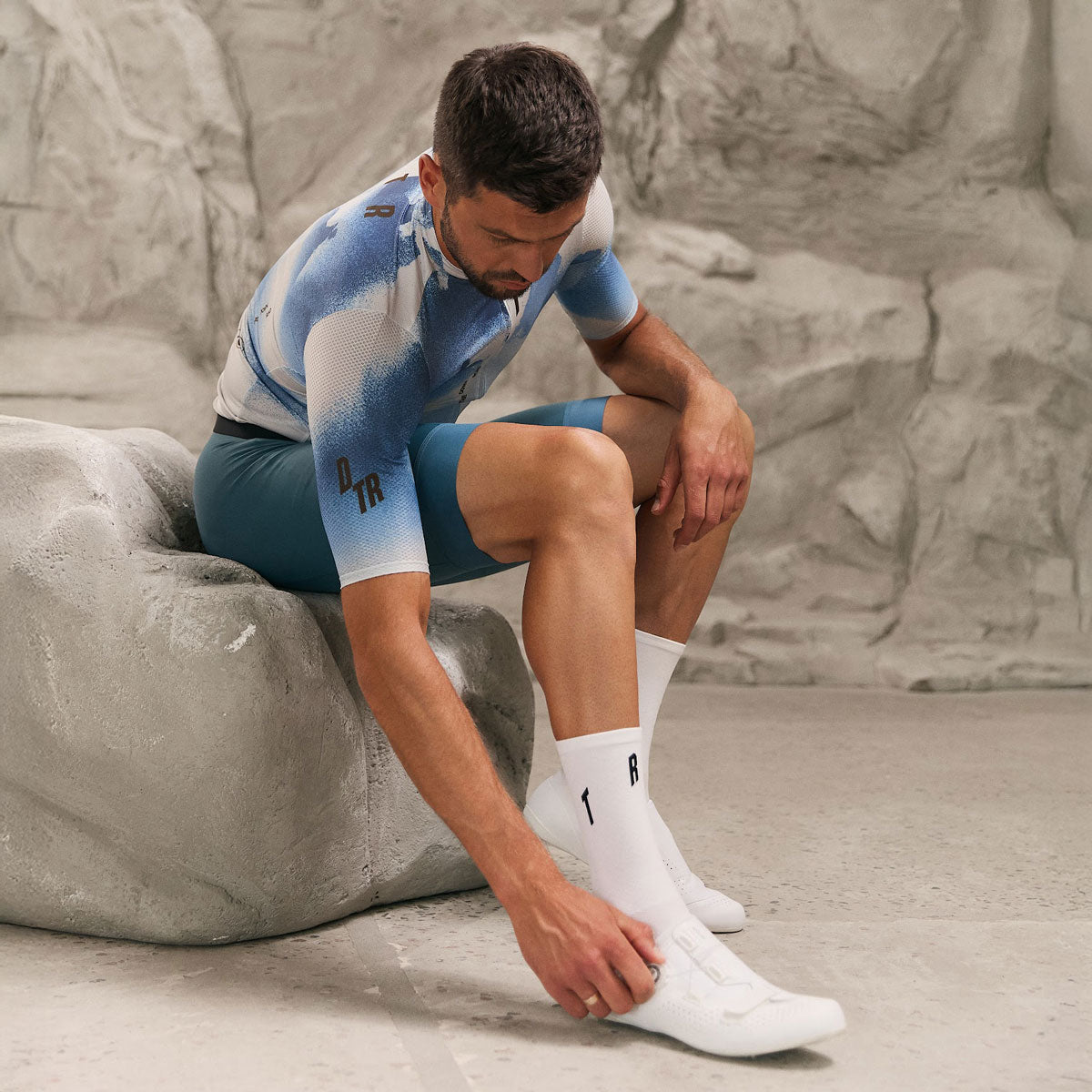
Cargo bib shorts are bib shorts with pockets on the legs — usually one on each thigh, sometimes a small pocket at the back — built to carry food, a phone and a tool when three jersey pockets stop being enough. This guide covers what fits, who actually benefits, and how loaded legs change the way a short rides.
What the leg pockets are for
Leg pockets move weight off your back and onto the most stable part of your body. A loaded jersey pocket sags and swings with every out-of-saddle effort; a thigh pocket sits against a muscle that barely changes shape through the pedal stroke. Over four or five hours that shows up as less shoulder fatigue and far less blind rummaging behind you.
The second thing they solve is access. Reaching a thigh pocket is a glance and a drop of the hand — no twisting, no taking a hand fully off the bars while you are in a group or on loose ground. On gravel, that is the entire argument.
Who actually needs them
The riders who get the most out of them are gravel riders, bikepackers and anyone regularly out past four hours. These are rides where you carry more food than a jersey holds, where there is no shop for 60km, and where you want a phone and a multi-tool somewhere you can reach without stopping. Ultra-distance riders often treat the leg pockets as fixed storage and never fill the jersey at all.
If your riding is mostly two-hour road loops, a café ride, or racing, you do not need them. Three jersey pockets cover a gel, a phone and a spare tube, and a race-fit short with nothing on the legs is cleaner in a bunch. Buying cargo for short rides adds fabric and structure you will never load.
What fits — and what does not
A well-made thigh pocket takes a phone, three or four gels or bars, a folded gilet in the larger sizes, and a small multi-tool. That is roughly the volume of one jersey pocket per leg, with better retention. Two loaded thigh pockets plus a rear pocket comfortably covers a full day of nutrition and a spare layer.
What does not work is anything hard, dense and heavy. A full tool roll, a mini-pump, a large battery pack or a spare tube bundled with tyre levers will drag the pocket down and slap against your leg on rough ground. Heavy and rigid belongs in a frame bag or saddle pack. Light, soft and flat belongs in the leg.
Do the pockets bounce?
Properly cut ones do not. The pocket has to sit high on the outer thigh, be cut from a mesh with real recovery, and hug the leg rather than hang off it. When those three things are right, a loaded pocket moves with the quad instead of against it, and you stop noticing it within a few minutes of riding.
Bounce is a fit problem more often than a design problem. If the short itself is a size too big, everything attached to it will move. A cargo short should pass the same fit test as any other pair — no gapping at the leg opening, no sagging chamois, no gathering behind the knee. If you are unsure where that line sits, our guide on how tight bib shorts should be covers it in detail.
Is the chamois any different?
It should not be, and on ours it is not. A cargo short is a long-ride short by definition, so it carries the same multi-density chamois you would want for any four-hour-plus day — denser under the sit bones, softer toward the edges, with no thick middle pushing soft tissue out of position. More density is not more thickness, and a bulkier pad is not a better one.
Treat the chamois as the primary spec and the pockets as the feature. A short that carries beautifully and leaves you sore at hour five has failed at the only job that really matters. We break the construction down further in chamois density explained.
Choosing across the DTR range
The choice comes down to ride length and what you carry, not to discipline. If most of your rides are under three hours and you race, a standard bib short is the right short and the pockets are dead weight. If you ride gravel, load up for all-day routes, or head out with no plan to stop, the cargo version is doing real work every time you clip in.
Riders who do both usually end up owning both rather than compromising. The cargo pair becomes the default for weekends and adventure days; the plain pair stays for intervals, races and anything where the kit should be as quiet as possible. For how that plays out over a long day off-road, see what to wear for long gravel rides.
Frequently asked questions
Can you wear cargo bib shorts for road riding?
Yes. They ride identically to a standard pair when the pockets are empty. The only reasons to prefer a plain short are a marginally cleaner line in a race and slightly less fabric in real heat.
Do the pockets add much weight?
Empty, the difference is small — a mesh panel and its seams. Loaded is another matter, but that weight is coming with you either way. The only question is where it sits.
Will a phone fit in the leg pocket?
Yes. A large phone fits a properly sized thigh pocket and is the most common thing riders carry there. It sits flat against the quad and is easier to reach than a jersey pocket.
Are cargo bib shorts good for bikepacking?
They are one of the more useful things you can wear for it. Bikepacking already loads the bike heavily, so keeping food and a phone on your body — reachable while moving — keeps you out of the bags for routine items.
See the cargo range at /collections/cargo-bib-shorts.
DTR — performance cycling and triathlon apparel, designed and developed in Ukraine.

Leave a comment
This site is protected by hCaptcha and the hCaptcha Privacy Policy and Terms of Service apply.