

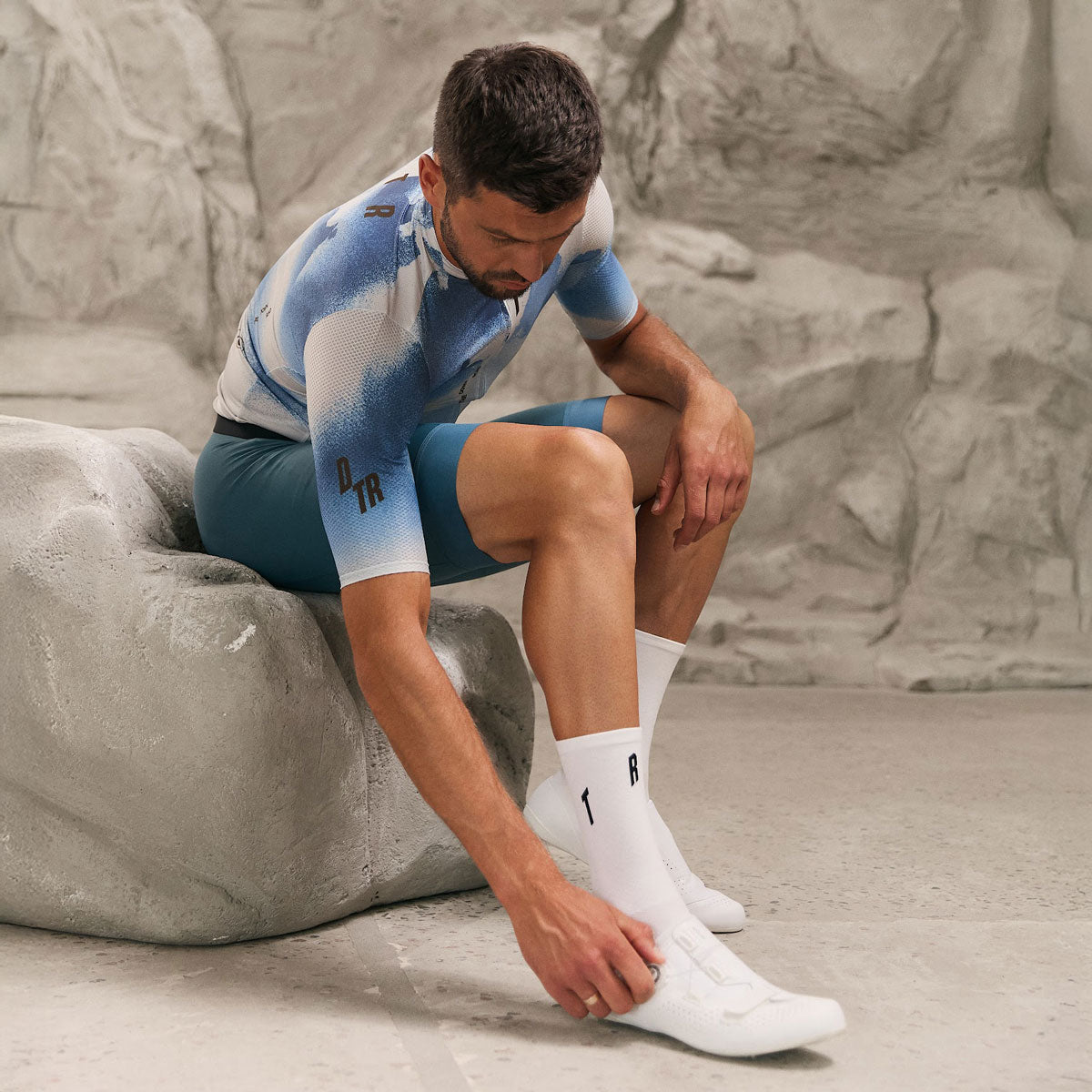
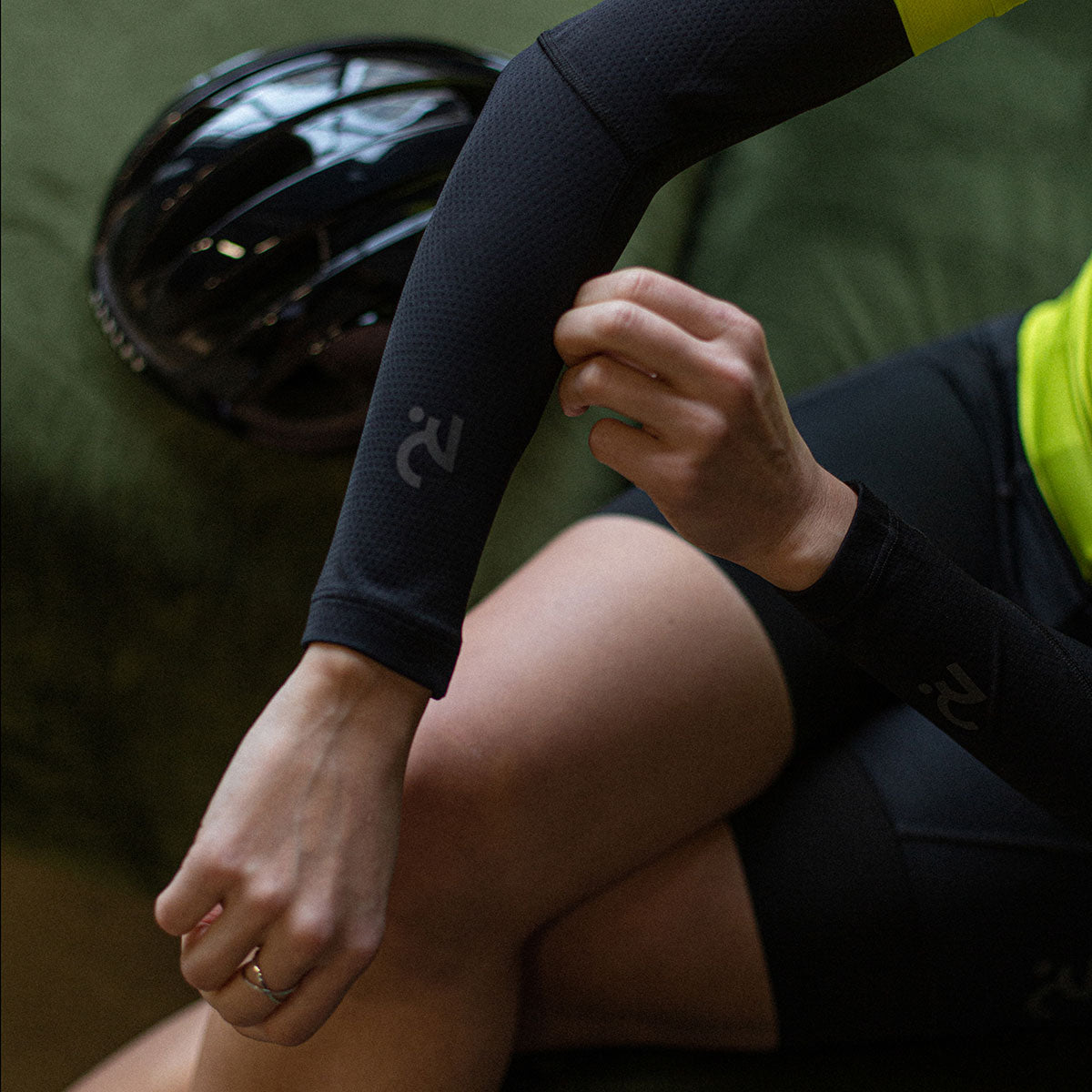
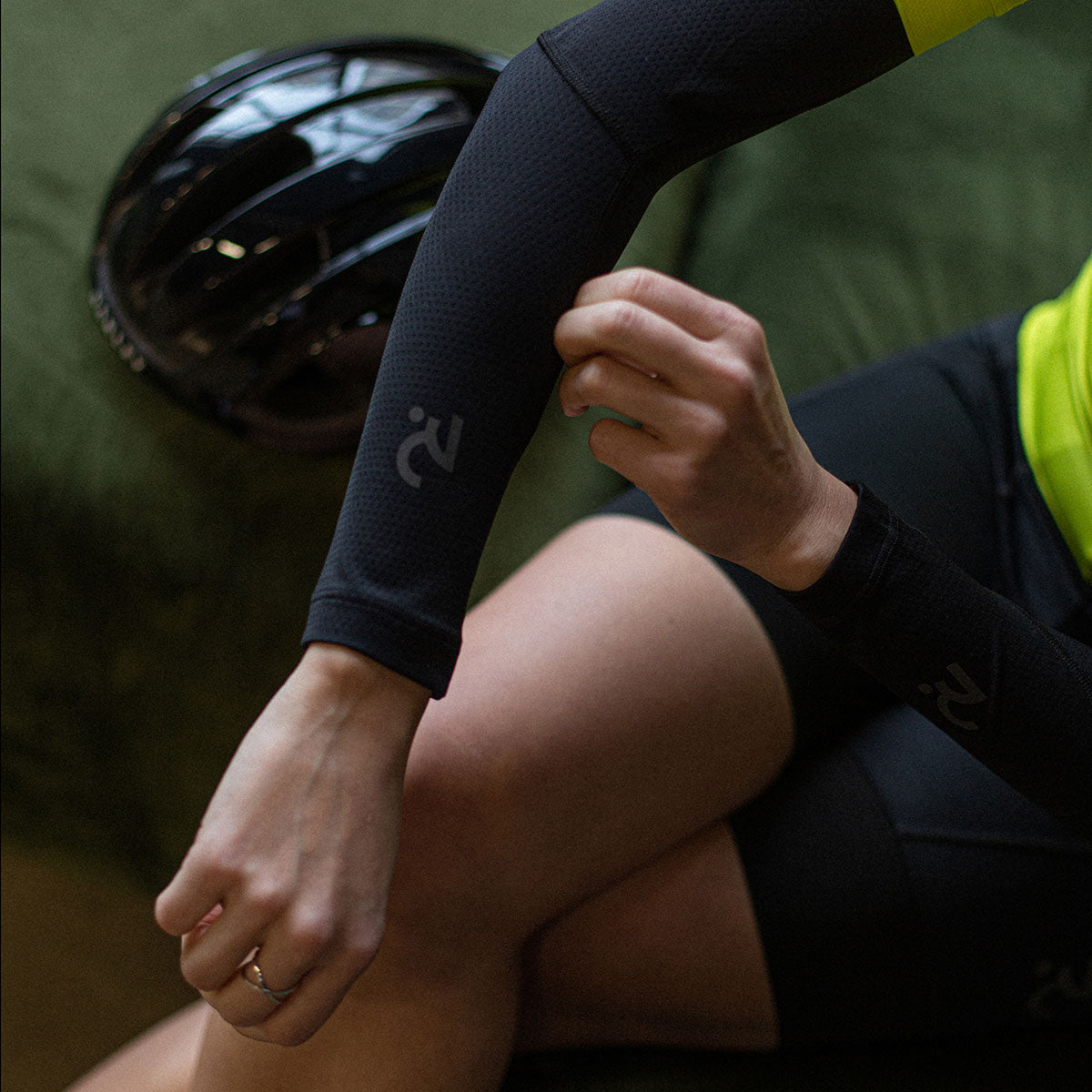
Cycling leg warmers are the flexible layer for a ride that starts cool, changes through the day or includes a long descent. They should cover the leg cleanly, stay put while pedalling and come off easily when conditions change.
When should you wear cycling leg warmers?
Use them when bib shorts are still the right foundation but exposed legs are not comfortable for the start, a descent or a variable forecast. They make sense when the ride is likely to warm rather than stay cold throughout, so removable coverage genuinely has a job to do.
How should leg warmers fit?
They should sit smooth from ankle to thigh without folds behind the knee, a gap above the sock or pressure at the top. Test them in the riding position and with your bib shorts, not standing indoors. A clean transition from short to warmer is more useful than pulling fabric tight.
What keeps them in place?
Fit and the interface with your bib shorts matter more than an aggressive grip. If they creep or bunch, reassess size and placement before trying to pull them tighter. Start with dry skin and smooth the fabric from the ankle upward before you ride.
When are thermal bib tights the better answer?
Choose thermal bib tights when conditions will remain cold throughout the ride. Leg warmers are better when removable coverage is genuinely useful, not as a compromise for a day that clearly needs a full lower-body layer.
How do you layer them?
Start with bib shorts that fit well, then add the warmers without creating a fold at the knee. Pair the lower-body choice with the upper-body plan in cold-weather layering or the cycling temperature guide. For the rest of the system, start from DTR bib shorts.
Can leg warmers replace arm warmers?
No. They solve different exposure and fit problems. Arm warmers versus leg warmers explains where each belongs. Use both when the ride calls for removable coverage at both ends, not because one can stand in for the other.
How do you look after them?
Wash after hard rides, avoid softener and air dry. The care routine in how to wash cycling kit applies here too. Check the fit again after washing rather than storing them folded at the bottom of a jersey pocket.
FAQ
Do leg warmers go over or under bib shorts? They should meet the lower edge of the bib short cleanly; test the overlap in your riding position.
Why do mine slide down? Usually the size, placement or interface with the bib short needs adjustment.
Are they useful in autumn? They can be practical for a changing day; see what to wear for autumn cycling.
Explore DTR arm and leg warmers.
DTR — performance cycling and triathlon apparel, designed and developed in Ukraine.

Leave a comment
This site is protected by hCaptcha and the hCaptcha Privacy Policy and Terms of Service apply.