

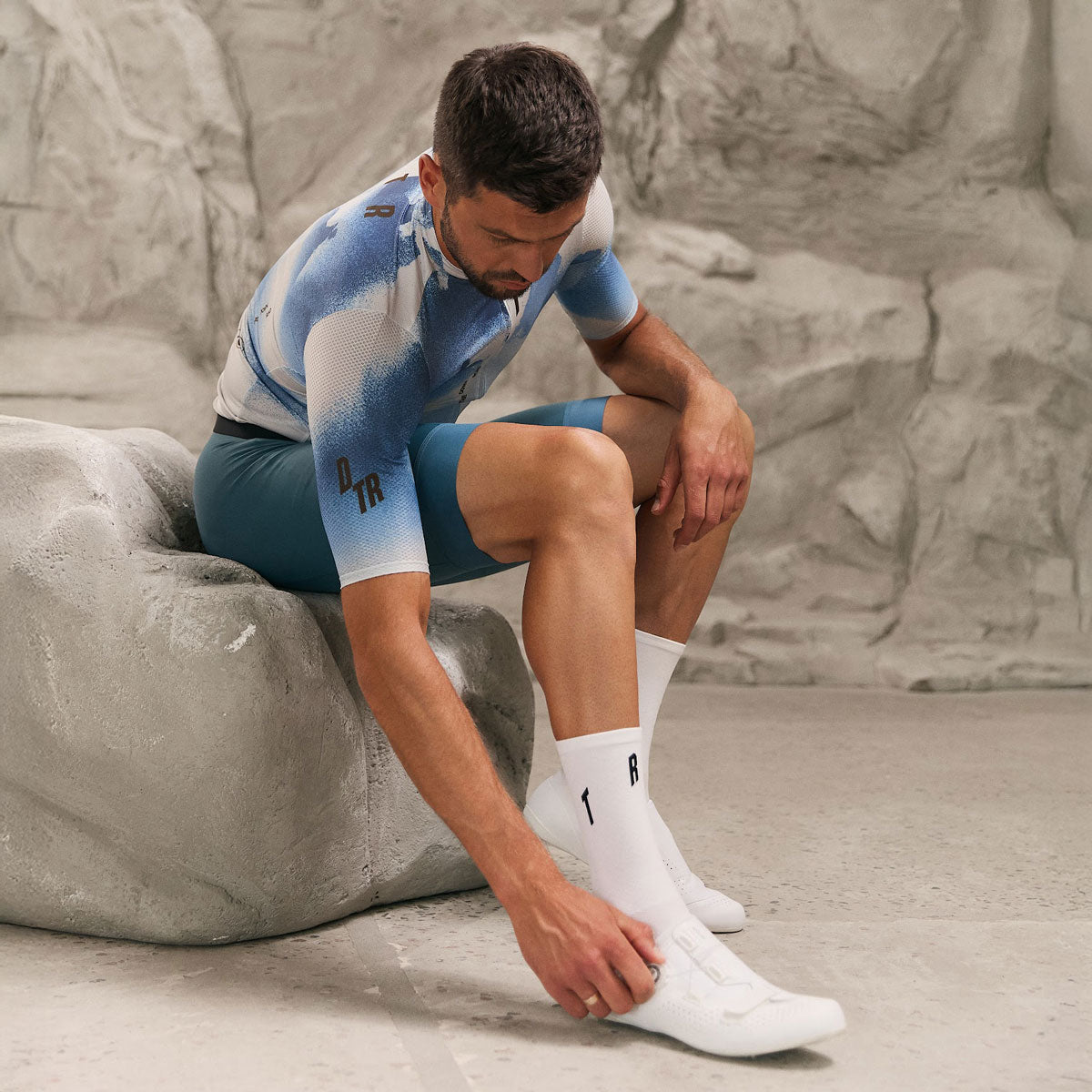
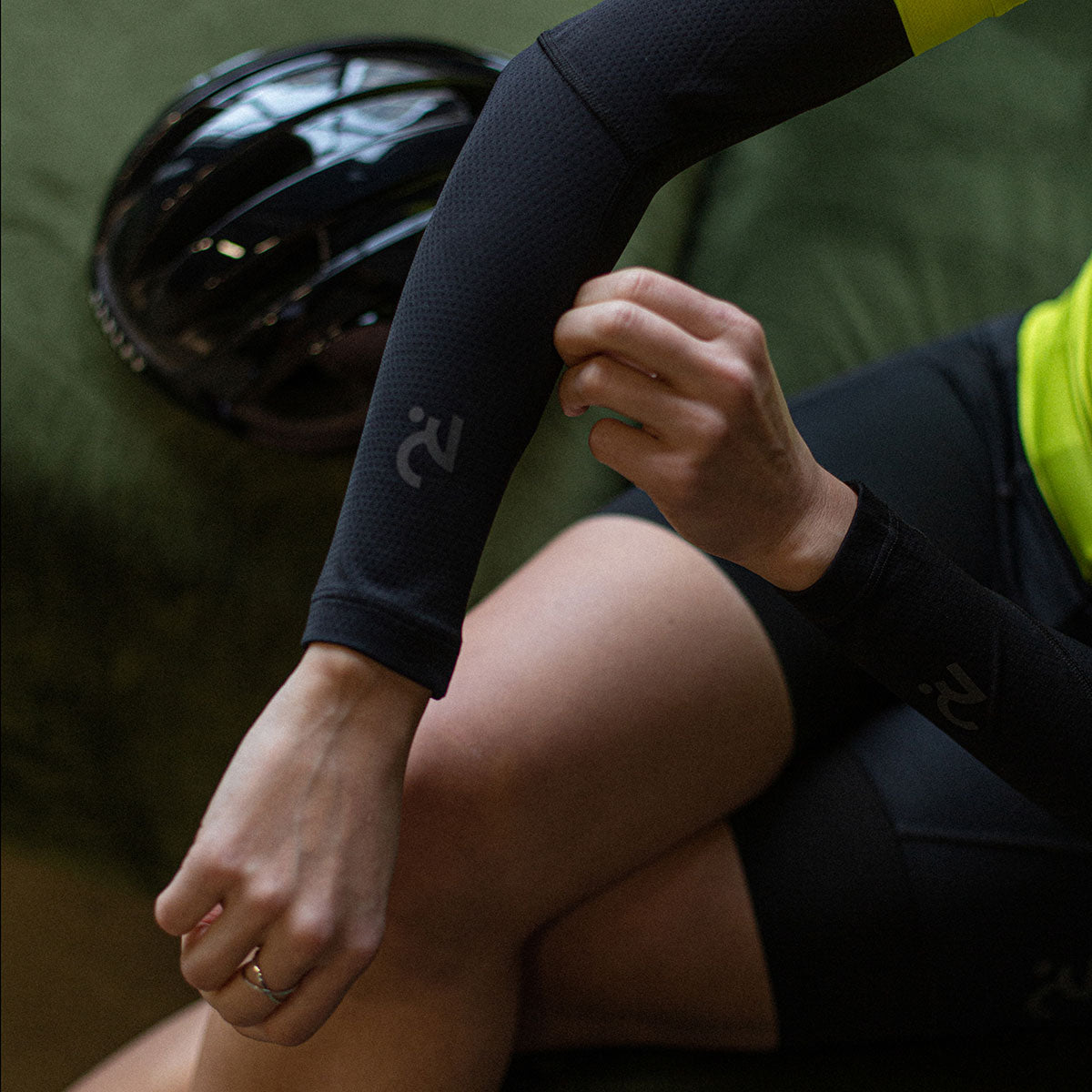
To get the smell out of cycling kit, wash it straight after the ride in cool water with a technical sportswear detergent, and pre-soak stubborn odour in cool water before the wash. Skip fabric softener and the tumble dryer, which lock smell in. This guide starts with odour, then covers the full routine for washing, drying and storing bibs, jerseys and base layers so they last.
Why does cycling kit still smell after washing?
Because bacteria and oily sweat residue sit deep in synthetic fibres, and a standard wash does not always reach them. Detergent build-up and fabric softener make it worse by coating the fibres and trapping the smell. The fix is a prompt wash, the right detergent and a proper rinse, not more product.
How do you get the smell out of cycling kit?
Work through these steps in order:
- Rinse or wash soon after the ride. The longer sweat sits, the more the odour sets.
- Pre-soak stubborn smell for 30 to 60 minutes in cool water with a technical sportswear wash. Some riders add a small splash of white vinegar; rinse well afterwards.
- Machine wash inside out on a gentle cycle at 30°C or below, using the recommended amount of detergent. More detergent does not clean better, it leaves residue.
- Dry completely in fresh air, away from direct heat. A damp garment smells again within a day.
If a garment still smells after two full cycles, the fibres are usually worn out. Our guide to how long cycling kit lasts covers when to replace it.
How do you machine wash cycling kit?
Use cool water, a gentle cycle and a mild detergent, ideally a technical sportswear wash. Avoid heavy-duty or enzyme detergents, which break down technical fabrics.
- Turn everything inside out, so the sweat-facing side and the chamois get properly cleaned.
- Close zips and Velcro so they do not snag other garments.
- Wash kit together, away from denim, towels and anything with hooks.
Wash a one-piece the same way; see how to wash a trisuit for the swim-specific points.
What should you never do to cycling kit?
Never use fabric softener, never tumble dry, never iron and never wring out bib shorts hard.
- Softener coats the fibres and destroys wicking and breathability.
- Heat damages the elastic and the chamois, and melts technical fabrics.
- Bleach and harsh detergent degrade fabric and chamois alike.
- Wringing can distort the chamois and stretch the fabric; press the water out in a towel instead.
How should you dry and store cycling kit?
Air dry away from radiators and long direct sun, because UV and heat degrade elastic over time. Hang jerseys, lay bib shorts flat or over a rail, and make sure everything is fully dry before it goes in a drawer. Store it loosely folded or hung, not crushed.
How do you look after the chamois?
Wash it after every ride, inside out, and dry it fully; a damp chamois is where bacteria multiply. Keep softener and high heat away from it, because they break down the foam. A worn chamois that has lost its shape is a comfort and hygiene problem no wash will fix, so replace the bib shorts: see how long bib shorts last.
Chamois cream helps on long rides; our chamois cream guide explains when to use it. Persistent soreness or skin irritation is a reason to see a doctor, not a laundry problem; saddle sores are covered separately.
How often should you wash cycling kit?
After every ride. Sweat degrades technical fabric and bacteria build up quickly in a warm, damp chamois. If you cannot wash straight away, hang the kit to dry and wash it the same day rather than leaving it balled up in a bag.
FAQ
How do I get the smell out of cycling kit?
Wash promptly with a technical sportswear detergent. For stubborn odour, pre-soak in cool water with a sports wash for 30 to 60 minutes first, then dry fully in fresh air. Avoid softener and extra detergent, which trap smell.
Can you tumble dry cycling kit?
No. Heat damages the elastic and the chamois and shortens the life of the kit. Air dry away from direct heat instead.
Why can't you use fabric softener on cycling kit?
Softener coats the technical fibres and destroys their wicking and breathability. It also makes odour worse over time.
How do I wash cycling kit?
Machine wash inside out at 30°C or below on a gentle cycle with a mild or technical detergent and no softener. Air dry, never iron.
Start with bib shorts worth looking after, or restock base layers and jerseys that have worn out.
DTR — performance cycling and triathlon apparel, designed and developed in Ukraine.

Leave a comment
This site is protected by hCaptcha and the hCaptcha Privacy Policy and Terms of Service apply.