

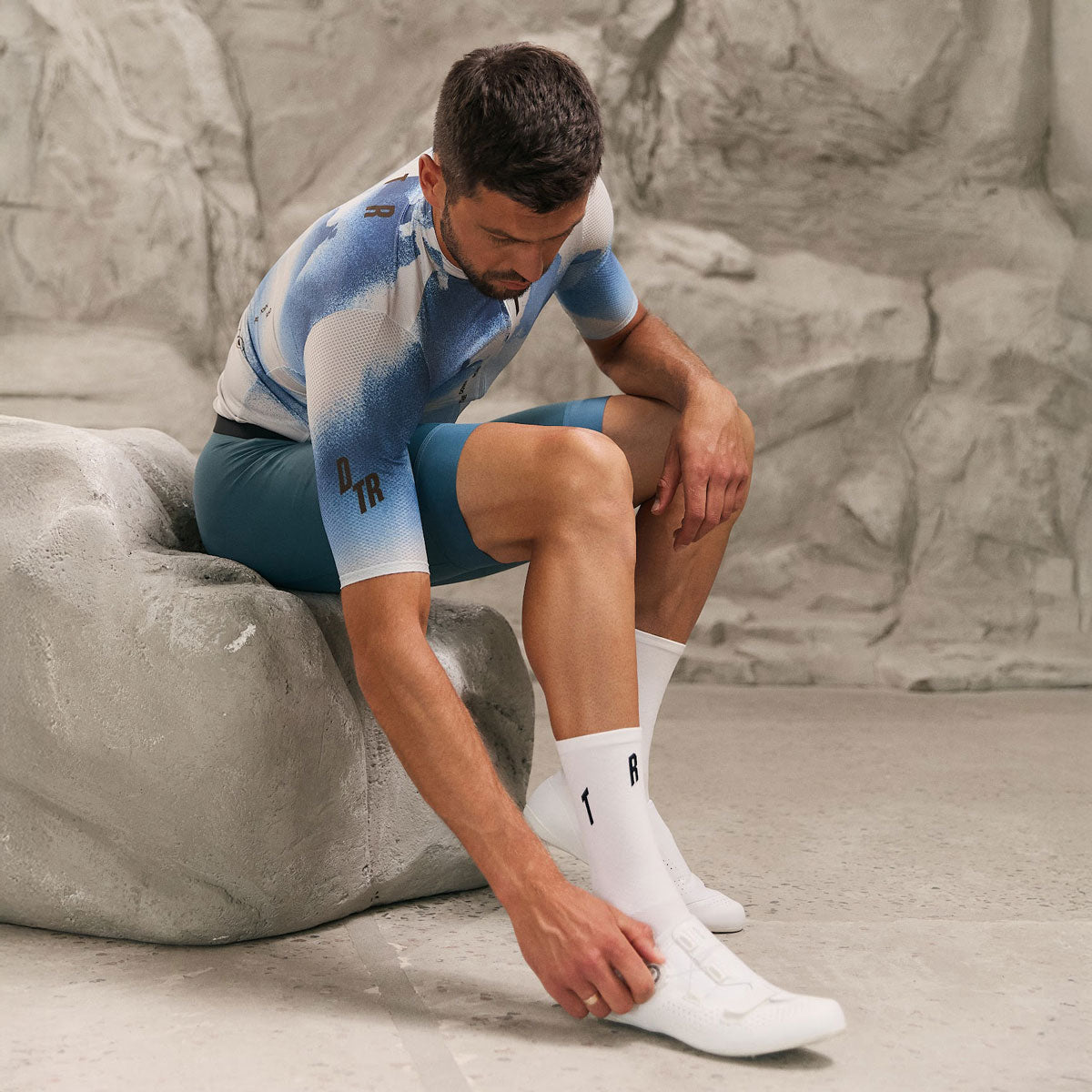
For sprint and Olympic distance, most triathletes go sockless on the bike and run if their shoes are comfortable and they have tested it; for half and full distance, thin socks are usually worth the extra seconds. The decision comes down to distance, shoe fit and how well you have trained without them.
Should you wear socks in a triathlon?
It depends on the distance. Short races reward the seconds you save in transition, so sockless is common. Longer races give blisters time to form, so a sock that reduces friction earns its transition time. Whichever you choose, race in exactly what you trained in: the worst day to try something new is race day.
When does going sockless work?
When the race is short, your shoes have a smooth lining and you have done several brick sessions without socks. Wet feet from the swim soften the skin, so test it after a swim, not just on dry land. A little powder or lubricant at the heel and toes helps, and you should check the inside of the shoes for seams first. If you get hot spots in training, treat that as the answer.
When are socks worth the extra seconds?
Over a half or full distance, when blister risk grows with every hour. A thin, seamless sock also helps in cool or wet conditions. You can speed transition by rolling the sock down over the foot, putting it on in one pull, and keeping a towel by your bike to dry your feet first. Our guide to the triathlon transition kit checklist lays out the whole set-up.
What should a triathlon sock be like?
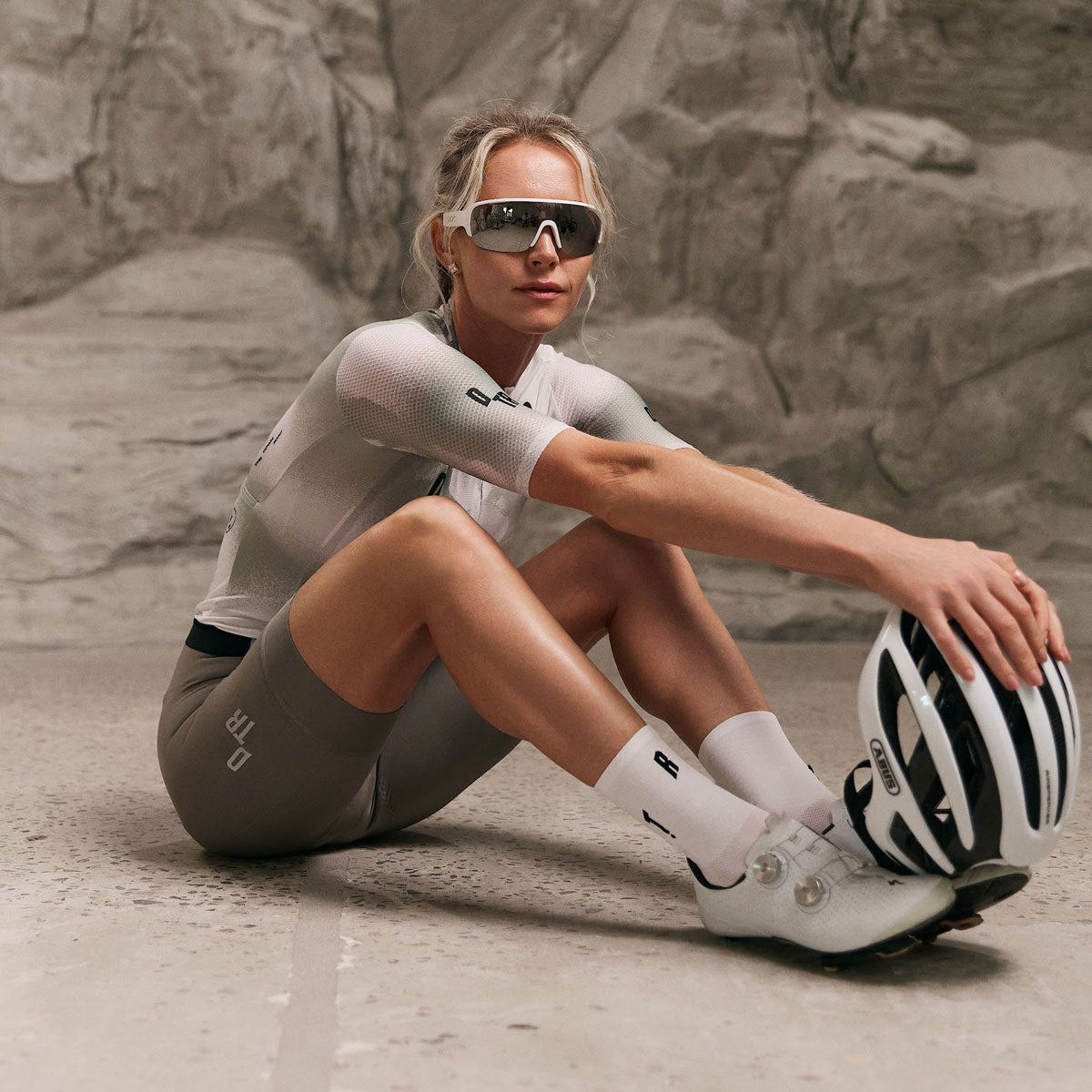
Thin, snug and seamless where it matters, with no bunching in the toe box and a cuff that stays up when wet. Cycling socks fit the brief for the bike leg, and our guide to cycling socks covers length and fabric. If you race in aero conditions, see aero socks too. DTR does not make a socks range built only for triathlon, so choose a thin cycling sock you have tested in your running shoes.
Do socks change what you wear on top?
Not directly, but the whole system has to work together. A trisuit that fits and a transition you have rehearsed matter more than the sock decision. If you are building your first race kit, start with what to wear for your first triathlon, then see Olympic distance kit or what to wear for an Ironman, and pick the suit with how to choose a trisuit.
How do you avoid blisters in a triathlon?
Good shoe fit, tested kit and dry feet where you can manage it. Keep nails trimmed, avoid new shoes on race day, and treat hot spots early in training. If you get blisters that are painful, infected or keep returning, speak to a doctor or a podiatrist rather than pushing through.
What about cold-water swims?
Cold feet are slower to wake up on the bike. A thin sock can help you ride comfortably out of T1, and neoprene overshoes are a different product altogether. For colder races, read cold-weather triathlon bike leg kit.
Putting your race kit together? Browse the DTR cycling socks and the trisuits.
DTR — performance cycling and triathlon apparel, designed and developed in Ukraine.

Leave a comment
This site is protected by hCaptcha and the hCaptcha Privacy Policy and Terms of Service apply.