

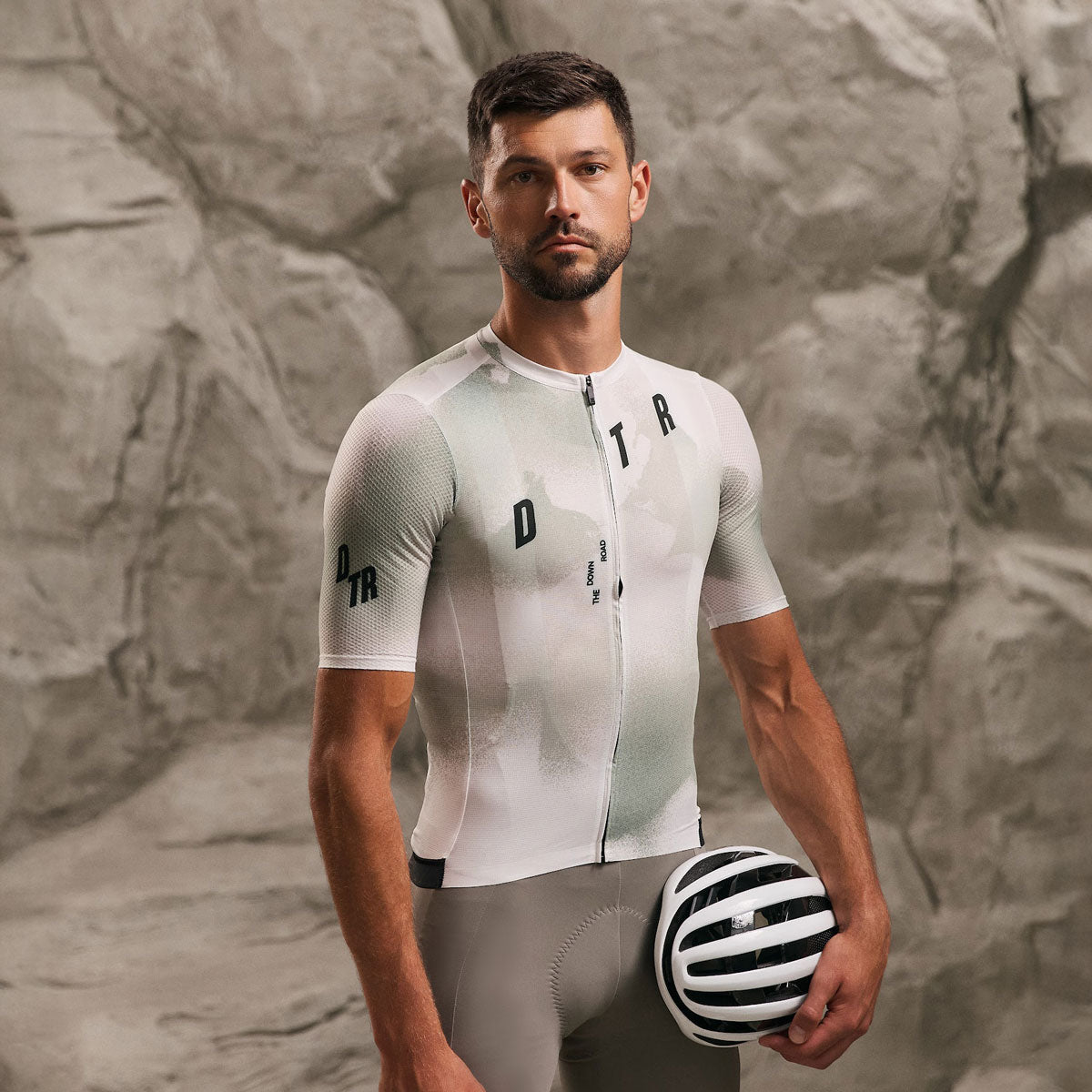
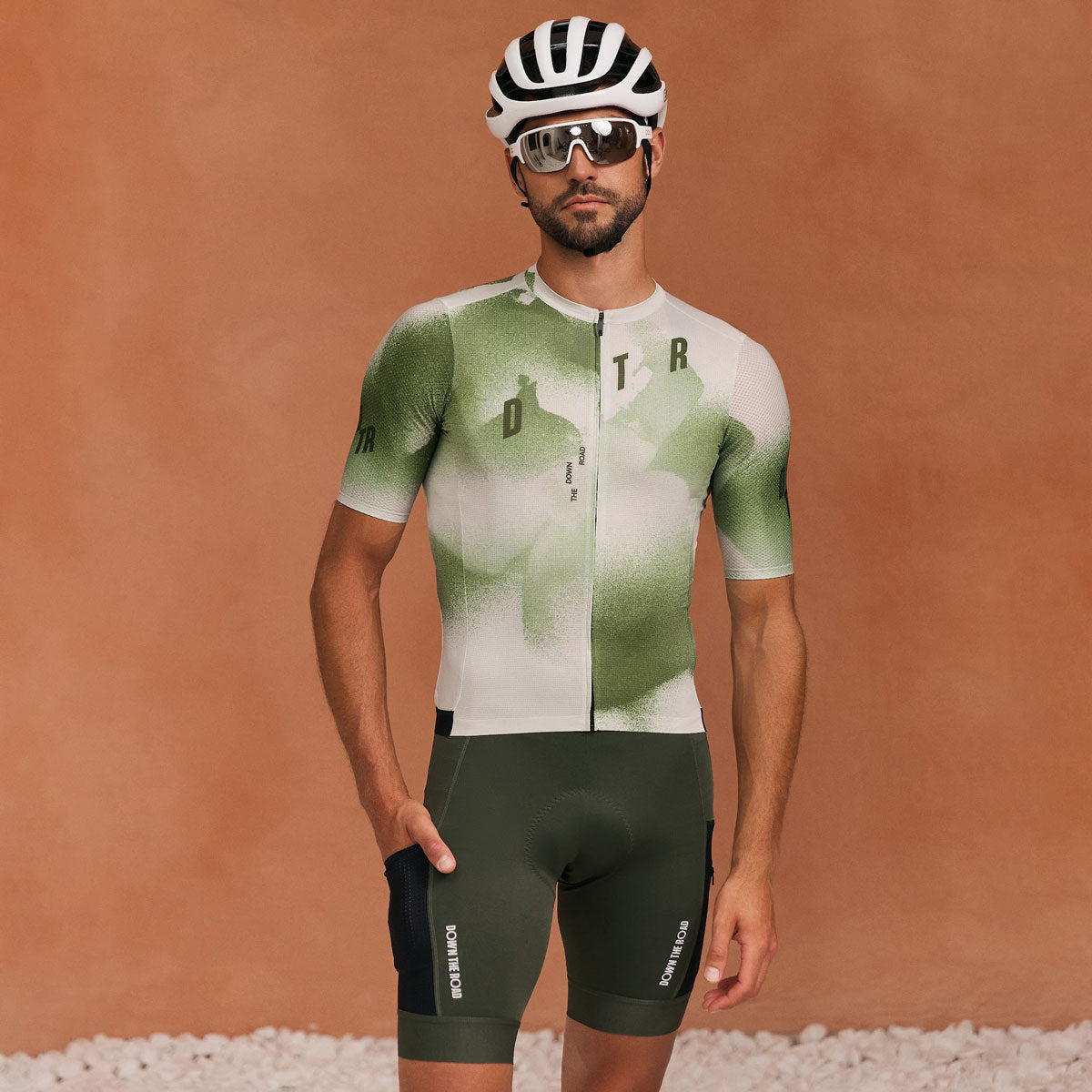


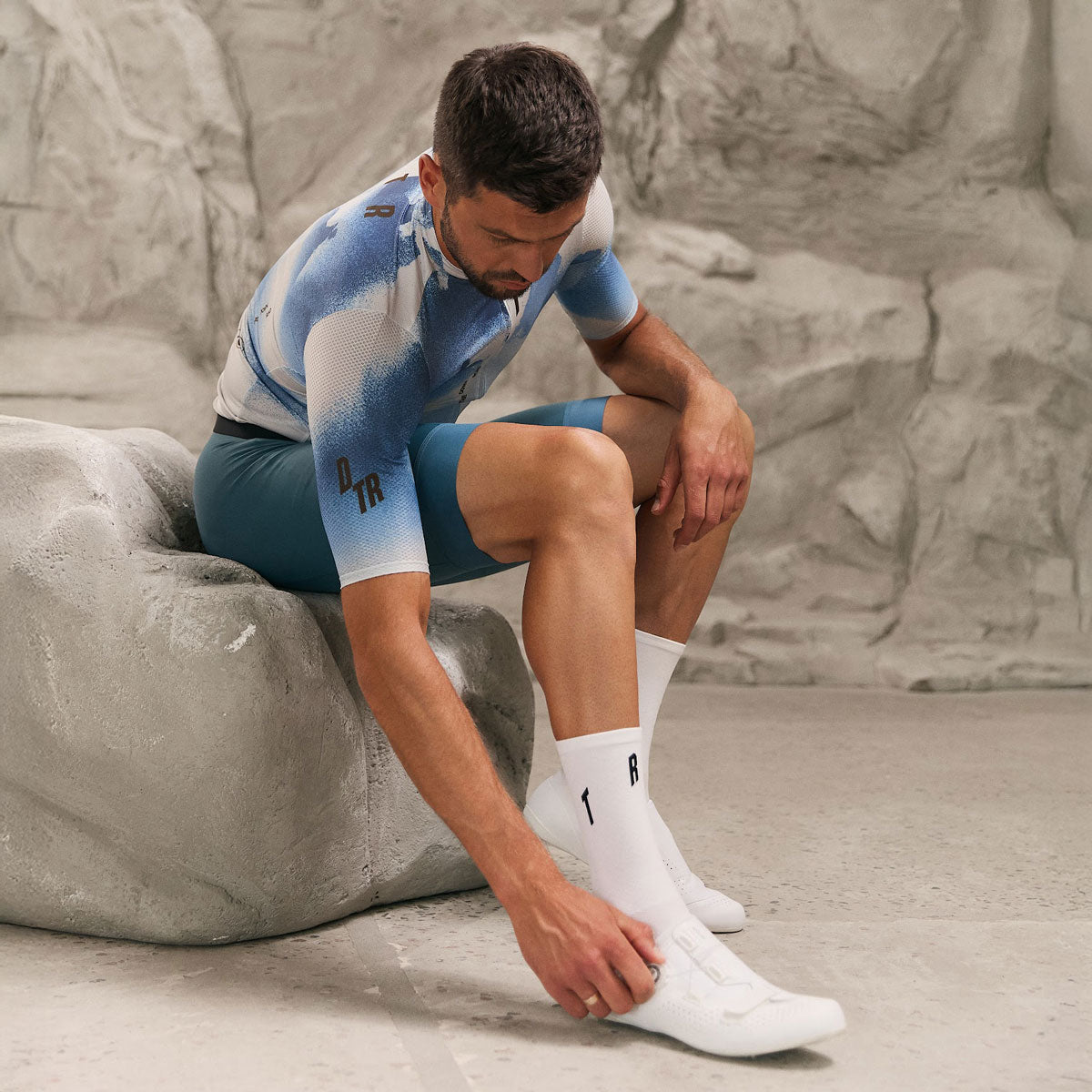
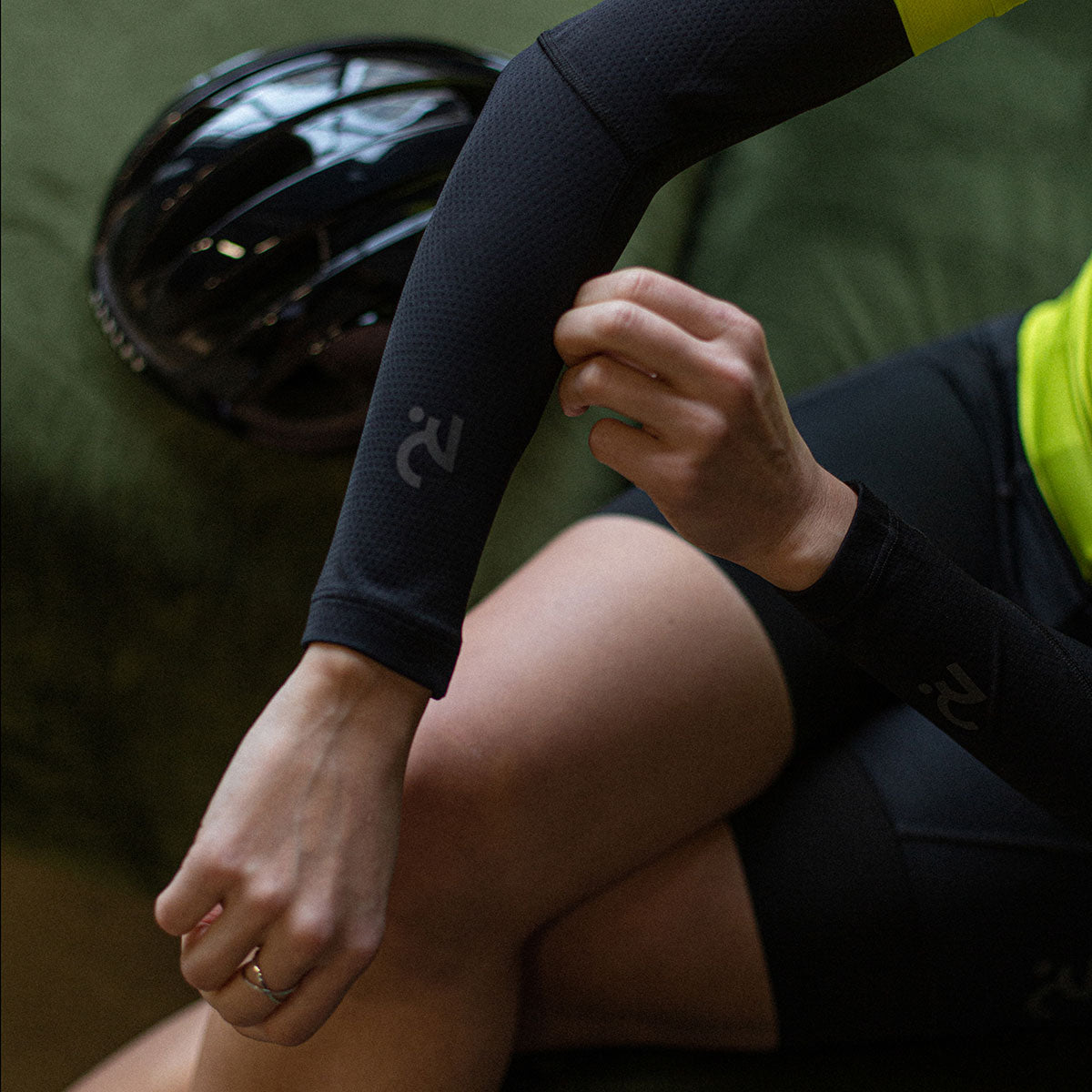
A trisuit is a single one-piece garment that combines a top and a chamois-lined bottom into one item, built to be worn through the swim, the bike and the run of a triathlon without changing kit. It replaces a jersey and bib shorts with one piece cut for three disciplines instead of one.
This guide covers what's actually in a trisuit, how it differs from a road cycling kit, sleeved versus sleeveless, how pad thickness relates to distance, and whether you actually need one.
What's actually in a trisuit
A trisuit has three jobs built into one garment: a swim-ready outer fabric that sheds water and doesn't drag once wet, a thinner, quicker-drying chamois than a road bib short (padded for the bike leg without staying waterlogged on the run), and compression panels through the core and legs that support the muscles across three disciplines back to back. Everything is one piece, so there's no waist join between top and bottom to create a pressure line under a wetsuit or bunch up on the run. Browse the full DTR trisuit range to see how sprint and long-course builds differ.
Why one piece instead of separates
The one-piece construction removes the seam where a jersey and bib shorts would otherwise overlap. That matters more than it sounds: a waist join is exactly where a wetsuit rides up in the swim, where a race belt sits on the run, and where fabric bunches and chafes over three back-to-back disciplines. A trisuit also goes on once, before the swim, and stays on for the whole race — no kit change in transition, which is where triathletes actually lose time.
How a trisuit differs from a cycling kit
A road cycling kit is built for one discipline: a jersey with sleeves, pockets and a wind-cut back, and bib shorts with a thick, supportive chamois for hours in the saddle. A trisuit trades some of that bike-specific comfort for versatility — the chamois is thinner and quicker-drying because it has to survive being wet and then run in, and the fabric is chosen to perform swimming, riding and running rather than to maximise comfort on the bike alone. It isn't a lesser chamois; it's a different one, built for a different job.
Sleeved or sleeveless?
Sleeved trisuits add light compression and a small aerodynamic gain on the bike and run, and suit cooler races. Sleeveless trisuits are simpler under a wetsuit and cooler in hot conditions. Neither is faster in every race — it comes down to your event's temperature and how you want the suit to feel under a wetsuit. (See our full breakdown: sleeved vs sleeveless trisuit.)
How long can you race in one?
Pad thickness is matched to distance, not preference. A minimal pad suits a sprint or Olympic-distance race where the bike leg is short and the run matters more; a more supportive pad earns its place over a half or full-distance bike leg. Going too thick costs you comfort on the run; going too thin costs you comfort on the bike. (Full detail: trisuit pad guide by distance.)
Do you need one for every triathlon?
Not necessarily. For a short, low-key race, a swimsuit or tri shorts and a top can work. Once transitions start costing real time and the bike leg gets long enough that chamois and compression matter, a trisuit earns its place — it's the standard choice for anything from Olympic distance upward, and for long-course racing specifically it's less about convenience and more about hours of comfort across three disciplines. (See how to choose a trisuit and our pick of trisuits for long-distance triathlon.)
Frequently asked questions
What is a trisuit used for? Racing all three legs of a triathlon — swim, bike and run — in one garment, without changing kit in transition.
Is a trisuit the same as a cycling kit? No. A trisuit trades some bike-specific comfort (a thicker chamois, a wind-cut back) for a thinner, quicker-drying pad and swim-to-run versatility that a cycling jersey and bib shorts aren't built for.
Can you swim in a trisuit? Yes — the fabric is chosen to perform wet and to not drag in the water, and most trisuits are designed to be worn under a wetsuit for the swim leg.
Do you wear anything under a trisuit? No — like bib shorts, a trisuit is designed to be worn directly against the skin; the chamois is built for that.
Is a trisuit worth it for a sprint triathlon? Often yes for the transition-time savings alone, even though the chamois and compression matter less over a short bike leg than in a half or full-distance race.
The bottom line
A trisuit is a one-piece swim-bike-run garment with an integrated, distance-matched chamois — built to remove the seam and the kit change that cost triathletes time and comfort. New to the sport? Start with our triathlon kit for beginners guide for the rest of the list.
Compare sprint-distance and long-course builds in the DTR trisuit range.
DTR — performance cycling and triathlon apparel, designed and developed in Ukraine.

Leave a comment
This site is protected by hCaptcha and the hCaptcha Privacy Policy and Terms of Service apply.