


A zipless cycling jersey is a pullover jersey with no front zip: cleaner lines and less to flap in the wind, but no way to open the front when the road tilts up or the temperature climbs. For most road riding the zip earns its place. A zipless cut only makes sense for short, hard efforts in cool to mild weather.
This guide covers what you give up, when the trade works, and what to choose when you want a clean front without losing control of your temperature.
What is a zipless jersey, and who rides in one?
A zipless jersey (also sold as a zipperless or pullover jersey) closes at the neck with a short placket or none at all, so you pull it on over your head. It is mostly worn by time trialists, short-course racers and riders who want a minimal, close-to-the-body feel. It is a niche cut, not a better version of a standard jersey.
What do you lose without a zip?
Ventilation, first. A zip lets you open the front on a climb or at a cafe stop and close it again on the descent, which does more for comfort than most fabric claims. You also lose easy on-and-off: a close race-fit jersey over a base layer takes effort to pull over your head, and more so with sweat on a warm day. If you ride in changeable weather, the zip is your cheapest temperature control. Fabric matters too; see how jersey fabric affects airflow.
When does a zipless jersey make sense?
Short and hard, in the cool: a 40-minute time trial, a criterium at 12°C, a hill climb where you will not touch your collar once. The closed front is tidy and light when you will not need to adjust anything mid-effort. For anything over about an hour, in warm weather, or with long climbs, a zip wins. If you are choosing between cuts, race cut vs relaxed fit will change your ride more than the zip does.
Is a zipless jersey faster?
Slightly, at best. A closed front removes a zip line and collar edge that can catch air, but fit does most of the work: a loose jersey costs far more than any zip saves. Get the fit right first, then read our guide to the aero cycling jersey. For triathlon, the real aero answer is a one-piece: here is what a trisuit is and why triathletes race in one.
Full zip, half zip or none?
Full zip gives the most control and is the default for a reason. Half zip trims weight and the flapping tab but keeps some venting. No zip trims the most and gives the least control. Our full-zip vs half-zip comparison goes through the trade-off in detail, and whichever you pick, check how a cycling jersey should fit first. Rear pockets are a separate question; see cycling jersey pockets.
What does DTR offer if you want a clean front?
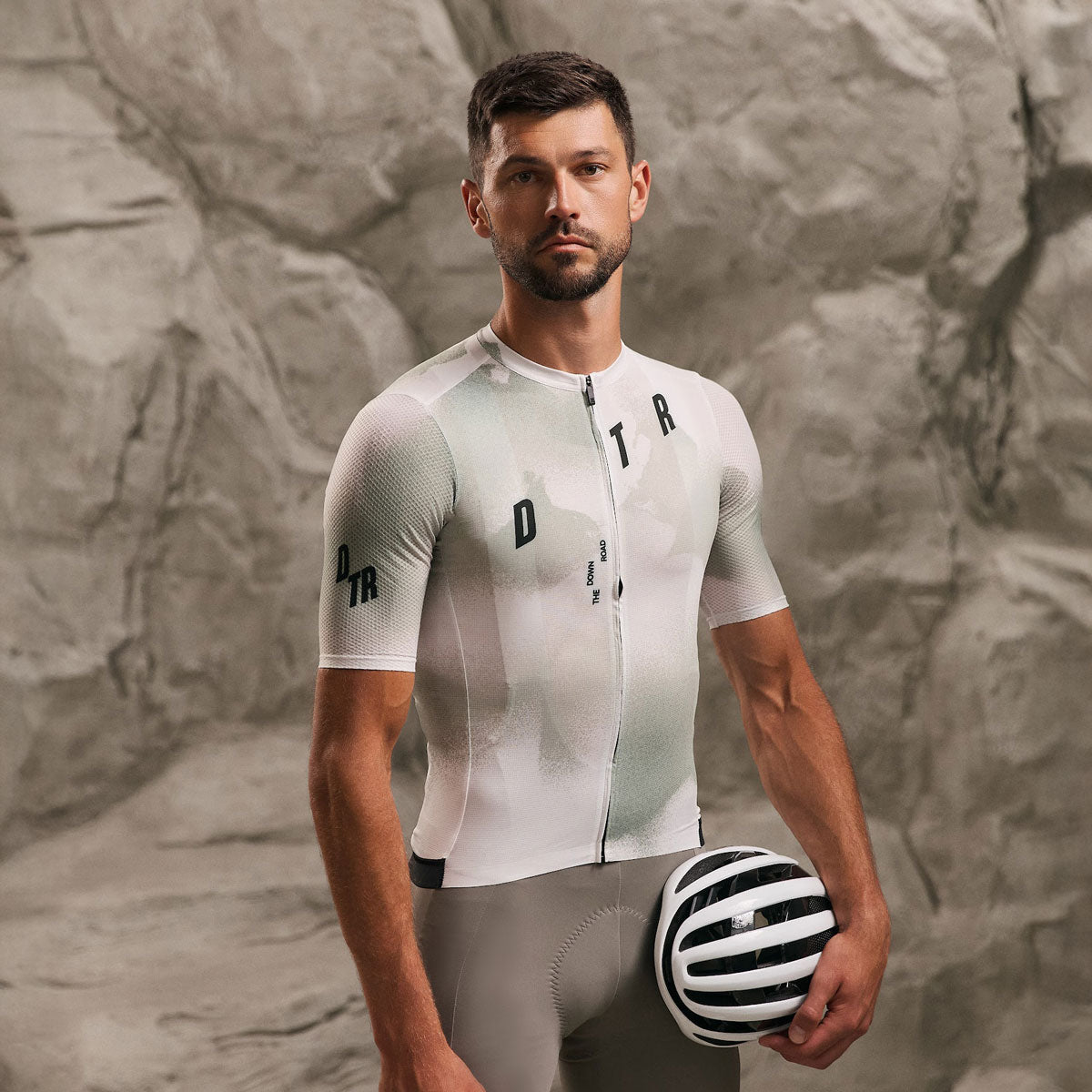
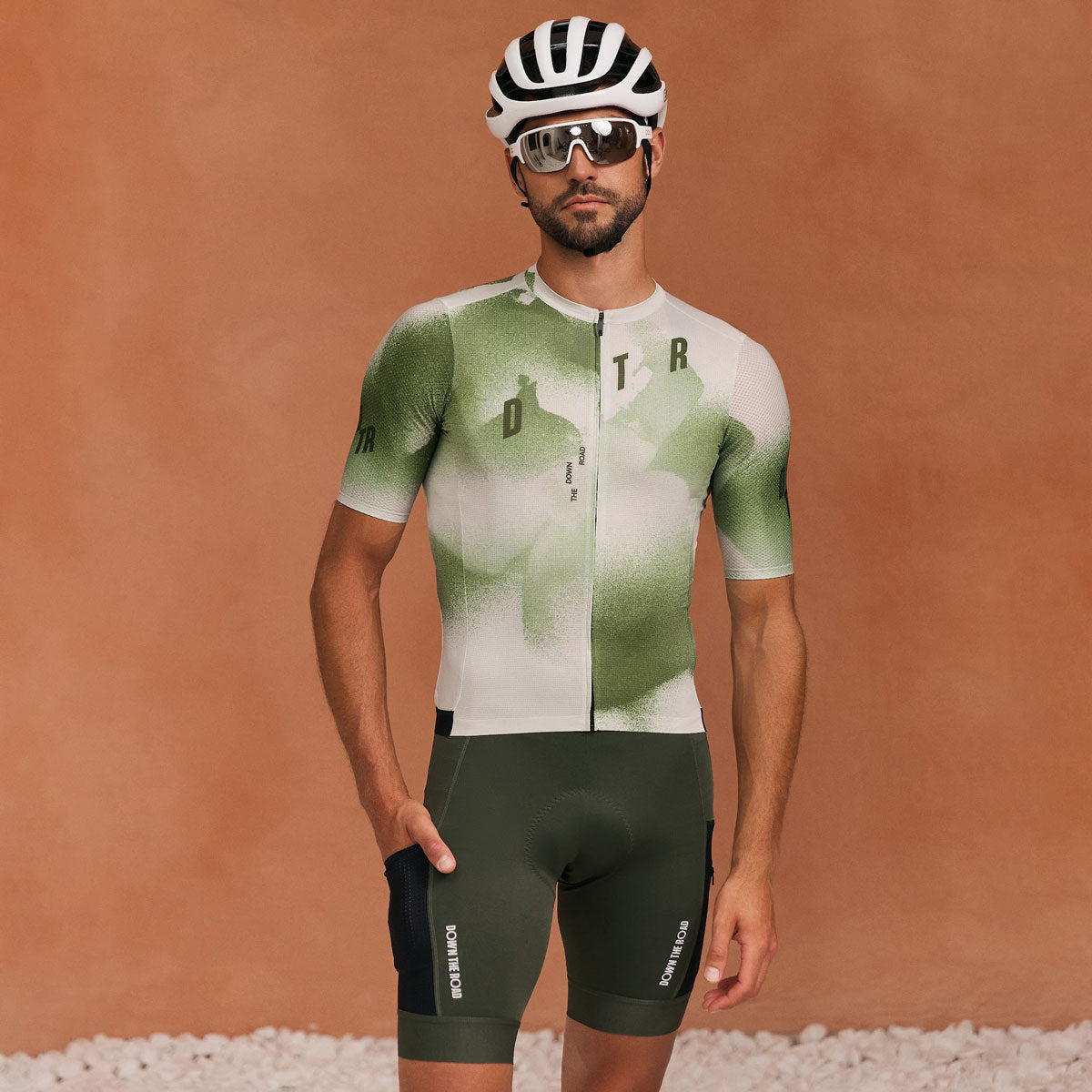
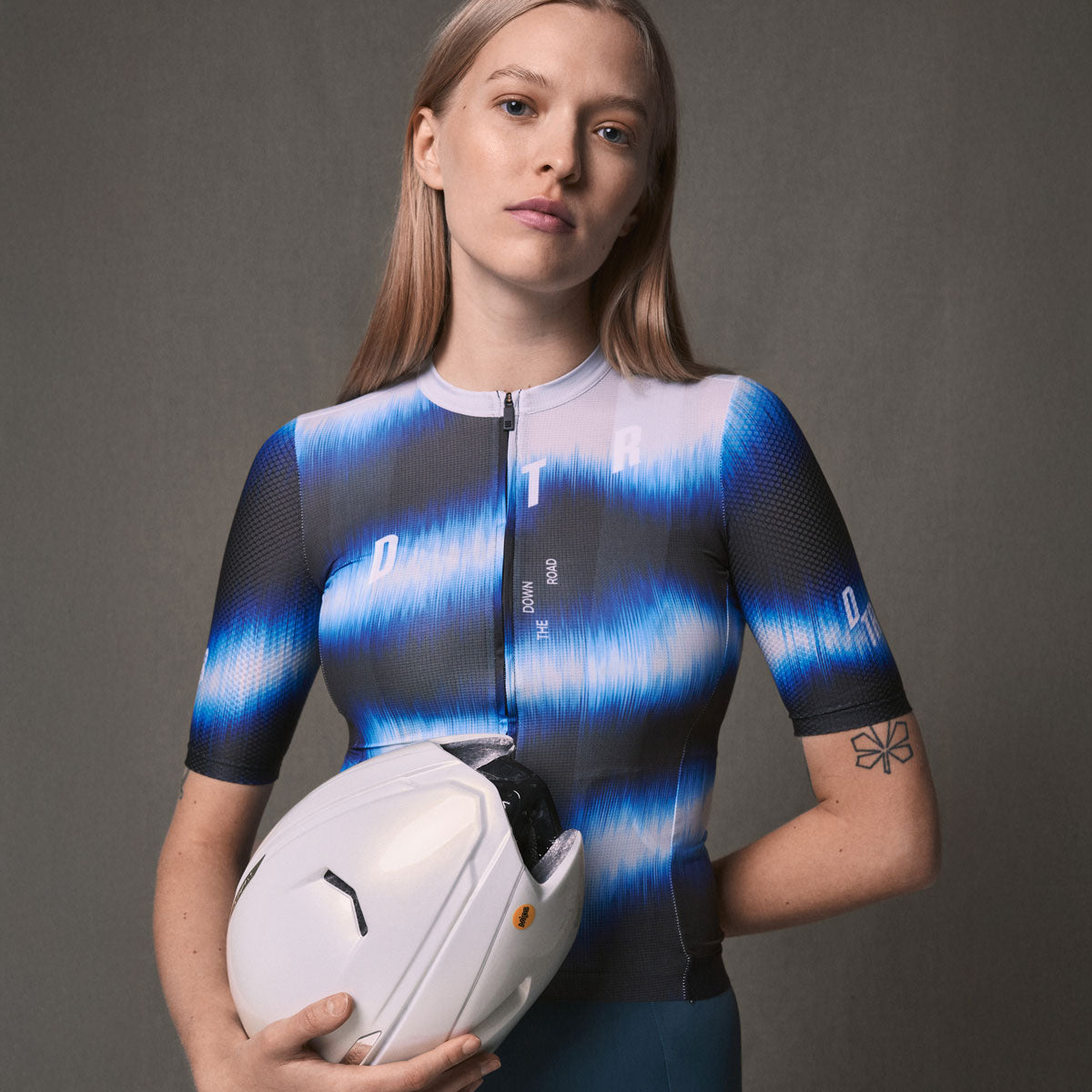
We do not currently make a zipless jersey, and we would rather say so than point you to a product that does not exist. If a clean, close fit is what you are after, a race-fit jersey worn fully zipped gives you most of that look with the option to open up when you need to. For triathlon racing, a trisuit removes the jersey question entirely.
Quick answers
Are zipless cycling jerseys cooler?
No. Without a zip you cannot open the front, so a zipless jersey is usually the warmer option at a given fabric weight. It suits cool weather.
Can you wear a zipless jersey in a road race?
Yes, if the race is short or cool enough that you will not need to vent. Check the event's kit rules first.
Are zipless jerseys harder to put on?
Yes, especially in a close race fit, over a base layer, or on damp skin. Roll the jersey up and pull it over your head one arm at a time.
DTR — performance cycling and triathlon apparel, designed and developed in Ukraine.

Leave a comment
This site is protected by hCaptcha and the hCaptcha Privacy Policy and Terms of Service apply.