

The three rear pockets on a cycling jersey exist because the small of your back is the only place on a rider that can carry weight without changing how you pedal, steer or breathe. Load them well and you forget they are there; load them badly and the jersey sags, bounces and pulls on your shoulders for the rest of the ride.
This guide covers why the layout is what it is, what belongs in each pocket, why loaded pockets sag and what actually fixes it, and the point at which the weight should move off your back entirely.
Why three, and why there
Three pockets is a compromise between reach and stability. One wide pocket lets contents slide side to side as you move; four or more become too narrow to get a hand into while riding. Three gives you a stable centre compartment and two you can reach with either hand without looking.
The position is not arbitrary either. Anywhere higher on the back sits over the ribs and interferes with breathing and shoulder movement. Anywhere lower fouls the saddle. The lumbar curve just above the waistband is the one place where mass sits close to your centre of gravity, stays out of the pedalling motion, and does not move relative to your torso when you shift position on the bike.
It is also the reason a proper cycling jersey has a dropped rear hem. The tail exists to keep the pocket opening pointing up rather than back when you are stretched out in the riding position — without it, loaded pockets tip and their contents work their way out. How a cycling jersey should fit covers the rest of the cut.
What goes in each pocket
Centre pocket for the heaviest single item, side pockets for what you need while moving, and the zip pocket for anything you cannot afford to lose. Keeping the heaviest thing centred stops the jersey pulling to one side, which is the single most common loading mistake.
- Centre. Your packed windbreaker or vest, or a spare tube and tools if you carry them on your body. This is the deepest and most stable position — put the mass here.
- Right pocket (or your dominant hand's side). Food you will eat while riding. Gels, bars, anything you want to reach without looking or slowing.
- Left pocket. Rubbish, arm warmers you have just taken off, a cap, gloves — the things that go in mid-ride rather than come out.
- Zip pocket. Phone, cards, keys. Anything whose loss ends the ride.
The habit worth building is keeping the same item in the same pocket every ride. Reaching behind you on a moving bike is a blind operation, and knowing exactly where the food is means one hand off the bars for two seconds instead of ten.
The sag problem and what fixes it
Loaded pockets sag because the fabric stretches under weight and there is nothing anchoring the hem. The fix is a silicone gripper at the rear hem and a fabric with enough recovery to return to shape — not a tighter jersey, which is the usual and wrong instinct.
Three things determine whether a jersey holds a load:
- The gripper. A silicone gripper across the rear hem holds the jersey against your shorts so the weight loads the waistband instead of pulling on the shoulders. A jersey without one will always sag under load, regardless of price.
- Fabric recovery. Cheap knits stretch under weight and stay stretched. A fabric with good recovery returns to shape when you empty the pockets, which is what keeps a jersey usable over a season of loaded rides.
- Pocket depth and elastic. A deep pocket with a firm elasticated opening holds contents against the back. A shallow one with tired elastic lets a phone edge out over rough ground.
If a jersey sags with a full load, going down a size does not fix it — it makes the fabric work harder and stretch faster, and it opens the weave over the shoulders. The problem is the hem and the fabric, not the circumference.
What not to put back there
Hard, heavy or sharp items are worth keeping off your back, because they concentrate load in one point and because in a crash you land on whatever is in your pockets. A multitool with the pocket fabric between it and your spine is not a good arrangement.
Specifically worth relocating to the bike or to a saddle pack:
- Multitools and tyre levers. Hard edges against the lumbar spine.
- CO2 canisters. Small, hard, and heavy for their size.
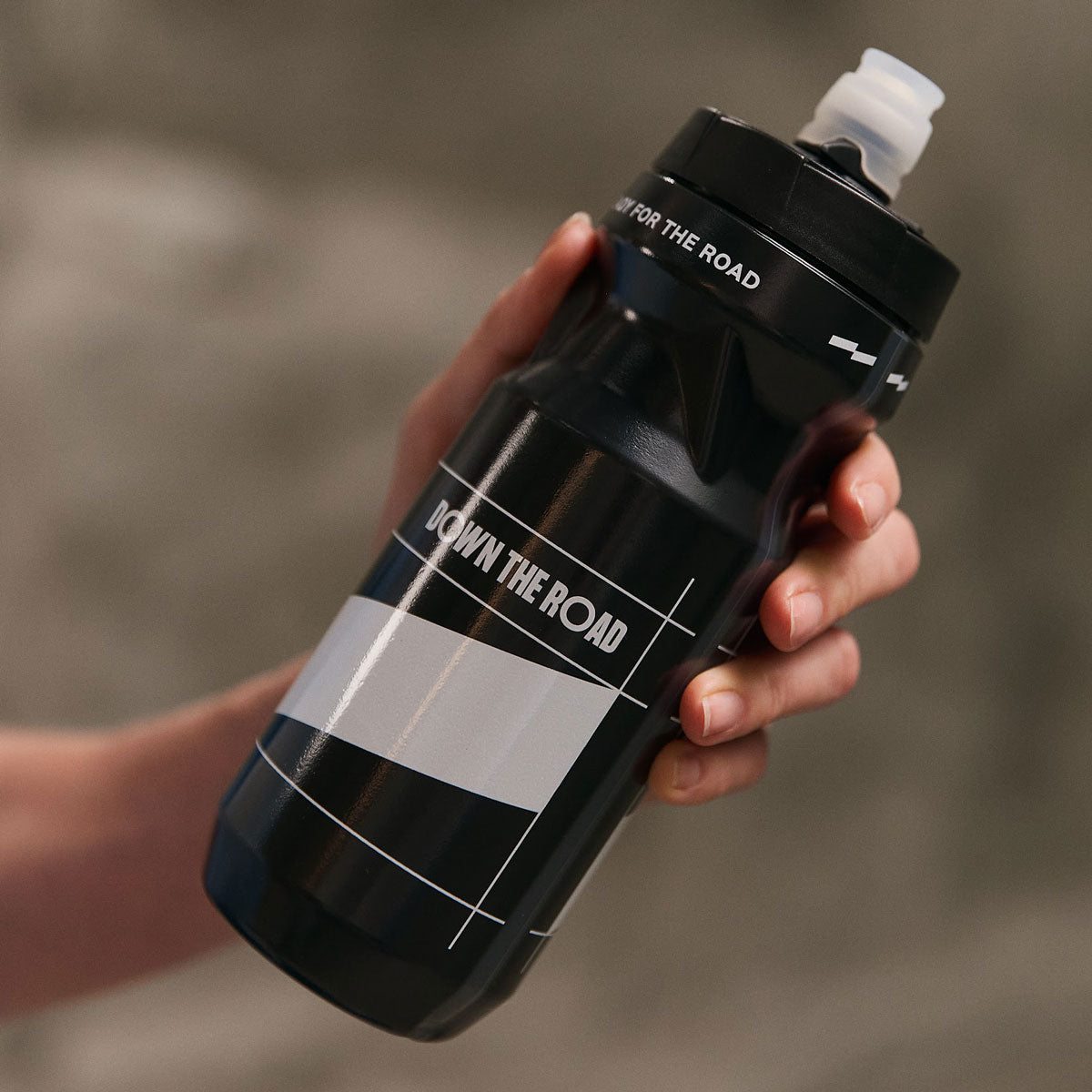
- Full bottles. Occasionally seen on long gravel days, and it works, but a 750 ml bottle is 750 grams sitting high and swinging.
- Anything you cannot reach. If the only way to get to it is to stop, it belongs in a bag on the bike.
When the load should move to your shorts
Once you are carrying more than about 500 grams, or riding somewhere rough enough that the weight bounces, cargo bib shorts do the job better than jersey pockets. Leg pockets sit lower and closer to your centre of mass, and a thigh does not flex the way a lower back does.
The situations where the switch is clearly right: long gravel rides where every bump moves a loaded rear pocket, bikepacking days where you are already carrying more than a road ride needs, and hot weather, where three loaded rear pockets sit flat against your back and block exactly the airflow you want across it.
The two systems work well together rather than competing. Food and layers in the leg pockets, phone and valuables in the jersey zip pocket, and the rear pockets left mostly empty so the jersey vents properly. The cargo bib shorts guide covers what fits where, and whether you need cargo bibs at all covers the decision.
Frequently asked questions
Why do cycling jerseys have pockets on the back and not the front?
Front pockets sit where you fold forward, so contents press into your stomach and get in the way of your legs at the top of the pedal stroke. The lower back is the only area that stays still relative to your torso, clears the pedalling motion, and does not restrict breathing.
How much weight can you put in jersey pockets?
Around 500 grams is comfortable for most riders on the road. Beyond that you start to feel it pulling on the shoulders and bouncing on rough surfaces, and it is worth moving the excess to cargo bib shorts or onto the bike.
Why does my jersey sag when the pockets are full?
Either the rear hem has no silicone gripper to anchor it against your shorts, or the fabric has poor recovery and has stretched permanently. Sizing down does not fix either problem and usually makes the fabric stretch faster.
What should go in the zip pocket?
Phone, cards and keys — anything whose loss would end the ride. The zip is there for security rather than convenience, so it is the wrong place for food or anything you need repeatedly.
Can you carry a water bottle in a jersey pocket?
You can, and riders do on long gravel and bikepacking days when the bike has no room left. It is not comfortable — a full 750 ml bottle is heavy for the position and swings on rough ground — but it works as an overflow option rather than a plan.
Pockets that hold their shape start with the jersey: the DTR range is at Jerseys.
DTR — performance cycling and triathlon apparel, designed and developed in Ukraine.

Leave a comment
This site is protected by hCaptcha and the hCaptcha Privacy Policy and Terms of Service apply.