



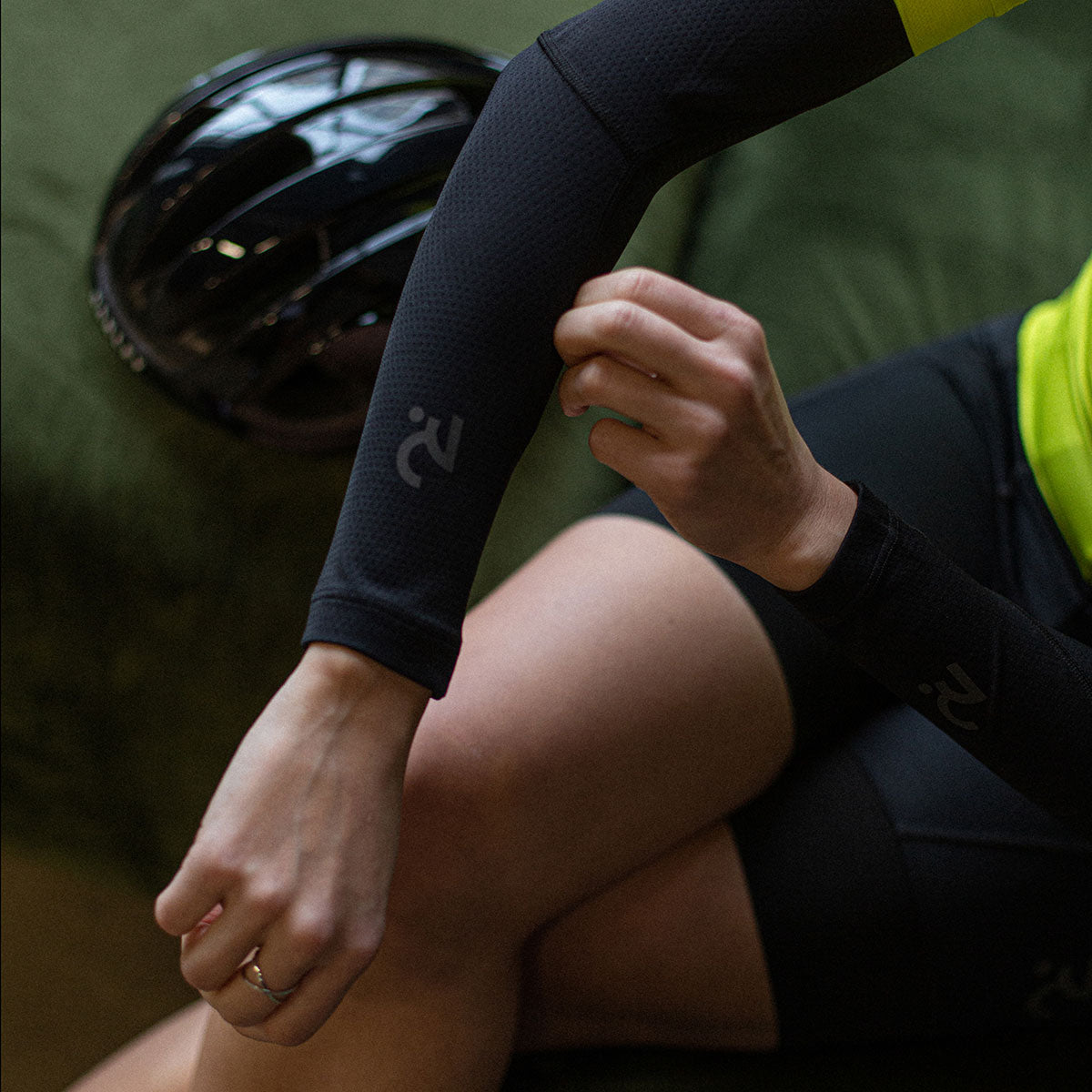
Yes, you can wear a t-shirt to cycle, and for a short, easy spin it does the job. Past an hour, or the moment you start sweating properly, a cotton tee soaks through, hangs heavy and rubs, which is exactly what a cycling jersey is cut and built to avoid. This guide covers fabric, fit, pockets and when a tee is perfectly fine.
Is a t-shirt fine for a bike ride?
For commuting, a café run or an easy spin under an hour, a t-shirt is fine. The trouble starts with effort and time: cotton absorbs sweat and stays wet, so it gets heavier and colder the harder and longer you ride. If your rides are getting longer, that is the point to switch.
What does a jersey do that a tee can't?
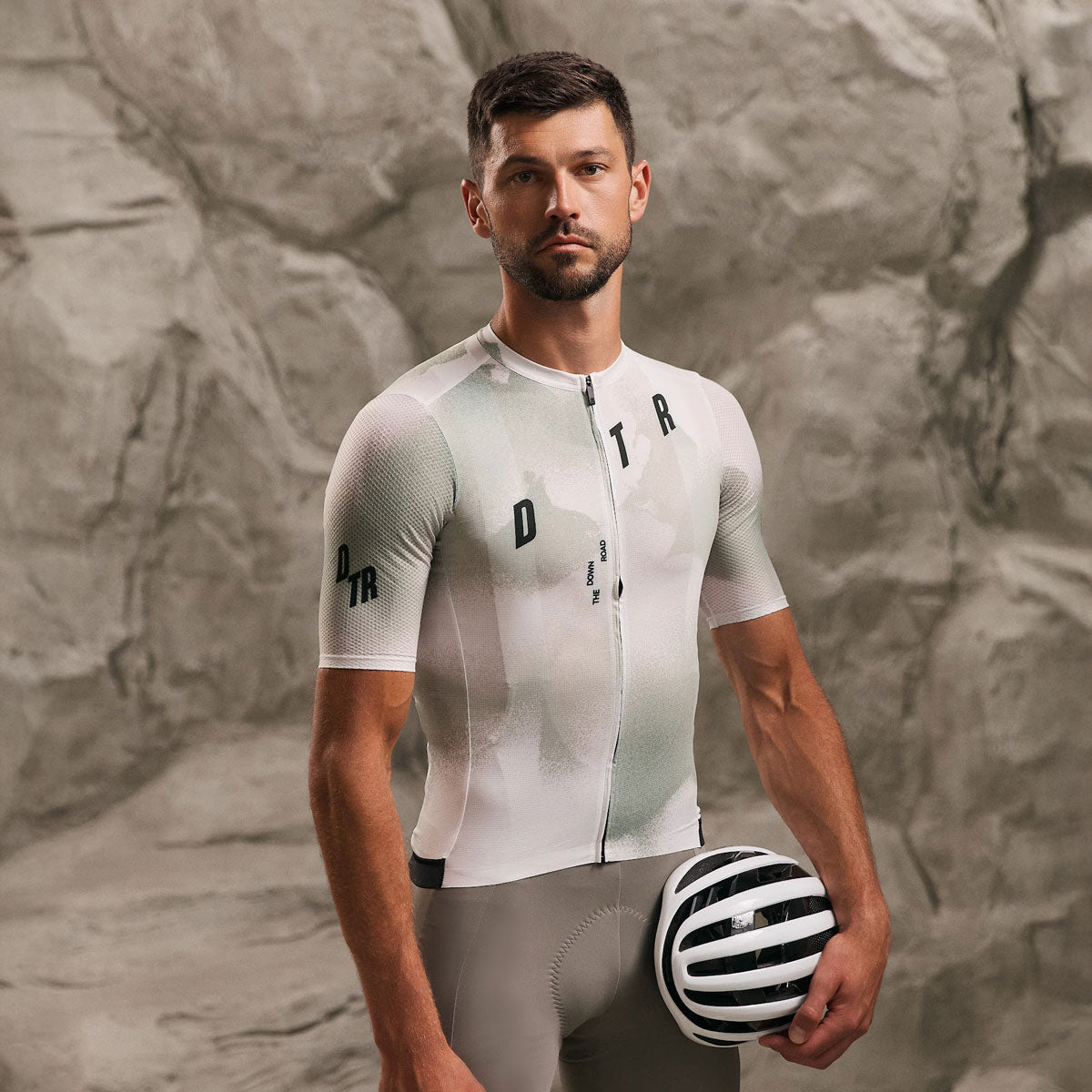
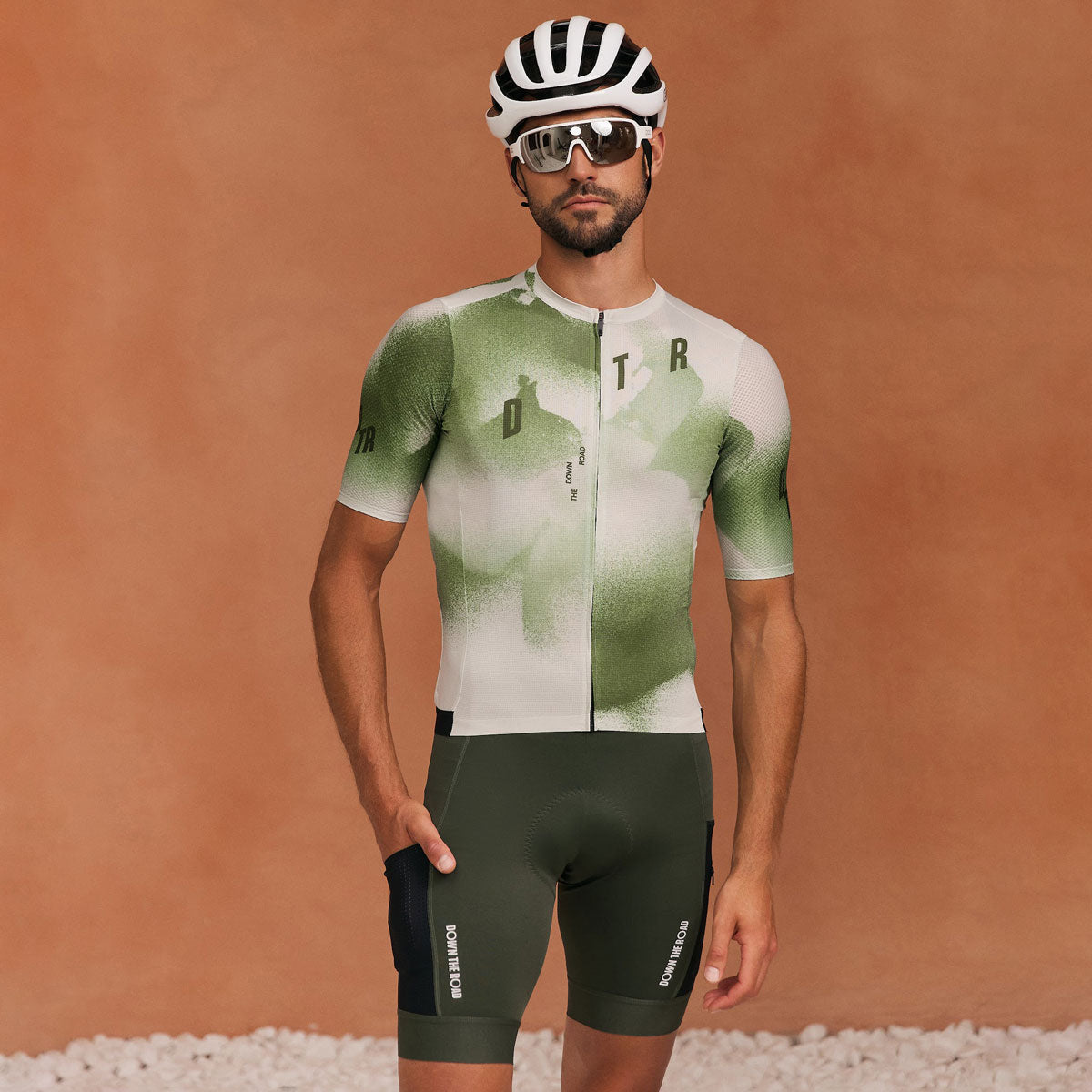
A cycling jersey moves sweat away from your skin and dries quickly, keeps its shape in a riding position and gives you somewhere to carry things. Four things change: the fabric, the cut, the pockets and the zip. None of them is cosmetic, and each one shows up around the second hour.
Why does cotton get worse the longer you ride?
Cotton holds moisture instead of moving it. A wet tee clings, sags at the shoulders and chills you on descents, then rubs under the arms and across the lower back. Technical jersey fabric is built to wick and dry, which is why a jersey feels the same at hour three as it did at minute ten. Here is what moisture-wicking actually means, and how jersey fabric is chosen.
How is a jersey cut differently?
A jersey is cut for the riding position, not for standing up. The back hem sits longer so your lower back stays covered when you lean forward, the front is shorter so it doesn't bunch at the stomach, and the sleeves are shaped for arms reaching to the bars. A tee does the opposite: it rides up behind you and gathers in front. If you are choosing between cuts, race cut versus relaxed fit is the decision that matters, and this fit guide shows how it should sit.
Where do you carry things without a backpack?
In the rear pockets. A jersey has pockets across the back, where weight sits low and doesn't swing, so a phone, keys, food and a light layer stay put. A tee has none, which means a backpack, a sweaty back, or items stuffed into bib shorts. The pocket guide covers what fits where.
Does a full zip matter?
A zip lets you regulate heat without stopping. Open it on a climb, close it for the descent. A tee gives you one setting. Whether to choose a full or half zip is covered in full zip vs half zip.
When is a t-shirt the right call?
Short, flat, unhurried rides in mild weather are the tee's territory. Once you ride past an hour, ride in a group, climb, or ride in heat or cold, a jersey earns its place. Pair it with bib shorts for the part of the kit that matters most, and add a base layer when temperatures drop.
FAQ
Can I wear a cotton t-shirt cycling?
Yes, for short, easy rides. For anything longer or harder, cotton stays wet and rubs, and a technical jersey is the better choice.
Do I need a cycling jersey for commuting?
Not for a short commute, but a jersey helps if the route is long, hilly or hot, and the rear pockets save you carrying a bag.
What should I wear under a cycling jersey?
On cool days, a lightweight base layer. In warm weather, many riders wear the jersey alone.
Ready to move on from the tee? The full range is in the DTR cycling jerseys collection.
DTR — performance cycling and triathlon apparel, designed and developed in Ukraine.

Leave a comment
This site is protected by hCaptcha and the hCaptcha Privacy Policy and Terms of Service apply.