

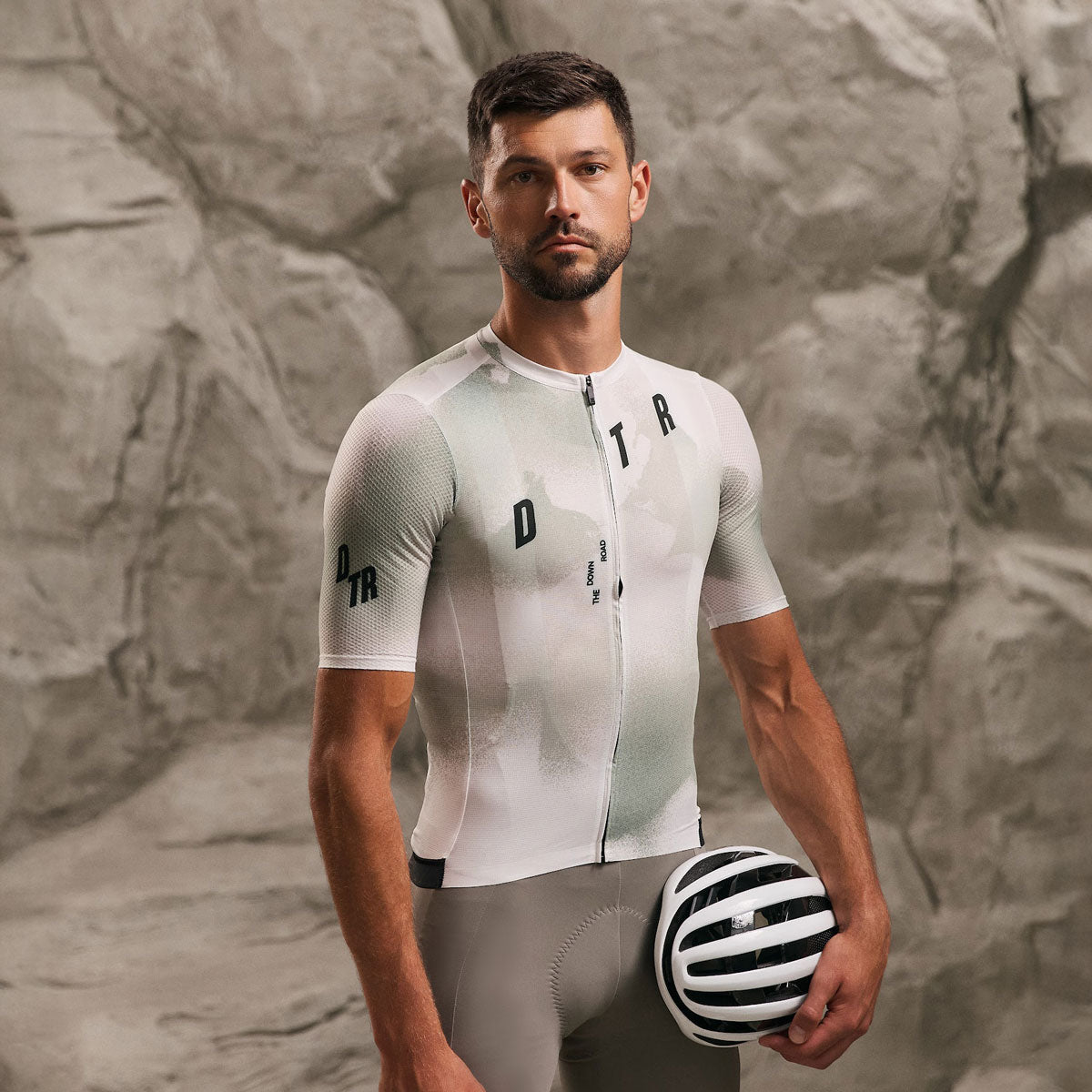
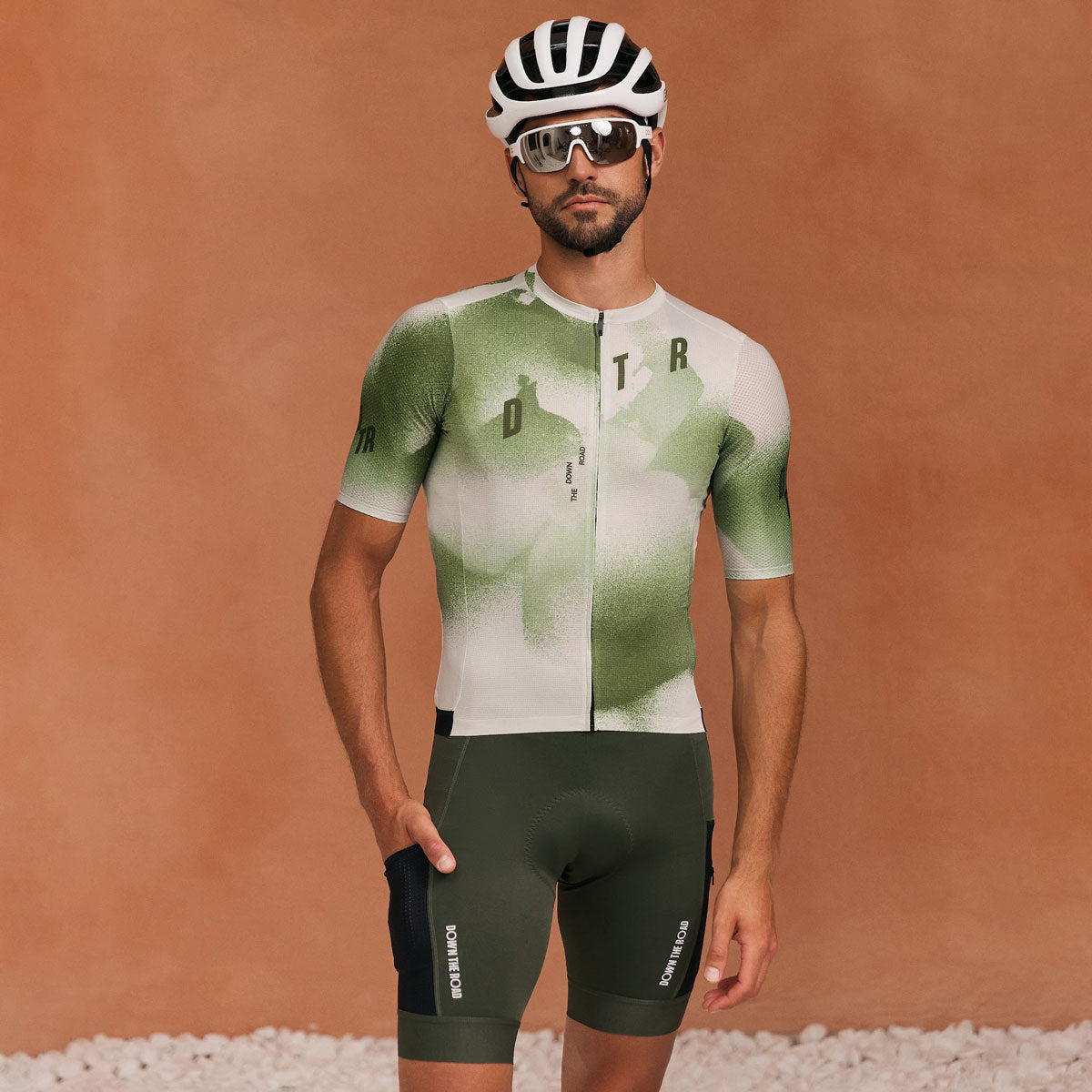
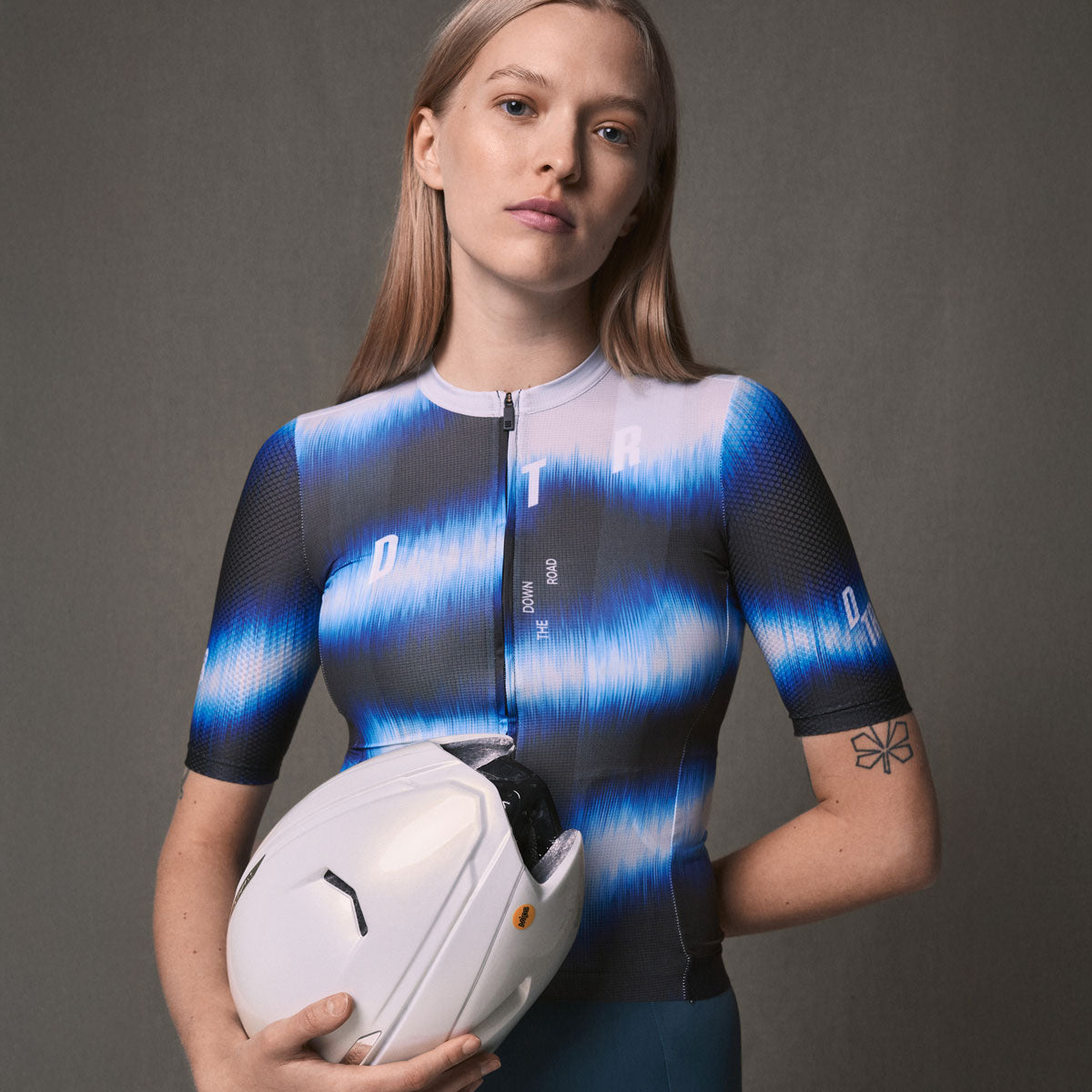
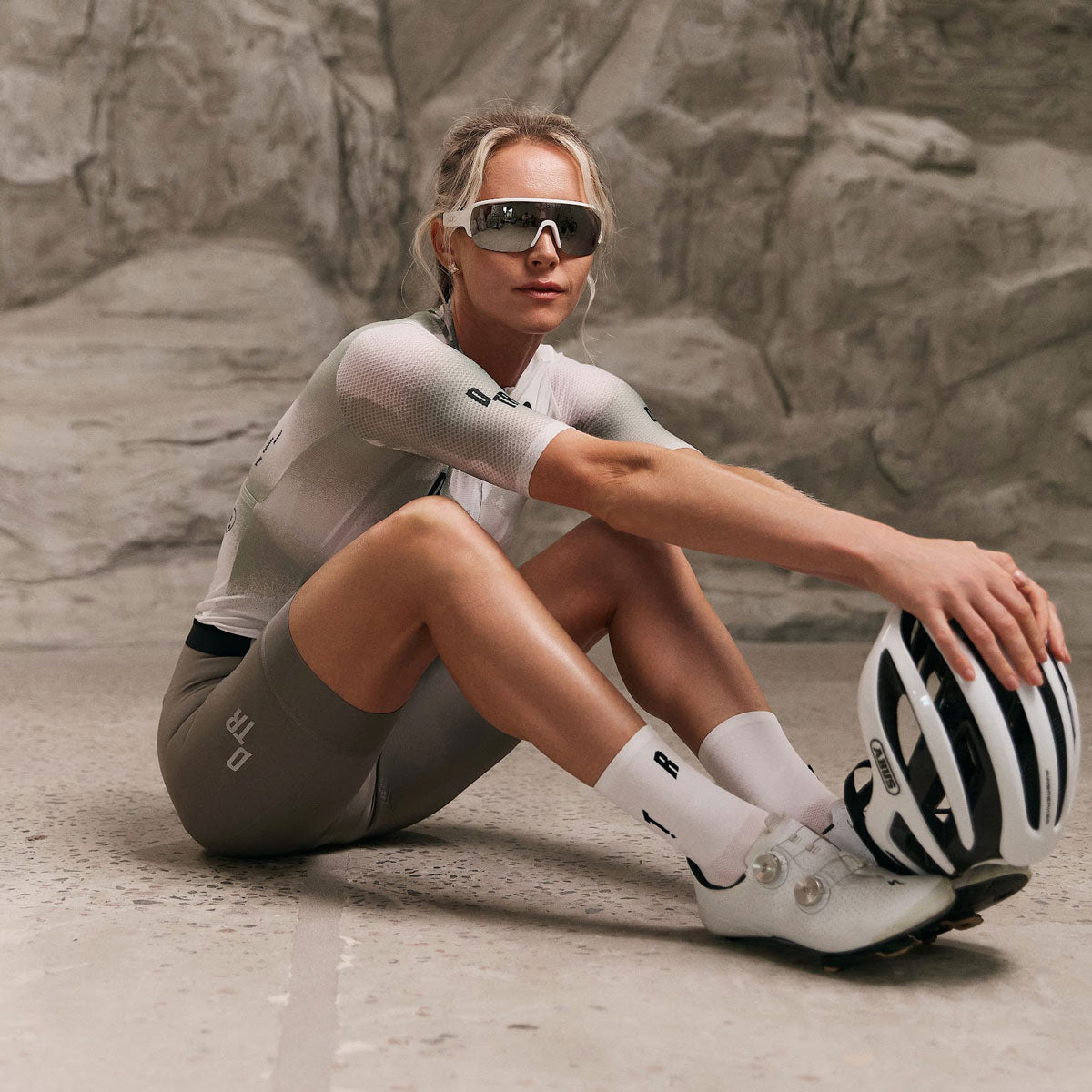
For a hill climb or mountain time trial, wear the lightest kit you own — a thin jersey, bib shorts, and nothing else at the start — because the effort is short and explosive enough to overheat almost immediately, and the real dressing decision is what you carry for the cold descent afterward, not what you wear on the way up. This guide covers why less is more for the climb itself, what to carry for the top and the way down, and how to warm up properly for an effort that's over in minutes.
Why less is more on the way up
A hill climb or mountain time trial is an all-out effort lasting anywhere from three minutes to half an hour, and body heat builds faster than in almost any other discipline DTR covers — extra fabric only adds weight and trapped heat with no benefit. A race-fit jersey and bib shorts alone are usually the right call even on a cold day, because you'll be generating far more heat than the temperature suggests within the first minute.
What to wear at the start line
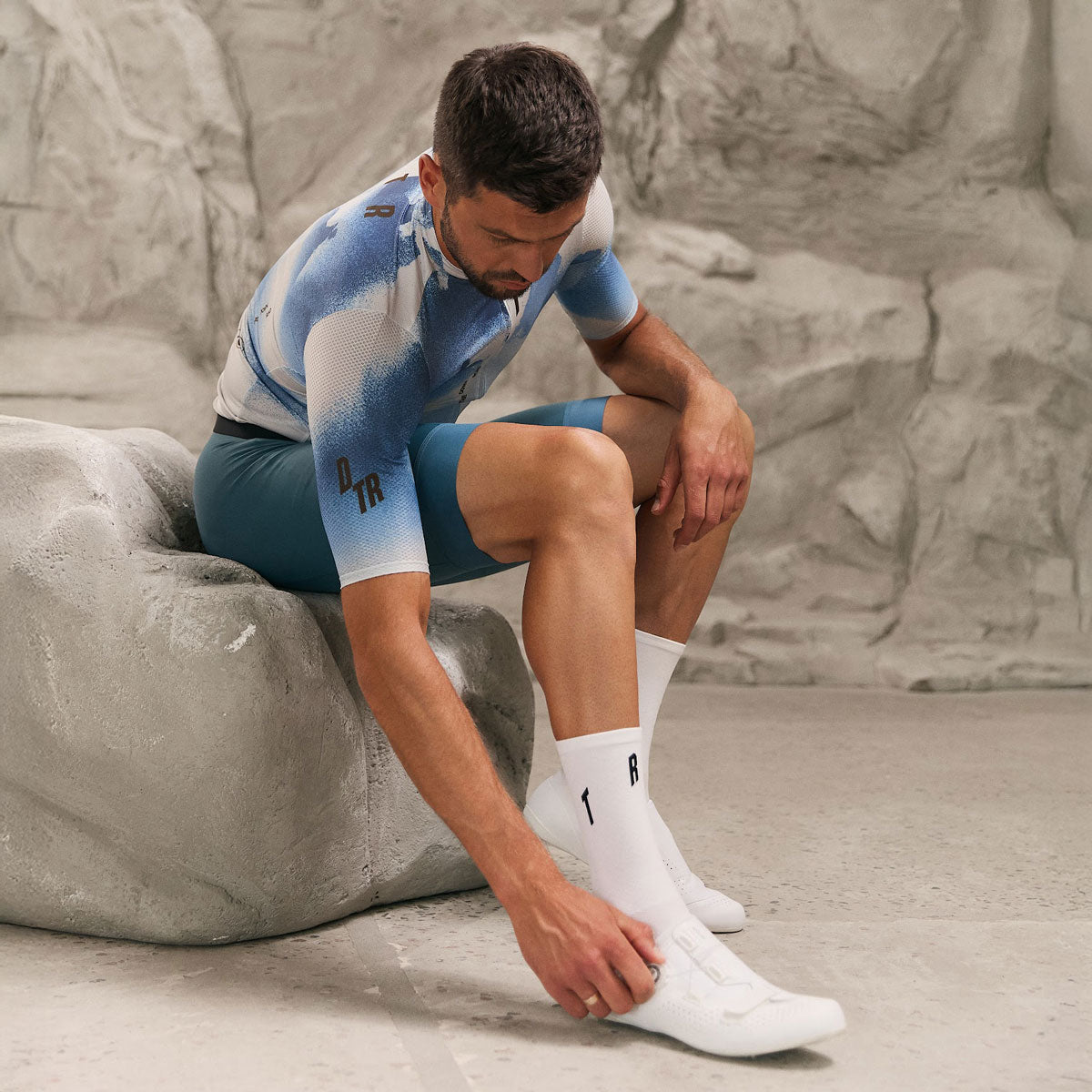
Race in what you'd wear for a hard club effort — jersey, bib shorts, and light socks — and save anything heavier for before and after. If the start itself is cold and exposed, a gilet you can remove and hand off just before you roll off the line covers the wait without compromising the effort; our gilet vs jacket guide covers which packs smallest for exactly this kind of hand-off.
Carrying for the descent, not the climb
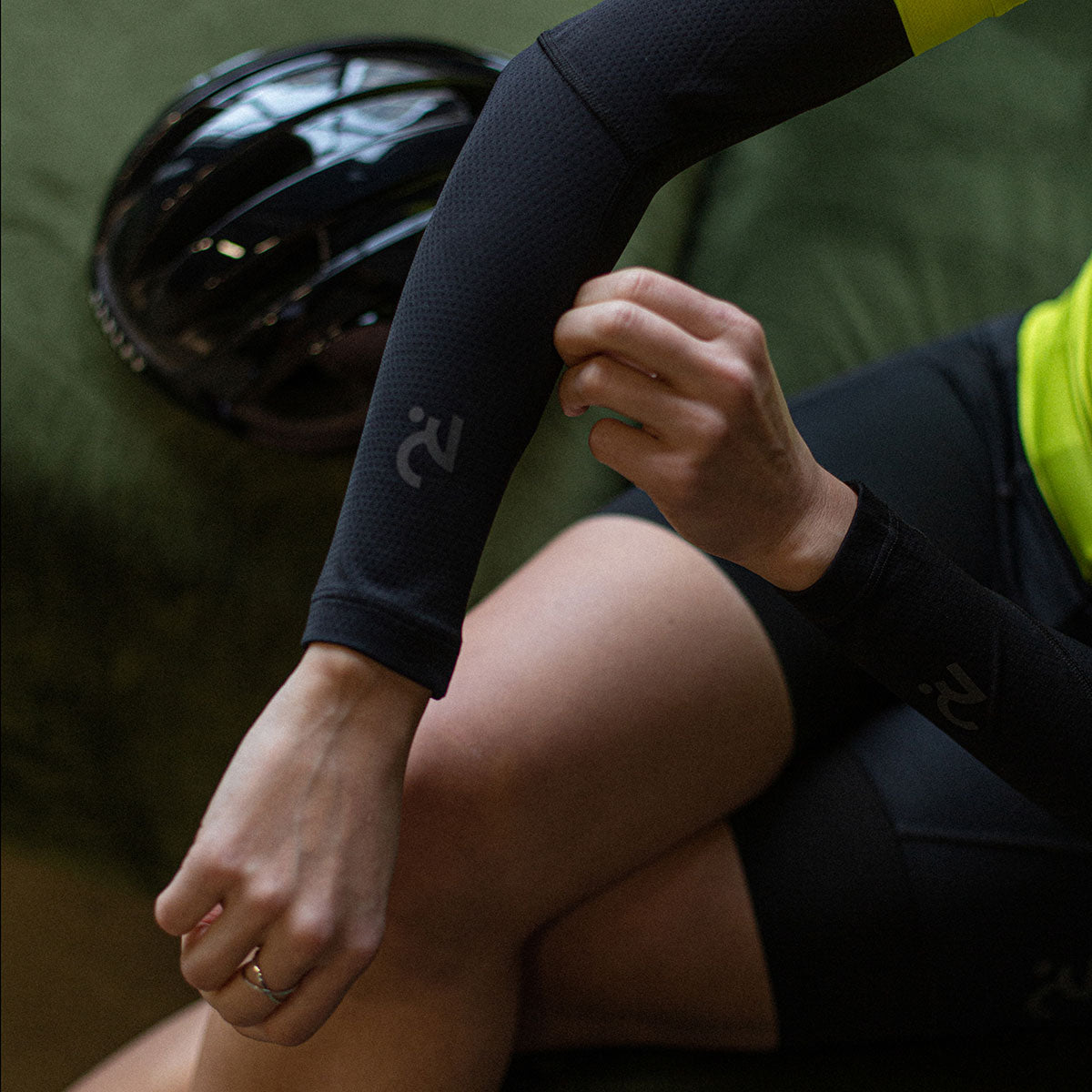
The descent after a hill climb is often colder and longer than the climb itself, and you'll be doing it in sweat-soaked kit with a heart rate dropping fast — carry a packable windbreaker and arm warmers even if you didn't need them on the way up. Our descents guide covers the layering logic for a long, cold drop in more detail, and it applies directly here once the effort itself is over.
Managing a cold, exposed summit
If there's a wait at the top before your descent — for results, for a group, for a support vehicle — that's when a soaked jersey turns a good effort into a genuinely cold, risky wait. Change into a dry base layer if you have one in a bag at the top, or at minimum get the windbreaker on immediately rather than waiting until you start feeling cold; by then your core temperature has already dropped further than you'd like.
Warming up before a short, all-out effort
Warm up properly in full kit — arm warmers, gilet, whatever the temperature calls for — since a hill climb or mountain TT gives you no chance to ease into the effort the way a longer ride does. Strip down to race kit only in the last few minutes before your start, the same approach that works for a flat time trial, adjusted for a colder wait if the climb starts at altitude or in shade.
FAQ
Do you need arm warmers for a hill climb?
Not for the climb itself in most conditions — you'll overheat carrying them. Carry them for the descent instead; see our arm warmers guide for when to put them back on.
What's different about dressing for a mountain time trial versus a flat one?
The effort and start-line kit are similar, but a mountain TT usually finishes at altitude or on an exposed summit, so you need a real plan for getting warm again immediately after you stop, not just a plan for the effort itself.
Should you wear a base layer for a hill climb?
Usually not for the climb — it adds heat retention you don't need during an all-out effort. A dry one to change into at the top is worth carrying if you have support there.
How cold does a mountain descent actually feel after a hot climb?
Colder than the thermometer suggests, because you're sweat-soaked, moving fast enough to create real wind chill, and no longer generating the heat that made the climb feel warm. Dress for that gap, not for the climb's temperature.
Light kit built for the effort, not the weather: the DTR jersey range is at /collections/cycling-jerseys.
DTR — performance cycling and triathlon apparel, designed and developed in Ukraine.

Leave a comment
This site is protected by hCaptcha and the hCaptcha Privacy Policy and Terms of Service apply.