



A cycling gilet and a jacket solve different problems. A gilet (or vest) protects your core from wind and chill while leaving your arms free, packs down small, and covers a wide range of changeable days; a jacket adds sleeves and more weather protection for wind, rain and sustained cold. Reach for a gilet when your core needs warmth but your arms don't, and a jacket when the whole ride is cold, wet or windy. This guide breaks down when to wear each — and why many riders carry both.
The short answer
A gilet is a sleeveless shell or thermal layer worn over your jersey. Its job is to keep your core — the part that chills fastest — warm and wind-protected while your arms stay free to breathe and move. It's the layer you pull on for a descent or a café stop and stuff in a pocket the moment you're climbing again. A jacket adds sleeves, more coverage and usually more weather resistance: it's for when the cold or the weather is the whole ride, not a passing phase.
How they differ
- Coverage: gilet = core only; jacket = core and arms.
- Warmth: a jacket is warmer overall; a gilet targets warmth where it counts and vents the arms.
- Packability: a gilet folds smaller and lives in a jersey pocket.
- Versatility: a gilet spans a wider band of changeable weather because it doesn't overheat your arms.
Note the two families of each: a windproof gilet (a thin shell vest) and a thermal gilet (insulated); and a windbreaker or rain jacket (a thin shell) versus a winter jacket (insulated).
When to wear a gilet
Reach for a gilet when your core needs protection but your arms don't — which is more often than you'd think.
- Cold descents after a warm climb: the gilet blocks the wind chill on the way down, then packs away for the next climb.
- Changeable spring and autumn days: core warmth you can add and drop without cooking your arms.
- Windy but mild days: a windproof gilet takes the edge off a crosswind without a full jacket.
- Café stops and early starts: pull it on when you stop working, stash it when you're pushing again.
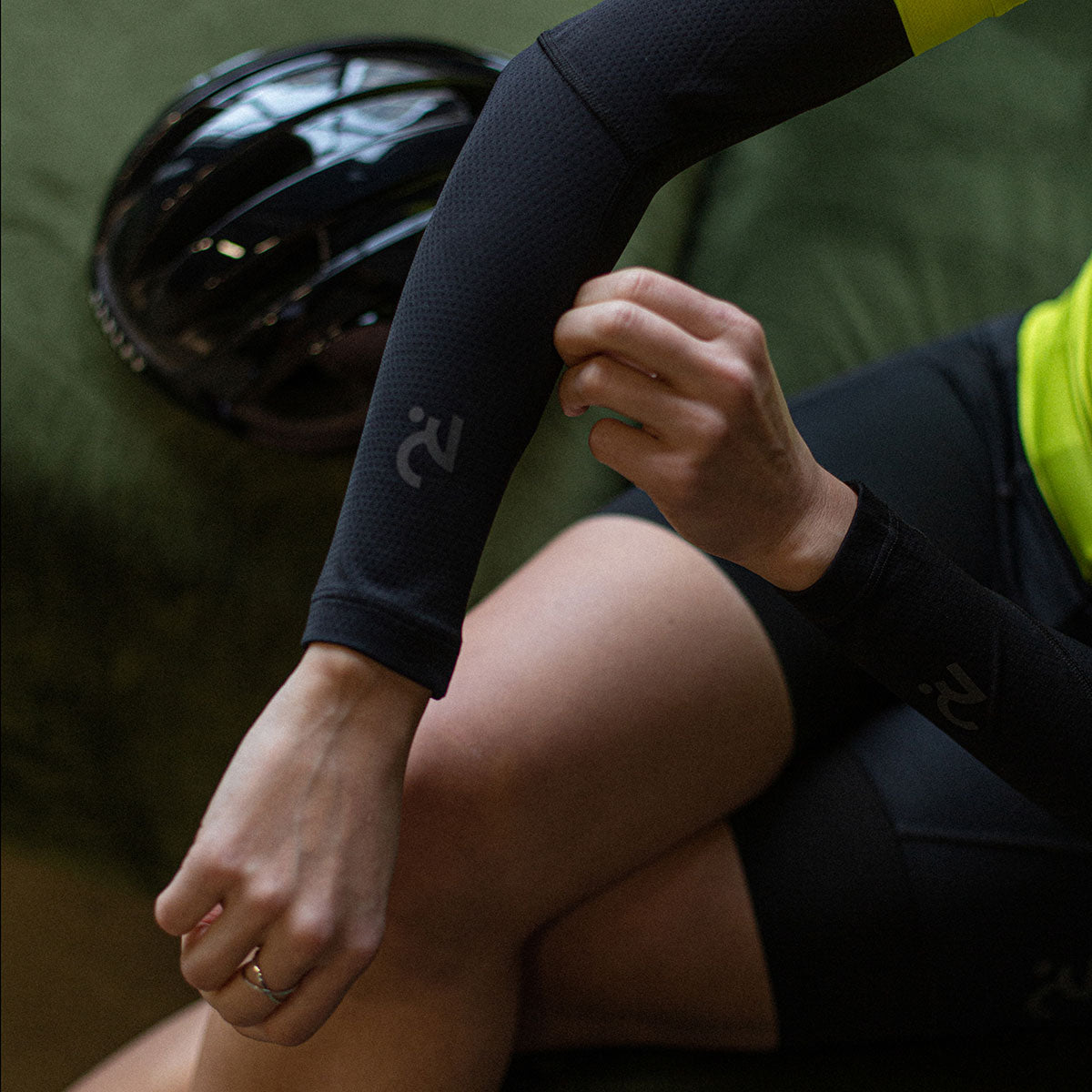
A gilet pairs naturally with arm warmers: together they cover the arms and core independently, which manages a changeable day better than a single jacket.
When to wear a jacket
A jacket wins when the weather or cold is the whole ride, not a passing phase.
- Sustained cold below ~8°C: a winter jacket's sleeves and insulation keep the whole upper body warm.
- Wind and rain: a windbreaker or rain jacket protects your arms as well as your core, and a waterproof adds sealed seams for real wet.
- Long descents in genuine cold: full coverage beats a bare-armed gilet.
- Commuting in poor weather: the simplicity of one jacket you leave on beats fiddling with layers.
Do you need both?
Most riders end up with both because they do different jobs. A common kit: a packable windproof gilet for changeable and shoulder-season days, and a jacket (a windbreaker for wind and showers, or a winter jacket for deep cold) for when the weather commits. If you're buying one to start, think about your riding: mostly mild-but-changeable, start with a gilet; mostly cold or wet, start with a jacket.
Gilet + arm warmers vs a jacket
This is the real decision on a lot of days. A gilet plus arm warmers covers the same area as a light jacket but lets you remove the arms and keep the core — more flexible when the day will warm up. A jacket is simpler and warmer when it won't. On a ride that starts at 8°C and climbs to 16°C, gilet plus warmers wins; on a 5°C ride that stays there, a jacket does.
FAQ
What's the point of a sleeveless cycling gilet? It keeps your core warm and wind-protected — the part of you that chills fastest — while your arms stay free to breathe. That targeted warmth is why a gilet spans a wide range of changeable days.
When should I wear a cycling gilet instead of a jacket? When your core needs warmth but your arms don't: cold descents, changeable days, windy-but-mild rides. Use a jacket when the whole ride is cold, wet or windy.
Is a gilet warm enough for winter? A thermal gilet plus a long sleeve jersey covers a lot, but in deep or wet winter cold a jacket's full coverage is warmer and better protected. Many riders use a gilet over a winter jersey and switch to a jacket when it's truly cold.
Windproof or thermal gilet? A windproof gilet blocks wind chill and packs tiny; a thermal one adds insulation for colder days. If you buy one, a windproof gilet is the more versatile starting point.
Gilet or windbreaker? A windbreaker (light jacket) covers the arms too; a gilet leaves them free. For changeable days, a gilet plus arm warmers is more adaptable; for wind and showers across the whole ride, a windbreaker.
The bottom line
A gilet for core warmth and changeable days; a jacket for when wind, rain or cold owns the whole ride. Explore DTR cycling gilets for the flexible core layer, and windbreakers and jackets for full weather protection. (For the shell-only comparison, see our cycling windbreaker guide.)
—
DTR — performance cycling and triathlon apparel, designed and developed in Ukraine.

Leave a comment
This site is protected by hCaptcha and the hCaptcha Privacy Policy and Terms of Service apply.