

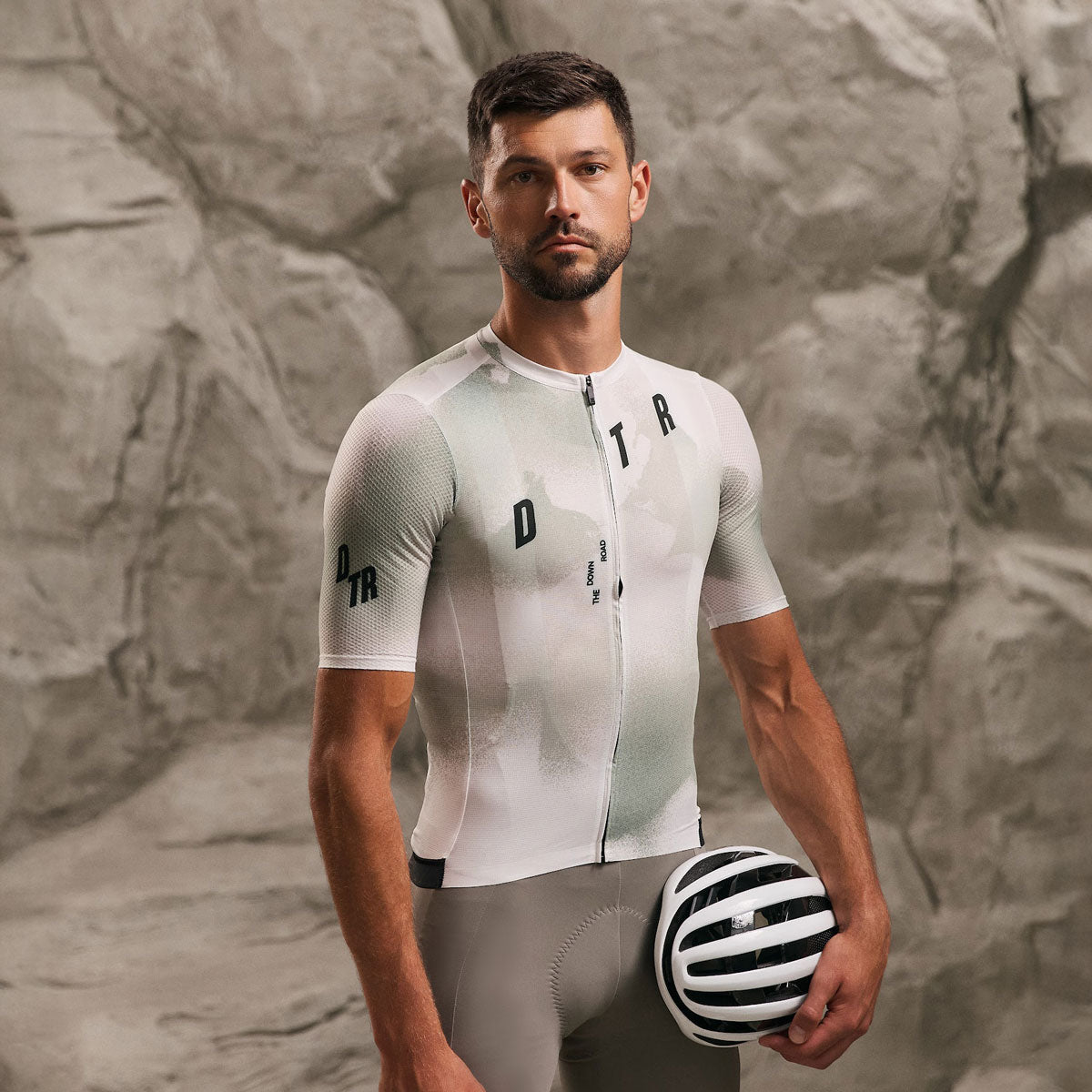
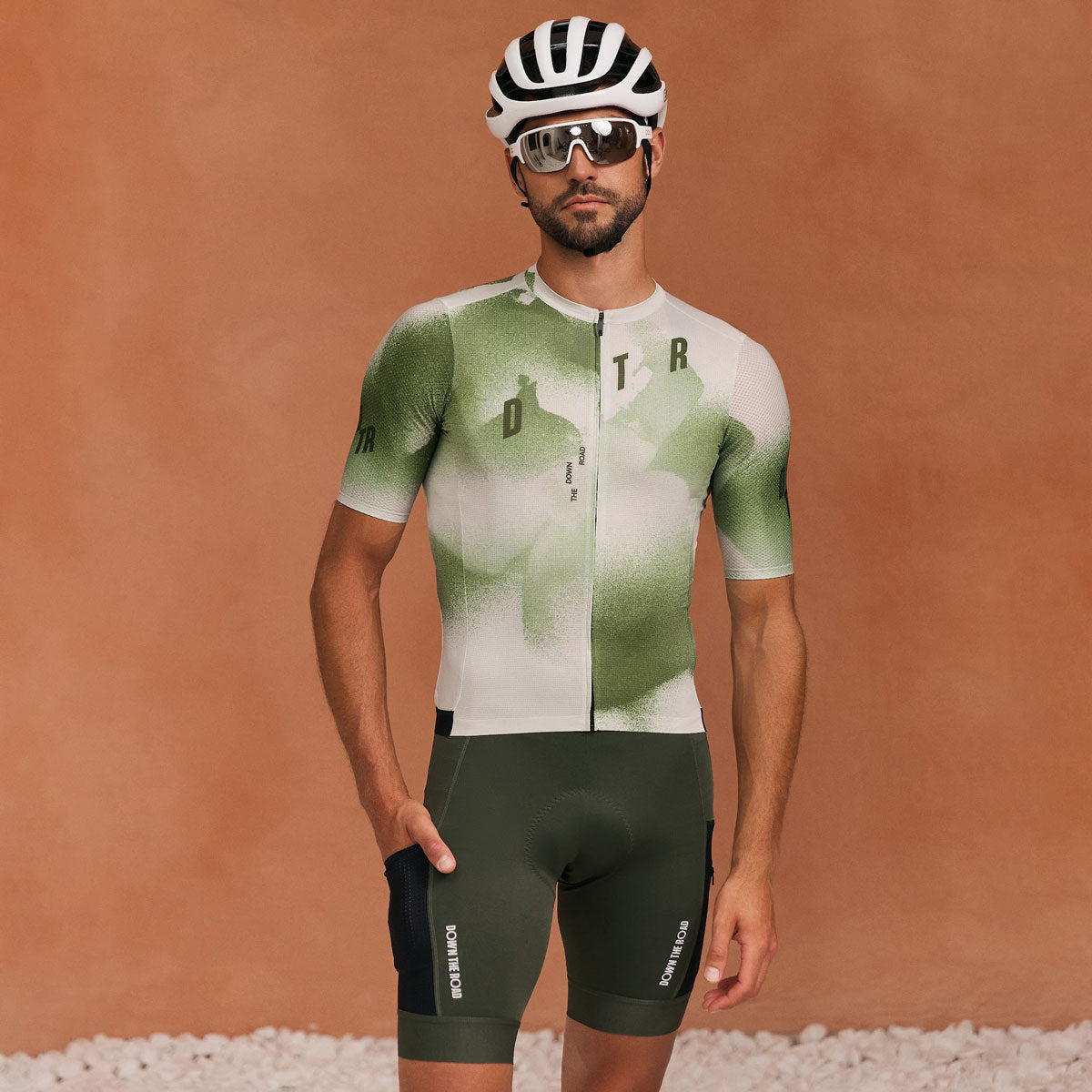


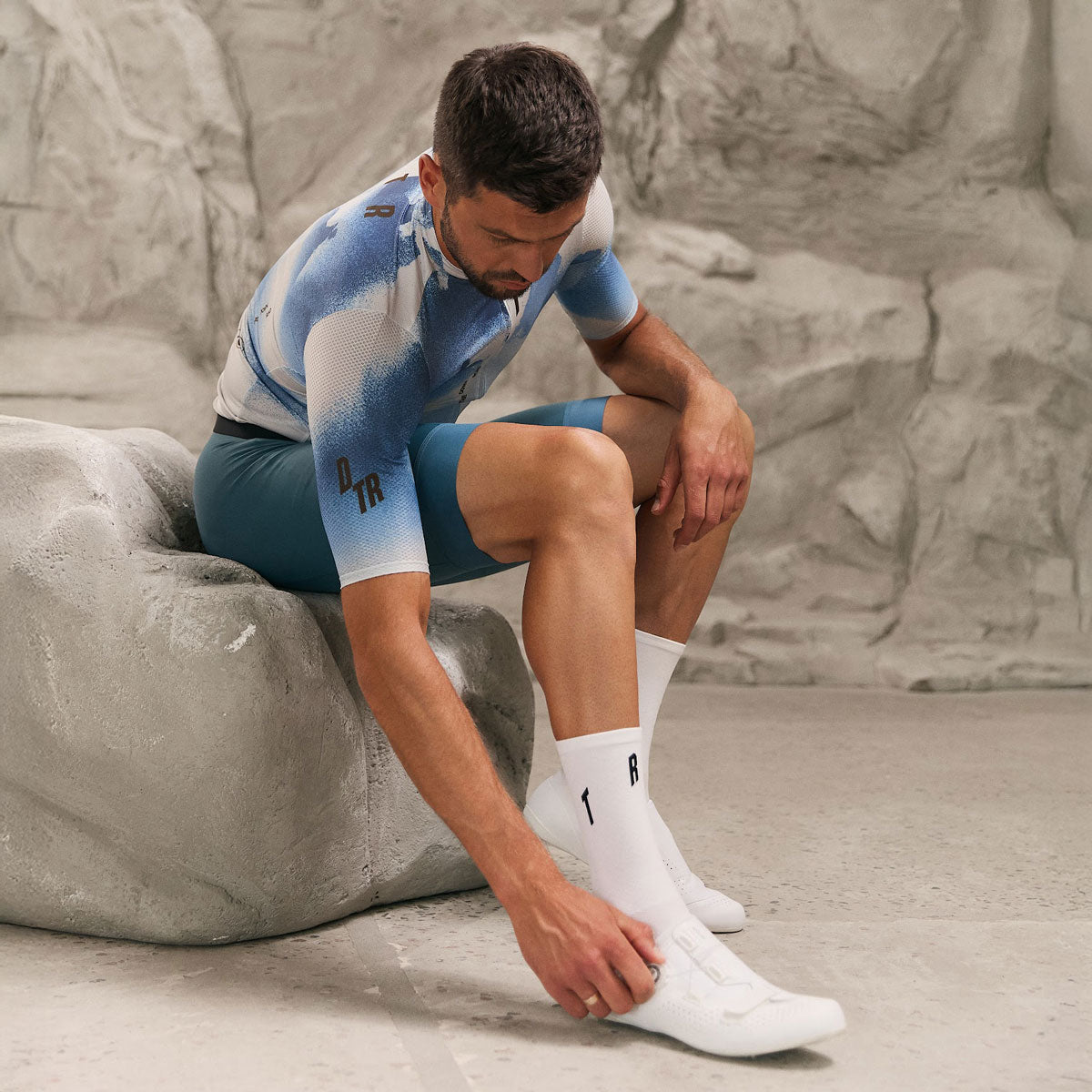
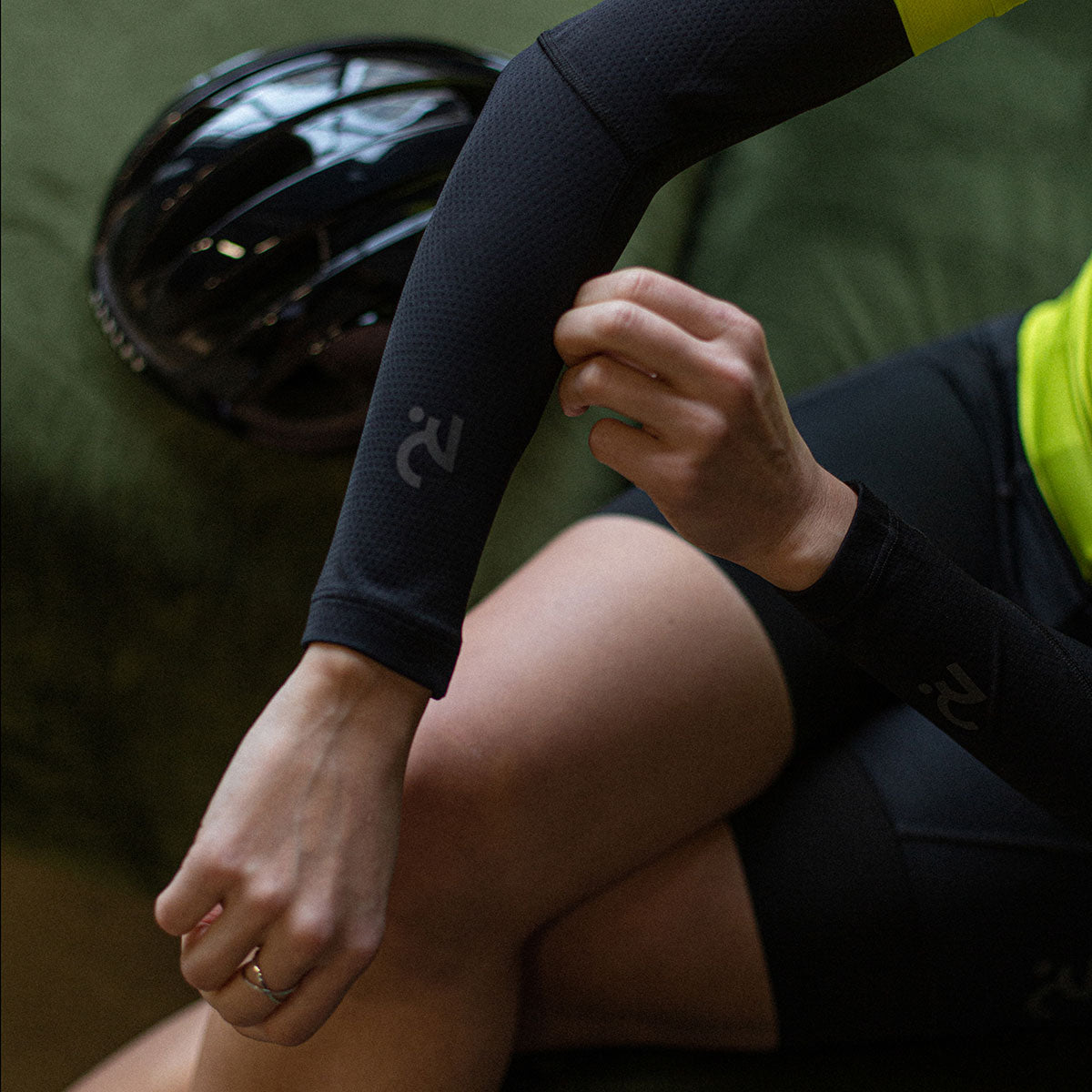
A short sleeve jersey paired with arm warmers is the more versatile choice for most riding, while a long sleeve jersey is warmer, simpler and better when it's cold from start to finish. Above about 16°C it's short sleeve; below about 8°C a long sleeve jersey (or a short sleeve one over a base layer, with arm warmers) keeps you warmer; in the 8–16°C middle, either works and the deciding factor is how much flexibility you want. This guide breaks the choice down by temperature, ride type and how much you want to manage on the move.
The short answer
A short sleeve jersey is the year-round core of your kit. On its own in summer, and layered with arm warmers, a base layer or a gilet as it cools, it covers a huge temperature range — and the warmers pack into a pocket the moment the day heats up. A long sleeve jersey builds the warmth in: more coverage, often a brushed or thermal inner and sometimes a wind-resistant front, in one piece you pull on and leave on. Short sleeve is flexibility; long sleeve is committed warmth.
Choosing by temperature
- Above 16°C: short sleeve jersey, bare arms. A long sleeve would leave you overheating on the climbs.
- 12–16°C: short sleeve plus arm warmers is ideal — warm at the start, easy to strip when your core heats up.
- 8–12°C: either a long sleeve jersey, or a short sleeve jersey with a base layer and arm warmers. This is the crossover band.
- Below 8°C: a long sleeve jersey (often a winter or thermal one) over a base layer. Short sleeve plus warmers starts to leave gaps in the cold.
Remember the forecast isn't the whole story: wind and fast descents make it colder, hard efforts warmer. (Our guide to what to wear cycling by temperature has the full breakdown.)
Short sleeve plus arm warmers: the versatile combo
This is the setup most experienced riders default to across spring and autumn. A short sleeve jersey and arm warmers covers roughly 8 to 18°C in one kit, because you can add the warmers for a cold start and pocket them once you're warm — something a long sleeve can't do without stopping to change. If you ride days that start cold and finish mild, or climb warm and descend cold, this combination manages the swing better than any single jersey. Pair it with a base layer and you push the range colder still.
When a long sleeve jersey wins
A long sleeve jersey earns its place when the cold is consistent. On a ride that's 6°C start to finish, a dedicated long sleeve — with its brushed inner and wind-resistant front — is warmer, more comfortable and simpler than layering a short sleeve. There's no arm-warmer junction to seal, no gripper to slip; the coverage is continuous. It's also the cleaner choice when you know you won't need to shed a layer: a fixed setup you don't have to think about. For winter base miles and cold, stable conditions, a long sleeve is the right tool.
By ride type
- Racing and fast group rides in the shoulder seasons: short sleeve plus arm warmers, so you can strip them when the pace lifts.
- Long endurance days with changeable weather: short sleeve plus warmers and maybe a gilet — a system you can adjust over hours.
- Winter training in steady cold: a long sleeve jersey over a base layer.
- Commuting: depends on your climate — consistent cold favours a long sleeve, variable weather favours the flexible combo.
Can you get by with just one?
If you're building a kit from scratch, start with a good short sleeve jersey and a pair of arm warmers — together they cover more of the year than any single jersey, and they're the more useful first purchase. Add a long sleeve jersey when your riding runs into consistent cold and you want the simpler, warmer option for those days. Most riders end up with both and choose by the forecast.
FAQ
Is a long sleeve jersey warmer than short sleeve plus arm warmers? Usually, yes — the coverage is continuous, the fabric is often thermal, and there's no gap at the arm. But short sleeve plus warmers is more flexible, because you can remove the warmers mid-ride.
When should I wear a long sleeve cycling jersey? Roughly below 8–12°C, and especially when it's cold the whole ride. Above that, a short sleeve jersey with arm warmers is usually more comfortable and more adaptable.
Do I wear a base layer under either? Yes — a base layer helps in both cases, wicking in warmth and adding insulation in cold. It's what lets a short sleeve jersey stretch into colder weather.
Are arm warmers as warm as sleeves? Close, in the right range. A good pair seals at the bicep and covers the arm fully; fleece versions add real warmth below 10°C. Below about 8°C, a long sleeve's continuous coverage pulls ahead.
Short sleeve plus a gilet, or a long sleeve jersey? A gilet warms the core but leaves the arms bare, so it pairs best with arm warmers on changeable days. A long sleeve covers the arms too — better for steady cold.
The bottom line
Short sleeve plus arm warmers for flexibility and the shoulder seasons; a long sleeve jersey for consistent cold and simplicity. Build the versatile base with the DTR cycling jersey range and a pair of arm warmers, and add a long sleeve for winter.
—
DTR — performance cycling and triathlon apparel, designed and developed in Ukraine.

Leave a comment
This site is protected by hCaptcha and the hCaptcha Privacy Policy and Terms of Service apply.