

A cycling base layer is the thin layer worn next to the skin under your jersey, and its one job is managing moisture — pulling sweat off your skin so it evaporates instead of soaking in. That makes it a warm-weather tool as much as a cold one: a summer base layer keeps you cooler and drier, a thermal one keeps your core warm in winter. So the short answer to “do I need one?” is yes, year-round. Here's why base layers matter and how to choose the best one for how and when you ride.
What a base layer actually does
The job of a base layer is moisture management. It draws sweat away from your skin and spreads it across the fabric, where it evaporates — which cools you in the heat and keeps your skin dry rather than clammy under a soaked jersey. In the cold it does the opposite favour, trapping a thin layer of warm air against your core so you stay warm without bulk. And it solves one of cycling's nastiest moments: the wet-jersey chill, when a sweat-soaked jersey meets cold wind on a descent and strips the heat straight out of you. A base layer keeps that sweat moving so it never gets the chance. It's the foundation every other layer sits on, and the starting point for layering in the cold.
Why you need one even in summer
This is the part most riders get wrong: a summer base layer makes you cooler, not warmer. By wicking sweat off your skin to the jersey, where it evaporates, it lets your body's own cooling system work properly — dry skin regulates temperature far better than skin sitting under a soaked jersey. It also protects your jersey and cuts down chafing. Skipping a base layer on a hot day feels logical and is usually a mistake; a lightweight one is a warm-weather performance tool, not extra insulation.
Base layers in winter
In the cold, a thermal base layer is the first and most important layer of the system — base, then jersey, then jacket. It traps warm air against your core and keeps you warm without the bulk of piling on outer layers. But even in winter, wicking still matters: sweat that can't escape sits against your skin and freezes you the moment you stop working or start descending. A good winter base layer keeps you warm and dry at once, which is why it's worth more than an extra jacket you'll overheat in on the climbs. Pair it with a thermal jersey rather than a heavier shell.
How to choose the best cycling base layer
Weight and season
Match the weight to the weather. A lightweight or mesh base layer maximises breathability for warm weather; a mid-weight suits spring and autumn; a thermal base layer adds warmth for winter. Most riders end up with two — a summer one and a winter one — which covers almost the whole year. Our lightweight vs thermal comparison lines the two up directly.
Fit
A base layer must fit close, like a second skin. It only wicks if it's in direct contact with your skin, so a loose one simply traps air and sweat and does nothing useful. It should feel snug but not compressive — close enough to move moisture, comfortable enough to forget. If you are between sizes, the sizing guide is the place to settle it.
Sleeve length
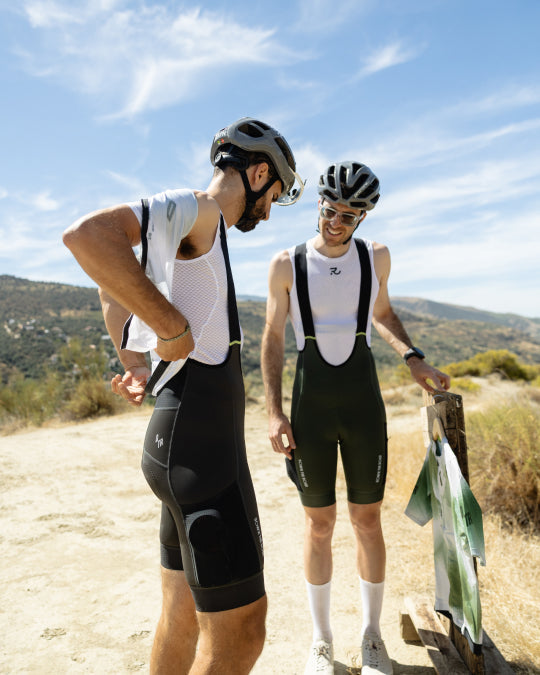
Sleeveless is the year-round default: it wicks the core without adding warmth to your arms, so it works in summer and under a winter jersey alike. Short sleeve suits mild and cool days. Long sleeve is a winter piece, adding arm coverage and warmth beneath your jersey.
Fabric
Synthetic fabrics wick fast, dry fast, and are affordable — ideal for hot days and high-output efforts. Merino wool regulates temperature across a wider range, resists odour over long or multi-day rides, and is warmer for its weight, which makes it a strong choice for cold and endurance riding. Mesh maximises breathability for the hottest days. Choose by what you value most: raw wicking speed, temperature range, or breathability.
Match your base layer to the temperature
As a rough guide, reach for a lightweight or mesh base layer above roughly 16°C, a mid-weight through the 8 to 16°C shoulder-season range, and a thermal base layer below 8°C. Wind, rain and how hard you're riding shift those numbers, but the principle holds: lighter as it warms, thermal as it drops. For a full breakdown by °C, see our guide to what to wear cycling by temperature.
Looking after your base layer
Wash cold on a gentle cycle and never use fabric softener — softener coats the fibres and destroys the wicking that is the entire point of a base layer. Air dry rather than tumble on high heat, and follow wool-specific care for merino. Looked after, a good base layer keeps performing for years.
FAQ
Do I need a base layer in summer?
Yes. A lightweight summer base layer wicks sweat off your skin so it evaporates, which keeps you cooler and drier than a jersey worn on its own. It's a warm-weather tool, not just a winter one.
Sleeveless or sleeved?
Sleeveless is the year-round default — it wicks the core without warming the arms, so it works in summer and under a winter jersey. Choose long sleeve when you want extra arm warmth in the cold.
Can I wear a cotton t-shirt instead?
No. Cotton soaks up sweat and holds it against your skin, staying wet and chilling you — the exact opposite of what a base layer does. Use a technical wicking fabric.
Merino or synthetic?
Synthetic for hot days, high-output efforts and value; merino for a wider temperature range, odour resistance, and long or cold rides. Many riders keep one of each.
Do I wear it under or over my jersey?
Under, directly against the skin. That's the only way it can wick sweat away — worn over a jersey it does nothing.
The base layer is the quietest piece of kit you own and one of the most useful. Explore DTR base layers for summer and winter: shop base layers.
DTR — performance cycling and triathlon apparel, designed and developed in Ukraine.

Leave a comment
This site is protected by hCaptcha and the hCaptcha Privacy Policy and Terms of Service apply.