

Cycling at high altitude means dressing for three things at once: thinner air that makes every climb feel harder, UV exposure that's stronger than it looks, and a temperature swing between the climb and the descent that can run 15°C or more. This guide covers layering, headwear, and base layer choices by distance and discipline — and what actually changes once you're riding above 2,000m.
Why altitude changes what you wear
Above roughly 1,500–2,000m, three things shift at once: the air holds less oxygen so your effort feels harder at the same wattage, UV radiation increases roughly 10-12% per 1,000m of elevation gain, and the gap between valley-floor and summit temperature widens. None of this shows up on a normal forecast the way it does at altitude, which is why riders who dress for sea-level conditions end up overheating on the climb or freezing on the descent.
Layering for the climb-to-descent swing
The core problem at altitude isn't cold — it's the range. You might climb in 22°C sunshine and descend into 8°C wind chill twenty minutes later. A long sleeve jersey over a technical base layer, with a packable layer for the descent, covers most of that range without carrying a full jacket. On multi-hour climbs, a lightweight base layer that manages sweat matters more than insulation — you generate heat on the way up and lose it fast once you stop pedaling hard. See our guide to layering for cold-weather rides for the full system; altitude just compresses the same principles into a shorter window.
Sun exposure gets more aggressive up here
UV exposure increases with elevation and reflects harder off snow, pale rock, and thin cloud cover that doesn't actually block much radiation. Riders who'd never burn on a two-hour flat ride get caught out on a four-hour alpine climb. Long sleeves, a UPF-rated jersey, and covering the back of the neck and ears matter more here than on almost any other terrain. We cover the specifics — fabric, coverage, and what sunscreen can't fix — in our sun protection guide.
Headwear and extremities at altitude
Your head and hands lose heat fastest once the effort drops on a descent, and altitude makes that worse because the air itself is colder at elevation regardless of season. A thin skull cap or buff under the helmet handles the swing without overheating on the climb, and it's the easiest piece to carry in a jersey pocket. Full-finger gloves are worth it above 2,500m even in summer, since a 20-minute descent at speed with cold hands is where most altitude riders actually get cold.
What changes above 2,500m
Past 2,500m, the temperature swing and UV intensity both get more extreme, and weather changes faster than forecasts predict. This is the range where riders on events like Badlands plan for both desert heat and near-freezing descents in the same ride. The rule of thumb: pack for the coldest 20 minutes of your ride, not the average temperature — that's the 20 minutes that actually decides whether you're comfortable.
Building the kit
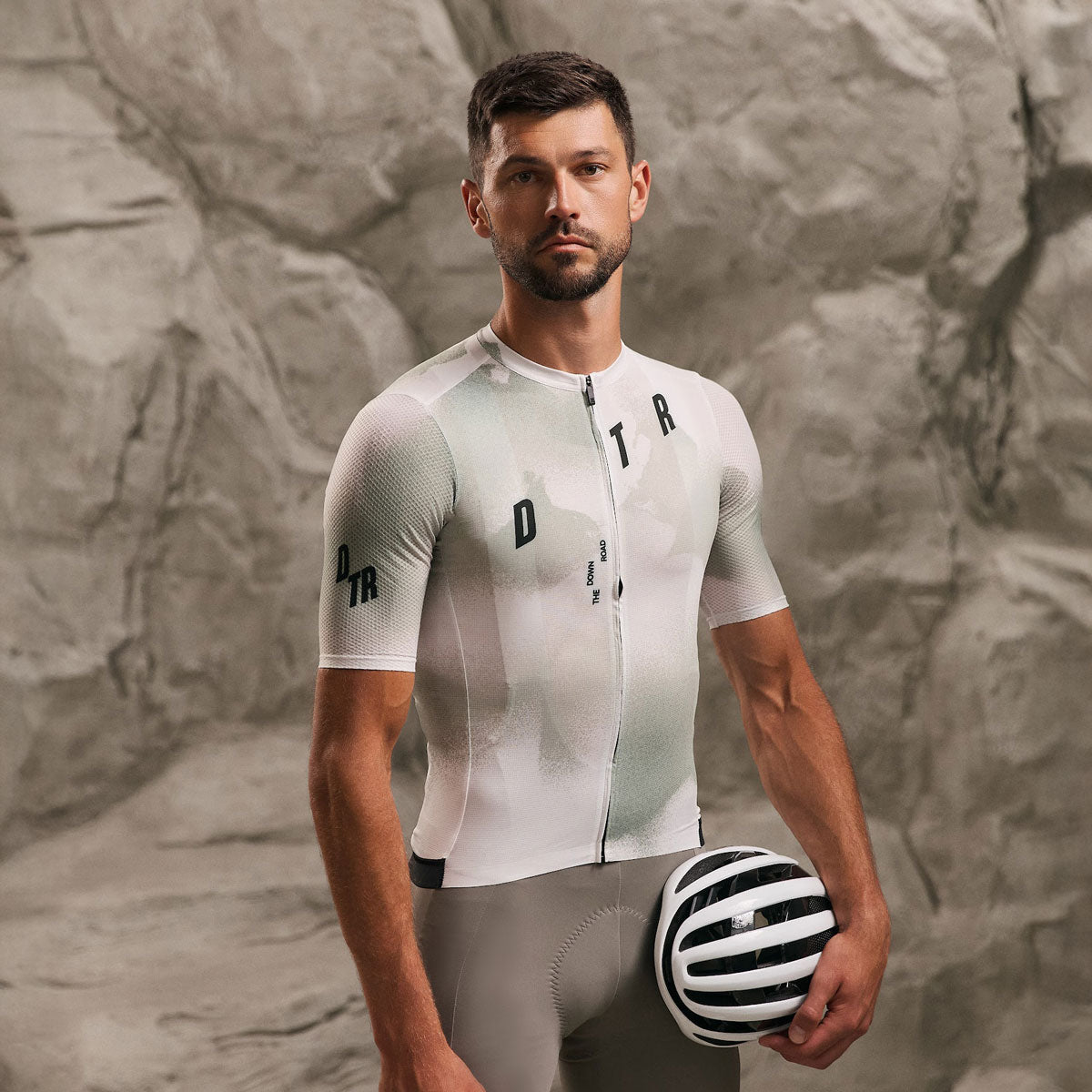
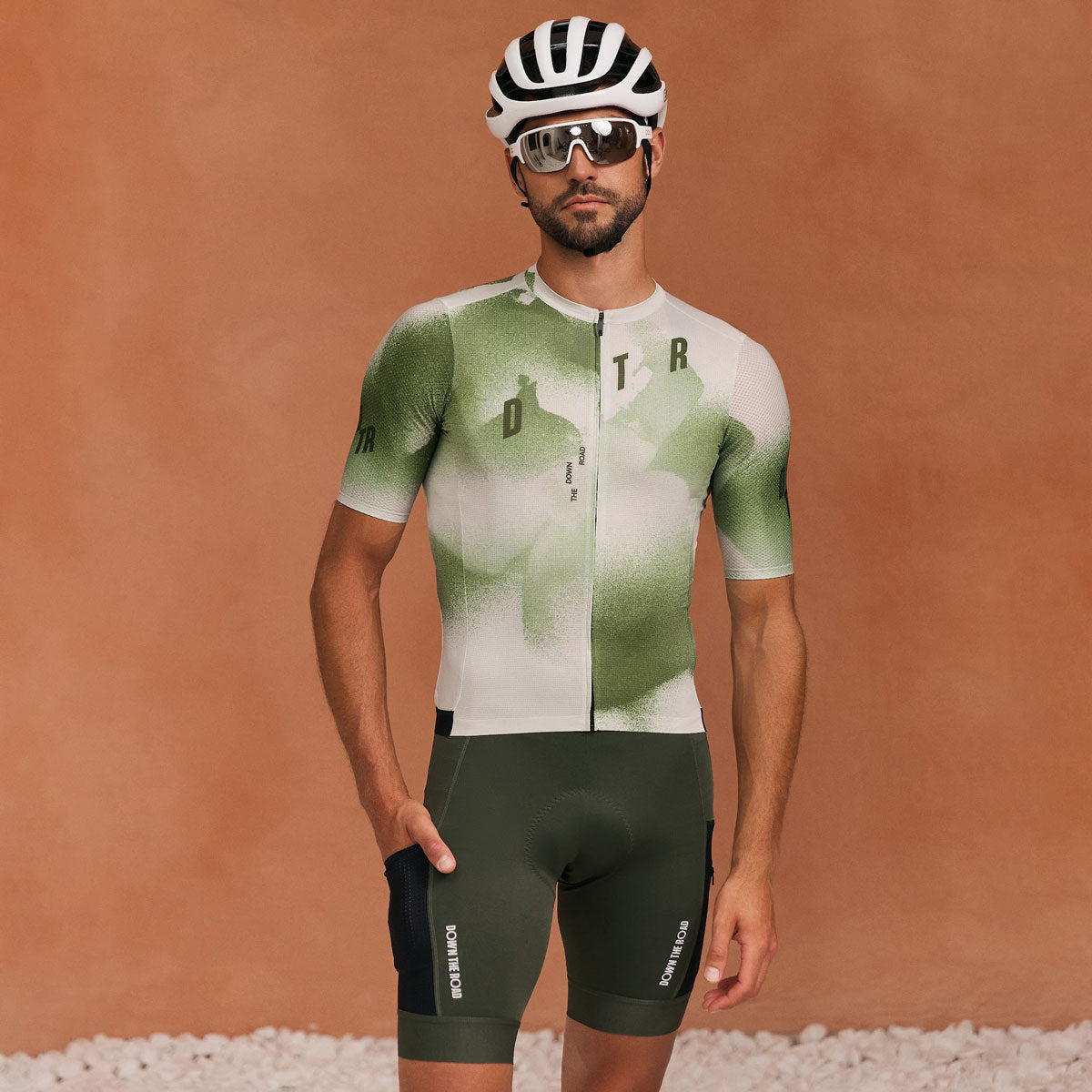
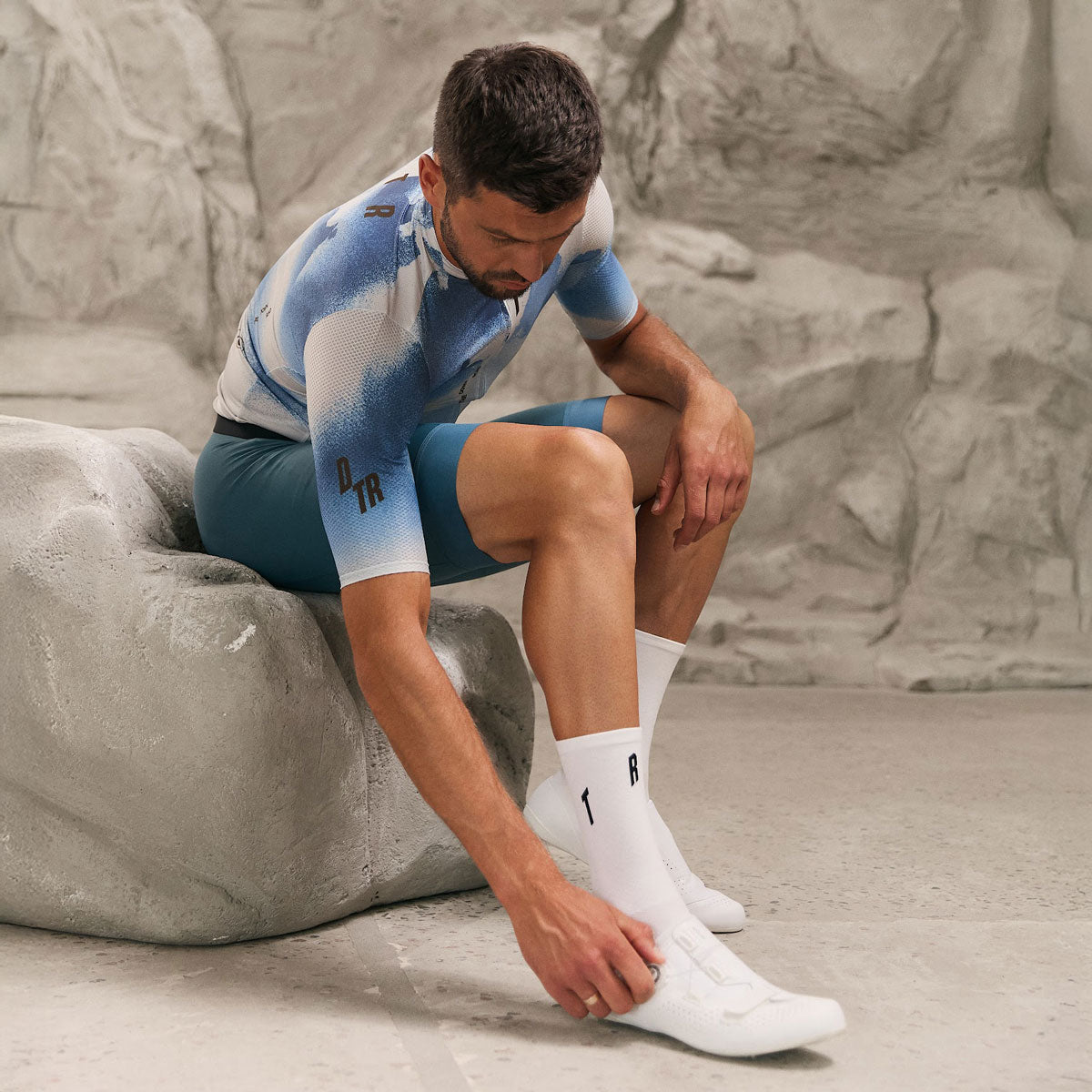
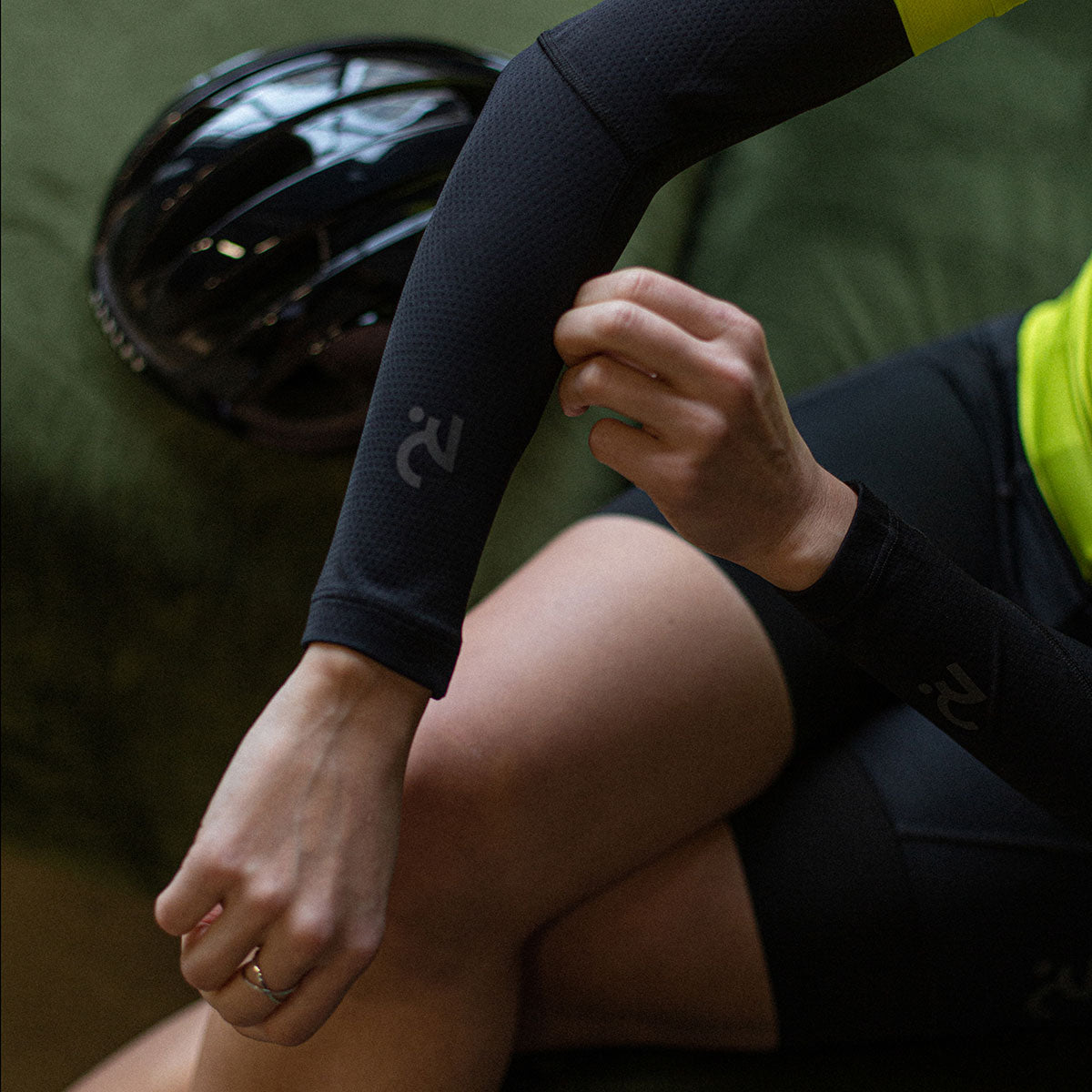
For a half-day alpine ride, that typically means: a long sleeve jersey or short sleeve plus arm warmers, a technical base layer, a packable wind layer for the descent, a buff or skull cap, and full-finger gloves once you're consistently above 2,000m. Pair it with a long sleeve jersey built for temperature range rather than pure warmth, and check the fit against your usual size in our kit sizing guide if you're buying for a trip rather than your usual local loop.
FAQ
Do you need a base layer at altitude even in summer?
Yes. Altitude air is colder than the same latitude at sea level, and the temperature swing between climb and descent is wider. A lightweight technical base layer manages sweat on the way up and adds insulation on the way down, regardless of season.
Is UV really stronger at altitude?
Yes — UV exposure increases roughly 10-12% for every 1,000m of elevation gain, and reflects harder off snow, pale rock, and thin cloud. Long sleeves and UPF-rated fabric matter more here than on flat rides at the same latitude.
What temperature swing should I plan for at altitude?
A 15°C or greater swing between a sun-exposed climb and a fast, shaded descent is common above 2,000m. Pack for the coldest 20 minutes of the ride — usually the descent — rather than the average.
Build out your altitude kit: DTR headwear for the climb-to-descent swing is at /collections/cycling-headwear.
DTR — performance cycling and triathlon apparel, designed and developed in Ukraine.

Leave a comment
This site is protected by hCaptcha and the hCaptcha Privacy Policy and Terms of Service apply.