

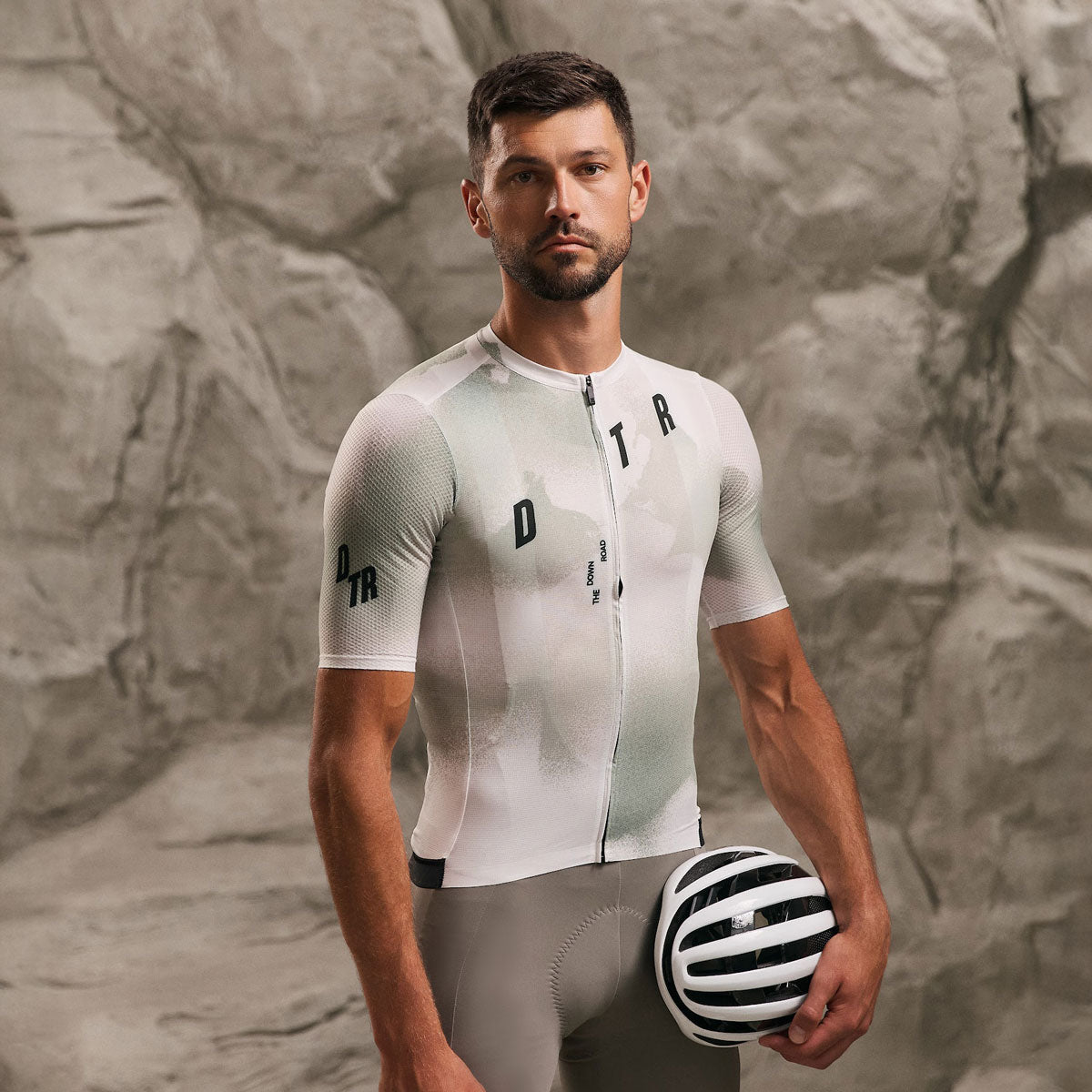
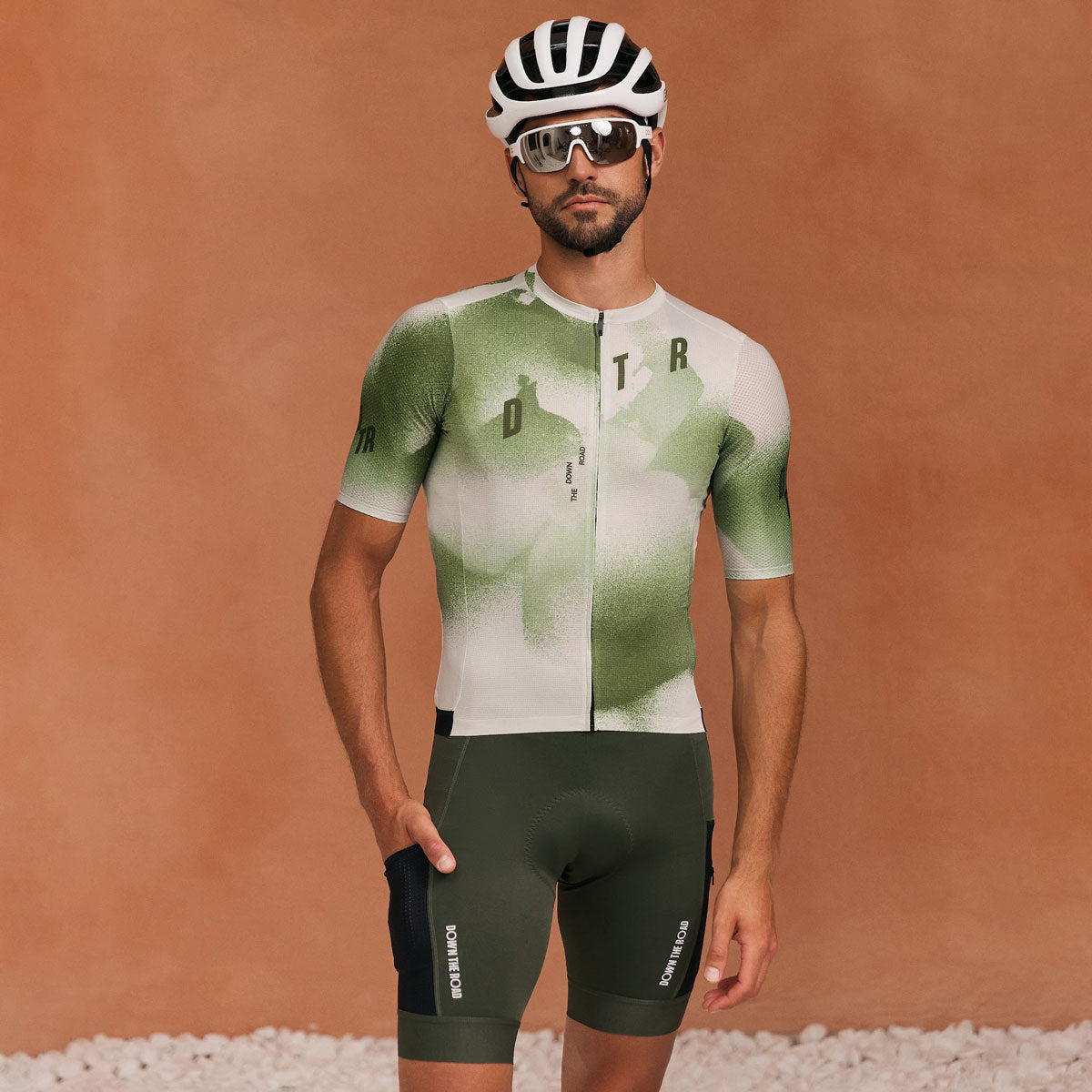
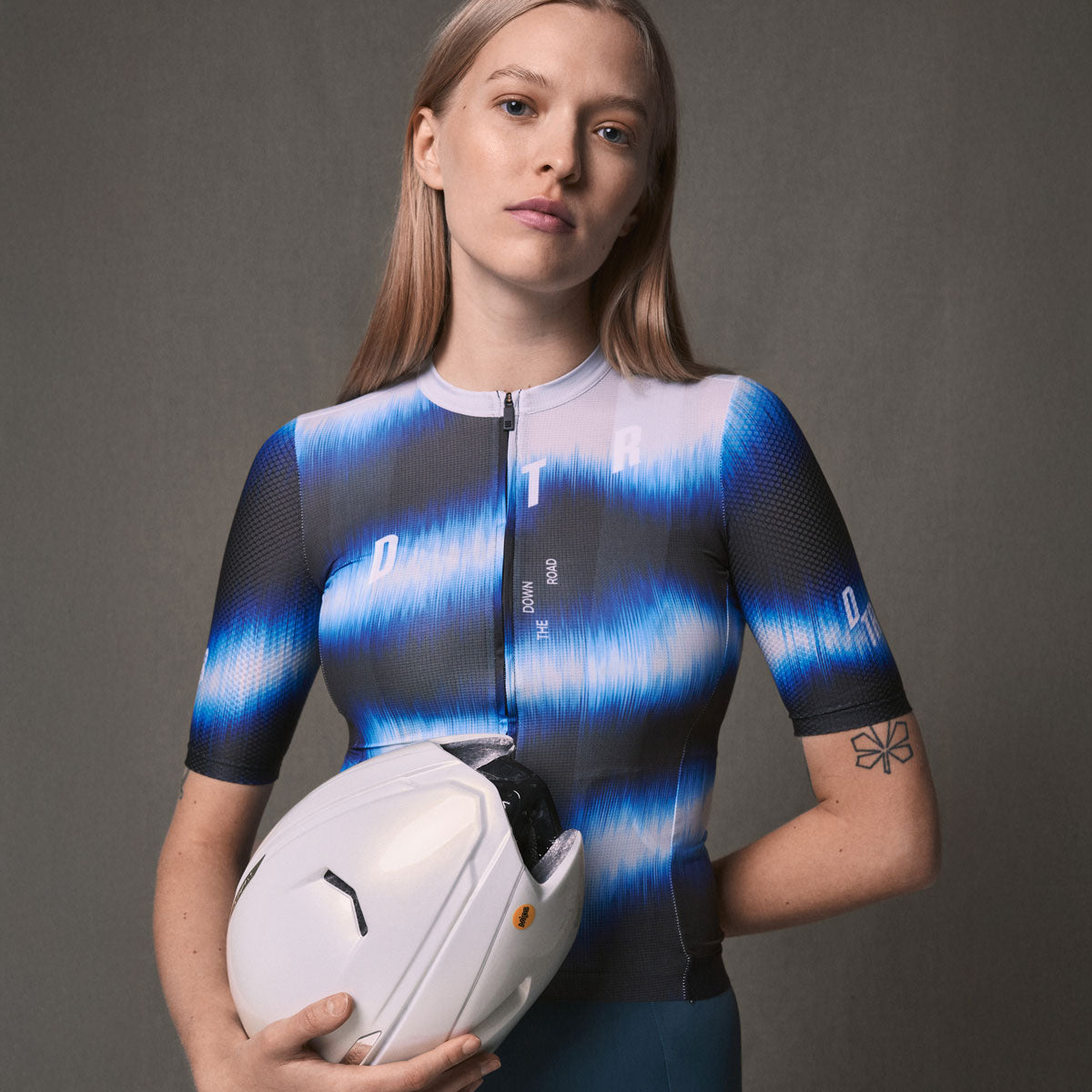
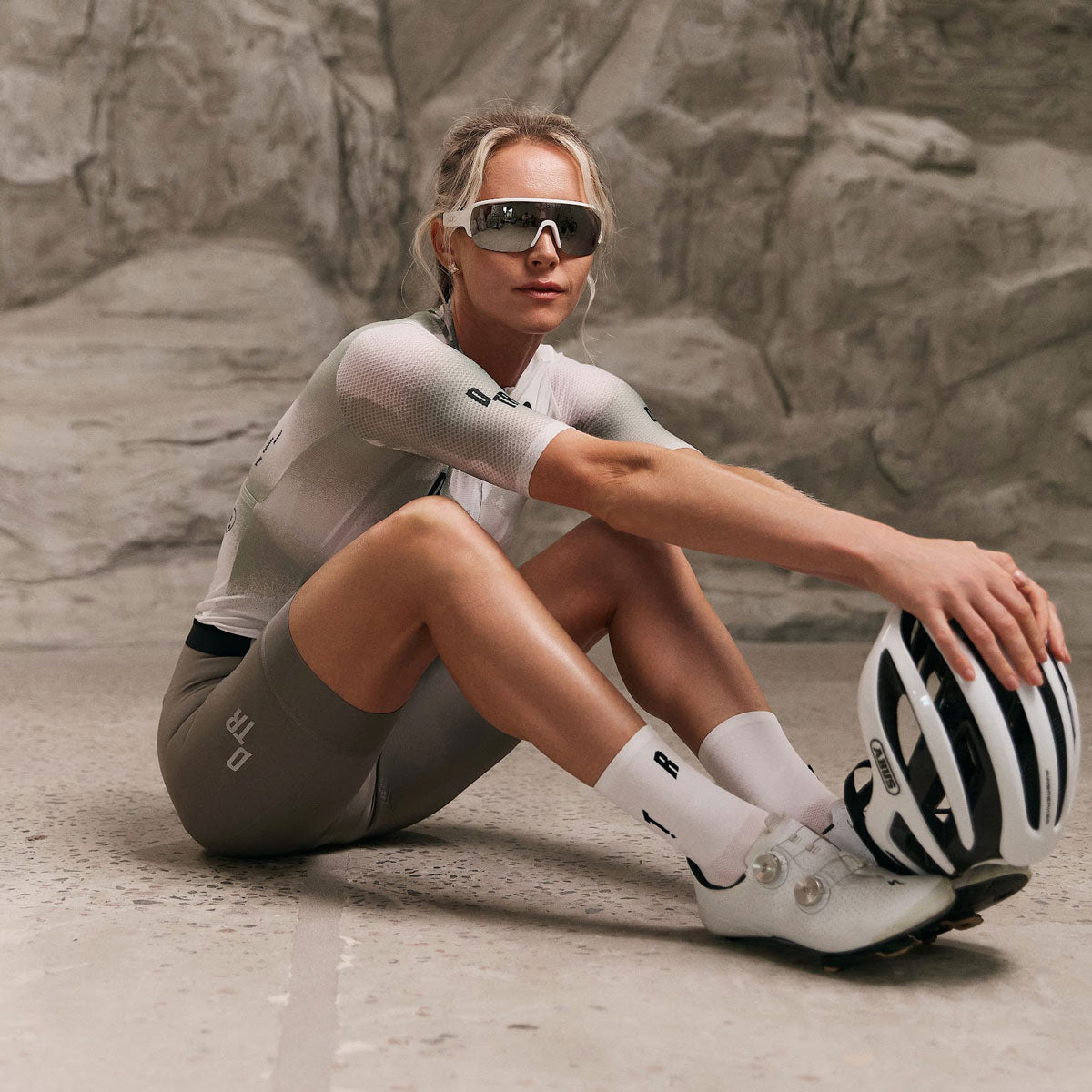
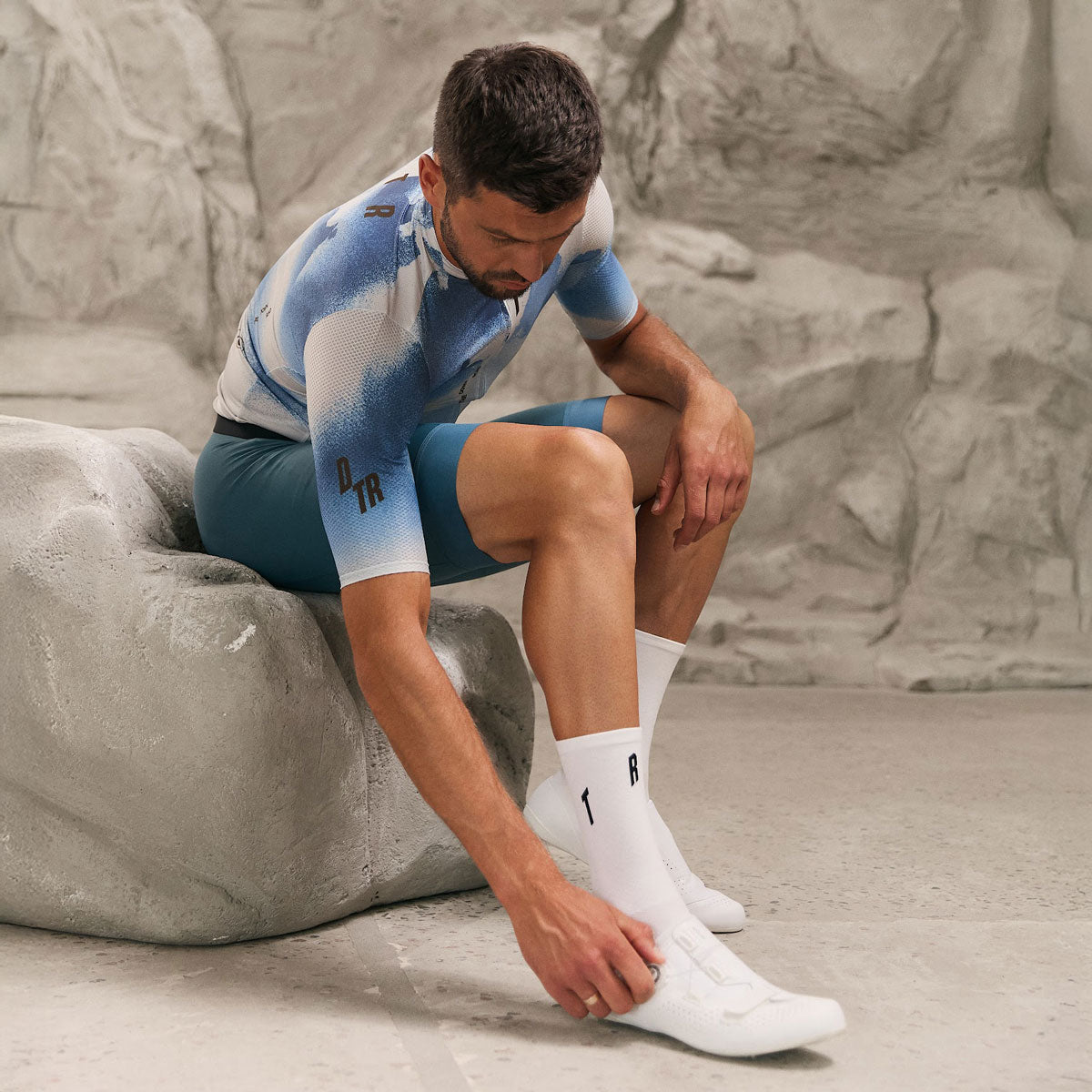
When a ride starts cold and finishes warm, start in a short-sleeve jersey with arm warmers and a gilet or packable windbreaker, then take pieces off as the day warms. Arm warmers and a gilet roll into a jersey pocket, which a long-sleeve jersey never will. This guide covers what to start in, what you can shed on the move and what has to be decided at the car park, framed by big swings of 10 degrees or more.
What do you wear when the start is cold but the day warms up?
Dress for how you will feel ten minutes into the ride, not for how you feel on the doorstep. For a start somewhere in the single digits that warms to the mid-teens, that usually means a short-sleeve jersey, arm warmers, a gilet and bib shorts, with a base layer underneath if the first hour is very cold. The temperature-by-temperature detail sits in our guide to what to wear by temperature.
Which layers can you take off mid-ride?
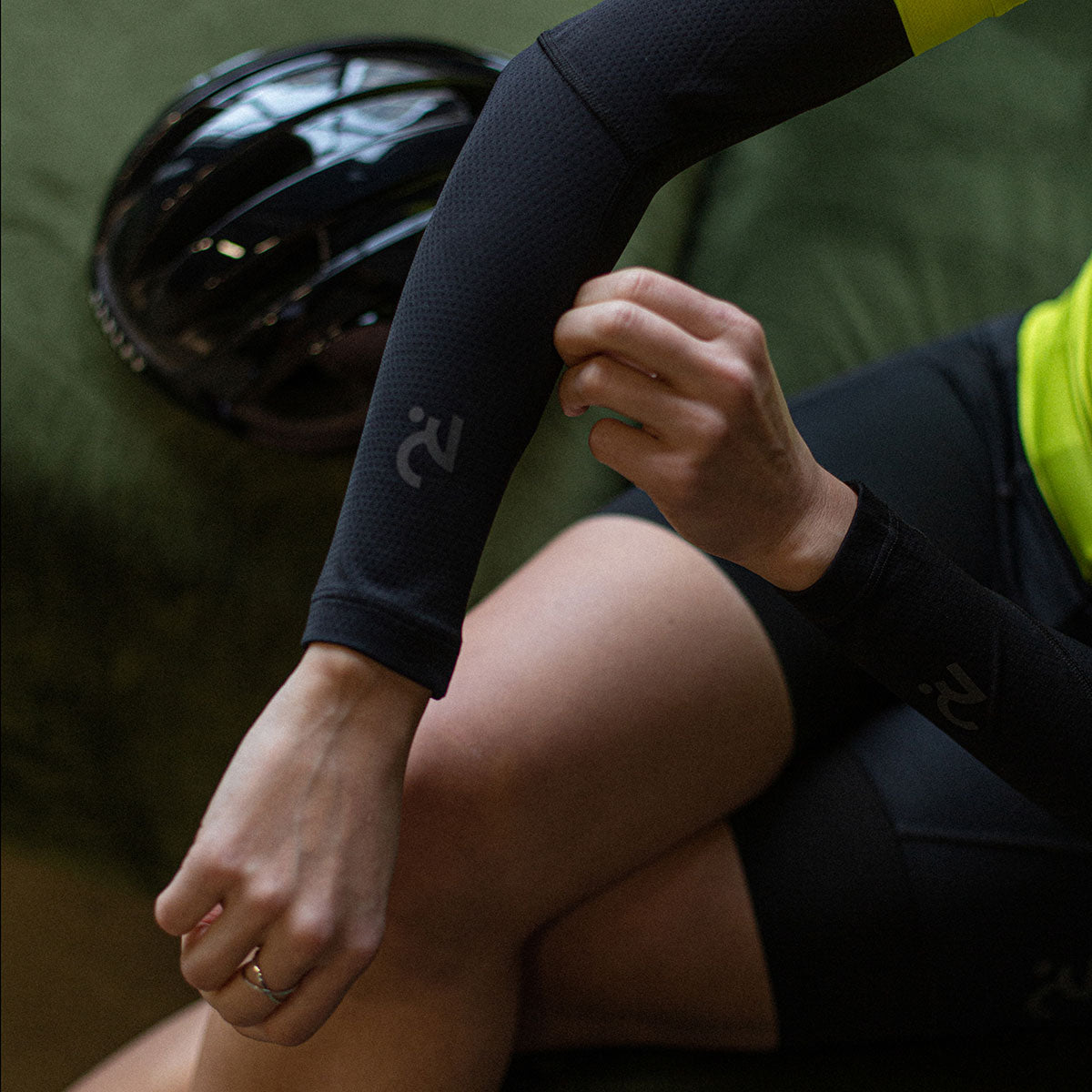
Arm warmers, a gilet and a windbreaker all come off on the move and stow in a pocket. Leg warmers and a base layer do not, because both need a stop, so decide on them before you leave. As a rough guide, leg warmers suit around 8 to 16°C; if the afternoon will be warmer than that, think twice before wearing them. The DTR arm and leg warmers are cut for exactly this kind of day.
How much can you fit in your jersey pockets?
A rolled gilet or a pair of arm warmers takes about one rear pocket each, so plan the layers you will shed around the pockets you have. Keep food and a phone in the pockets that are easiest to reach and put the shed layers in the middle. For more on what a jersey carries, see how cycling jersey pockets work.
Are arm warmers better than a long-sleeve jersey for a big temperature swing?
Yes, for a swing of ten degrees or more. A long-sleeve jersey commits you to sleeves for the whole ride, while arm warmers let you adapt without stopping. Our comparison of arm warmers and a long-sleeve jersey explains where each wins.
Gilet or packable windbreaker?
A gilet keeps your core warm and your arms free to vent, while a packable windbreaker blocks wind on the descents. For a day that warms steadily, the gilet is the easier layer to live with and to stow. Gilet vs packable jacket goes through the choice, and the DTR vests and windbreakers are the two options to compare.
When should you take layers off?
Take them off before you start to sweat, not after, as damp layers cool you on the next descent. Put layers back on before a long descent, not at the bottom of it. If you are layering for a cold-weather ride from the start, how to layer for cold-weather cycling covers the build-up, and our autumn cycling guide covers the season.
Cold start, warm finish: quick answers
What is the best layering system for a 10 degree swing?
A short-sleeve jersey, arm warmers and a gilet. Each piece comes off on the move and stows in a pocket.
Should I wear a base layer on a cold morning?
If the first hour will be below roughly 8°C, yes, but remember it stays on all day. A thin one is easier to live with when it warms up.
Can I take leg warmers off while riding?
Not comfortably. Leg warmers need a stop, so only wear them if the cold will last long enough to justify one.
Build the kit for a cold start in the DTR arm and leg warmers collection.
DTR — performance cycling and triathlon apparel, designed and developed in Ukraine.

Leave a comment
This site is protected by hCaptcha and the hCaptcha Privacy Policy and Terms of Service apply.