

Embroidered patches and applied badges are the visible face of a real shift in women's cycling kit — away from muted, borrowed-from-the-men's-range design and toward kit that says something. On technical stretch fabric, though, the version that lasts is artwork built into the garment rather than stuck onto it. This guide covers what personalisation survives a season of washing and riding, and how to brief it.
Why personalisation is having a moment
For years, women's cycling kit was a colourway decision made downstream of the men's line. That has changed. Riders are asking for artist-led graphics, club identity, names, flags and colour that reads as a deliberate choice rather than a default. The demand is for kit that is recognisably yours in a bunch.
The practical question is how to get that without compromising a garment that has to stretch, wick and stay put for four hours.
What actually holds on technical fabric
Applied patches — iron-on, sewn-on, velcro-backed — behave badly on performance lycra. The fabric stretches in four directions; the patch does not. The result is puckering around the edges, a stiff panel where you need movement, and adhesive that lifts after a handful of washes. On a jersey back or a sleeve, it also sits directly where you would rather have breathability.
Embroidery has the same problem in a milder form. It adds weight, resists stretch locally, and the underside can abrade skin on a close race-fit cut. It works on caps and casual pieces. It is a poor choice on a bib short leg or a trisuit panel.
None of this makes the trend wrong. It makes the execution method matter.
Sublimation: the graphic becomes the fabric
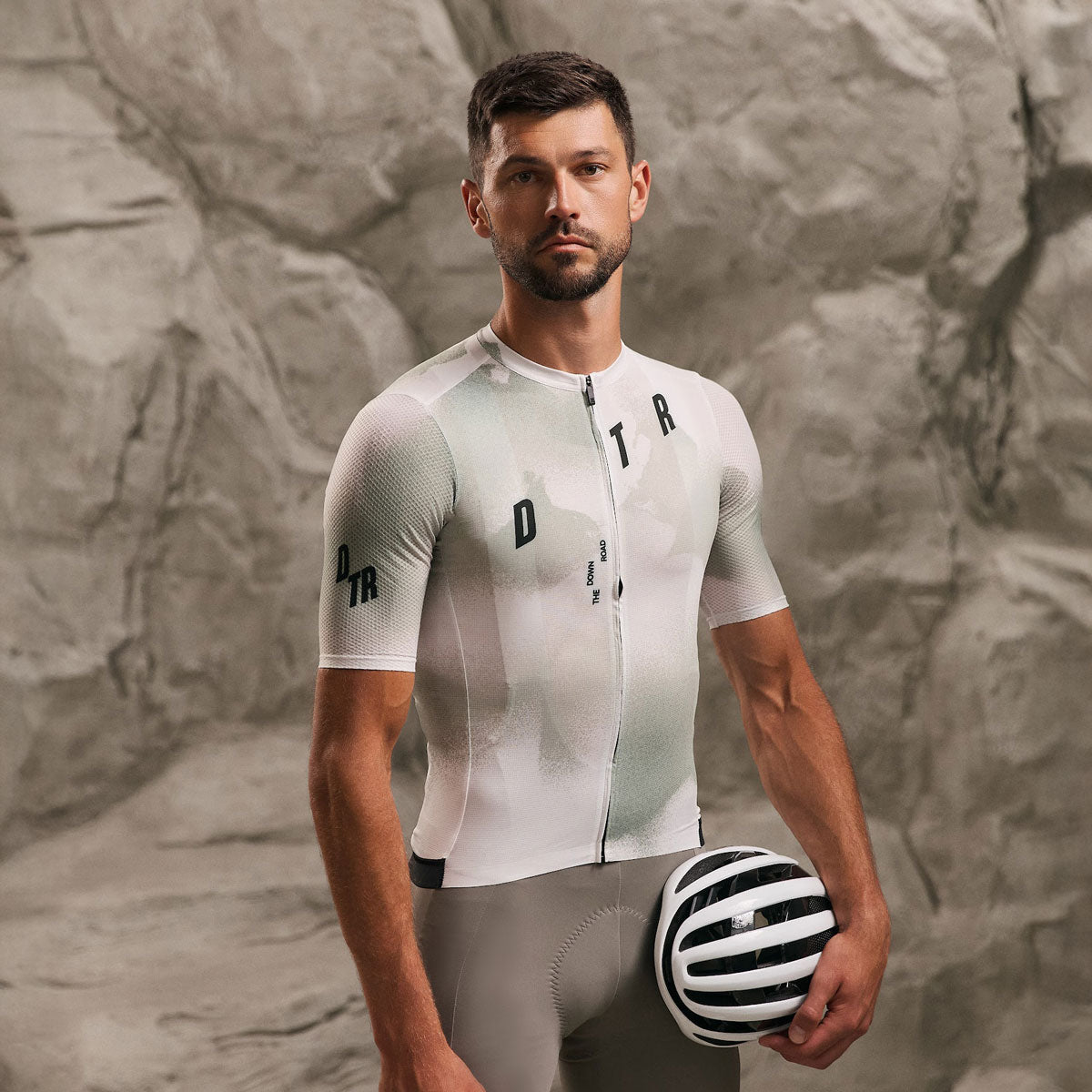
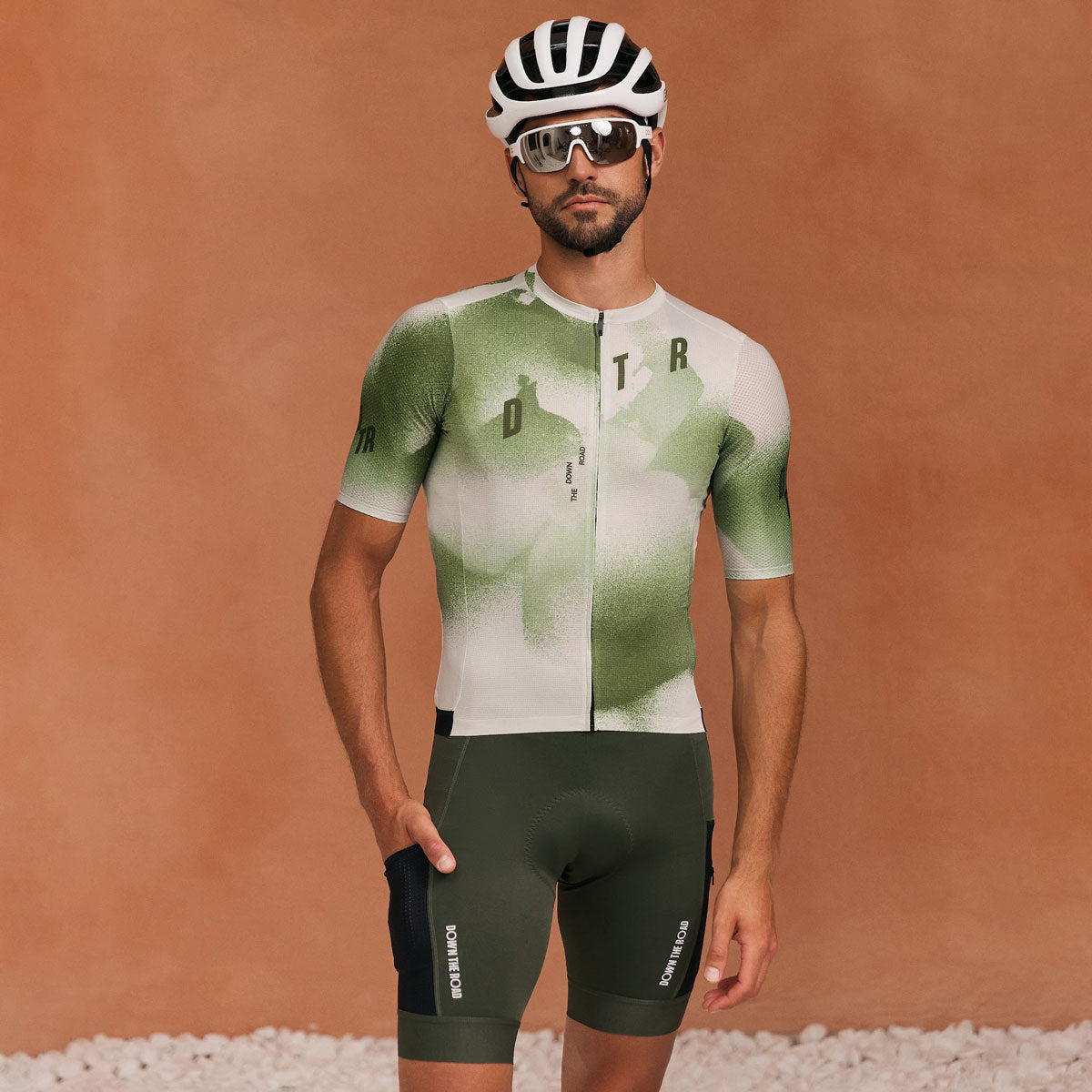
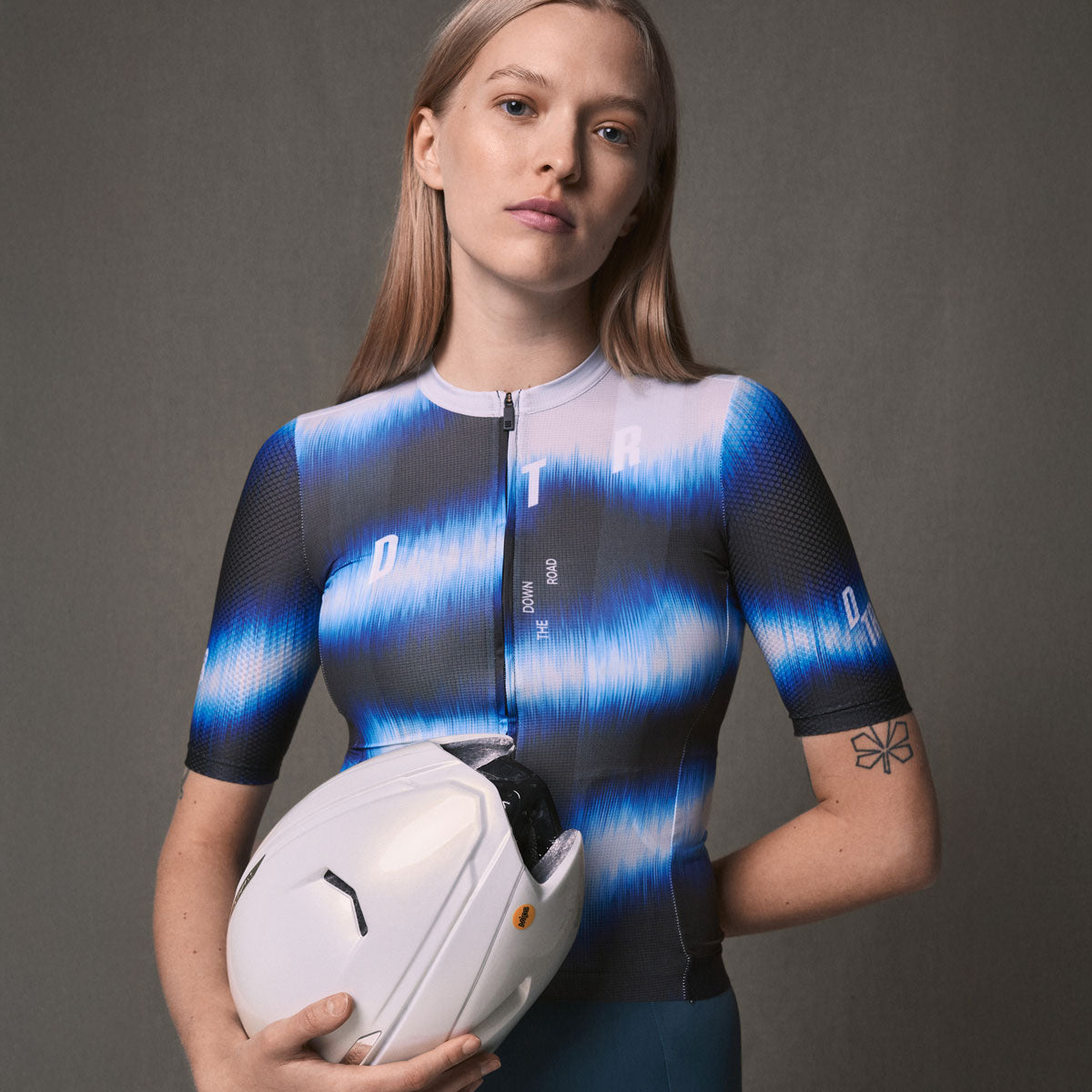
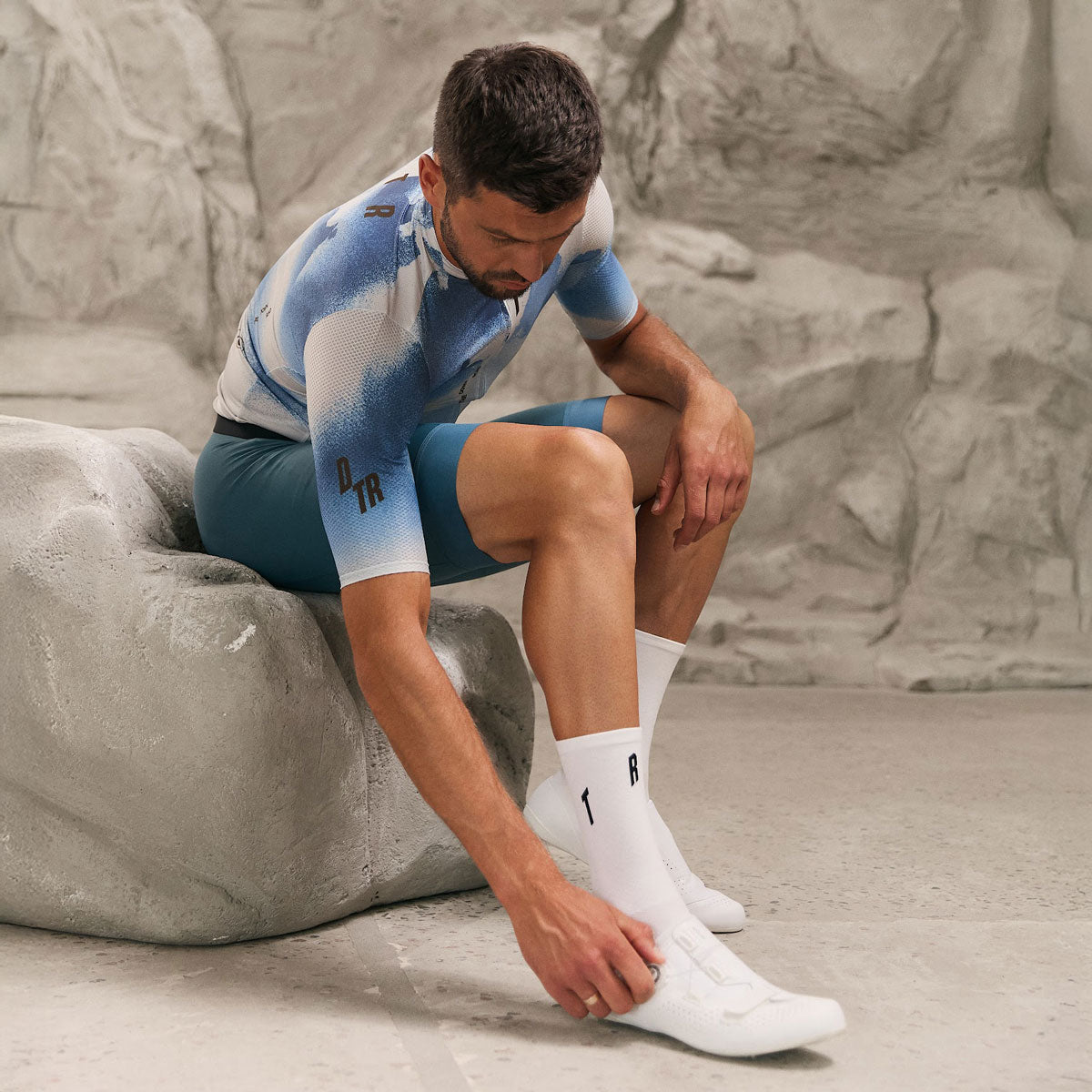
Sublimation prints the dye into the fibre rather than laying ink on top of it. The finished panel has no added thickness, no edge to lift, and no stiff patch fighting the stretch. It does not crack, peel or fade the way a surface print does, and it costs nothing in breathability.
The design freedom is the part riders underestimate. Because there is no per-colour setup, a twelve-colour illustration is no harder to produce than a two-colour logo. Gradients, full-bleed artwork, repeated pattern across a panel — all of it is available. If you want the look of a patch, it can be rendered as one, sitting flush in the fabric.
More on the design process in how to design custom cycling kit.
Names, flags and individual identity
The most common personalisation request is the simplest: a name, a country, initials. On a custom order these are sublimated in a fixed font and position so a squad still reads as one team while every rider's piece is individually theirs.
That constraint is deliberate. Free-placed names on a team order produce a group photo where nothing lines up. Fixing the font and the position keeps the collective identity intact and still gives each rider their own garment.
For sponsor artwork, placement is its own discipline — see sponsor logos on cycling kit.
Designing for women's fit, not shrinking a men's design
A graphic laid out on a men's pattern does not transfer cleanly to a women's one. Panel shapes differ, seam positions differ, and a design that reads correctly across a men's chest can distort across a different pattern. Artwork placed without accounting for that ends up with a logo bending over a seam or a stripe that stops short.
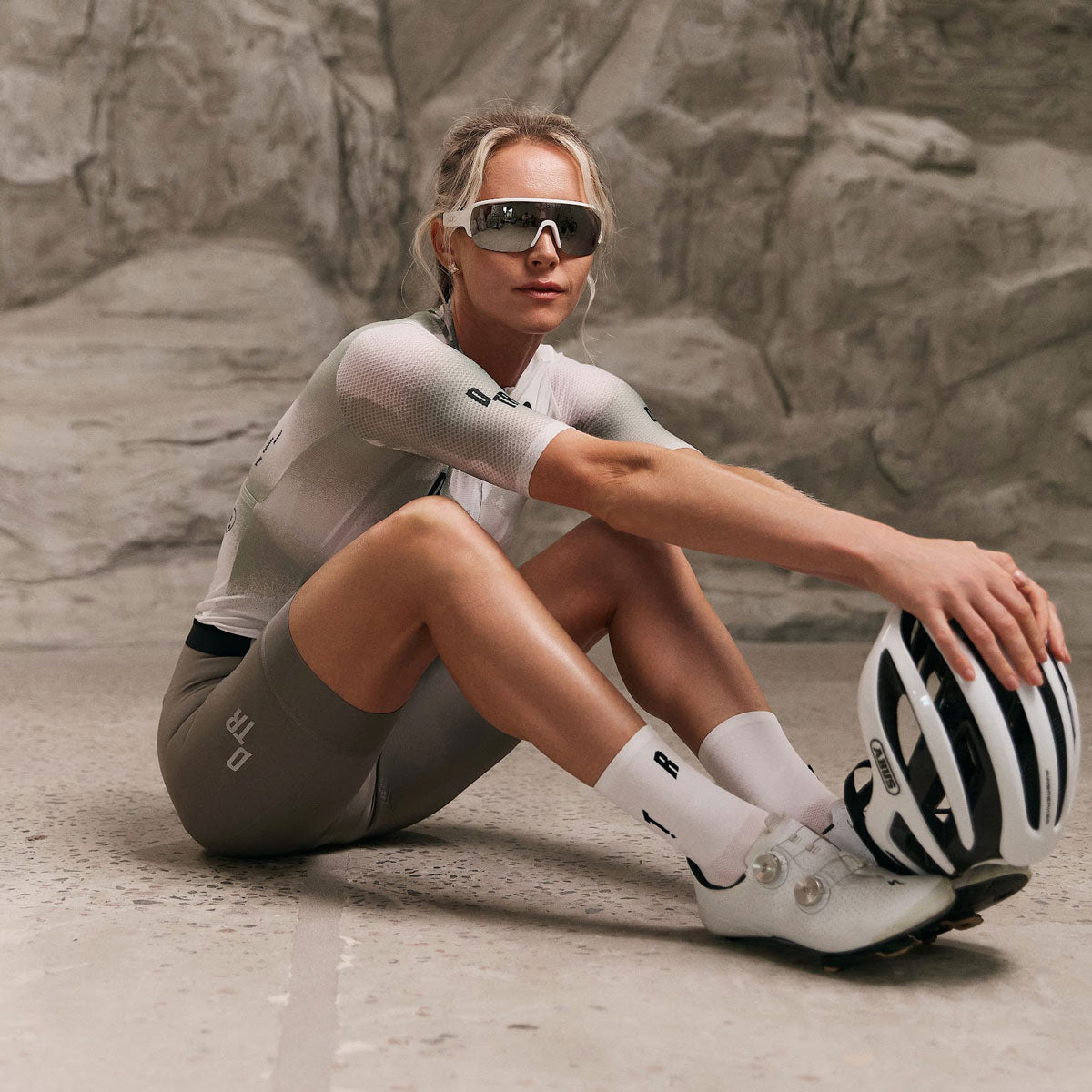
Women's kit at DTR is developed as its own pattern rather than scaled down from the men's — cut, chamois placement and strap construction are drawn for female athletes. Custom artwork is laid out against that pattern, not adapted from the men's layout after the fact. If your club is ordering both, expect the same design to be set out twice.
What you can personalise on a custom order
Full-garment artwork across jerseys, bib shorts, trisuits, base layers, vests, windbreakers, socks and caps. Club or event identity. Individual names and countries. Sponsor logos, supplied as vector files. Colourways matched to an existing brand palette.
Minimums start from 5–10 pieces depending on the garment, which is low enough for a small women's group inside a larger club to run its own design. Nothing goes to production without your sign-off on the visual. For lead times, see the custom kit timeline.
FAQ
Can you put patches on cycling kit?
You can, but applied patches pucker and lift on stretch technical fabric and add stiffness where you need movement. Sublimating the same artwork into the panel gives the look without the failure mode.
Will a sublimated design fade?
No. The dye sits inside the fibre rather than on the surface, so there is nothing to crack or peel. Colour holds through normal washing for the life of the garment.
Can each rider have her own name on club kit?
Yes. Names and countries are sublimated in a fixed team font and position, so individual pieces stay personal while the squad still reads as one design.
Is there a minimum order for a small women's group?
Minimums start from 5–10 pieces depending on the garment — workable for a sub-group within a club rather than requiring a full club-wide order.
Can you match our existing club colours?
Yes. Supply the colour references and vector artwork and the design is built to them, with a visual for sign-off before anything is produced.
Tell us your brief and we'll take it from there: request a custom quote.
DTR — performance cycling and triathlon apparel, designed and developed in Ukraine.

Leave a comment
This site is protected by hCaptcha and the hCaptcha Privacy Policy and Terms of Service apply.