

A women's cycling windbreaker is a light, packable shell that cuts wind and sheds light rain, worn over a jersey when the temperature drops or the weather turns. Choose one by fit, weight and how well it breathes. This guide covers what to look for, how it should fit, and how to layer it.
What does a cycling windbreaker actually do?
It blocks the wind that strips heat from your chest and arms, and it turns away a light shower. It is not a waterproof hardshell: that is a different jacket for a different job, and DTR does not make one. Think of the windbreaker as the layer you carry for the descent, the cold start or the front that rolls in halfway round. For the full comparison, read windbreaker vs rain jacket.
What should a women's windbreaker fit like?
Close enough not to flap, loose enough to sit over a jersey and a base layer. A women-specific cut matters here: sleeve length, shoulder width and the line at the hip are shaped for a woman's body rather than scaled down from a men's pattern. The DTR Paceline Windbreaker has an ergonomic women-specific fit and runs slightly big, so if you want a closer fit, size down, especially when you will wear it over a lightweight jersey.
How light and packable should it be?
Light enough that you forget it is in your pocket. The Paceline weighs 85 g in size S and packs into its own pocket, which slips into any jersey back pocket. If a jacket does not pack down small, you will leave it at home, and then it cannot help you. Our guide to packable windbreakers covers the carry question in more depth.
Will it make me too hot?
Not if it breathes where you need it to. The Paceline has a wind- and water-repellent front panel and sleeves for protection, and a laser-perforated back so heat and moisture can leave when you push the pace. A two-way YKK zipper with auto lock lets you open it from the bottom while keeping your chest covered, which is the quickest ventilation fix on a climb.
How do you layer a windbreaker?
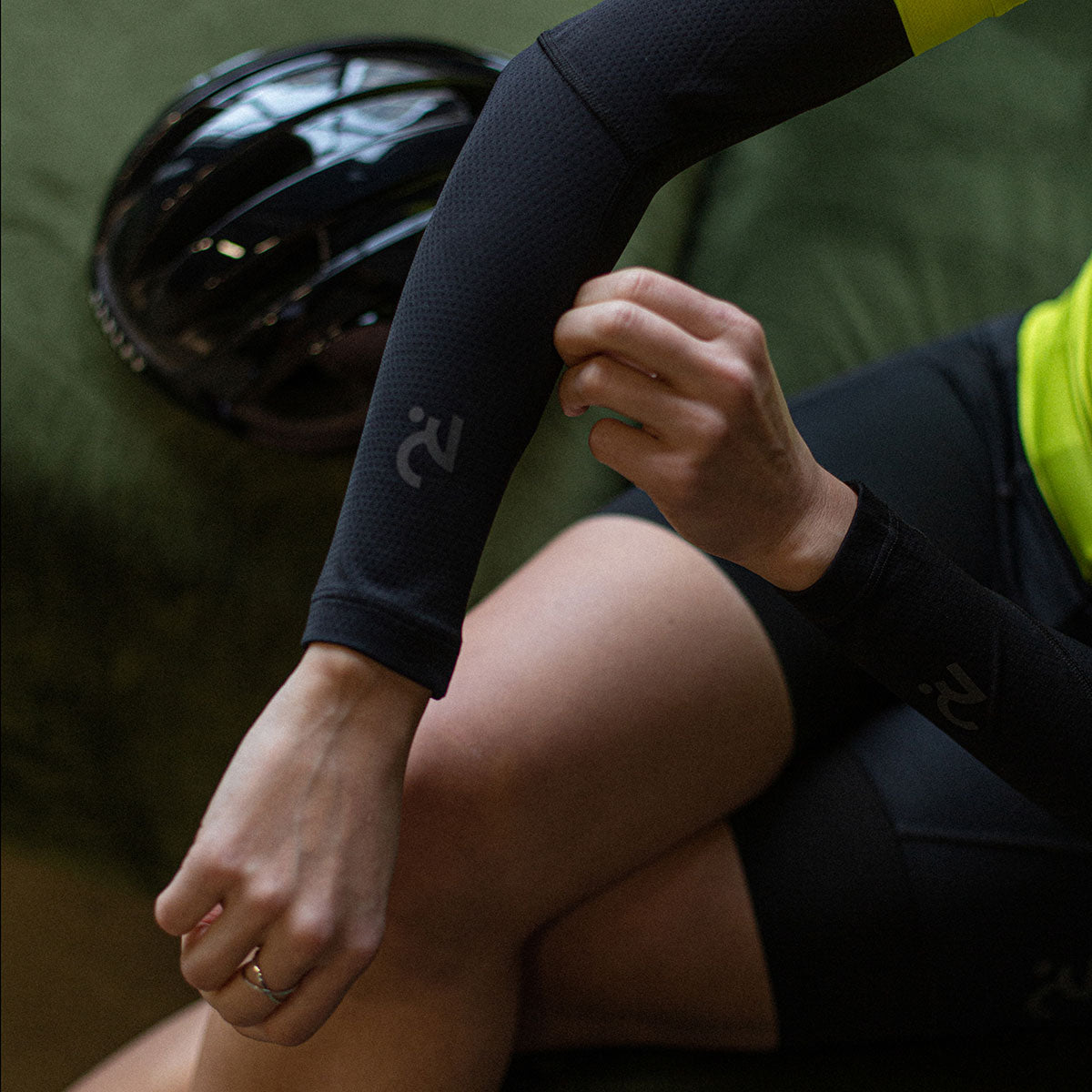
Start with the base: a women's base layer to move sweat off the skin, then a jersey, then the windbreaker on top. Add arm warmers before you reach for a heavier jacket, because they are easier to remove. For colder rides, build the system in the order set out in how to layer for cold-weather cycling, and consider a long-sleeve option such as the ones in our women's long-sleeve jersey guide.
Windbreaker or vest: which do you need?
A windbreaker covers your arms, so it wins on cooler, windier days; a vest keeps your core warm and leaves your arms free, so it wins on milder ones. If you ride in changeable weather, many riders carry the windbreaker and pair it with arm warmers. We compare the two in gilet vs packable jacket, and the women's vests are one click away.
Is it visible in low light?
Reflective details on the Paceline add visibility when the light drops, which matters in autumn and winter when a ride can finish after dark. Choose a colour that stands out from the road verge, and treat reflective detail as an addition to your lights, never a replacement.
What should I check before buying?
Zipper action, back ventilation, how it packs and whether the cut leaves enough sleeve length when you reach for the bars. Try it on in your riding position and then compare it against the windbreaker guide.
Ready to choose? See the DTR women's windbreakers.
DTR — performance cycling and triathlon apparel, designed and developed in Ukraine.

Leave a comment
This site is protected by hCaptcha and the hCaptcha Privacy Policy and Terms of Service apply.