

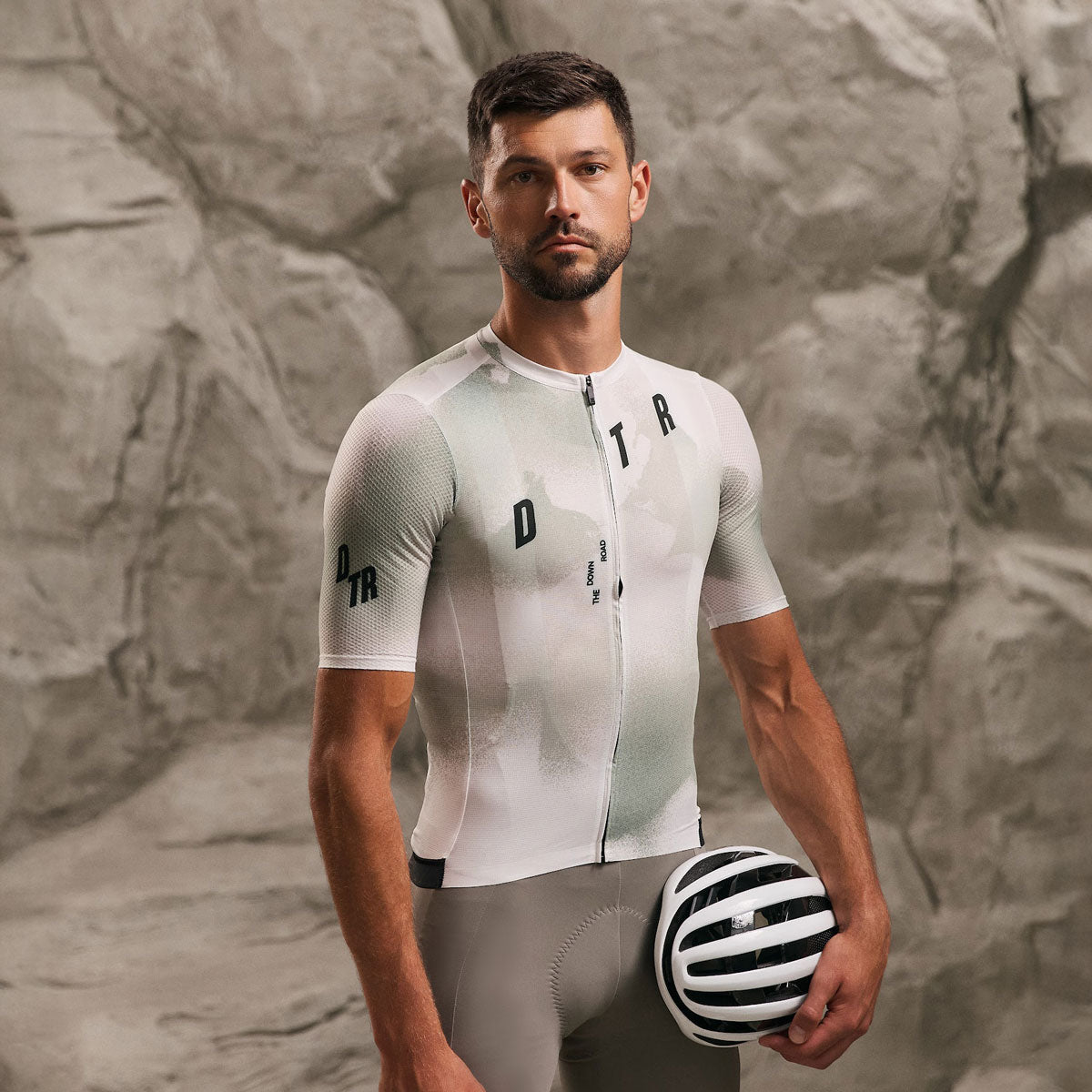
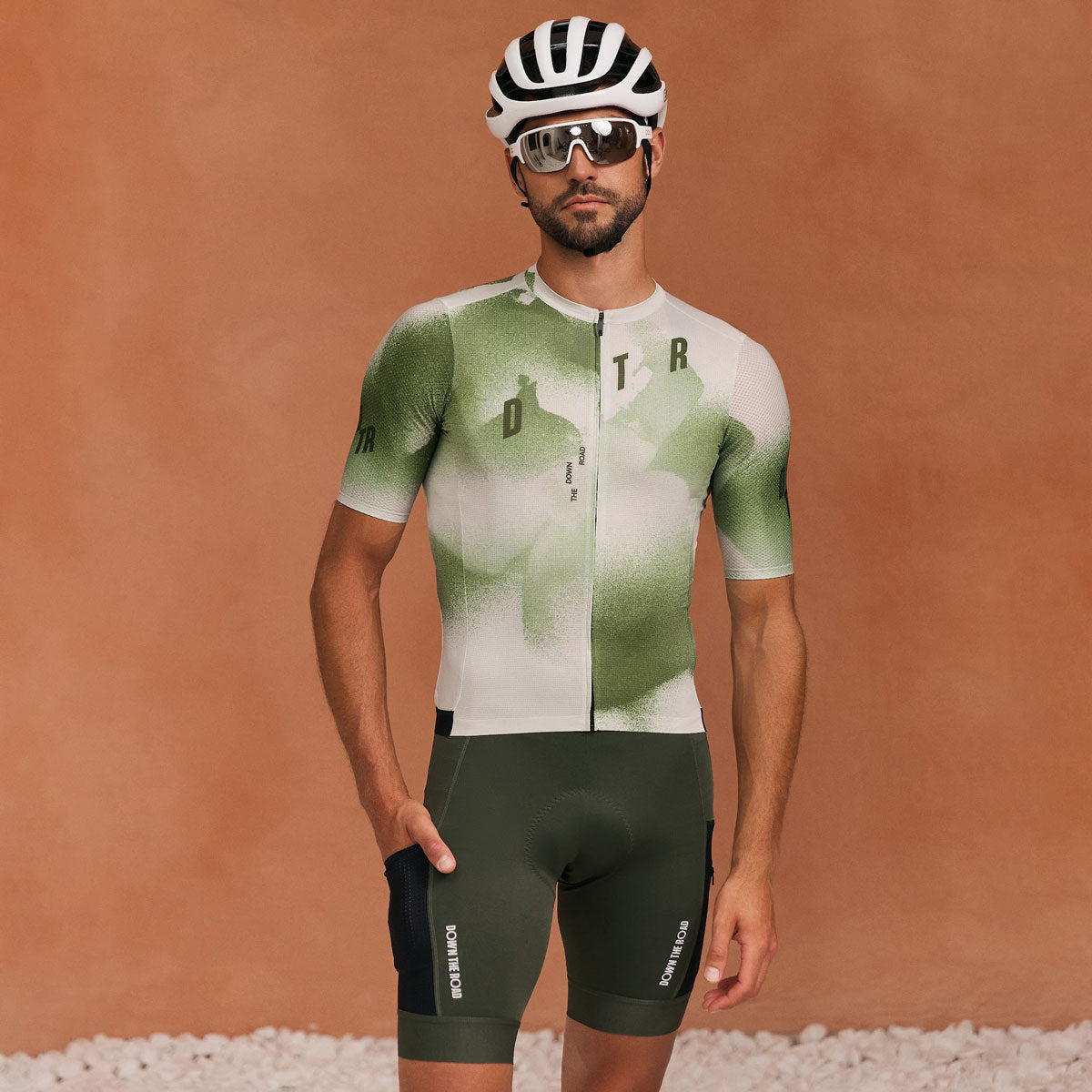

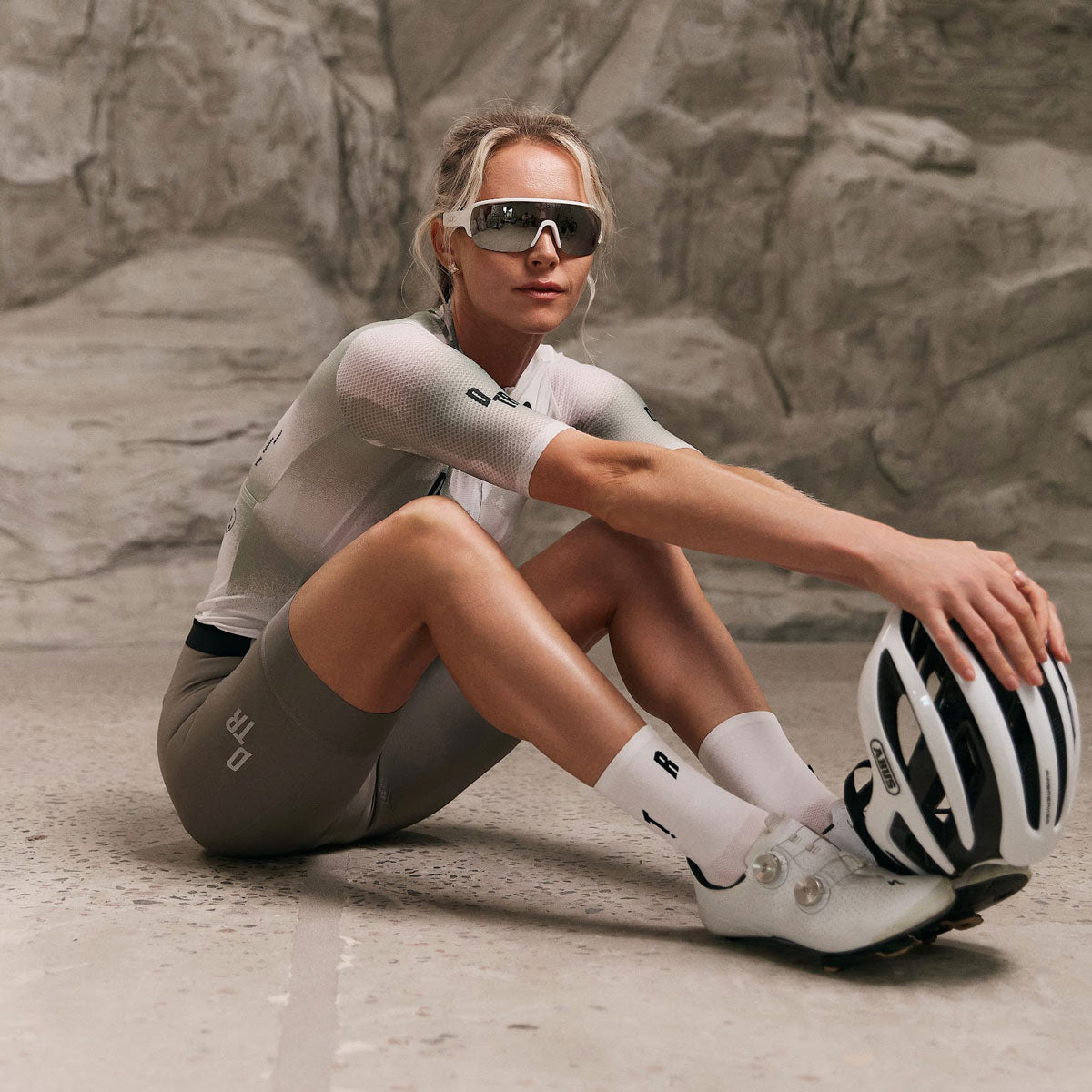
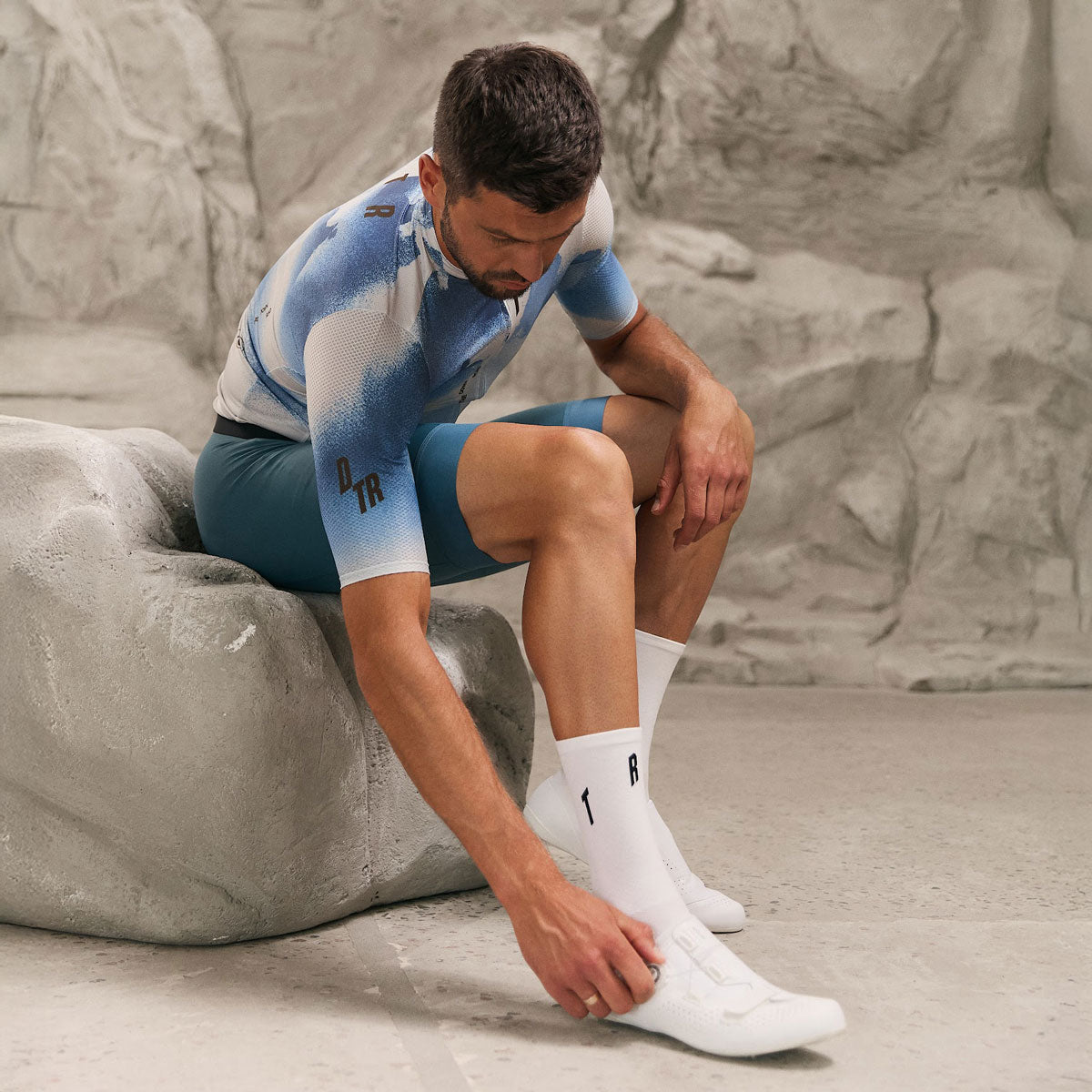
A thermal cycling jersey earns its place from roughly 5°C to 12°C — the band where a short sleeve jersey and arm warmers stop holding heat but a winter jacket traps too much of it. This guide covers what actually makes a jersey thermal, the conditions it handles better than the alternatives, and when a base layer under a standard long sleeve is the smarter call.
What makes a jersey thermal
Brushed backing, not thickness. The inside face of the fabric is raised into a soft nap that traps a thin layer of warm air against the skin. That trapped air does the insulating, which is why a good thermal jersey can be lighter than a heavy unbrushed one and still be considerably warmer.
Thickness on its own mostly adds weight and bulk. It also costs breathability, which matters more in winter than most riders expect — you still sweat at 6°C, and a fabric that holds that moisture against the skin will make you colder on the first descent than a thinner one would have.
The temperature band it owns
Roughly 5°C to 12°C for a rider working at a steady endurance pace with a light base layer underneath. Above about 12°C a thermal jersey overheats you on the first sustained climb. Below about 5°C it needs help — a windproof gilet over the top, a thermal base layer under it, or both.
Those numbers move with effort. A hard group ride shifts the whole band down by two or three degrees because you generate more heat; a slow recovery ride shifts it up. Treat the range as a starting point and calibrate it against your own first cold ride of the season. Our temperature guide maps the full range.
Thermal jersey, or a base layer under a long sleeve?
A thermal base layer under a standard long sleeve jersey is the more flexible system, and often the better first buy. You can dial the insulation up or down by changing only the base layer, so one jersey covers a much wider band, and the same base layer works under a summer jersey when the weather turns.
A thermal jersey is the better call when you want one garment to do the job. Fewer layers means less bulk at the shoulders, less fabric to bunch at the waist, and a cleaner line under a gilet. It is also warmer for its weight, because a brushed inner face against a base layer traps air more efficiently than two smooth fabrics sliding across each other.
If you are buying one thing for autumn, buy the base layer. If you already own good base layers and you are still cold, buy the thermal jersey. More on the logic in our cold-weather layering guide.
When you want a jacket instead
A jacket when the outer surface has to stop wind or water; a thermal jersey when it only has to hold heat. That is the whole distinction. A thermal jersey is a knitted fabric — air passes through it, which is what keeps it breathable and also what makes it feel suddenly thin at 45 km/h on a descent.
Below about 5°C, or in any sustained wind, put something windproof over the thermal jersey rather than replacing it. A gilet handles most of it and packs into a pocket when the sun comes out. See gilet vs jacket for where that line sits.
Wind is the variable that breaks the temperature rule
Air temperature tells you how to dress for climbing. Wind chill tells you how you will feel descending, and on a winter ride the descent is where riders get genuinely cold. A 20 km/h headwind at 8°C hits the chest like 3°C, and the chest is the panel with the least working muscle behind it to generate heat.
This is why many thermal jerseys use a different fabric on the front than the back — a denser, wind-resistant chest panel with a more breathable brushed back. If your route ends with a long descent, that construction detail matters more than an extra few grams of insulation everywhere.
How the fit changes once you layer underneath
A thermal jersey should still fit close. Loose fabric lets warm air escape and cold air circulate, so a baggy thermal jersey insulates worse than a fitted one in the same fabric — the trapped-air layer only works if the fabric stays near the skin.
But it has to fit close over a base layer, not against bare skin. If you ride in a thermal base layer through winter, try the jersey with that layer on before settling on a size. Shoulders and armholes are where a too-small thermal jersey shows first: reach for the bars and check the hem does not lift. Full detail in our jersey fit guide.
What to look for
A full-length zip you can drop on a climb without stopping. A high collar that closes the gap a base layer leaves. Rear pockets that stay reachable with a gilet over the top, and a zipped pocket for valuables, because winter riding means gloves. A silicone gripper at the hem that holds the extra weight of loaded pockets without rolling.
Reflective detail matters more here than on any summer jersey, simply because the rides happen in worse light. It costs nothing in weight or warmth.
FAQ
What temperature is a thermal cycling jersey for?
Roughly 5°C to 12°C with a light base layer underneath, riding at a steady endurance pace. Above that it overheats on climbs; below it, add a windproof gilet or switch to a thermal base layer underneath.
Is a thermal jersey warmer than a long sleeve jersey?
Yes, considerably. A standard long sleeve jersey covers the arms but uses a smooth fabric with no brushed inner face, so it traps almost no air. It is a mild-weather garment; a thermal jersey is a cold-weather one.
Do I still need a base layer under a thermal jersey?
Yes. The base layer moves sweat off the skin; the thermal jersey holds heat. They do different jobs, and skipping the base layer is the most common reason riders get cold in an otherwise warm enough jersey.
Is a thermal jersey windproof?
Not usually, and not fully. Many use a wind-resistant front panel, but the fabric is knitted and air passes through it. For real wind protection, add a windproof gilet or jacket over the top.
Can I wear a thermal jersey in the rain?
Only under something waterproof. A brushed inner face holds water once it is wet, and wet insulation stops insulating. Keep a packable shell in a pocket if rain is likely.
See the long sleeve and thermal jersey range at /collections/long-sleeve-jerseys.
DTR — performance cycling and triathlon apparel, designed and developed in Ukraine.

Leave a comment
This site is protected by hCaptcha and the hCaptcha Privacy Policy and Terms of Service apply.