

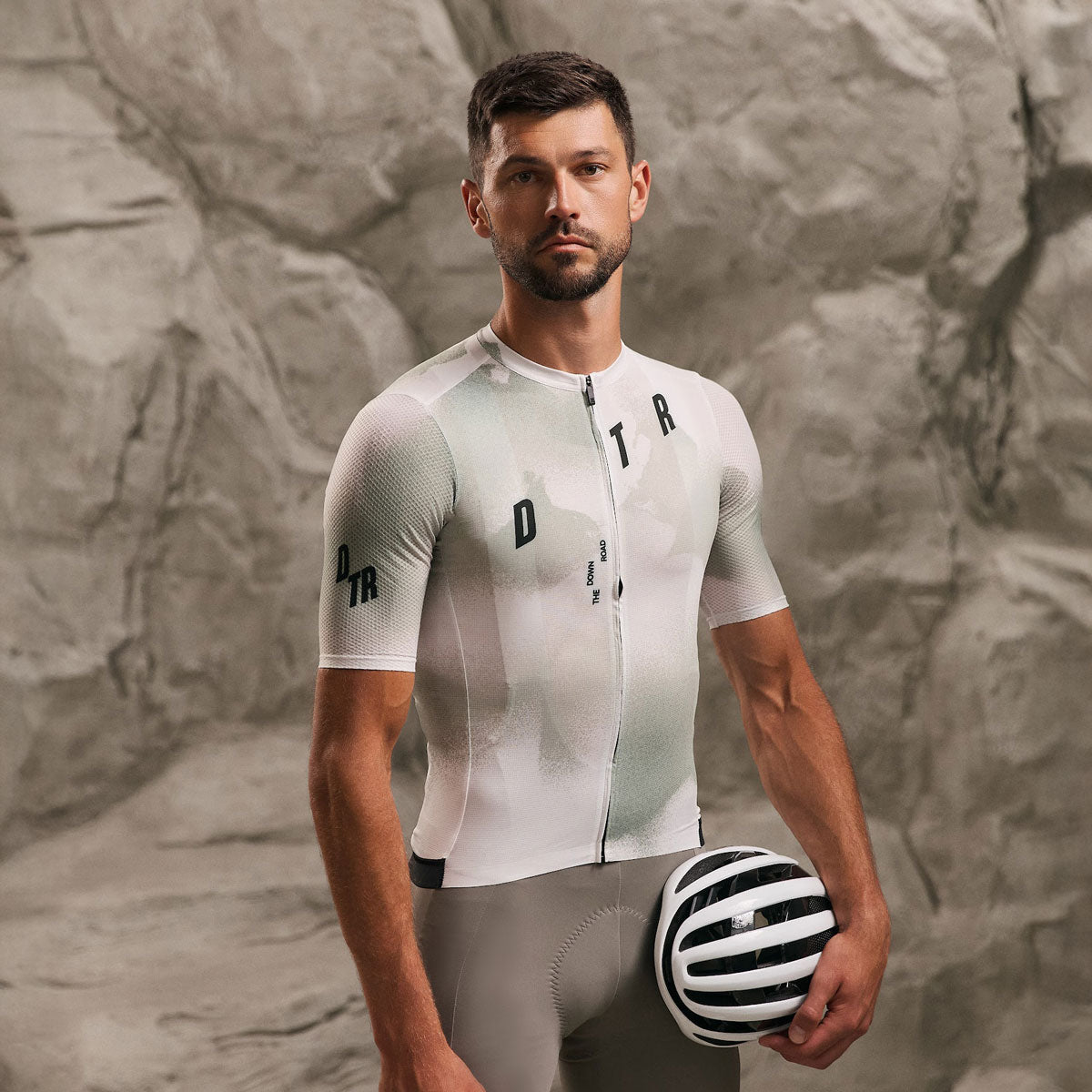
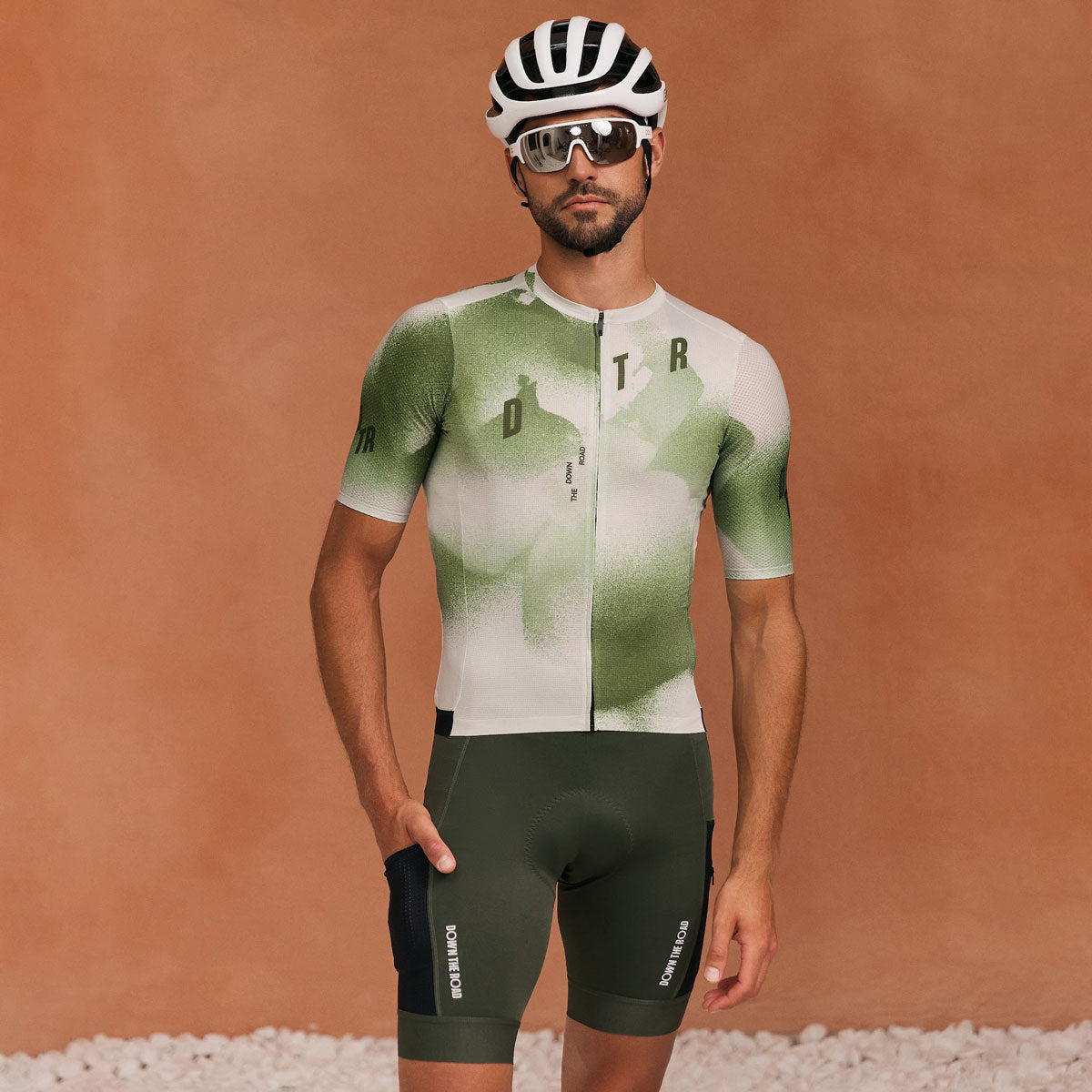
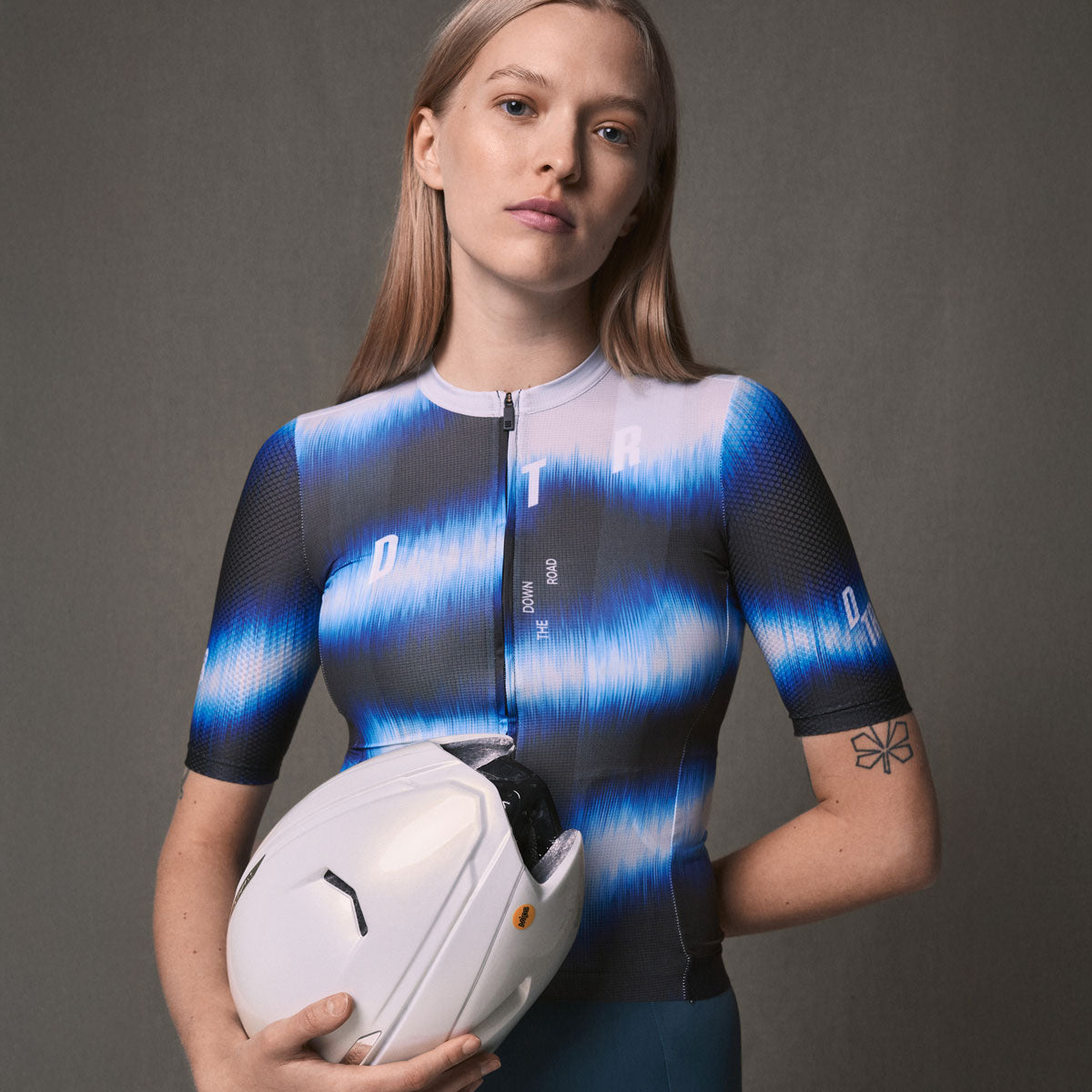

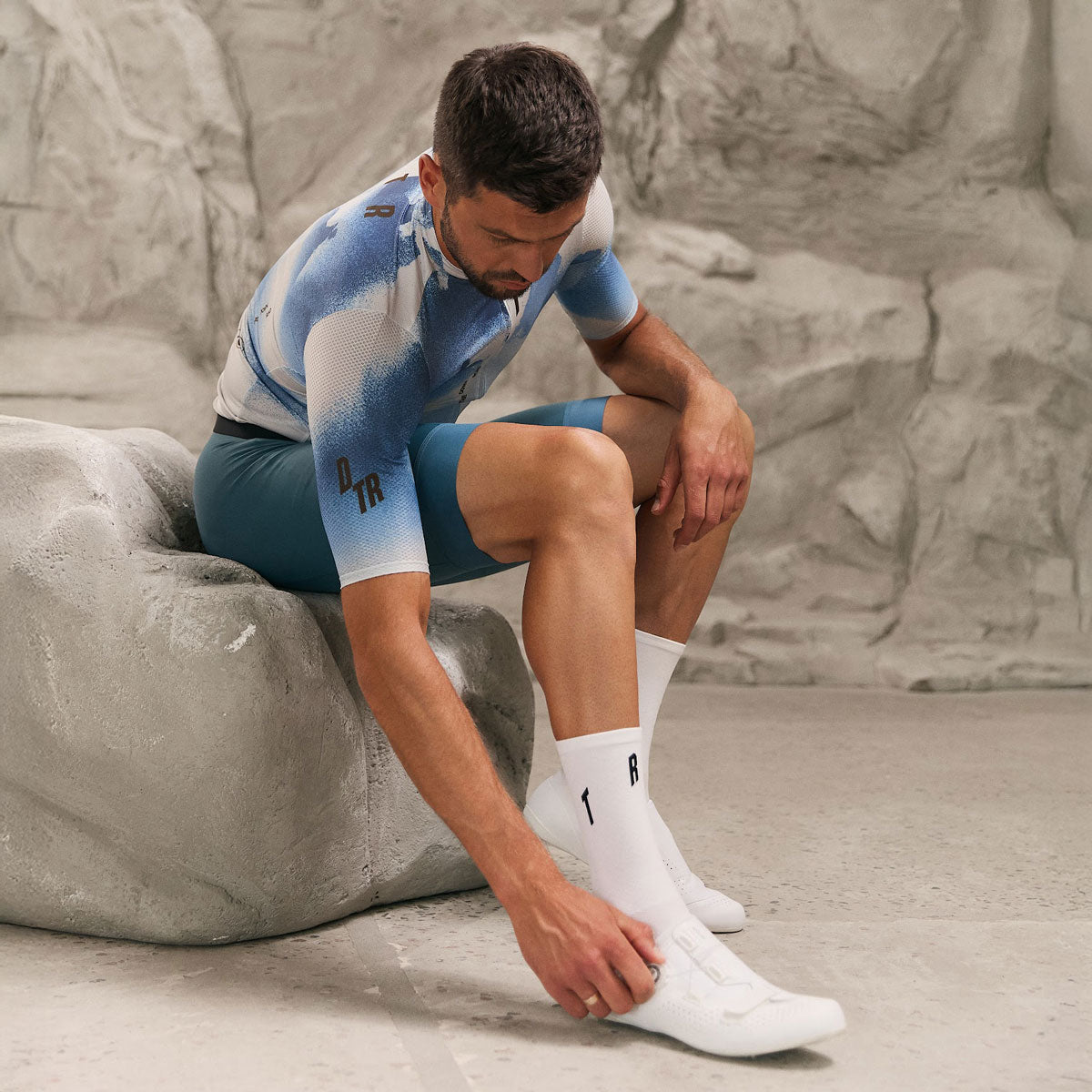
A tri suit is a single piece of technical clothing built to be worn for an entire triathlon — swim, bike and run — without changing kit at either transition. It combines a compressive top and a thin, quick-drying chamois in one garment, so there is nothing to put on or take off between disciplines beyond a wetsuit.
What it's actually made of
A tri suit uses a compressive, quick-drying fabric rather than the heavier lycra in a cycling jersey, because it has to perform wet and dry across three sports. Built into the shorts is a thin chamois — much less padding than a cycling-specific pad, because a thick chamois that's comfortable on the bike becomes dead weight and chafe risk on the run.
One piece or two?
Most tri suits are a single piece from shoulders to thigh, though a two-piece version — a separate top and shorts — does the same job. The choice comes down to aerodynamics versus convenience: a one-piece is smoother in the wind and simpler to wear, a two-piece is easier for nature breaks and nutrition on longer courses.
Does it go under the wetsuit?
Yes. A tri suit is worn under the wetsuit for the swim, stays on through T1 and T2, and is the only kit you wear for the entire race. That's the point of the garment — it removes two full kit changes from your race, which on a sprint or Olympic-distance day can matter as much as fitness.
How is it different from cycling kit?
A cycling jersey and bib shorts are built to be comfortable for hours in one position, with a thicker chamois and a fabric that isn't designed to get wet. A tri suit trades some of that bike-specific comfort for swim performance and run compatibility — it dries fast, the chamois is thin enough to run in, and there are no shoulder straps to deal with in transition.
How should it fit?
Snug enough to stay compressive when wet, with no bagging at the chest or gathering behind the knee. A tri suit that fits loose adds drag in the water and chafes on the bike and run once it's saturated — fit matters more here than on a jersey you only ever wear dry.
Do you need one for your first triathlon?
Not necessarily. For a first sprint-distance race, many athletes start in a cycling kit plus a separate top and buy a tri suit once they know they're racing again. Past sprint distance, or once you're doing back-to-back races in a season, the time saved at every transition starts to add up.
FAQ
What is a tri suit made of? A compressive, quick-drying fabric with a thin built-in chamois — light enough to run in, snug enough to hold its shape wet or dry.
Do you wear anything under a tri suit? No. Like bib shorts, it's worn directly against the skin so the chamois sits correctly.
Can you swim in a tri suit without a wetsuit? Yes — that's one of its jobs. It's built to swim in directly when water temperature rules out a wetsuit.
Is a tri suit the same as a cycling kit? No. It trades some bike-specific comfort for a thinner chamois and fast-drying fabric that works across all three disciplines.
How tight should a tri suit be? Compressive but not restrictive — snug enough to stay in place wet, without pinching at the chest or behind the knee.
See the range: DTR trisuits.
DTR — performance cycling and triathlon apparel, designed and developed in Ukraine.

Leave a comment
This site is protected by hCaptcha and the hCaptcha Privacy Policy and Terms of Service apply.