

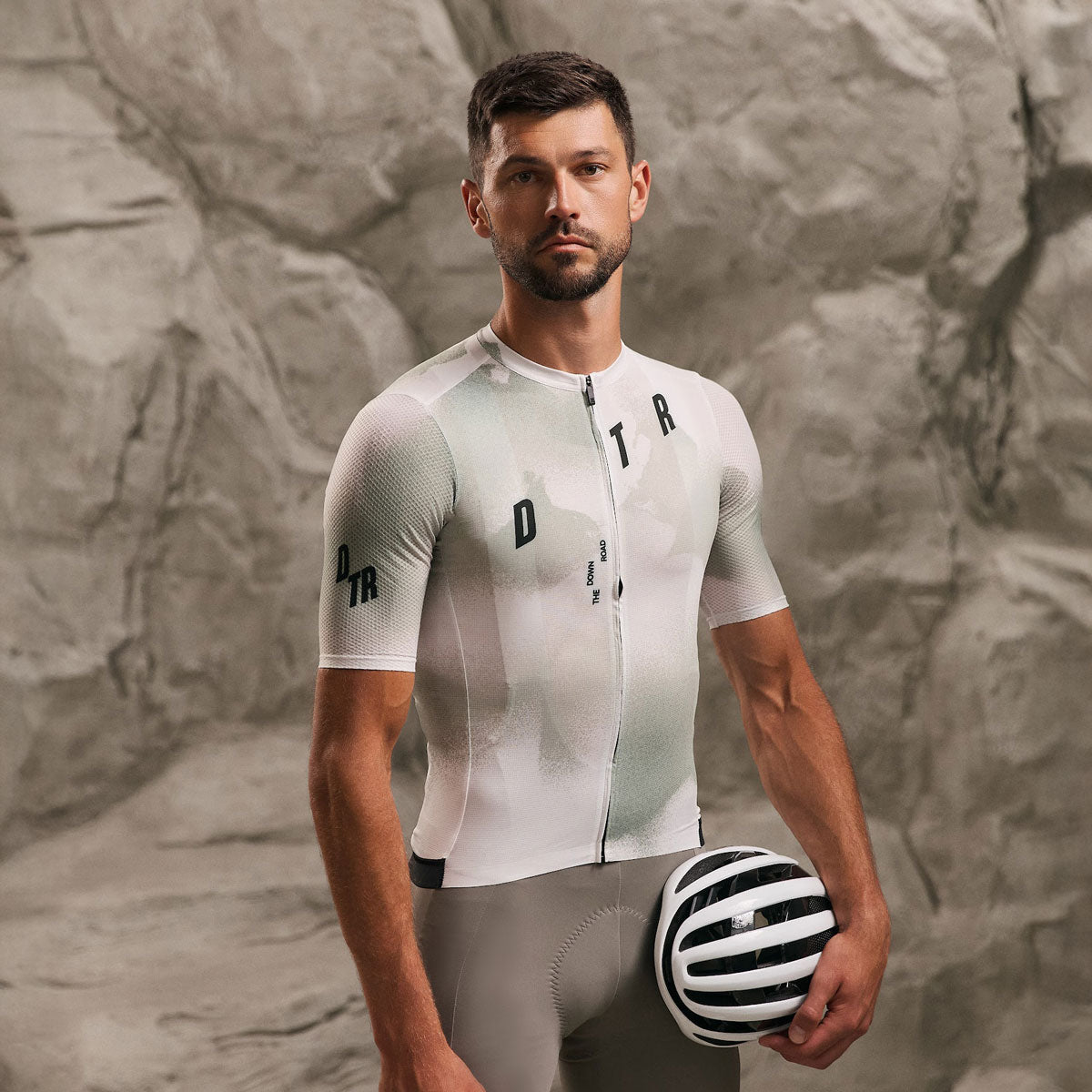
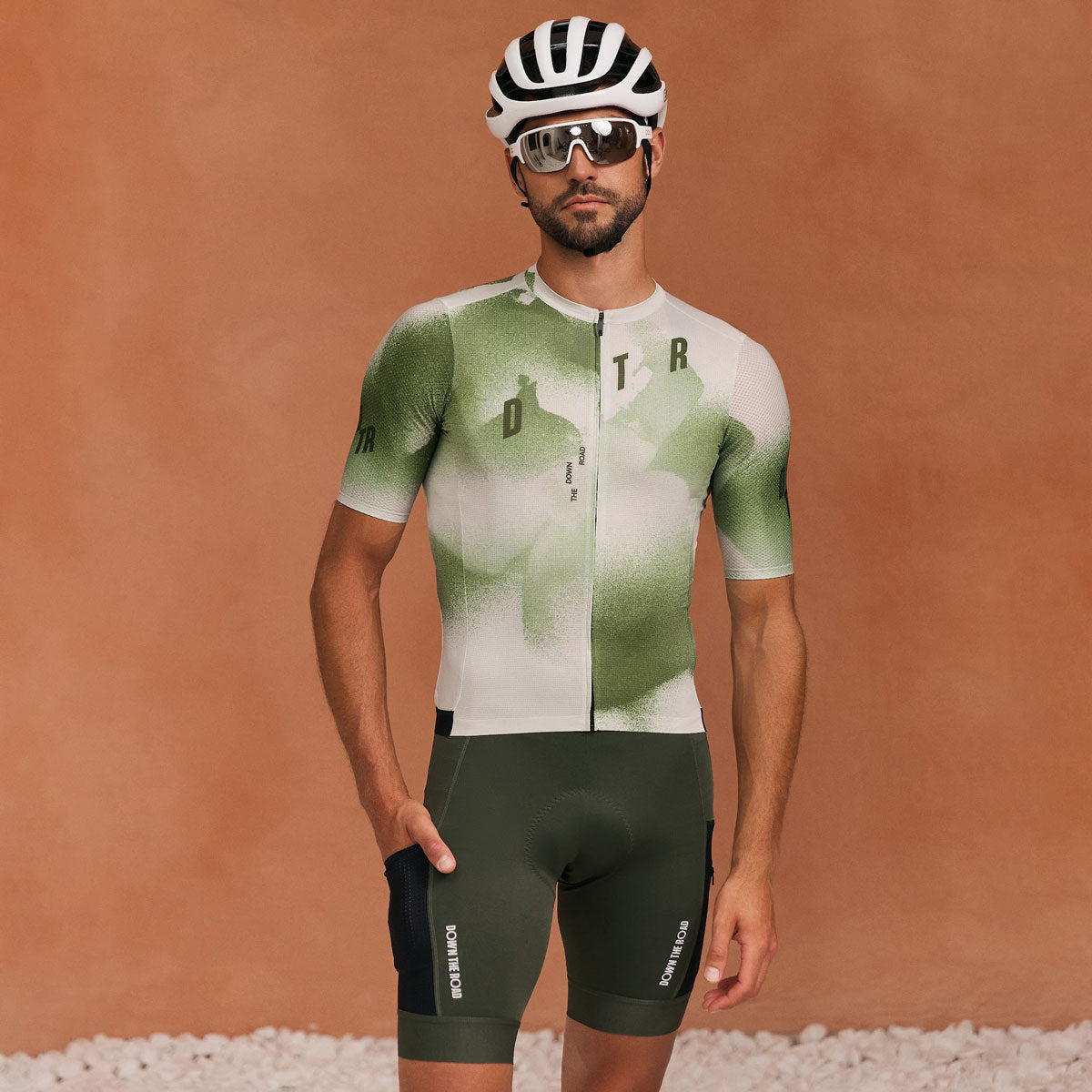


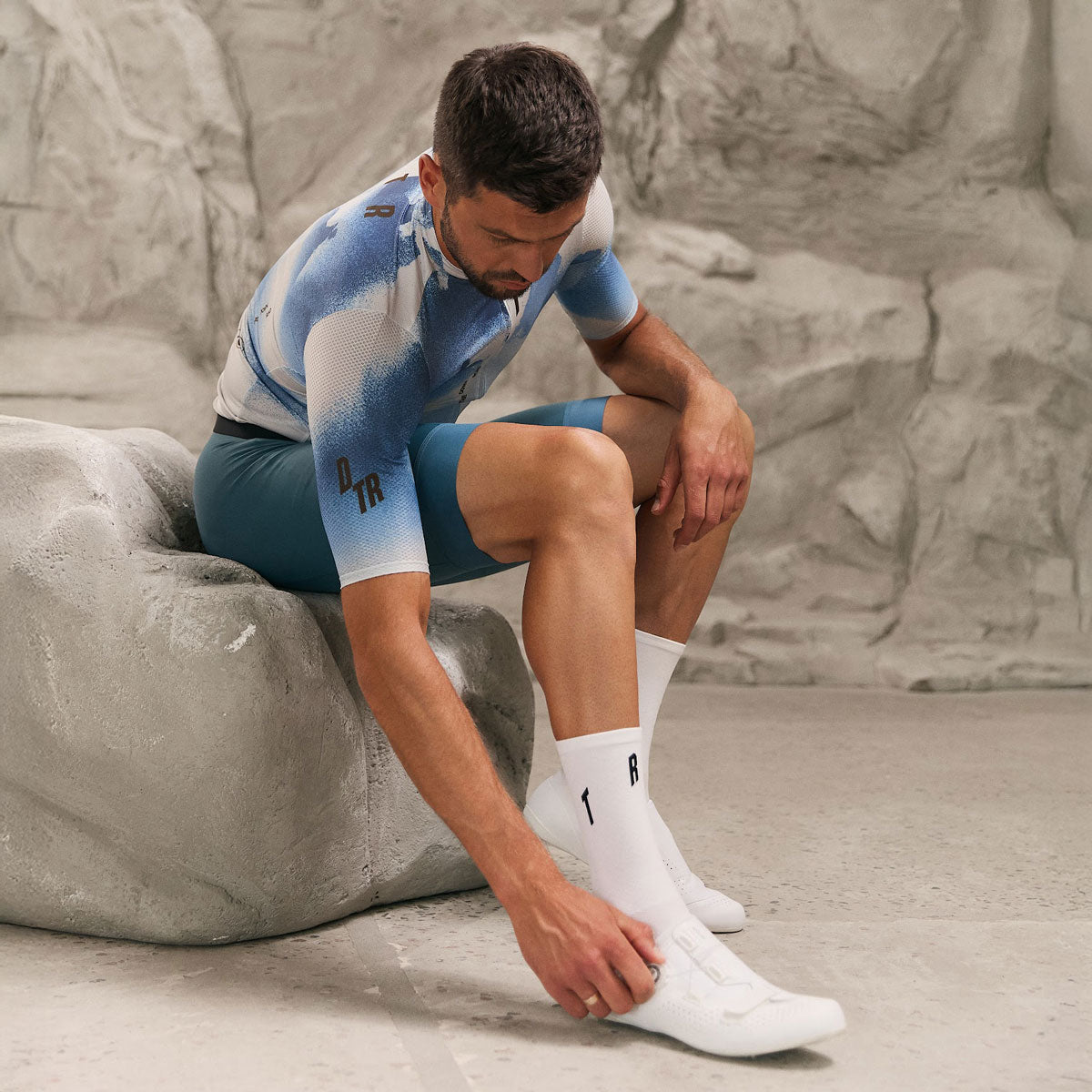
A cycling windbreaker should sit close enough to stay quiet in the wind while leaving room for the layers you actually ride in. It is a barrier layer for exposed roads, changing conditions and descents; it is not a substitute for a waterproof rain jacket or an insulated winter layer.
How close should the body fit be?
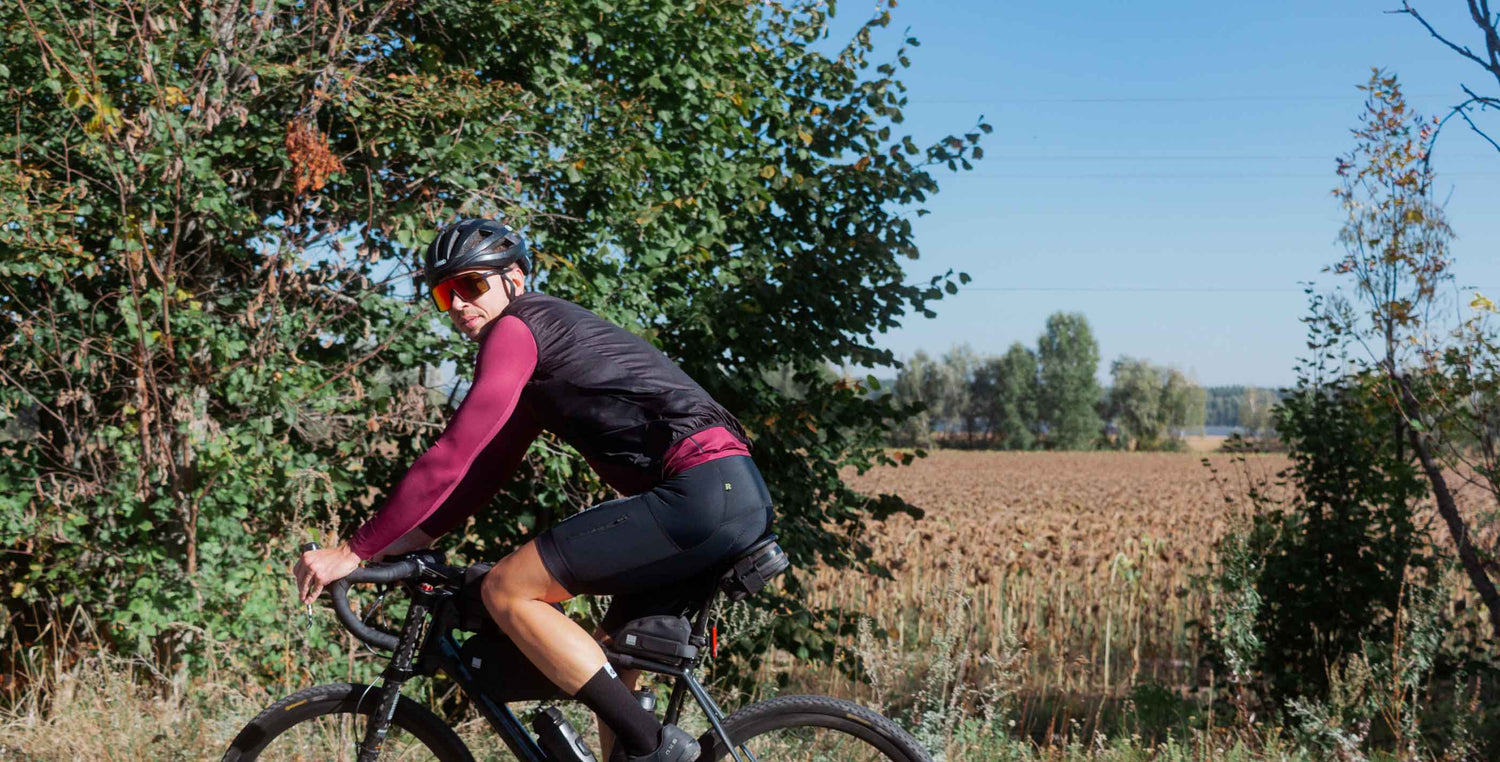
The body should follow your riding position without loose panels flapping or a tight chest restricting a deep breath. Try it over the jersey and base layer you would wear outside. A windbreaker that feels acceptable empty but pulls once layered is not the right fit.
What should happen at the sleeves and hem?
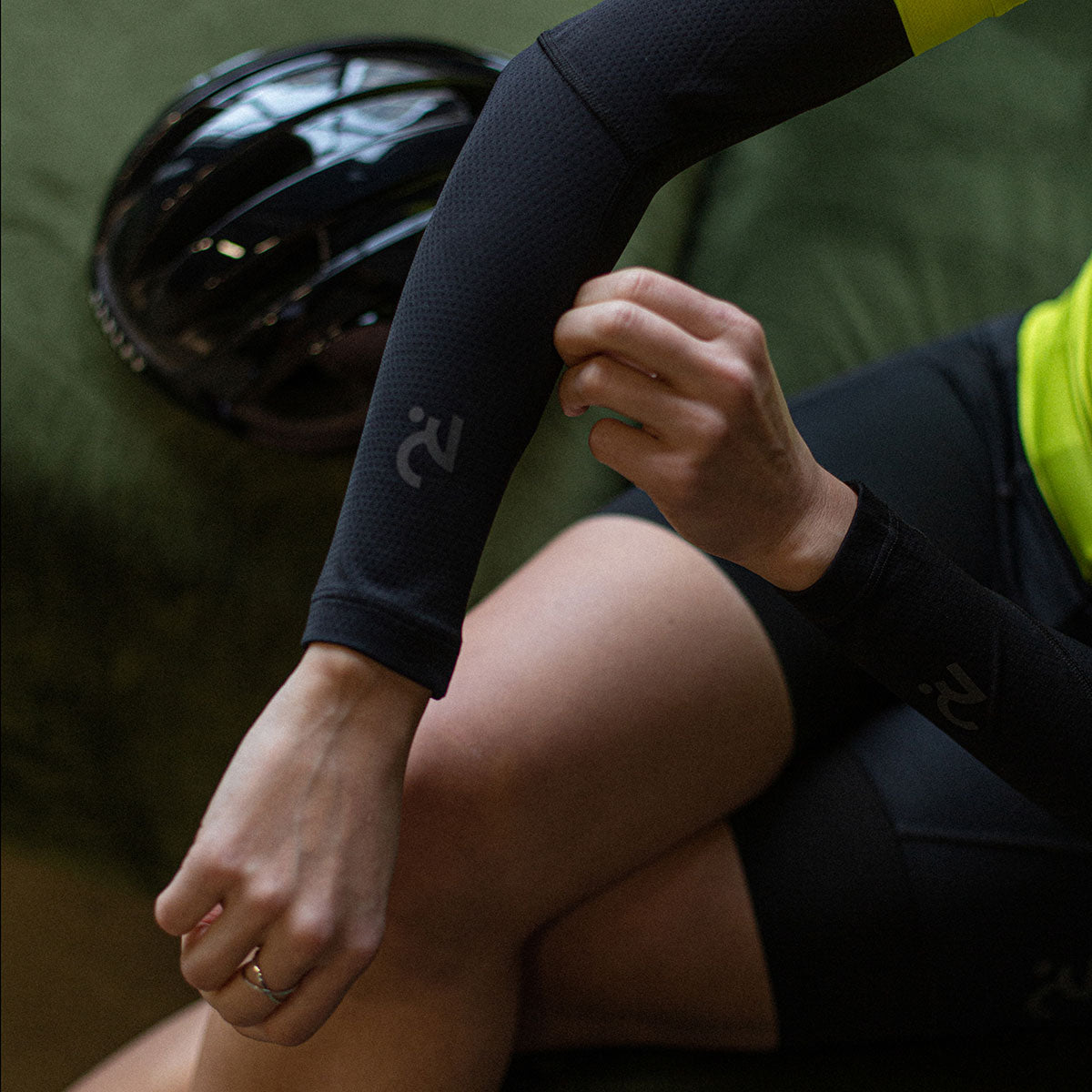
Sleeves should reach the wrists when you hold the hoods, while the hem should stay in place when you hinge forward. The aim is to limit drafts without creating pressure points. Check both with the zip closed and when reaching for the drops.
How much room should you leave underneath?
Leave enough room for the layers required by the conditions, but avoid selecting extra volume just to make the jacket feel casual when standing. How to layer for cold-weather cycling is the starting point for deciding what needs to fit underneath.
When is a gilet a better choice?
Choose a gilet when you want coverage for your core while keeping your arms free; choose a windbreaker when full-arm coverage matters on an exposed section or descent. Gilet versus packable jacket sets out the trade-off.
Is a windbreaker a rain jacket?
No. A windbreaker is chosen for wind management and changing conditions; sustained rain requires a purpose-built rain layer. Windbreaker versus rain jacket explains the distinction.
How should you test it before a ride?
Put it on over your normal ride layers, close the zip, reach the hoods and drops, and check whether the back stays covered. Then put a typical ride load in your jersey pockets. The correct fit stays composed without feeling restrictive.
FAQ
Should a cycling windbreaker be loose or tight? Close enough to minimise flapping, with space for the layers you genuinely need underneath.
Can you wear it on a climb? You can, but decide by conditions and comfort; it is easy to remove when the ride changes.
Does it replace a rain jacket? No. Read what to wear in strong wind and the rain-jacket comparison for the right choice.
Explore DTR windbreakers.
DTR — performance cycling and triathlon apparel, designed and developed in Ukraine.

Leave a comment
This site is protected by hCaptcha and the hCaptcha Privacy Policy and Terms of Service apply.