


For triathlon sun protection, start with UPF-rated kit and add sunscreen to every patch of skin the kit leaves bare. DTR trisuit descriptions state UPF 50+, which means the fabric blocks the vast majority of UV where it covers you. The rest is a plan for the swim, the long hours on the bike and the run.
What does UPF 50+ actually mean?
UPF measures how much ultraviolet radiation passes through fabric. A UPF 50+ rating means the fabric lets through only a small fraction of UV, so covered skin is well protected. The rating applies to the covered area only, so neck, arms, legs and face still need their own cover. UPF can drop when fabric is stretched very thin or wet, which is worth knowing for a swim-bike-run suit.
What should your kit cover?
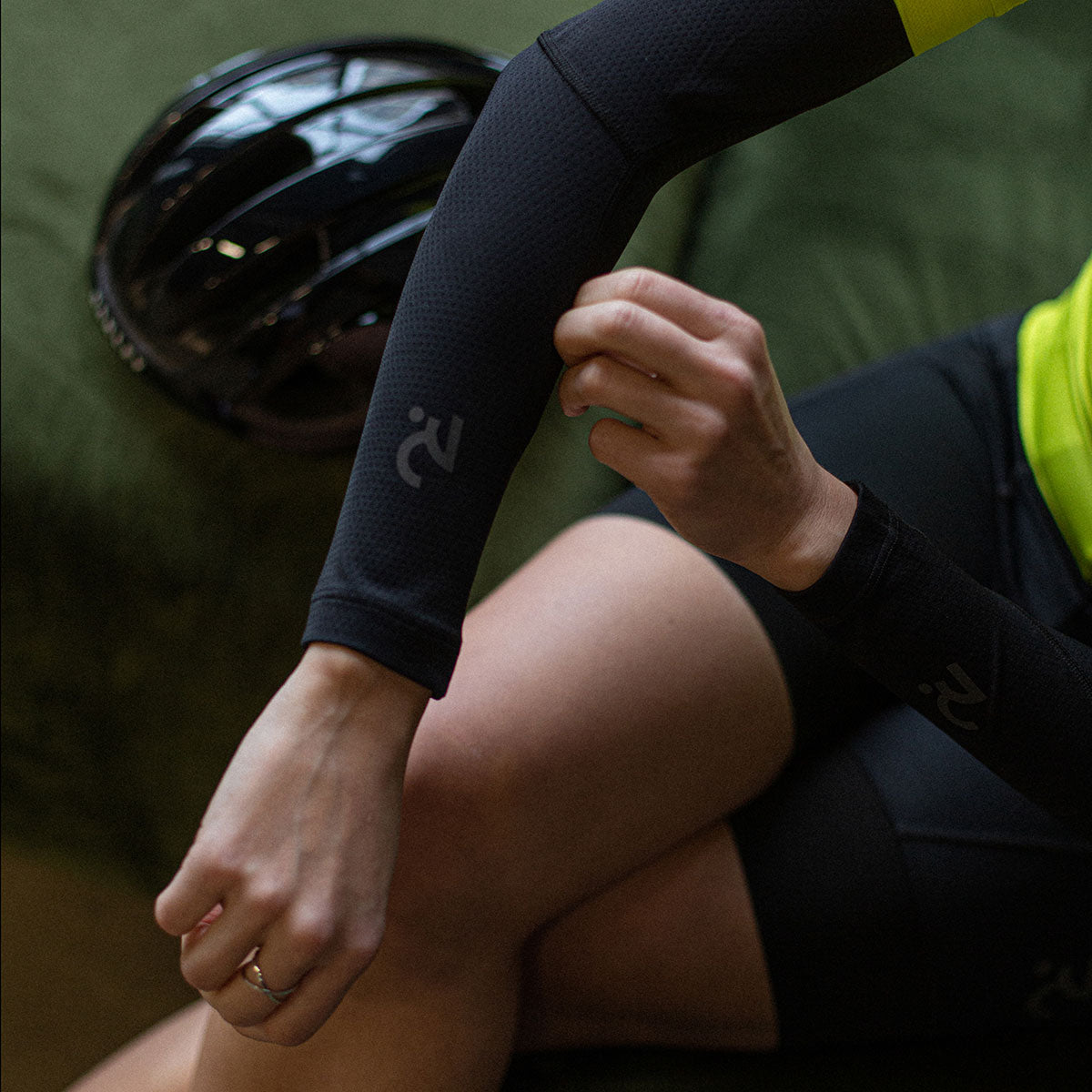
Torso and shoulders on the trisuit, plus arms and legs if you add sleeves. The bike is where you take the most sun: you are out for hours, leaning forward with your back and shoulders facing the sky. A pair of sun sleeves or a long-sleeve option covers arms without adding much heat. See cycling sun protection for the bike side in more detail.
Where does sunscreen still matter?
Face, neck, the back of the hands, the tops of the feet and any skin the suit leaves exposed: the legs of a short-leg suit, the arms of a sleeveless one. Apply it before you put your kit on, give it time to set, and use a water-resistant formula for the swim. Pre-race, apply under your trisuit line to avoid gaps where it rides up.
How do you plan sun protection by race distance?
The longer you are out, the more it matters. A sprint is a short exposure, so a good sunscreen and covered shoulders may be enough. Over half and full distance, the bike leg alone can last for hours: plan on sleeves, a cap or visor on the run and a reapplication point in T2. The Ironman kit guide and 70.3 guide cover the full day.
What about the swim?
Swim is the shortest exposure but the one where sunscreen washes off. A water-resistant formula and a wetsuit or covered trisuit take care of most of it. If you swim in a suit only, see can you swim in a trisuit for what to expect from the fabric.
Skin checks and recovery
Persistent redness, blistering or a mole that changes should be checked by a doctor. This is general guidance, not medical advice. Rinse and wash kit after a hot race following our trisuit care guide so sunscreen and sweat do not linger in the fabric.
FAQ
Is a trisuit enough sun protection?
It protects the skin it covers if it carries a UPF rating, but face, neck, hands and any exposed arms or legs still need sunscreen.
Does UPF fabric wear out?
Fabric protection can drop with heavy wear, stretching or chlorine. Replace worn kit and follow the care label.
Should you wear sleeves in a triathlon?
On a hot, long bike leg many athletes do. Sun sleeves are light and easy to remove.
See the DTR trisuits at /collections/trisuits.
DTR — performance cycling and triathlon apparel, designed and developed in Ukraine.

Leave a comment
This site is protected by hCaptcha and the hCaptcha Privacy Policy and Terms of Service apply.