

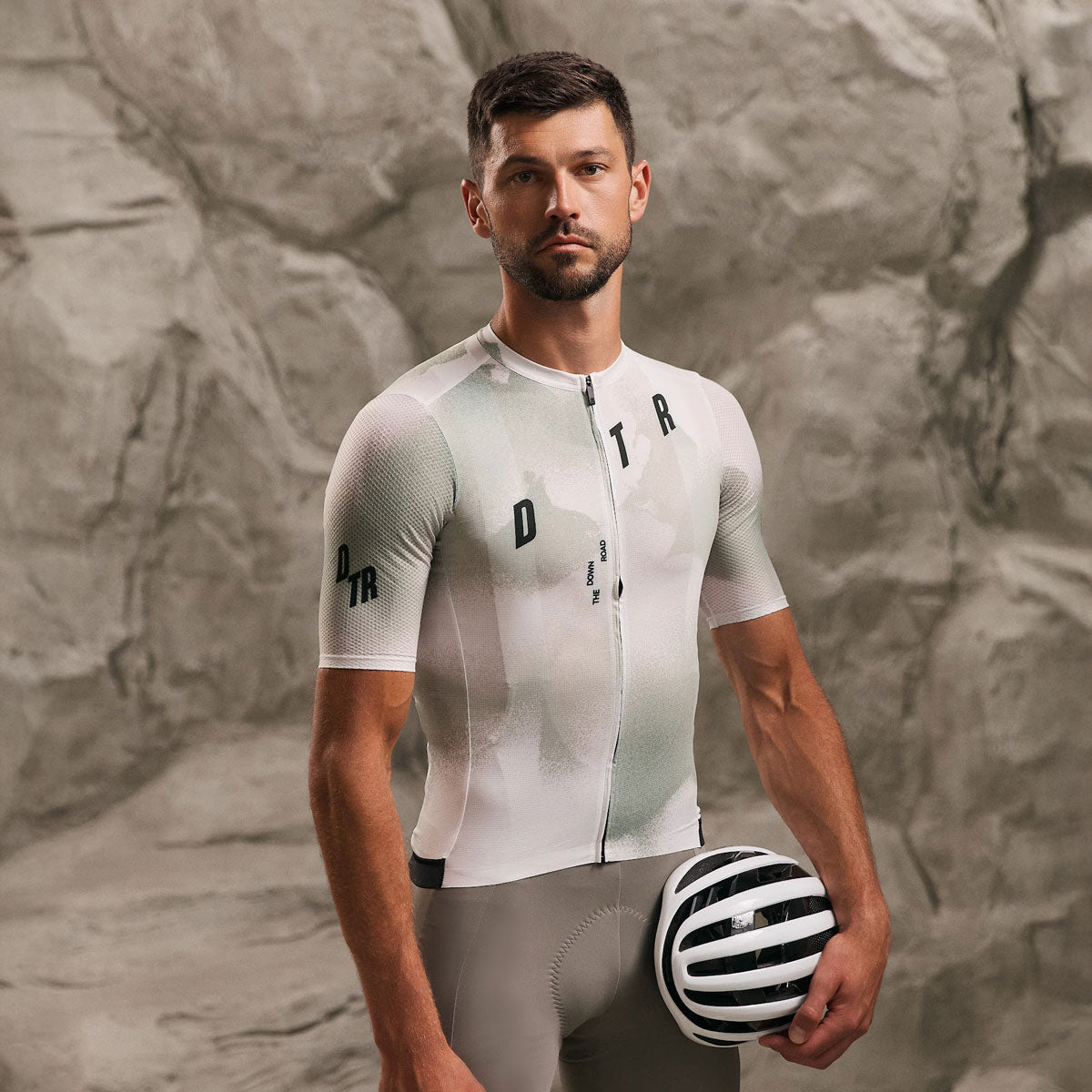
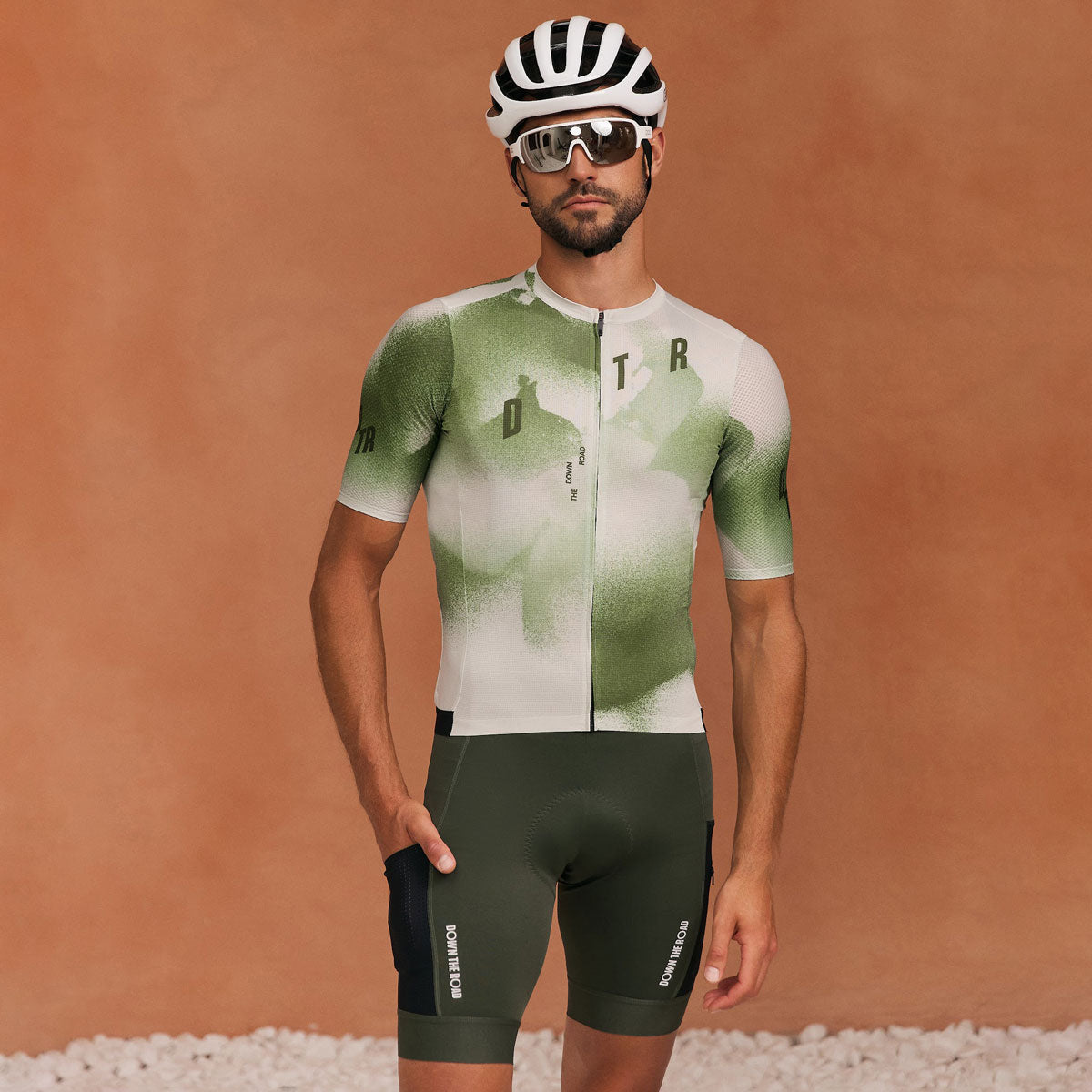
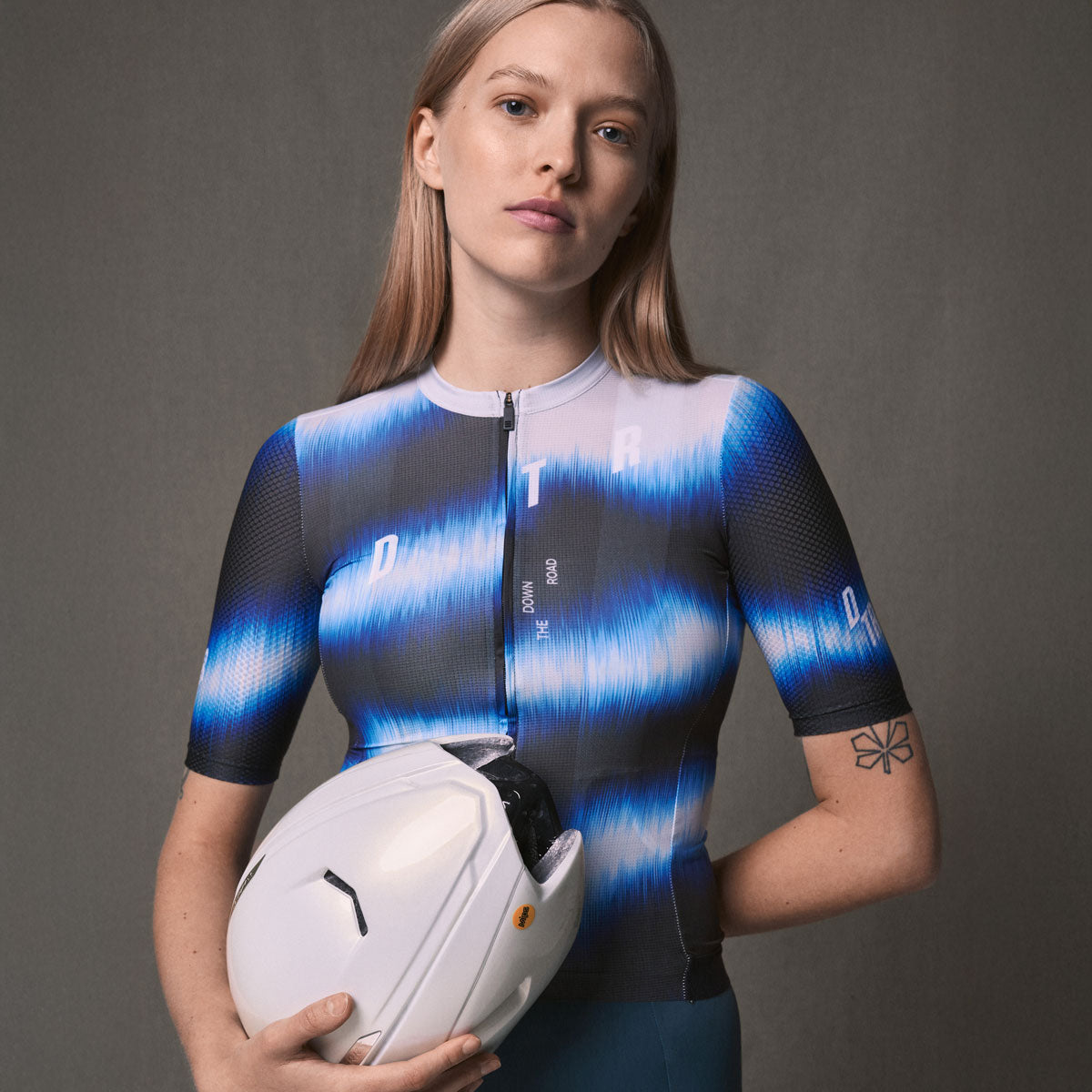
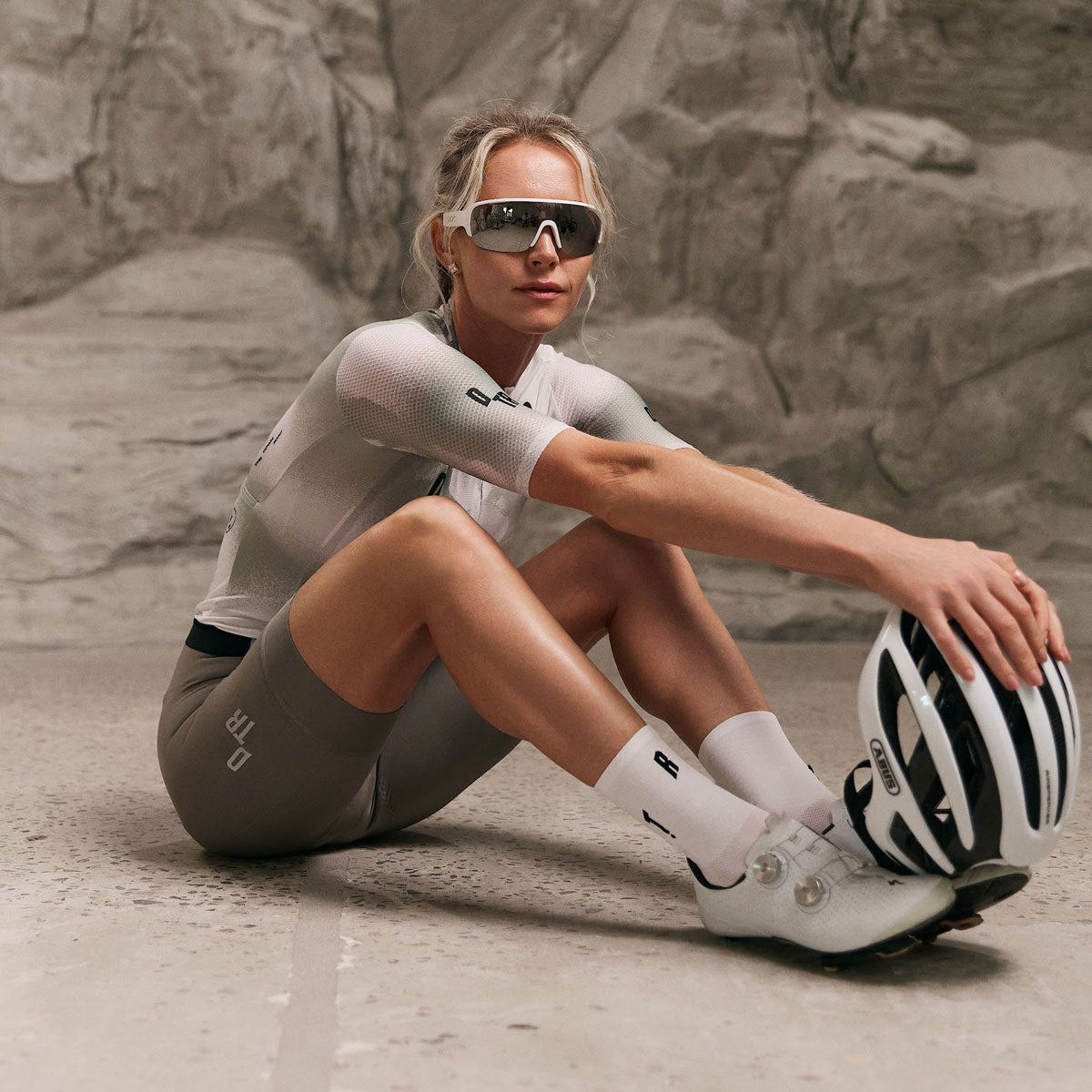
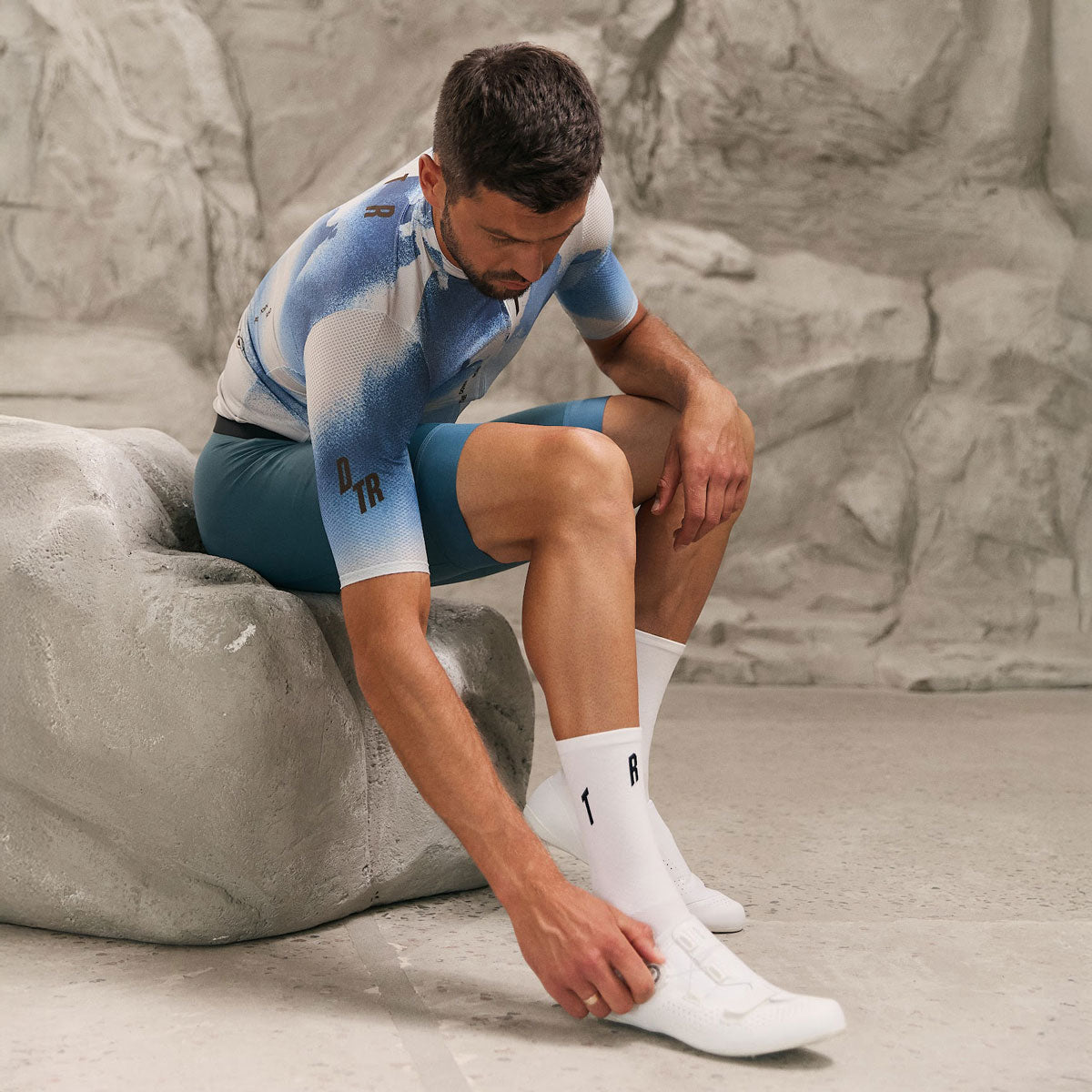
Sublimation is a printing process where dye is transferred into polyester fabric with heat, so the colour becomes part of the fibre instead of sitting on top of it. That is why sublimated custom cycling kit does not crack, peel or stiffen with stretch, and why it is the standard for jerseys, bib shorts and trisuits. This guide explains how it works and what it means for your artwork.
How does sublimation printing work on cycling kit?
Your artwork is printed onto transfer paper with special dyes. The paper is pressed against the fabric under heat, and the dye turns to gas and bonds with the polyester fibres. Because the fabric is printed before it is cut and sewn, the design can run across seams and panels. It also means every design carries setup work whatever the quantity, which is why minimum orders exist.
Why does sublimated kit not crack or peel?
There is no layer of ink to crack. The dye lives inside the fibre, so the fabric keeps its four-way stretch and the print moves with the rider. Colour also survives washing far better than a surface print. Follow the care label and the design should outlast the fabric, which is the point of printing before assembly.
What can you print, and what are the limits?
Full-colour artwork, gradients, photographic detail and continuous patterns are all possible, because the whole panel can be a design. The limits are about the fabric. Sublimation works on light-coloured polyester, so you cannot print white over a dark base; white areas are the fabric itself. Fine detail needs to be large enough to read at riding distance, and the weight of the fabric affects how a colour looks, which our guide to fabric weight and climate covers.
How should you prepare artwork for sublimation?
Send logos as vector files where you have them, and high-resolution images where you do not. Screens show colour differently from print, so expect a proof to look slightly different from your monitor; the proof approval process is where you check it. Our artwork guide lists the file formats and the common mistakes, and the design brief is the place to state colours and logo placement.
How do you match brand and sponsor colours?
Give us the exact brand colour references from your sponsors rather than a screenshot, and approve them on the proof. Our guide to sponsor colour matching explains how to avoid surprises when several brands share one jersey.
FAQ
Is sublimation the same as screen printing?
No. Screen printing puts a layer of ink on the surface. Sublimation dyes the fibre itself, so there is no layer to crack, and it allows full-colour designs across the whole garment.
Can I print on any fabric?
Sublimation needs polyester, which is what technical cycling fabric is made from. Cotton and similar fibres do not take the dye in the same way.
Will the colours match my screen?
Close, not identical. Always judge colour on the proof, and give exact references for brand colours.
Planning a kit? Tell us your brief and we will take it from there: request a quote. You can also see what we make as custom cycling jerseys and custom bib shorts.
DTR — performance cycling and triathlon apparel, designed and developed in Ukraine.

Leave a comment
This site is protected by hCaptcha and the hCaptcha Privacy Policy and Terms of Service apply.