

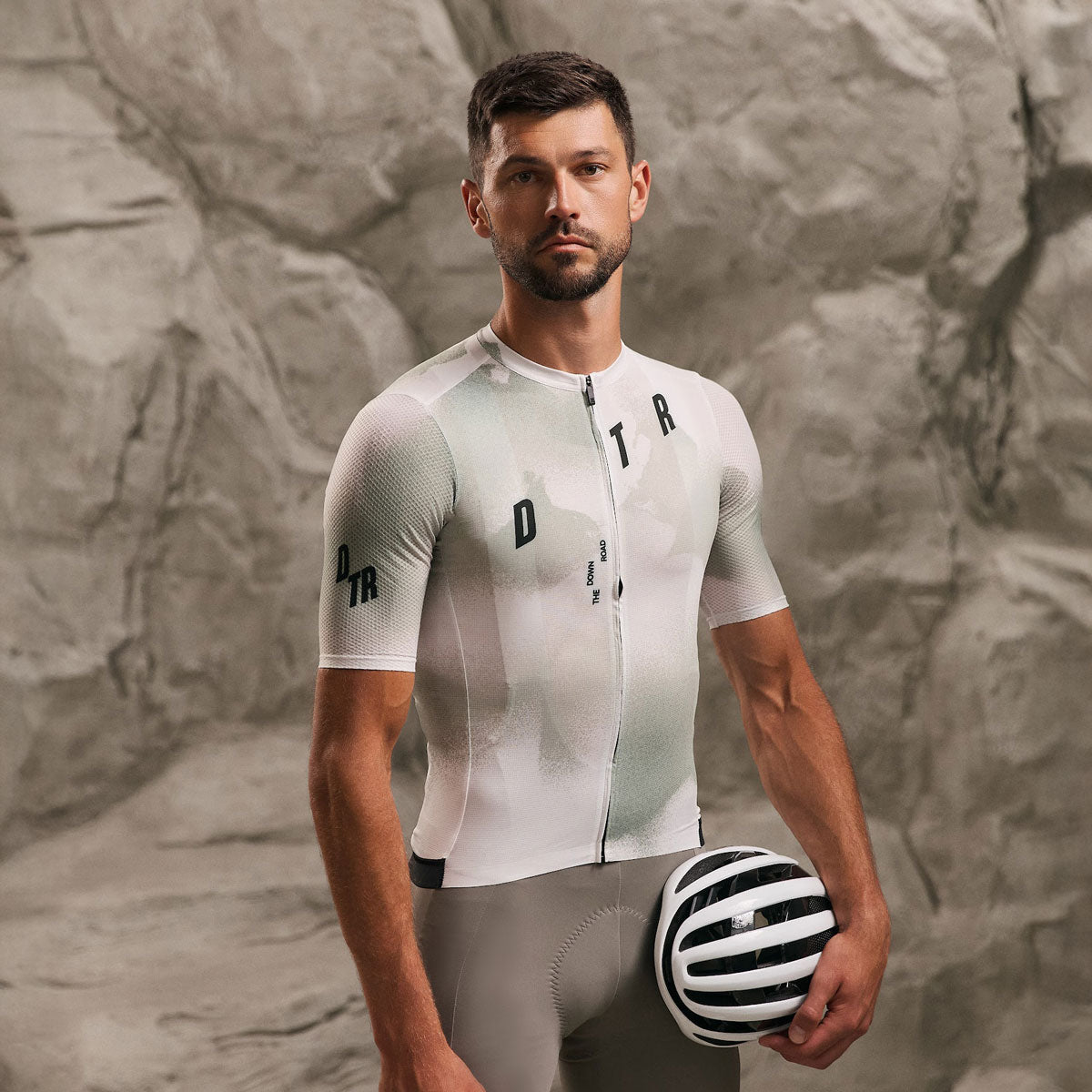
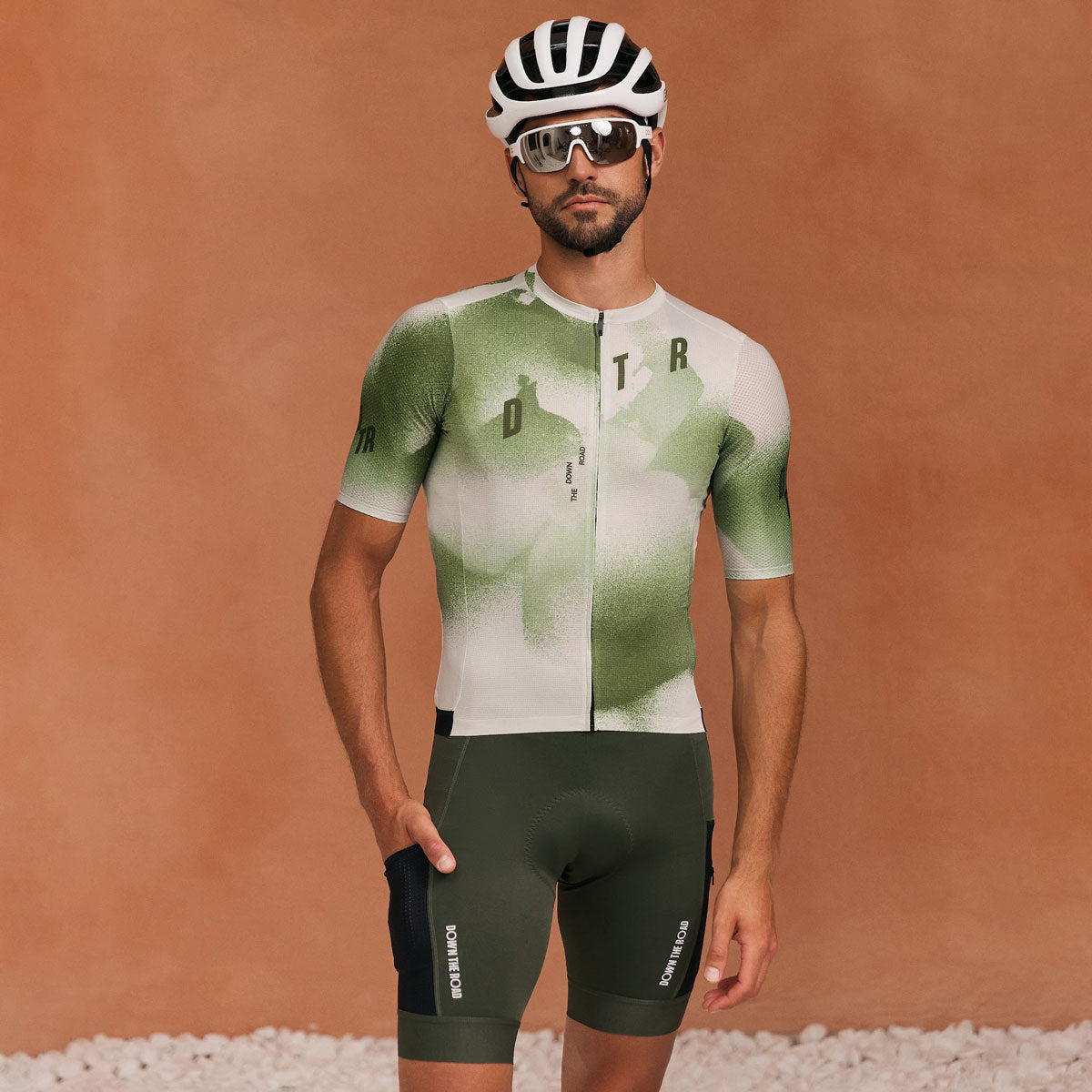
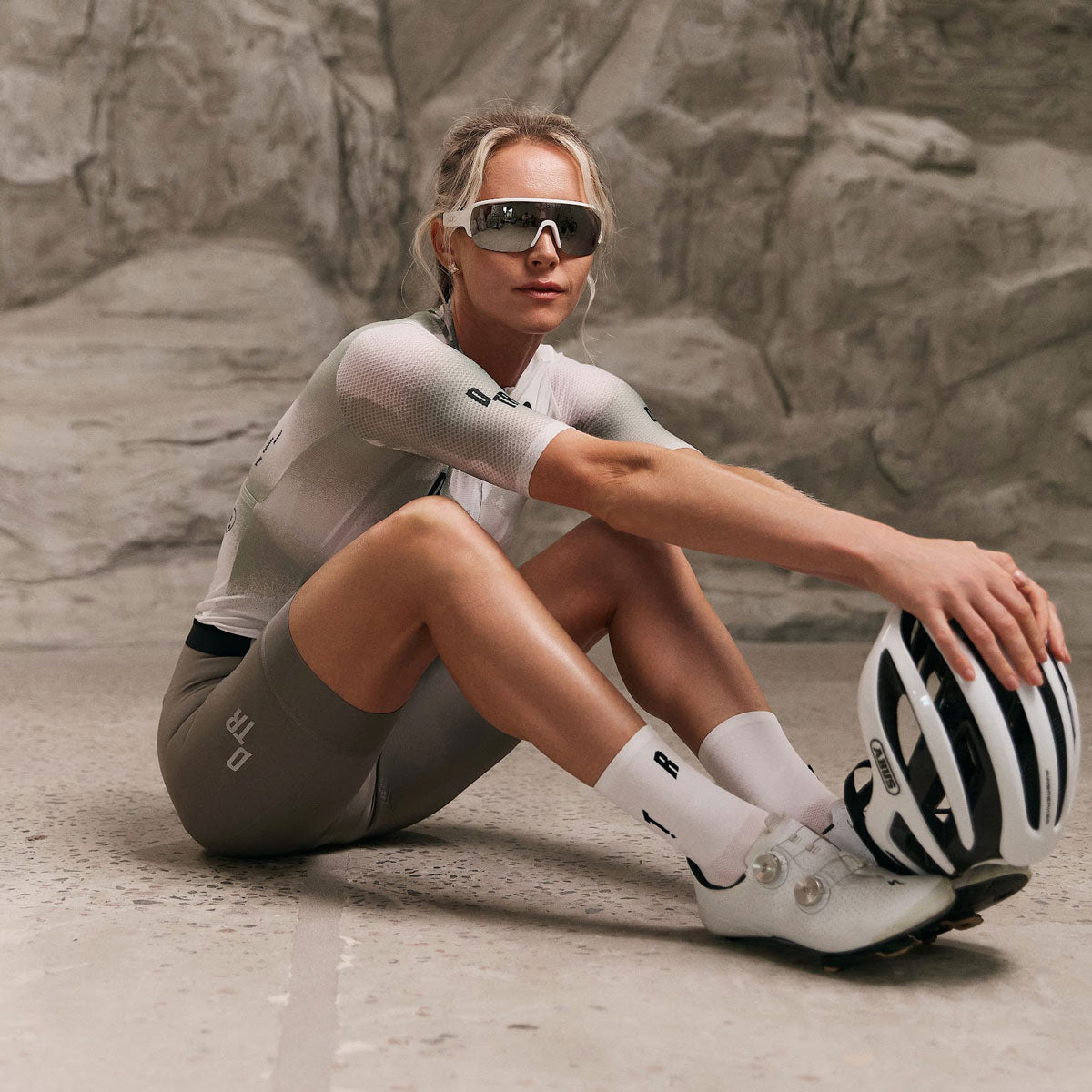
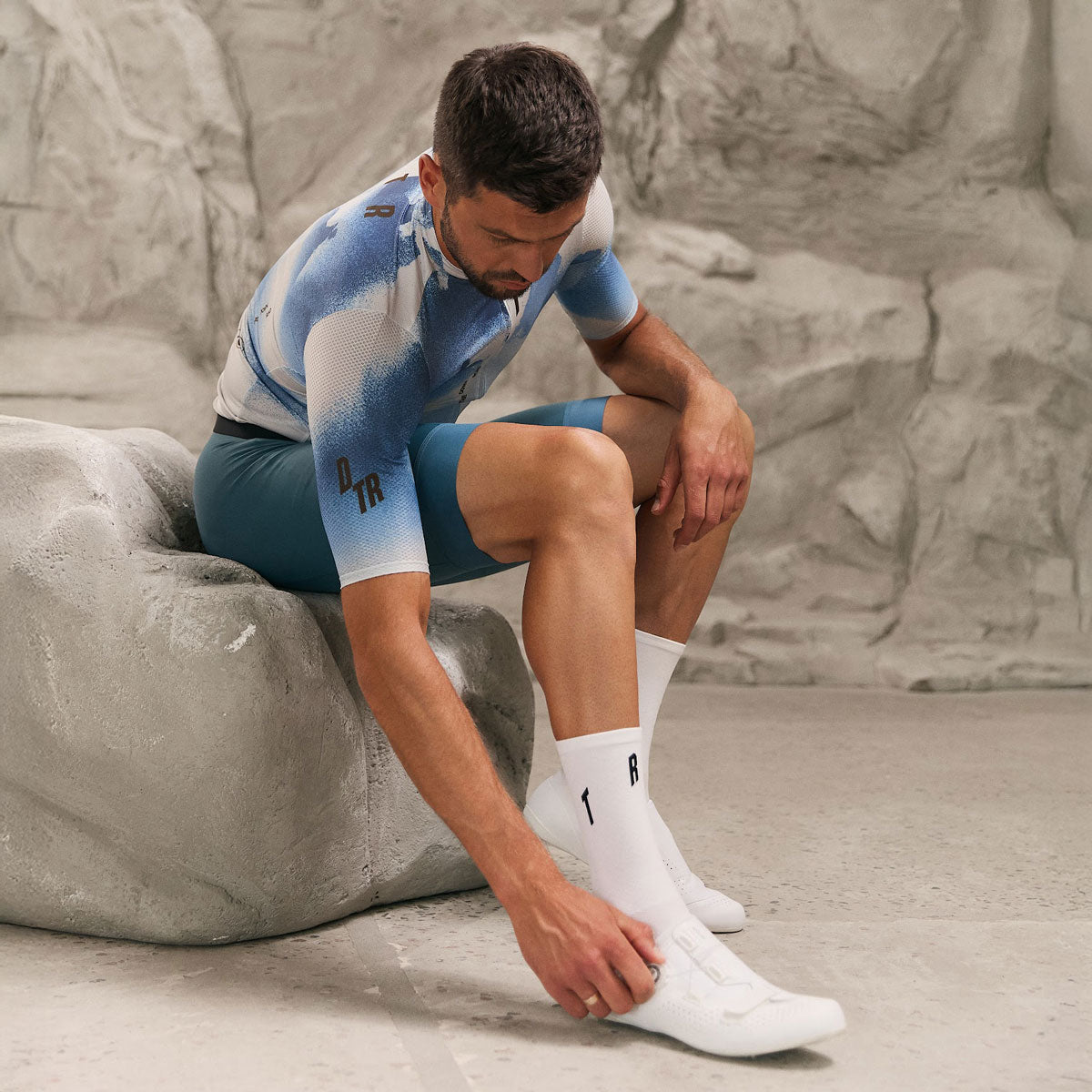
The best bib shorts for long rides are the ones matched to how and where you ride — and across the DTR range that comes down to a few clear use cases. Road bib shorts for long endurance days and fast group rides, cargo bib shorts when gravel and self-supported adventures mean you need to carry more, and thermal bib tights once winter sets in. Every pair shares the same multi-density chamois and fabric standard; what changes is the storage, cut and coverage for the ride in front of you. This guide walks the range use case by use case, so you end up in the right pair.
The short answer, by use case
- Long road rides and endurance: road bib shorts — multi-density chamois, supportive compression, built for hours in the saddle.
- Racing and fast group rides: a close, race-fit road bib — the same chamois in a lighter, more aero cut.
- Gravel, bikepacking and big adventure days: cargo bib shorts — road-bib comfort plus integrated thigh pockets for nutrition and kit.
- Winter riding below 8°C: thermal bib tights — fleece-lined, full-length, chamois built in.
- Women: women's-specific versions of each — different chamois geometry and strap construction, not a resized men's short.
What every DTR bib short gets right first
Before the use case, the fundamentals are shared across the whole range — and they're what actually decide comfort on a long ride.
The chamois is multi-density, which means firmer foam sits under the sit bones for support and softer foam surrounds it for flex. Comfort over hours comes from density calibrated to the riding position, not from a thick, soft pad that bottoms out. The fit is the other half: bib straps that hold the short in place without pulling, leg grippers that anchor without cutting in, and a rise that keeps the chamois where it's designed to sit when you're low on the bars. The fabric is a technical, four-way-stretch lycra with flatlock seams that lie flat against the skin. Get those three right and the use-case choice is really about storage, cut and coverage — which is where the range splits. (For the full detail, see our complete bib shorts buying guide.)
Long road rides and endurance
This is the everyday workhorse, and for most riders it's the right first pair. On 3-to-6-hour road rides, comfort comes from a chamois that supports without bottoming out and a fit that doesn't shift over the hours — exactly what road bib shorts are built for. The compression supports the muscles and reduces fatigue late in a ride, while the multi-density pad holds its shape through a long day in the saddle.
If your riding is mostly road and mostly two hours or more, a road bib short is the pair that will see the most use. It's also the most versatile base: add leg warmers and it stretches into the cold, pair it with a cargo option and you've covered the long adventure days too.
Racing and fast group rides
When the pace is high and you're spending real time in an aggressive position, you want the closest, lightest cut in the range. A race-fit road bib keeps the same multi-density chamois — calibrated for the forward, rolled-onto-the-front-of-the-sit-bones position of racing — in a more compressive, aerodynamic package. Less bulk, more support where the racing position loads your body, and a fit that stays quiet and locked in at speed.
The mistake here is over-padding: a thick, plush short feels good in the car park and slow on the road. For racing and fast bunch rides, a firm, well-calibrated pad in a close cut beats a soft one every time.
Gravel, bikepacking and long adventure days
Gravel and self-supported riding change the maths. You're out longer, further from a resupply, and three jersey pockets fill up fast once you're carrying real food, a phone, a tool and a layer. Cargo bib shorts solve it: the same chamois and fabric as the road bibs, plus integrated thigh pockets that carry gels, bars and kit without a saddle bag or a bulging jersey.
The storage doesn't cost you comfort — the chamois and fit are the road-bib standard — so cargo bibs are just as at home on a long tarmac day where you'd rather carry more. If your riding runs to gravel, bikepacking or all-day distances, they're the pair that earns its keep. Browse the bib short range to compare road and cargo options side by side.
Winter and cold-weather riding
Below about 8°C, bib shorts with leg warmers stop being enough. Thermal bib tights take over — fleece-lined, full-length, with a wind-resistant front panel and the chamois built in, so they replace your shorts entirely for the cold months. They're the piece that makes deep-winter riding genuinely comfortable rather than something to endure.
For the middle ground — the 8–16°C shoulder-season window — you don't need dedicated tights: road bib shorts plus leg warmers cover it, with the flexibility to strip a layer mid-ride. Our guide on leg warmers vs bib tights breaks that choice down.
Women's-specific bib shorts
Women's bib shorts aren't men's shorts resized. The chamois geometry is positioned for women's sit bones, which sit wider and further apart, and the strap construction is shaped around female anatomy — wide enough to distribute weight, cut to avoid pressure on the chest and collarbones. That's the difference between a short that works on a four-hour ride and one that doesn't. DTR runs women's-specific versions across road, cargo and thermal, so the use-case choice above applies just the same.
Still not sure? A quick decision
- Most of your riding is road, two hours or more → road bib shorts.
- You race or ride fast in a bunch → a race-fit road bib.
- You ride gravel, go long, or carry your own food → cargo bib shorts.
- It's consistently below 8°C → thermal bib tights.
- You want shoulder-season flexibility (8–16°C) → road bibs plus leg warmers.
FAQ
What are the best bib shorts for long rides? A road bib short with a multi-density chamois and supportive compression. Over 3-to-6-hour rides, comfort comes from a pad calibrated to the riding position and a fit that stays put — not from a thick, soft pad that collapses under load.
Do I need cargo bibs for gravel? Not mandatory, but useful. Gravel and self-supported days need more storage than jersey pockets hold; cargo bibs add thigh pockets with no loss of chamois comfort. For shorter gravel rides, standard road bibs are fine.
What's the difference between race and endurance bib shorts? Mostly cut and weight, not the pad. A race-fit bib is closer and lighter for the aggressive position; an endurance bib prioritises all-day comfort. Both use the same multi-density chamois — the difference is how aero versus how relaxed the fit is.
Can one bib short do everything? A road bib short covers most riding on its own — add leg warmers for the cold and a cargo option when you need to carry more. Most riders settle on a road pair first, then specialise.
How many pairs do I need? At least two, so you always have a clean, dry pair while the other is washing. Beyond that, add a cargo or thermal option as your riding specialises.
The bottom line
Pick by the ride: road bibs for endurance and racing, cargo bibs when you need to carry more, thermal bib tights for the cold. The chamois and build are the same standard across the range — you're just choosing the storage, cut and coverage that fit how you ride. Compare the full lineup in the DTR bib short range.
—
DTR — performance cycling and triathlon apparel, designed and developed in Ukraine.

Leave a comment
This site is protected by hCaptcha and the hCaptcha Privacy Policy and Terms of Service apply.