

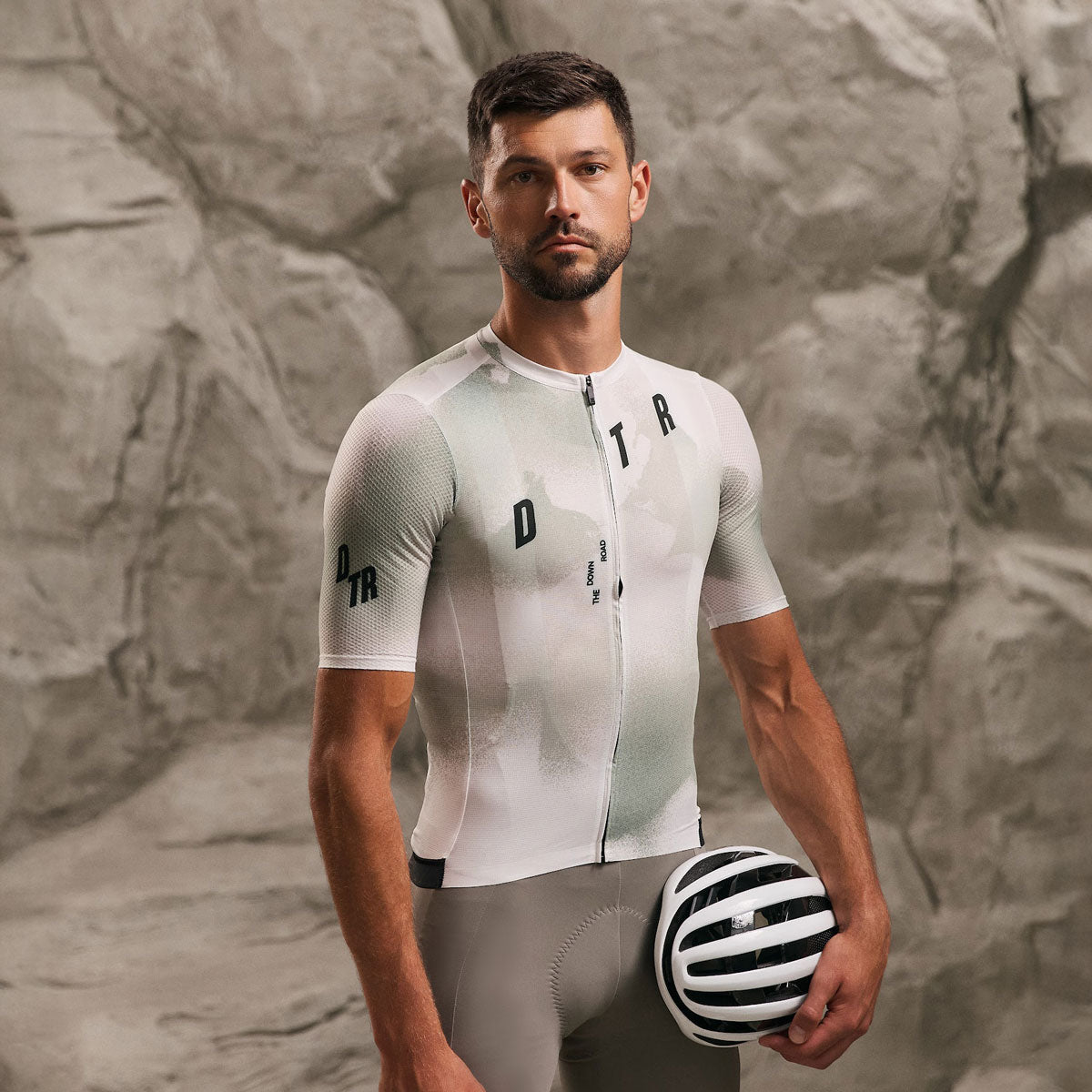
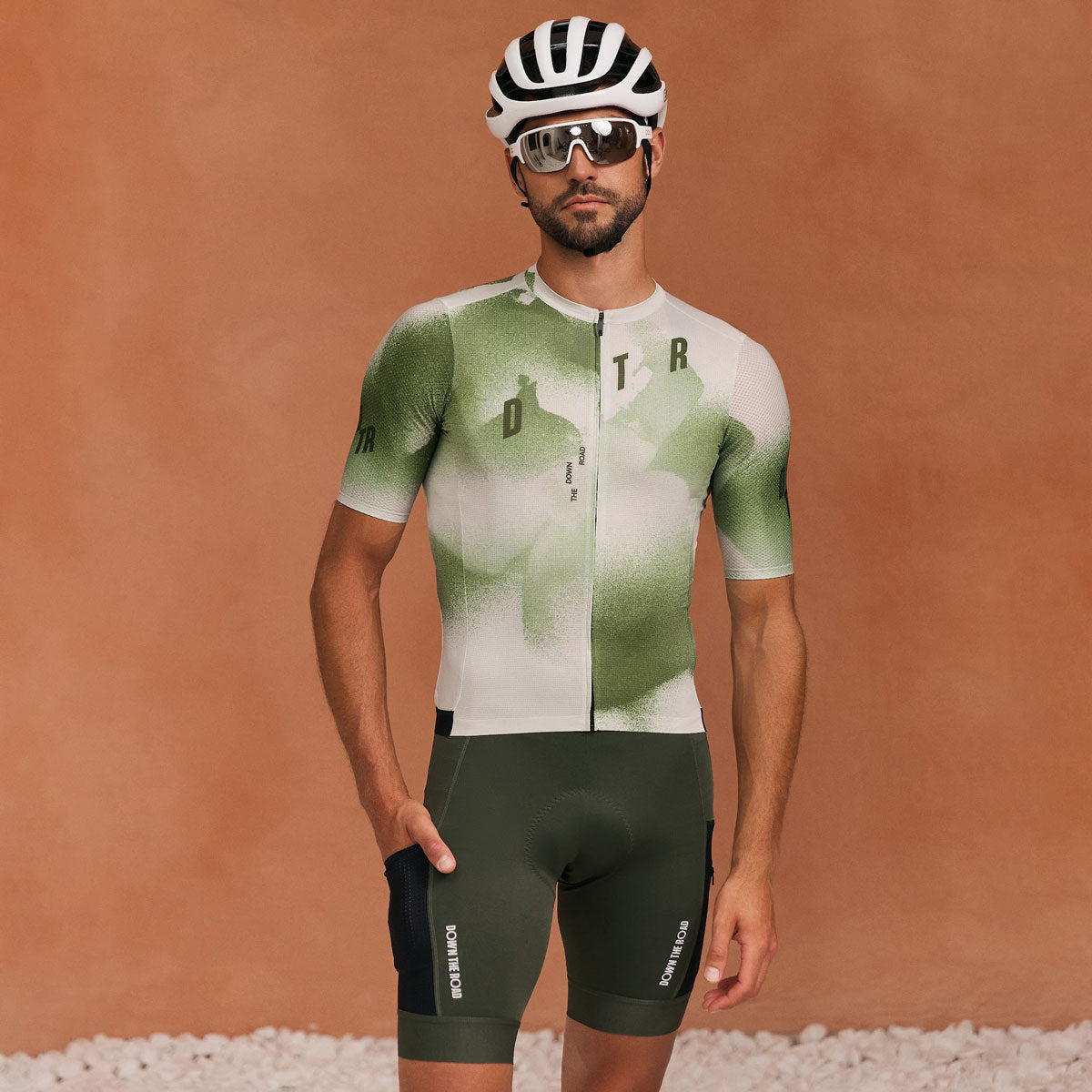
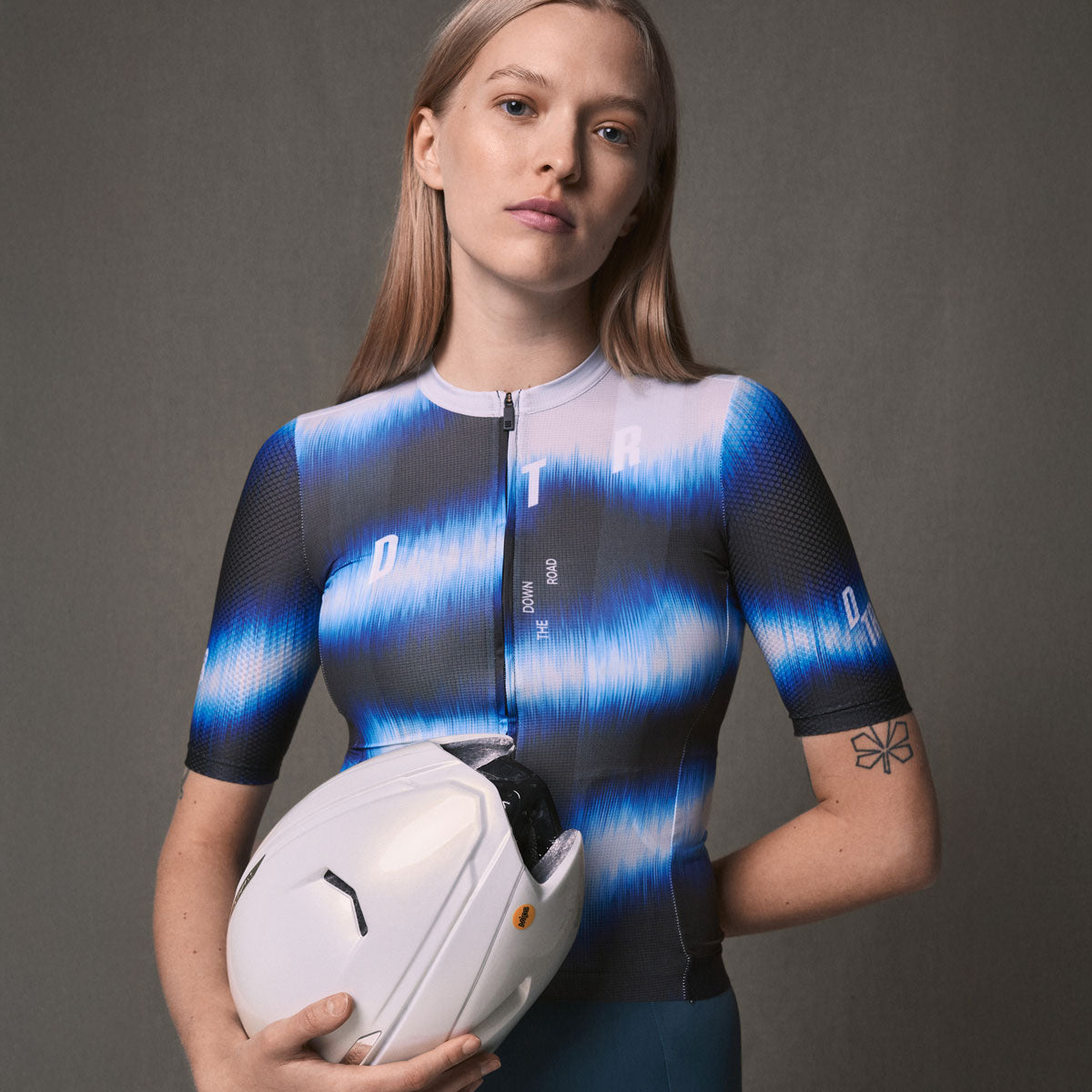
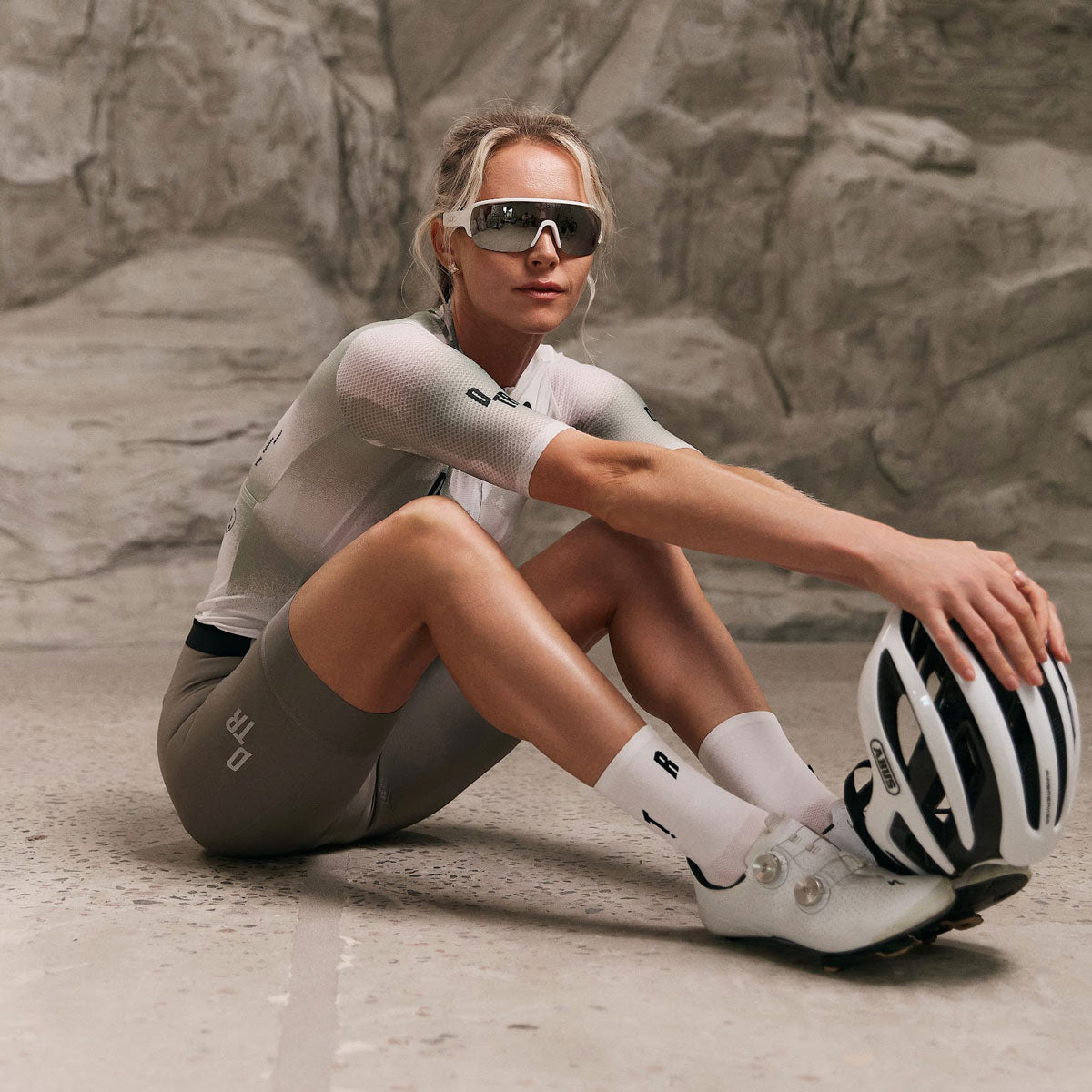
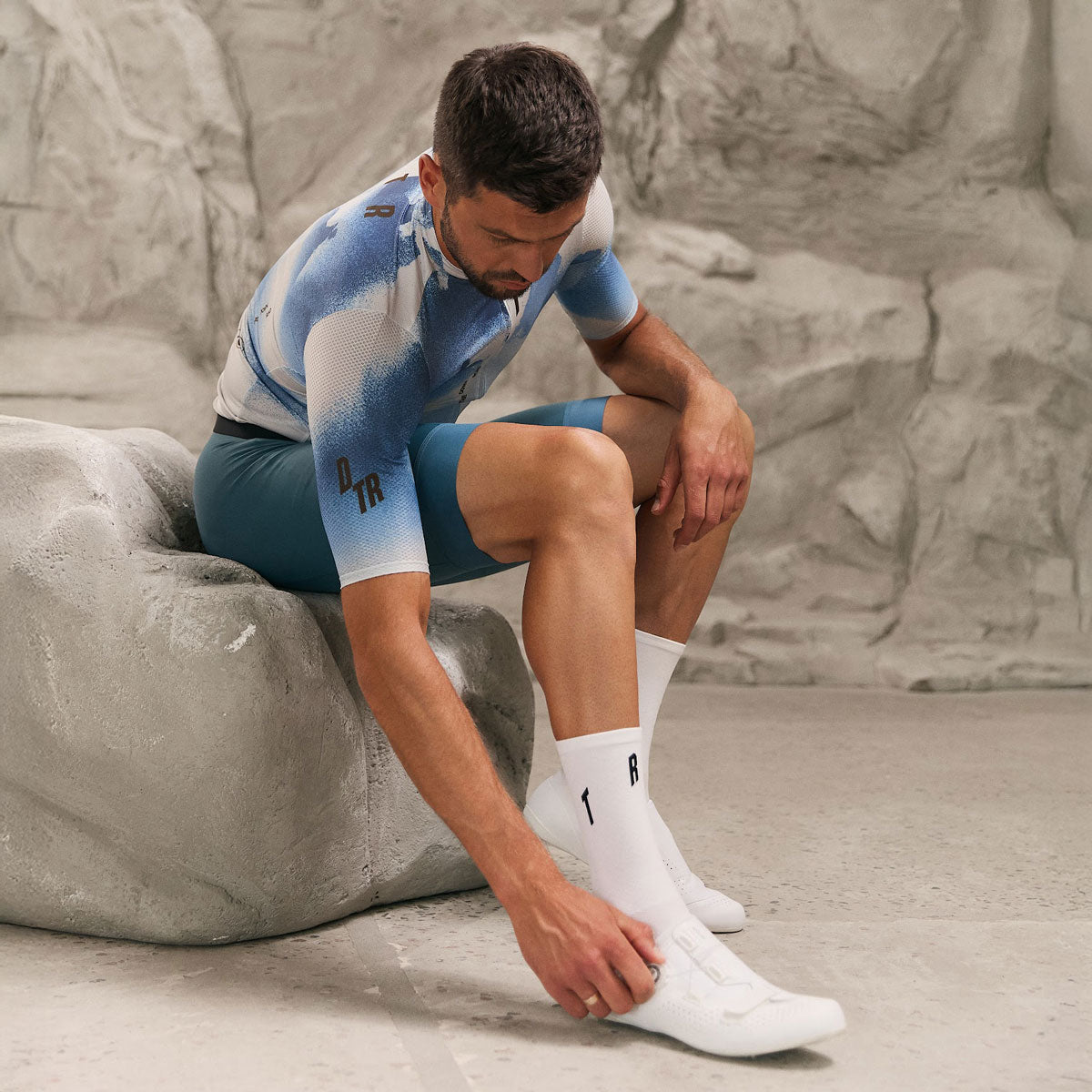
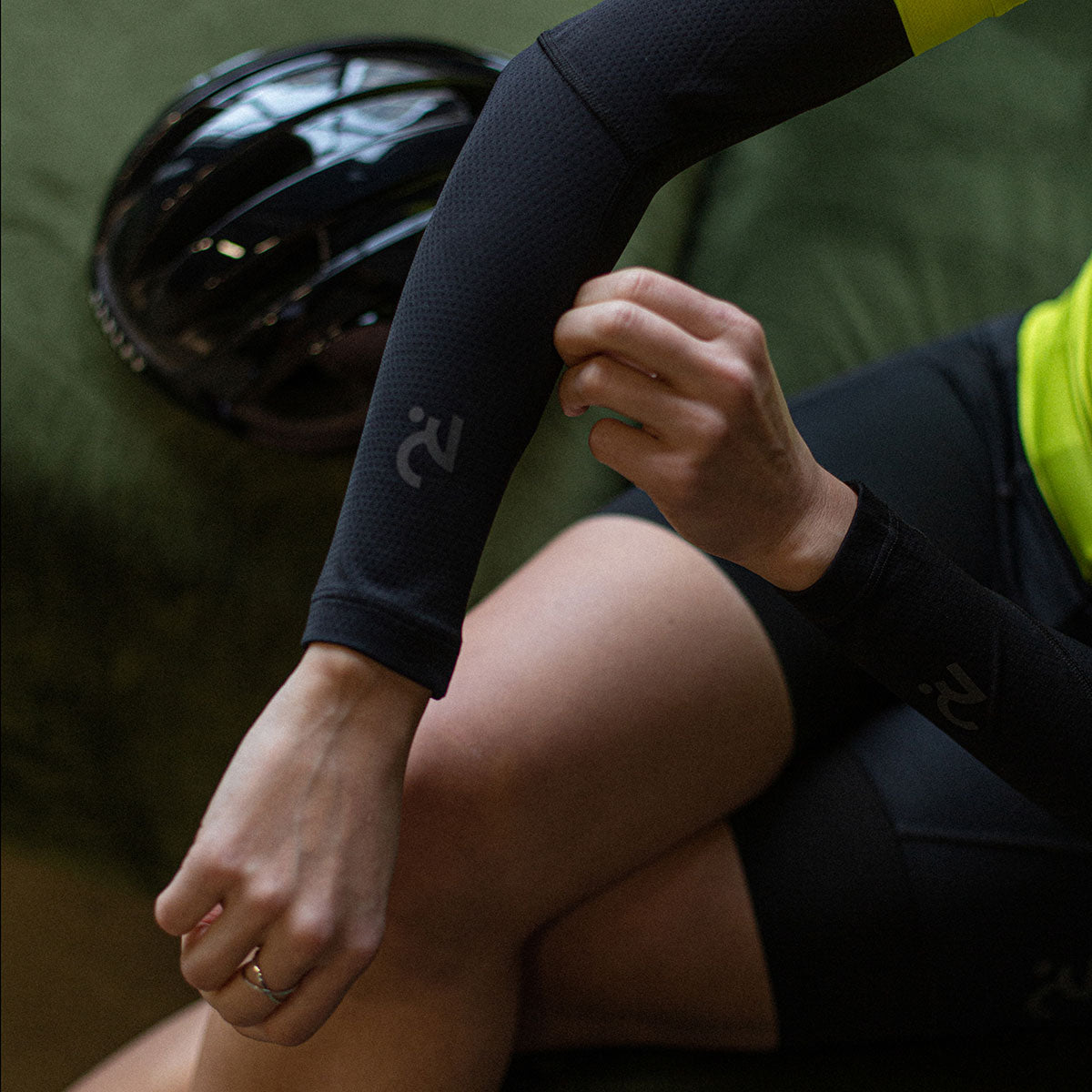
For winter cycling, wear a three-layer system on the torso — a long-sleeve base layer, a thermal jersey, and a windproof outer shell — with thermal bib tights on the legs, plus proper gloves, overshoes, a headband or cap and a neck warmer. The single most important rule: dress so you feel slightly cold standing at the door. If you feel warm before you start pedalling, you are overdressed and you will be soaked in your own sweat within half an hour, which is exactly how riders get dangerously cold in winter.
What is the basic winter layering system?
Every winter kit choice comes back to three jobs, and each layer does one of them.
- The base layer moves sweat away from your skin. A long-sleeve technical or merino base layer, worn snug against the skin. This is the layer that keeps you alive on a long descent — wet skin in cold air is what makes you shiver.
- The mid layer traps warm air. A long-sleeve thermal jersey with a brushed inner face. This is your insulation, and it is the layer you should adjust first when the temperature changes.
- The outer layer blocks wind and weather. A windproof jacket or a packable windbreaker. Wind is what actually makes you cold on a bike, and stopping it is worth more than any amount of extra insulation.
The reason this works is that trapped air, not fabric, is what keeps you warm. Three thin layers hold more warm air than one thick one, and they let you shed or add insulation as the ride changes.
What should you wear on your legs?
Thermal bib tights, and nothing much else needs saying. Legs are working hard and generating heat, so they need less insulation than your torso — but they are also exposed to the full force of the wind, and cold knees are a real injury risk.
- Thermal bib tights with a multi-density chamois are the default from roughly 10°C downwards. The brushed inner face traps warmth; the technical lycra keeps the compression and support you get from summer bibs.
- Bib shorts plus leg warmers work in the milder end of the range and give you the option to strip back mid-ride, but they will not match dedicated thermal tights when it is properly cold.
- Keep your knees covered below 15°C. This is not fussiness — cold joints and hard efforts are a bad combination.
If you are unsure which side of the line you are on, our guide to bib shorts vs bib tights covers where the crossover sits.
Why do the extremities matter so much?
Because they are where winter rides actually fall apart. Your core will usually be fine; it is numb hands and dead feet that turn a ride into an ordeal and make you unable to brake or shift safely.
- Hands. Full-finger winter gloves, windproof on the back. If your fingers still go numb, the problem is often circulation — gloves that are too tight cut off blood flow and make you colder, not warmer.
- Feet. Overshoes over your normal shoes, plus a warmer sock. Cycling shoes are vented, which is wonderful in July and catastrophic in January.
- Head. A thin thermal cap or headband under the helmet. You lose real heat through an uninsulated head in a ventilated helmet.
- Neck and face. A neck warmer is the single highest-value item for its weight and packed size — it seals the gap at your collar and can be pulled up over your face on a descent.
How should you dress for different winter temperatures?
Rough guidance, adjusted for how hard you ride and how you personally run:
- 10–15°C: Long-sleeve jersey or short-sleeve plus arm warmers, bib shorts with leg warmers, light gloves. A gilet or packable windbreaker in a pocket.
- 5–10°C: Base layer, thermal long-sleeve jersey, thermal bib tights, full-finger gloves, headband. Windproof gilet or jacket depending on wind.
- 0–5°C: Full three-layer system, thermal bib tights, winter gloves, overshoes, thermal cap, neck warmer.
- Below 0°C: Everything above, plus a heavier base layer, your warmest gloves, and a realistic look at whether the roads are icy. Winter kit does not protect you from black ice.
These are starting points, not rules. Riders who go hard need less; riders who spin easily or stop often need more.
What are the most common winter clothing mistakes?
- Overdressing. The most common error by a long way. If you are comfortable standing still, you are overdressed. Sweat you cannot evaporate becomes a cold, wet layer against your skin the moment you stop climbing.
- Wearing cotton. Cotton holds water against you and never dries. It has no place in winter cycling.
- Gloves and shoes that are too tight. Restricted circulation makes extremities colder. Warmth needs room for air.
- Forgetting the descent. You are warm going up and freezing coming down. Pack a windproof layer even if you do not think you will need it.
- No spare layer. A packable windbreaker weighs almost nothing and turns a mechanical or a wrong turn from miserable into merely annoying.
FAQ
What temperature do you need thermal bib tights? Roughly 10°C and below for most riders, though hard efforts push that lower and easy rides push it higher. Between 10 and 15°C, bib shorts with leg warmers give you more flexibility. Below 10°C, dedicated thermal bib tights with a brushed inner face are noticeably warmer and more comfortable.
How many layers should you wear cycling in winter? Three on the torso: a moisture-wicking base layer, a thermal mid layer, and a windproof outer shell. Three thin layers trap more warm air and are far more adjustable than one thick jacket. On the legs, a single thermal bib tight is usually enough.
Should you feel cold when you start a winter ride? Yes — slightly. If you feel comfortably warm standing at the door, you are overdressed and will overheat and sweat within 10 to 15 minutes. Aim to feel a little chilly at the start; you will be right once you are riding.
Why do my hands and feet get so cold cycling? Because extremities get less blood flow when your body prioritises your core, and because cycling shoes are ventilated and hands are held stationary in the wind. Windproof gloves and overshoes fix most of it. Gloves that are too tight make it worse, not better, by restricting circulation.
Do you still need a base layer in winter? Absolutely — it is the most important layer, not the least. Its job is to move sweat off your skin so you do not get chilled on descents and at stops. Skipping it and adding another jacket is exactly the wrong trade.
The bottom line
Winter cycling clothing is a system, not a single warm garment: base layer, thermal jersey, windproof shell, thermal bib tights, and real protection for hands, feet, head and neck. Dress to feel slightly cold at the door, block the wind rather than piling on insulation, and never let sweat sit against your skin. Get that right and winter riding stops being an act of endurance and starts being the best time of year to have the road to yourself. Explore DTR thermal bib tights, built in technical lycra with a multi-density chamois for long cold miles.
Born in Ukraine, ridden around the world.
—
DTR — performance cycling and triathlon apparel, designed and developed in Ukraine.

Leave a comment
This site is protected by hCaptcha and the hCaptcha Privacy Policy and Terms of Service apply.