

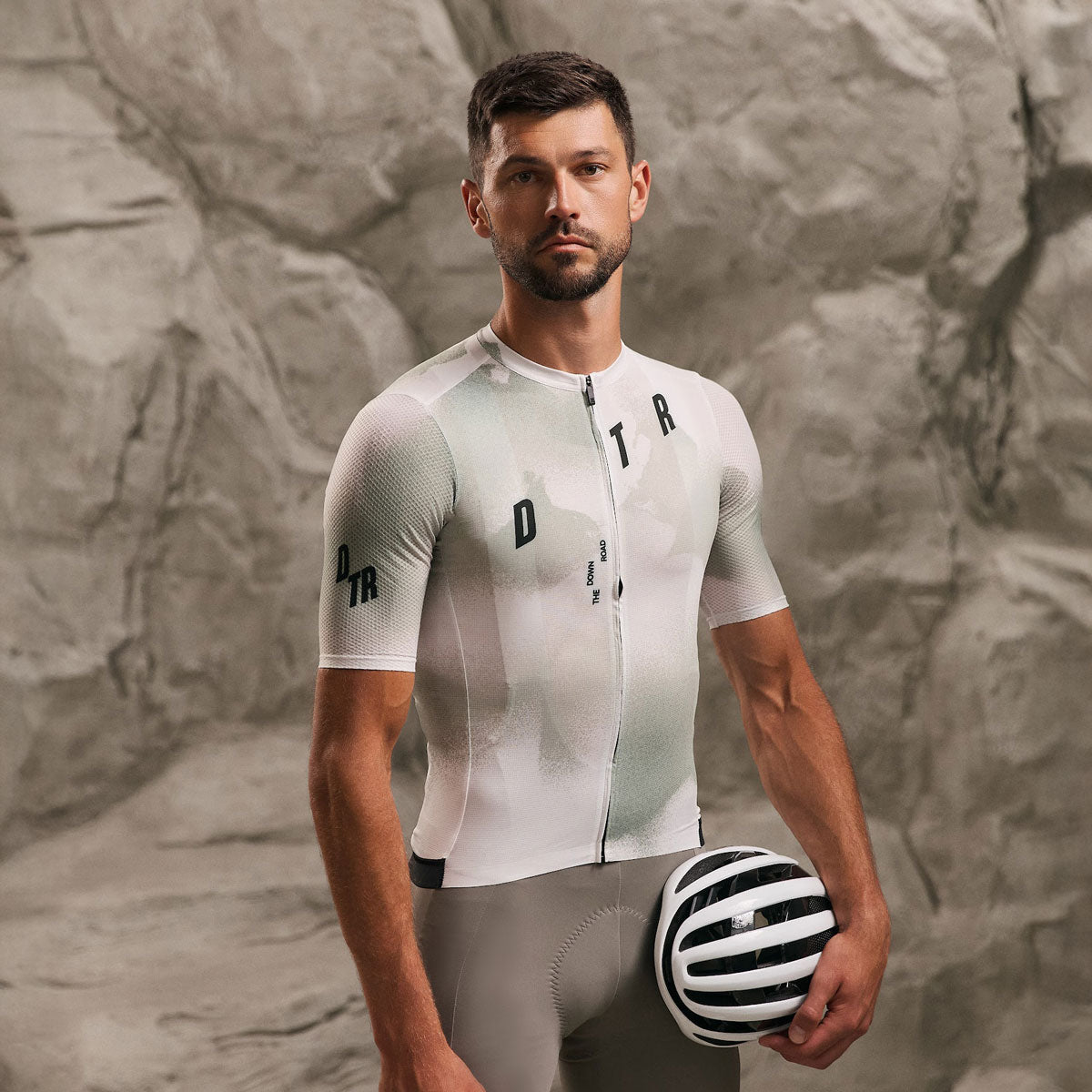
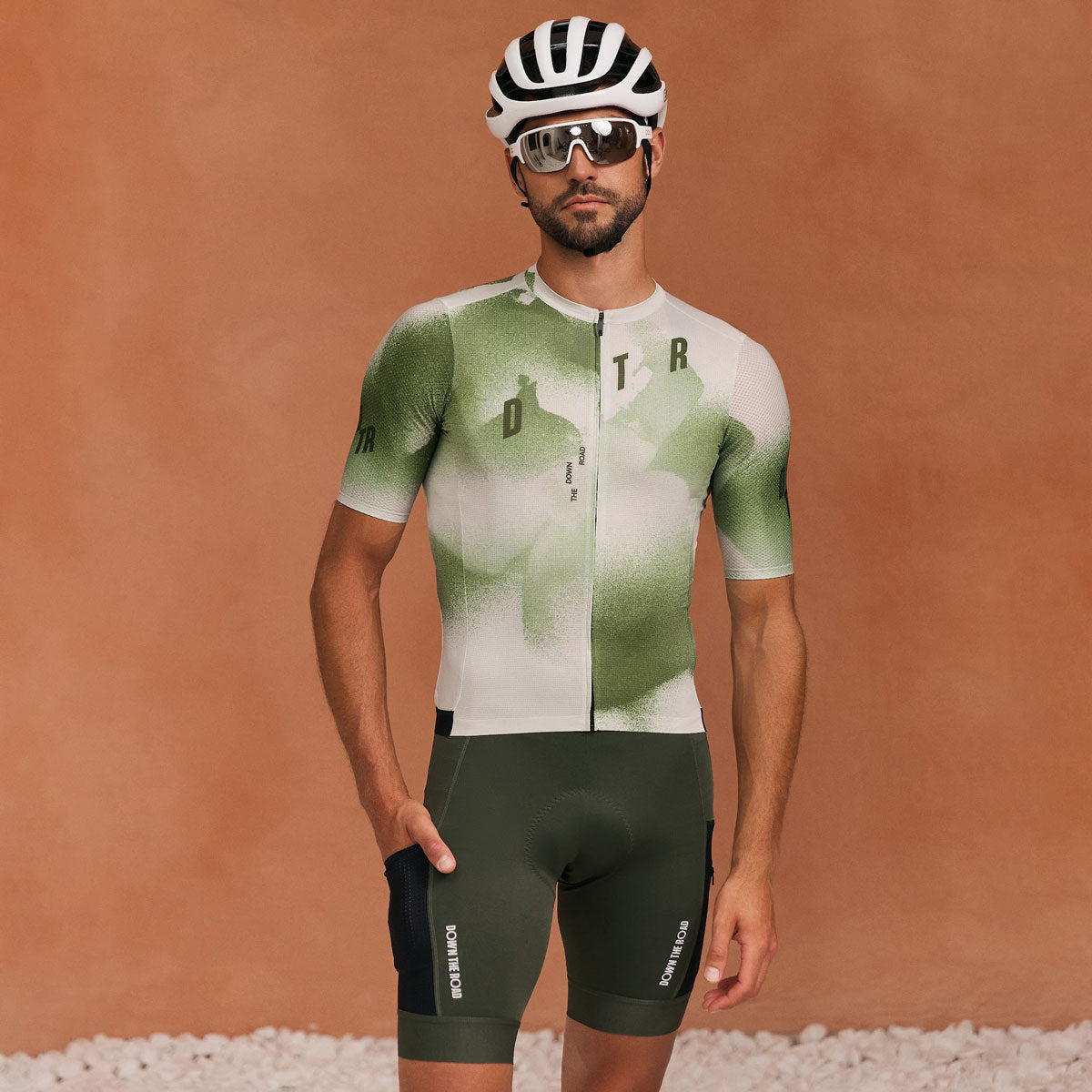
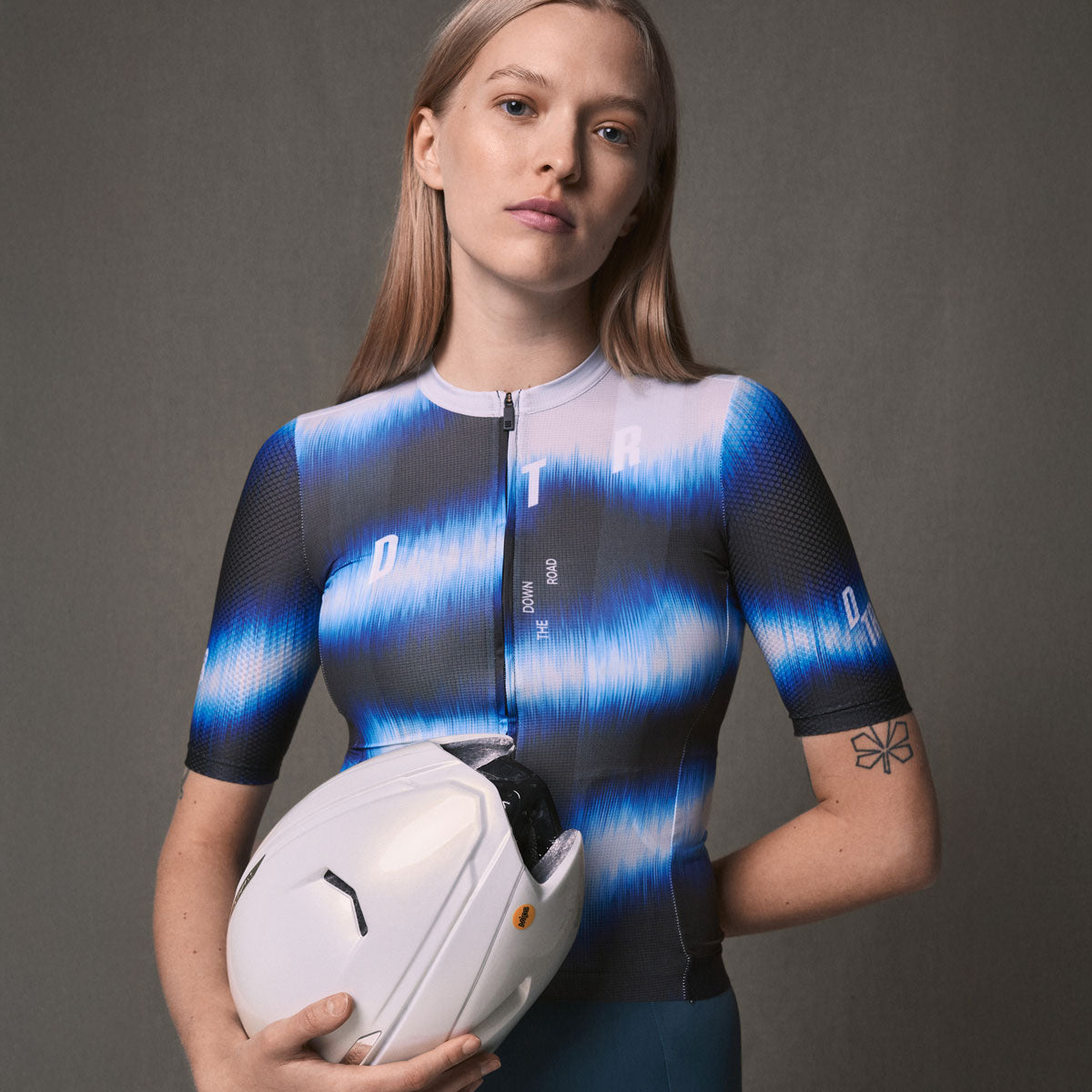
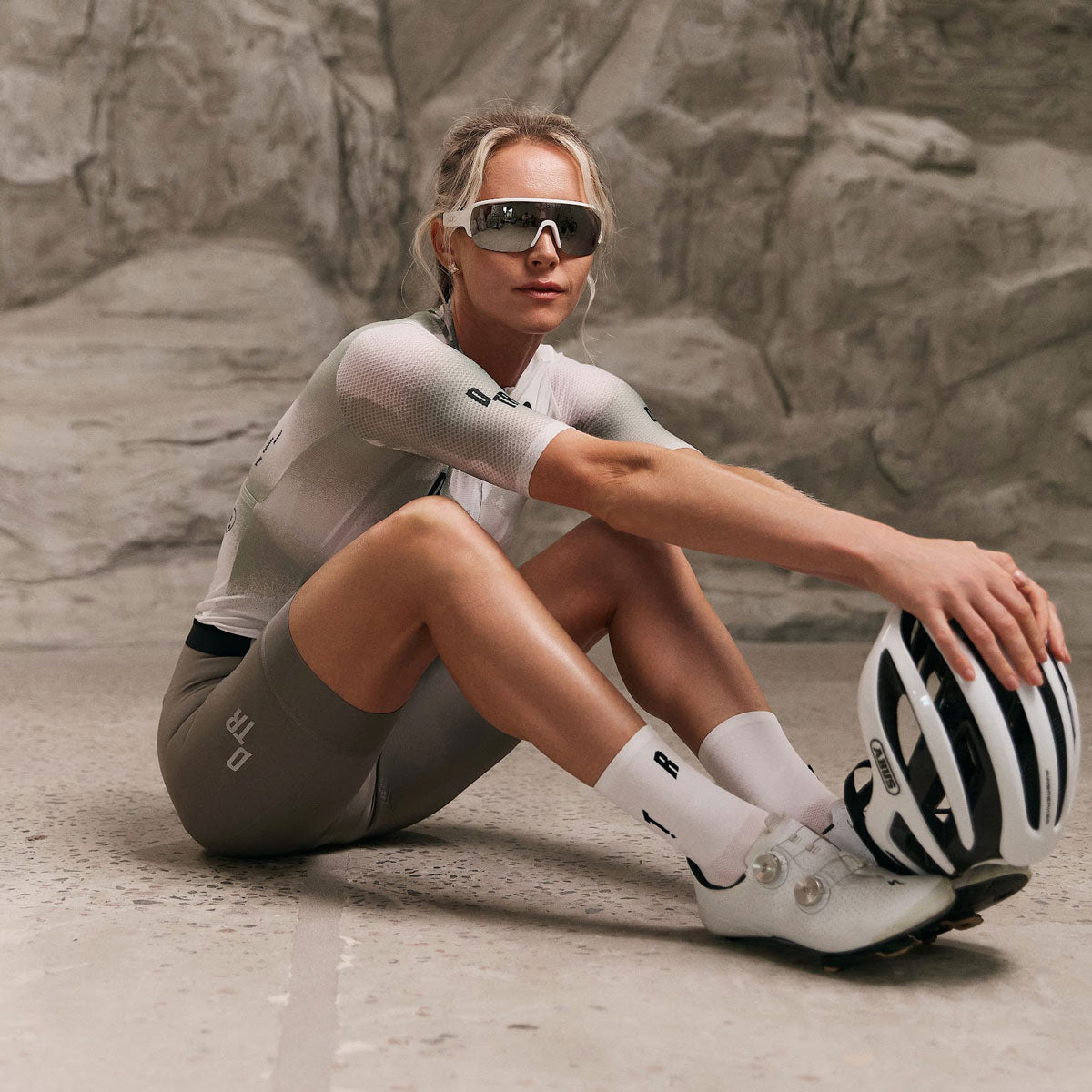
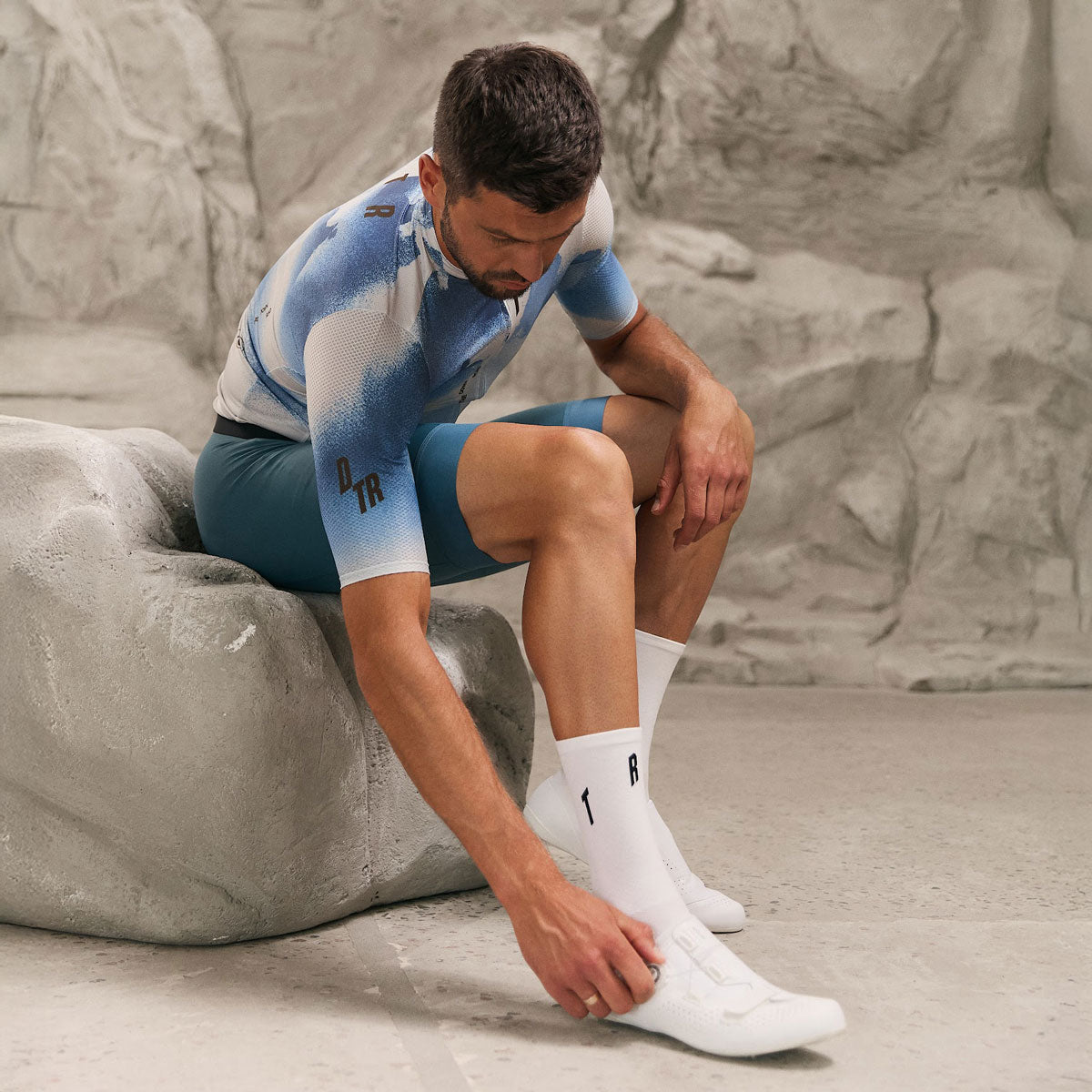
Cyclists wear lycra because a close-fitting stretch fabric solves three problems at once: it cuts the drag of loose cloth, it stops fabric sliding against skin on a repetitive pedal stroke, and it holds a chamois in the one position where it works. This guide covers what the fabric actually does, what goes underneath, and whether you need any of it to ride a road bike.
What the fabric is actually doing
Lycra is elastane — the same fibre sold as spandex — blended into a knit so the fabric stretches in every direction and returns to shape. On a bike that means a garment that moves with a knee opening and closing around 5,000 times an hour without bunching, and that stays put when you drop onto the drops.
The stretch is the whole point. A woven cotton shirt has to be cut loose to let you move. A four-way stretch knit can be cut close and still let you move further. Close is what buys the aerodynamics, the stability and the moisture transport — none of which you get from a fabric that has to hang off you to work.
Most cycling kit is a blend rather than pure elastane: a polyamide or polyester face for abrasion resistance and moisture transport, with elastane through it for recovery. The ratio is what separates a jersey that holds its shape for four seasons from one that goes baggy at the sleeves after a summer.
Why loose clothing fails on a bike
Loose clothing fails three specific ways. It catches air and creates drag. It slides against skin and creates friction where you sit. And it holds sweat against you instead of moving it to the surface where it can evaporate.
Cotton is the worst case on all three counts. It absorbs water rather than moving it, gets heavy, and stays cold the moment you stop climbing and start descending. A cotton t-shirt on a long ride in changeable weather is uncomfortable in a way that has nothing to do with looking the part.
Friction is the failure riders underestimate. Pedalling is repetitive by definition, and anything that moves against skin several thousand times in a ride will eventually irritate it. Kit that stays where you put it does not rub.
Do you have to wear it on a road bike?
No. Nothing about a road bike requires cycling-specific kit, and short rides in ordinary clothes are perfectly fine. The threshold is distance and repetition rather than bike type or speed.
Under about an hour, most riders are comfortable in whatever they already own. Past two hours, the chamois and the absence of friction stop being a preference and become the difference between finishing comfortable and finishing sore. If you ride 45 minutes once a week, bib shorts are a nice upgrade. If you ride three times a week and one of those is long, they are the first thing to buy.
What goes underneath
Nothing goes under bib shorts. The chamois is built to sit directly against skin — adding underwear puts a seam between you and it and reintroduces exactly the friction the chamois exists to remove. It also traps moisture in the one place you want it moved away from.
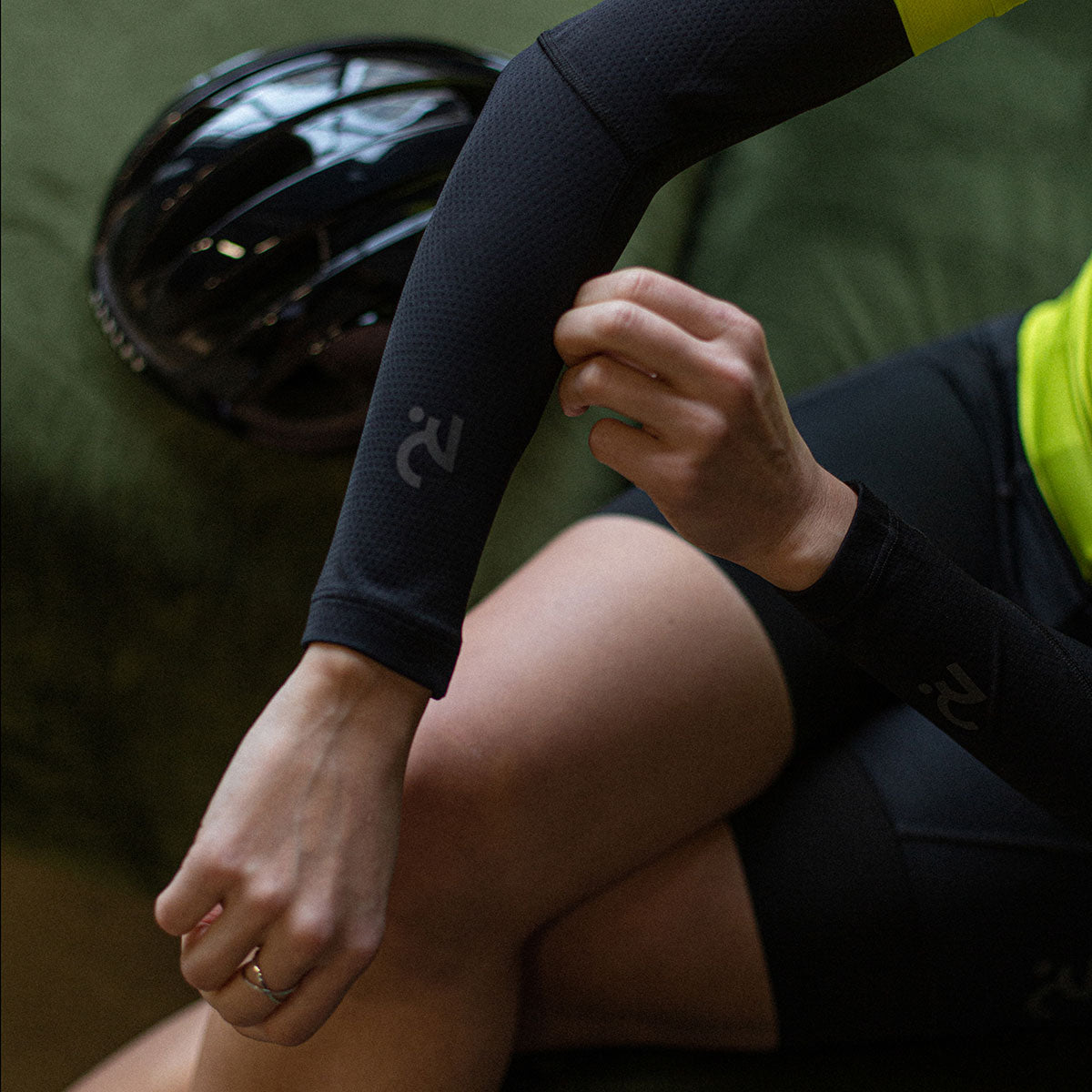
Above the waist it is the opposite. A base layer under the jersey earns its place in almost every condition, including summer: it moves sweat off skin and into the jersey, which is where it can actually evaporate. In cold weather it adds a still-air layer; in heat, a lightweight mesh base layer keeps a soaked jersey off your skin on a fast descent.
How much speed it's actually worth
At 30 km/h most of what you are fighting is air, and the large majority of that drag is you and what you are wearing rather than the bike underneath you. Swapping a flapping jacket for a close-fitting jersey is one of the cheapest speed gains available — cheaper per watt saved than almost any component upgrade.
The effect scales with speed. Below roughly 20 km/h, gradient and rolling resistance dominate and the fabric matters much less. Into a headwind or on a fast flat, it matters a lot. That is also why the same rider who is relaxed about kit on a club run cares about it on a time trial.
What to buy first
Bib shorts, then a jersey. Bib shorts do the most work per euro because they solve the contact-point problem — the chamois, the silicone grippers holding the leg in position, and the straps keeping the waistband off your stomach when you are folded over the bars. A jersey is a comfort and storage upgrade; bib shorts are a comfort and endurance one.
After that, a base layer, then a gilet or windbreaker that packs into a jersey pocket. That short list covers most of the year in most climates before you need anything season-specific.
Frequently asked questions
What did cyclists wear before lycra?
Wool. Merino jerseys and shorts with a leather chamois were standard until synthetic stretch fabrics arrived in the 1970s and 80s. Wool still works — it is warm when damp and resists odour — but it does not recover its shape the way a modern knit does.
Why bib shorts rather than shorts with a waistband?
A waistband has to grip your stomach to stay up, and it does that exactly where you fold at the hip. Straps hold the short from the shoulders instead, so nothing digs in when you are low, and the chamois stays in position.
Does it have to be this tight?
It has to be close enough not to move. Race-fit kit is cut tighter than that for aerodynamics; a more relaxed cut still stays put and is more comfortable on long endurance rides. Both are correct — the failure mode is loose enough to slide.
Is lycra hot in summer?
A close-fitting technical knit is cooler than a loose cotton top in the same conditions, because it moves sweat to the fabric surface where airflow can evaporate it. Cotton holds the sweat instead. Lighter, more open knits are what change in summer, not the fit.
Start with the shorts: the DTR bib shorts range is at /collections/bib-shorts.
DTR — performance cycling and triathlon apparel, designed and developed in Ukraine.

Leave a comment
This site is protected by hCaptcha and the hCaptcha Privacy Policy and Terms of Service apply.