

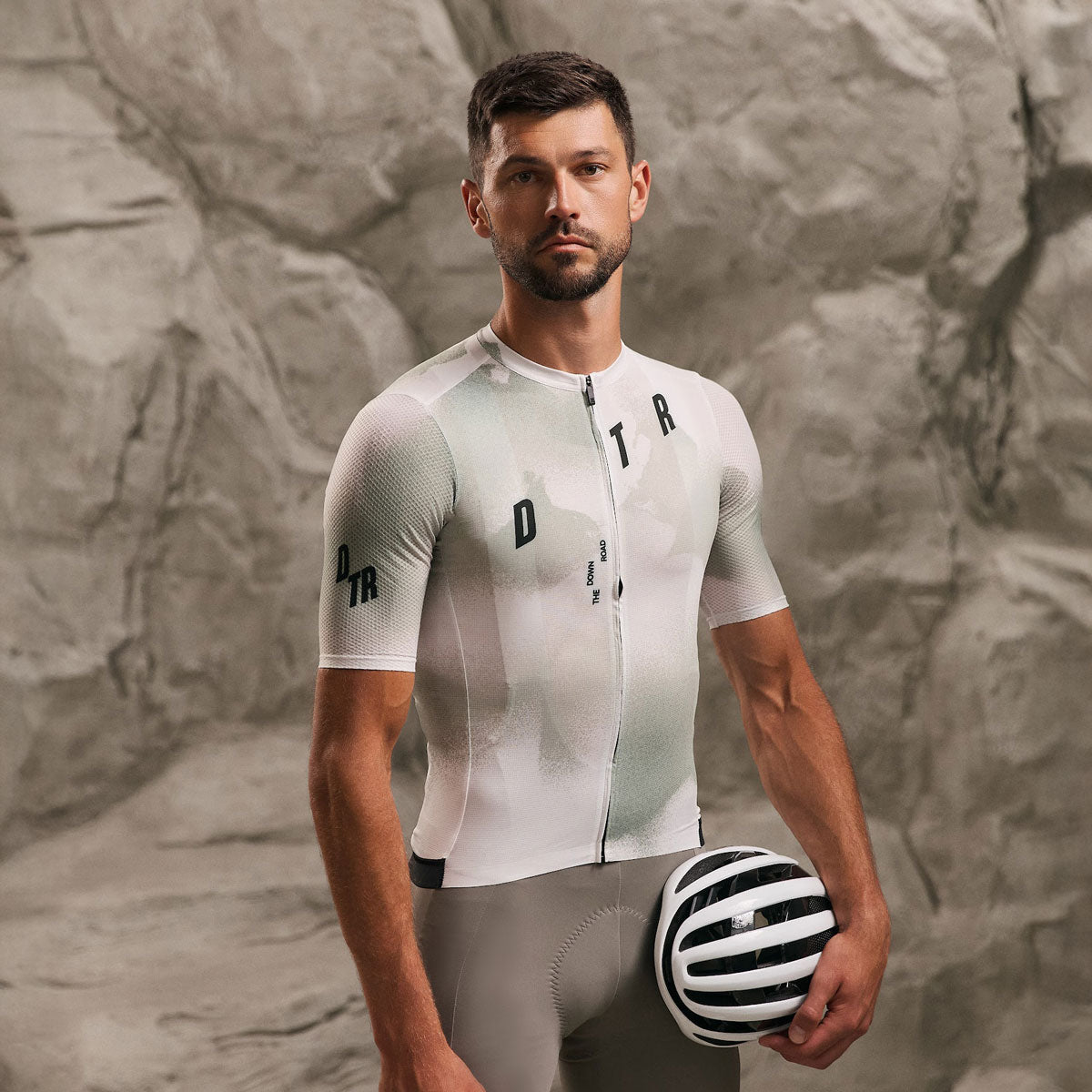
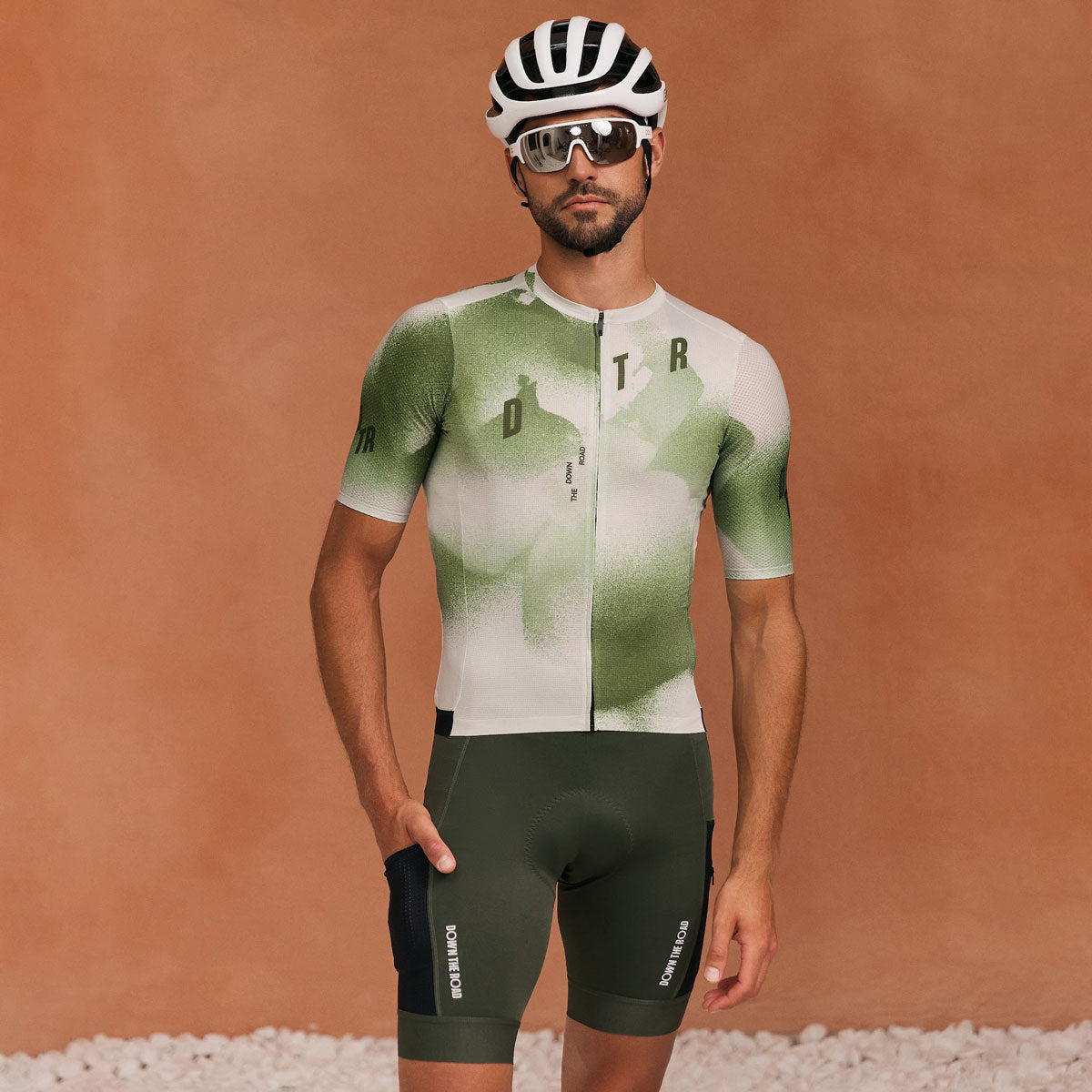
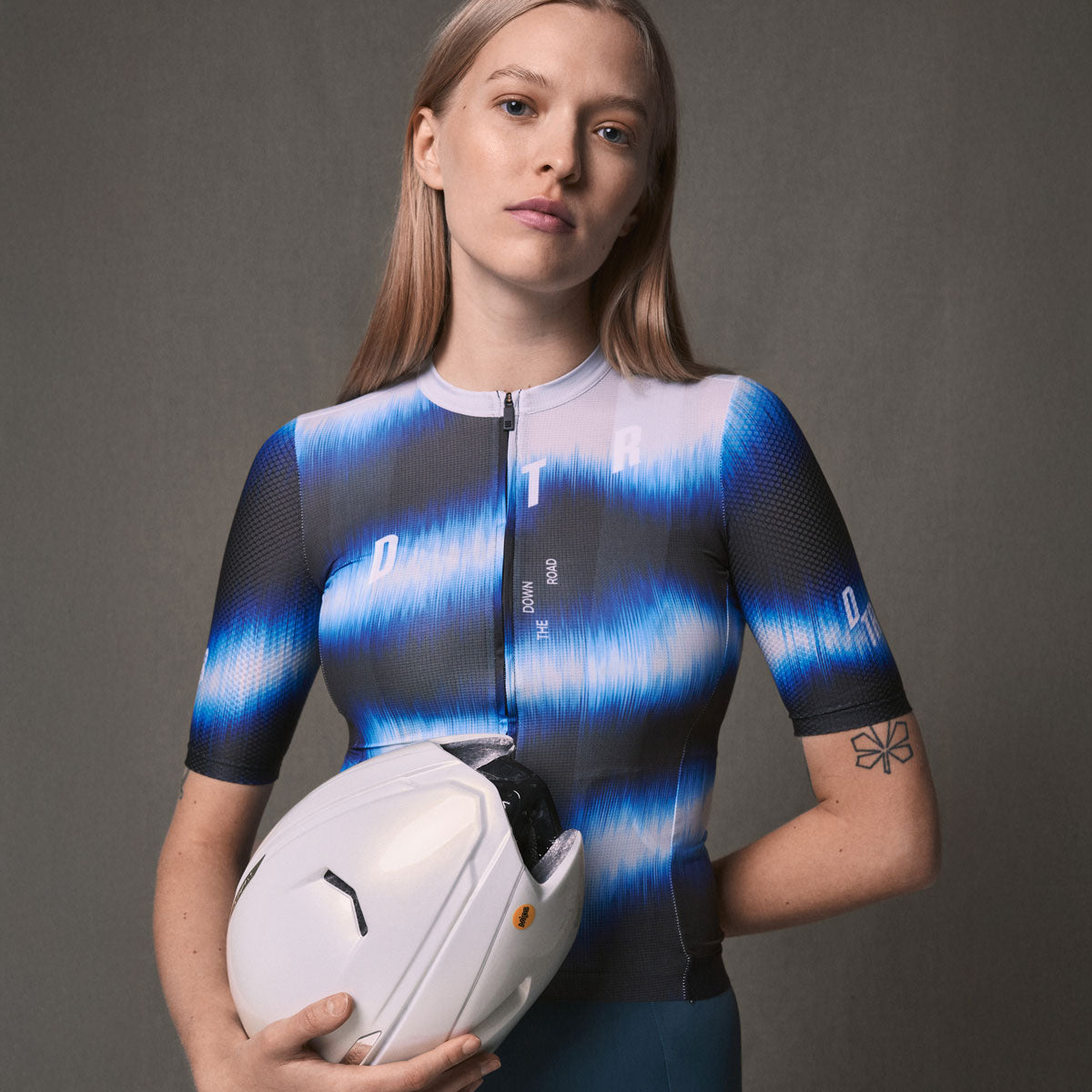

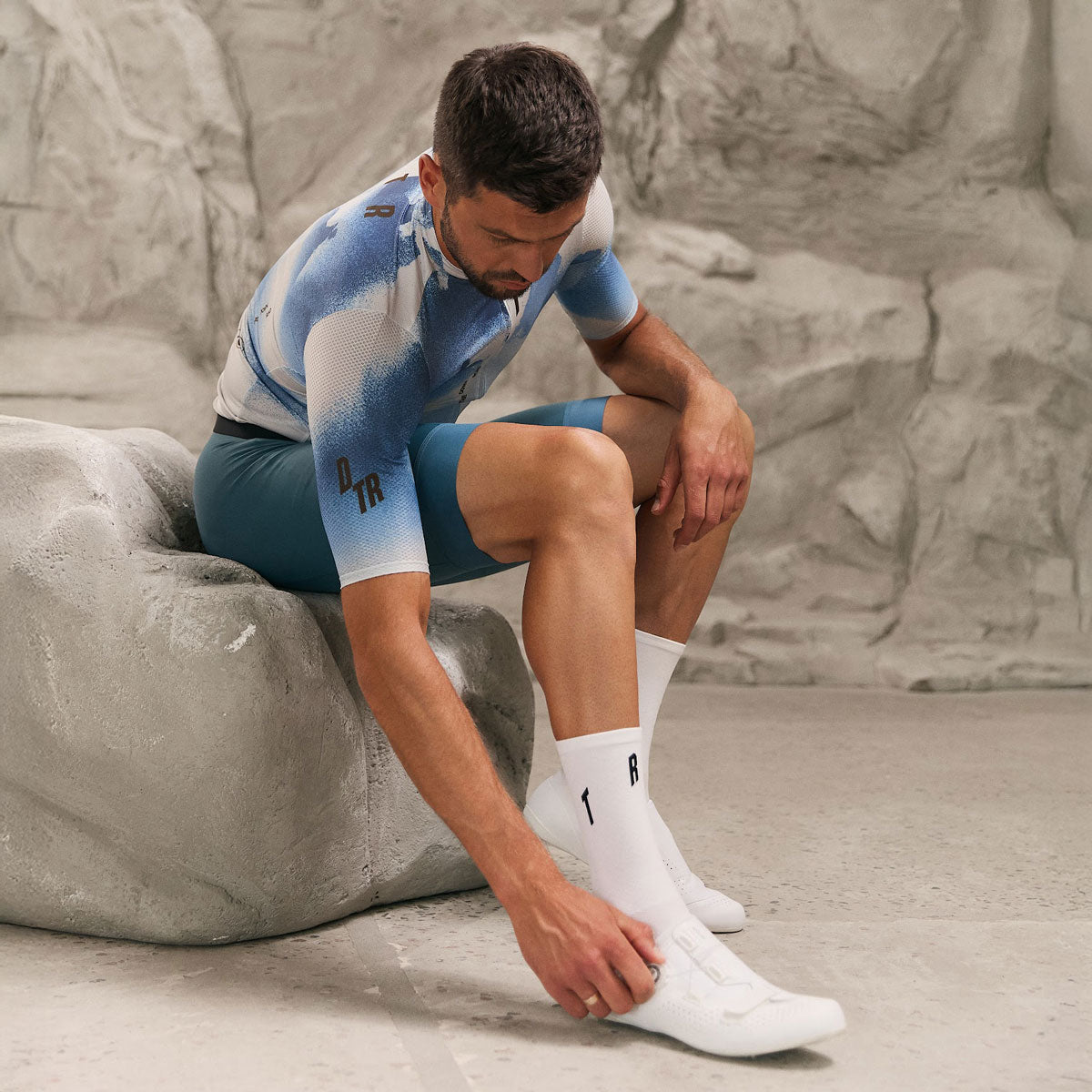
Choosing a cycling jersey comes down to four things: the right fit for how you ride, the right fabric weight for your climate, a full or partial zip, and enough rear pockets to carry what you need. Get those right and the jersey does its job — moving sweat, managing your temperature and staying put in the riding position — for years. This guide walks through what actually matters when buying a cycling jersey, so you pick one that suits your riding rather than guessing from a photo.
Fit: race, relaxed, or in between
Fit is the first decision, because it changes how the jersey feels and performs. A race (or aero) fit is snug and close to the body for speed and to stop fabric flapping; a relaxed (or club) fit is roomier and more forgiving, easy to wear all day. Neither is better — pick the one that matches how you ride and how you like clothes to sit. If you race or ride fast and like a close cut, go race; if you prioritise comfort or are newer to cycling, go relaxed. Whatever you choose, a jersey should sit right in the riding position — leaned forward — not standing up straight, and it should be snug enough not to flap but not restrictive. (For more, see our guide on race cut vs relaxed fit jerseys.)
Fabric and weight: match it to your climate
A jersey's fabric weight decides what conditions it suits, so match it to the temperatures you ride in:
- Summer/hot: a lightweight, highly breathable jersey, often with mesh panels, to move heat and sweat.
- Mild/all-round: a mid-weight jersey that handles a broad range of spring-to-autumn temperatures.
- Cold: a thermal jersey with a brushed, fleecy inner for warmth, worn with a base layer.
Whatever the weight, the fabric's real job is wicking — moving sweat off your skin to evaporate — so you stay dry and comfortable. A breathable technical fabric beats a heavier or cheaper one that traps sweat. If you ride year-round, a couple of jerseys at different weights covers more than one all-rounder trying to do everything.
The zip: full, half or quarter
The zip controls ventilation. A full-length zip is the most versatile: open it fully to dump heat on a climb or a hot day, zip it up on a cold descent. A half or quarter zip is simpler and can look cleaner, but gives less temperature control. For most riders, a full zip is the more flexible choice — being able to open the whole front is one of the easiest ways to manage your temperature mid-ride.
Pockets: how much you carry
Nearly all cycling jerseys have three rear pockets, and they matter more than people expect. They carry your food, phone, keys, a packable shell and arm warmers — everything for a ride. Look for pockets that are secure (so nothing bounces out), easy to reach, and sometimes a zipped fourth pocket for valuables. If you ride long or self-supported, pocket capacity matters; if you ride with a saddle bag or cargo bibs, you can get away with less. It's a small feature that shapes how useful the jersey is on a real ride.
Other things worth checking
A few details separate a good jersey from a frustrating one:
- Grippers: a silicone gripper at the hem stops the jersey riding up in the riding position.
- Sleeves: they should sit flat without cutting in; raw-cut or gripper sleeves stay put.
- Collar: comfortable, not too high or tight.
- Visibility: brighter colours or reflective details help if you ride in low light.
- Care: technical fabrics need gentle washing and no high heat to keep performing.
FAQ
How do I choose a cycling jersey? Match the fit (race or relaxed) to how you ride, the fabric weight to your climate (light for summer, thermal for cold), pick a full zip for the most temperature control, and check the rear pockets carry what you need. Fit and fabric matter most.
What's the difference between race and relaxed jersey fit? A race fit is snug and aerodynamic for speed; a relaxed fit is roomier and more forgiving for comfort. Choose based on how you ride and how you like a jersey to sit — neither is better.
Should a cycling jersey be tight? It should be snug enough not to flap in the wind and to wick sweat, but not restrictive. A race fit is close-fitting; a relaxed fit has more room. It should sit right in the forward riding position.
What weight jersey do I need? Match it to your climate: lightweight and breathable for summer, mid-weight for all-round spring-to-autumn riding, and a thermal jersey with a base layer for cold weather. Year-round riders often own a couple.
Do I need a full-zip jersey? A full zip gives the most temperature control — open it to dump heat, close it on descents — which makes it the most versatile. A half or quarter zip is simpler but less adjustable.
The bottom line
Choosing a cycling jersey is about matching four things to your riding: fit (race or relaxed), fabric weight (to your climate), zip (full for the most control), and pockets (for what you carry). Get those right and everything else is detail. Start with the fit and weight that suit how you ride, and explore DTR cycling jerseys.
—
DTR — performance cycling and triathlon apparel, designed and developed in Ukraine.

Leave a comment
This site is protected by hCaptcha and the hCaptcha Privacy Policy and Terms of Service apply.