

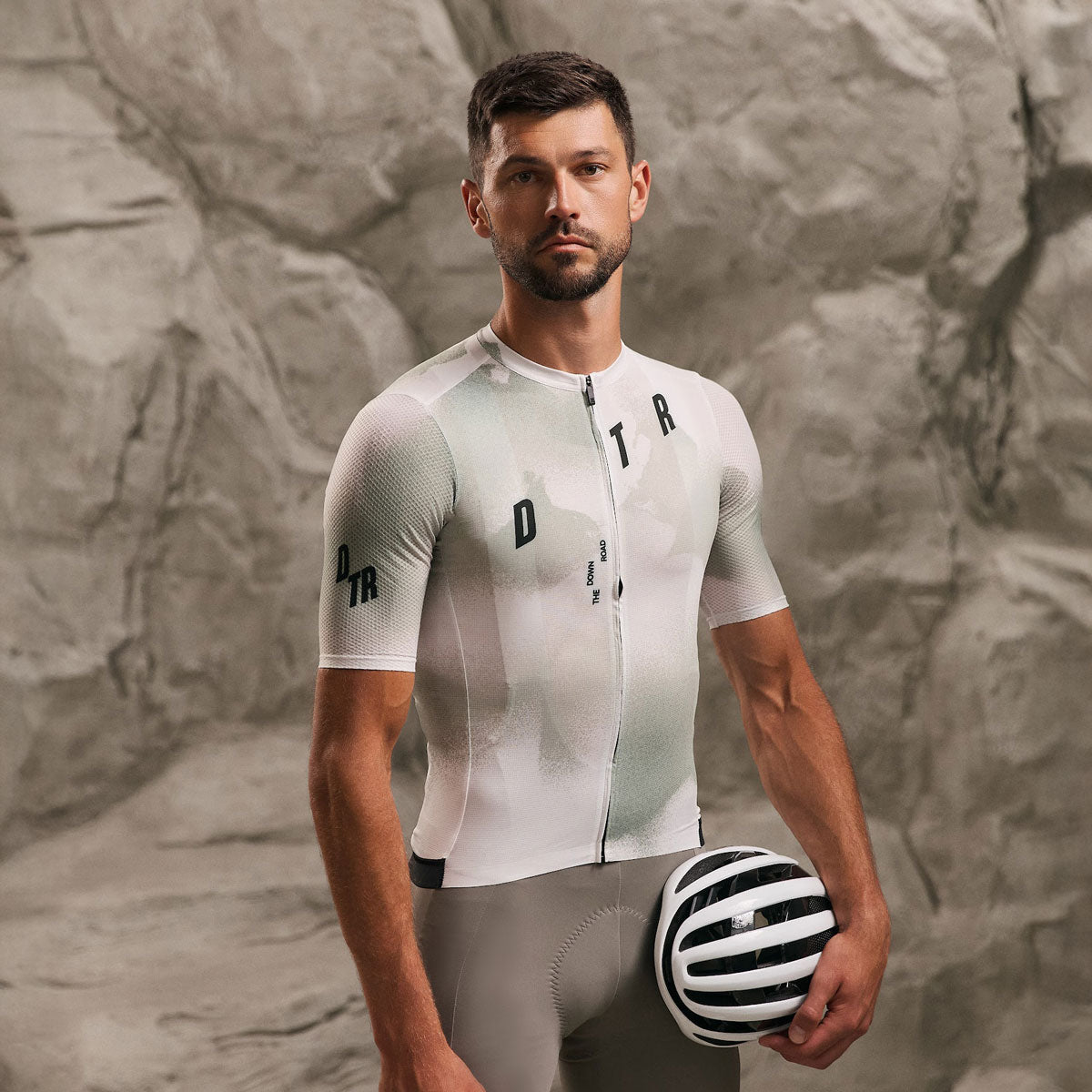
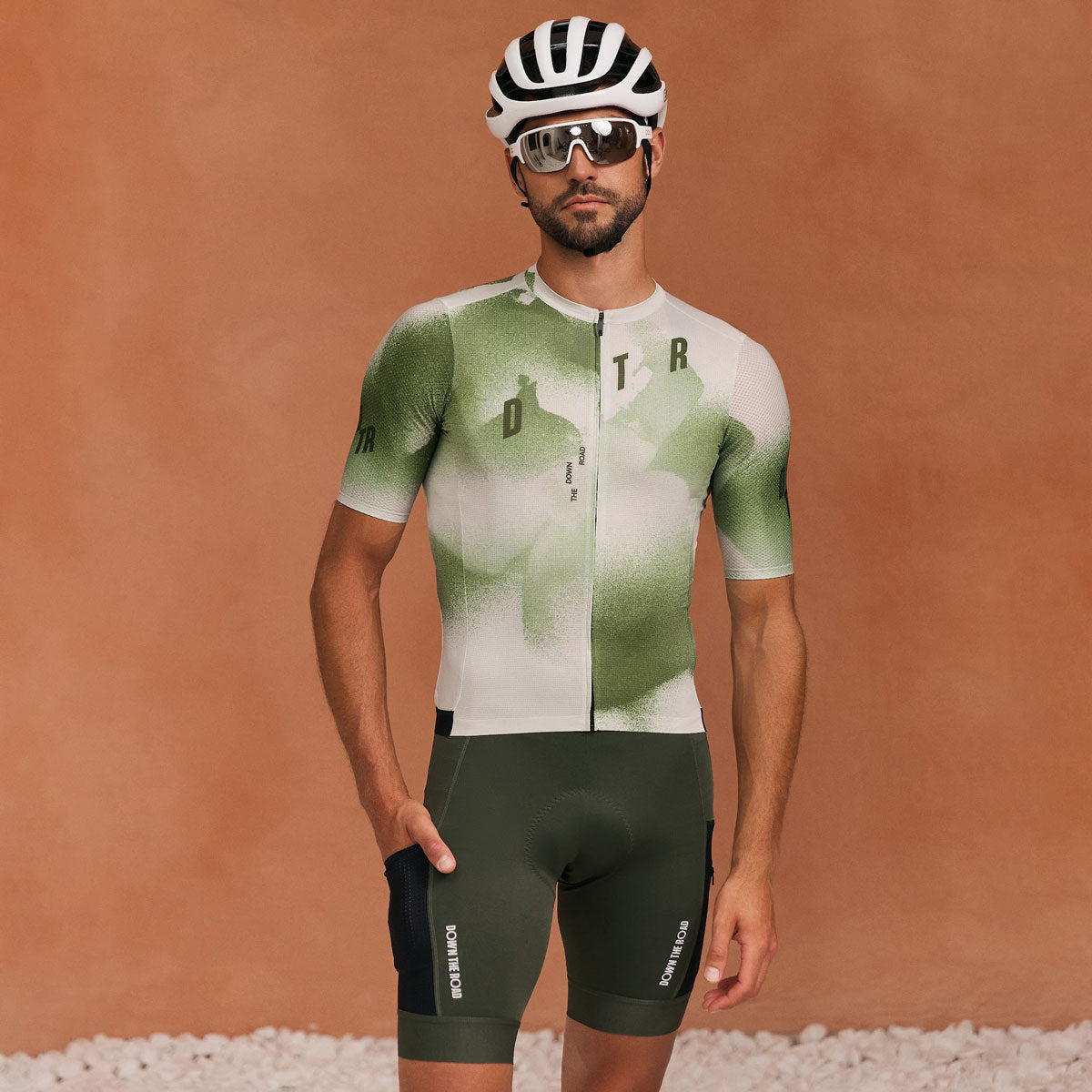
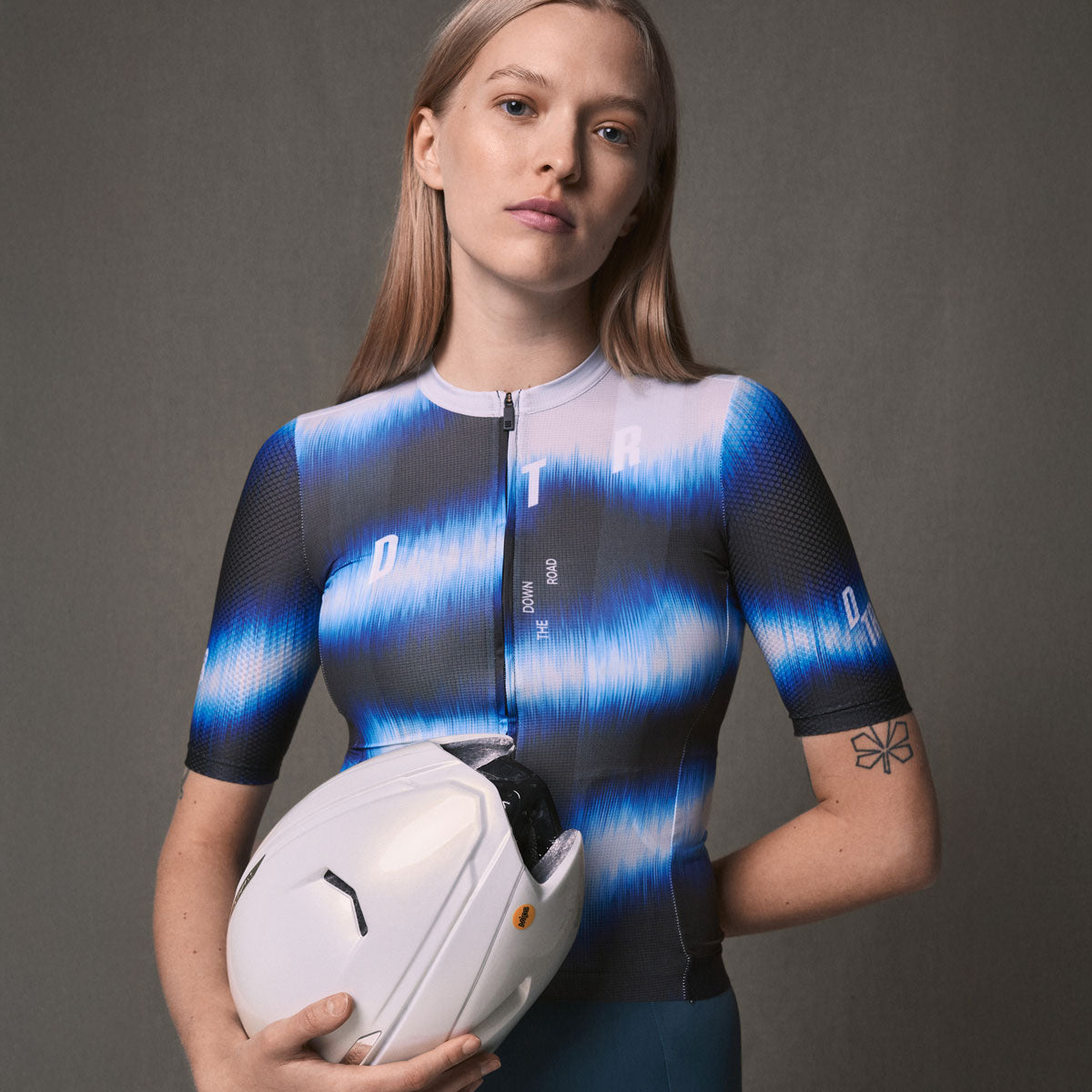

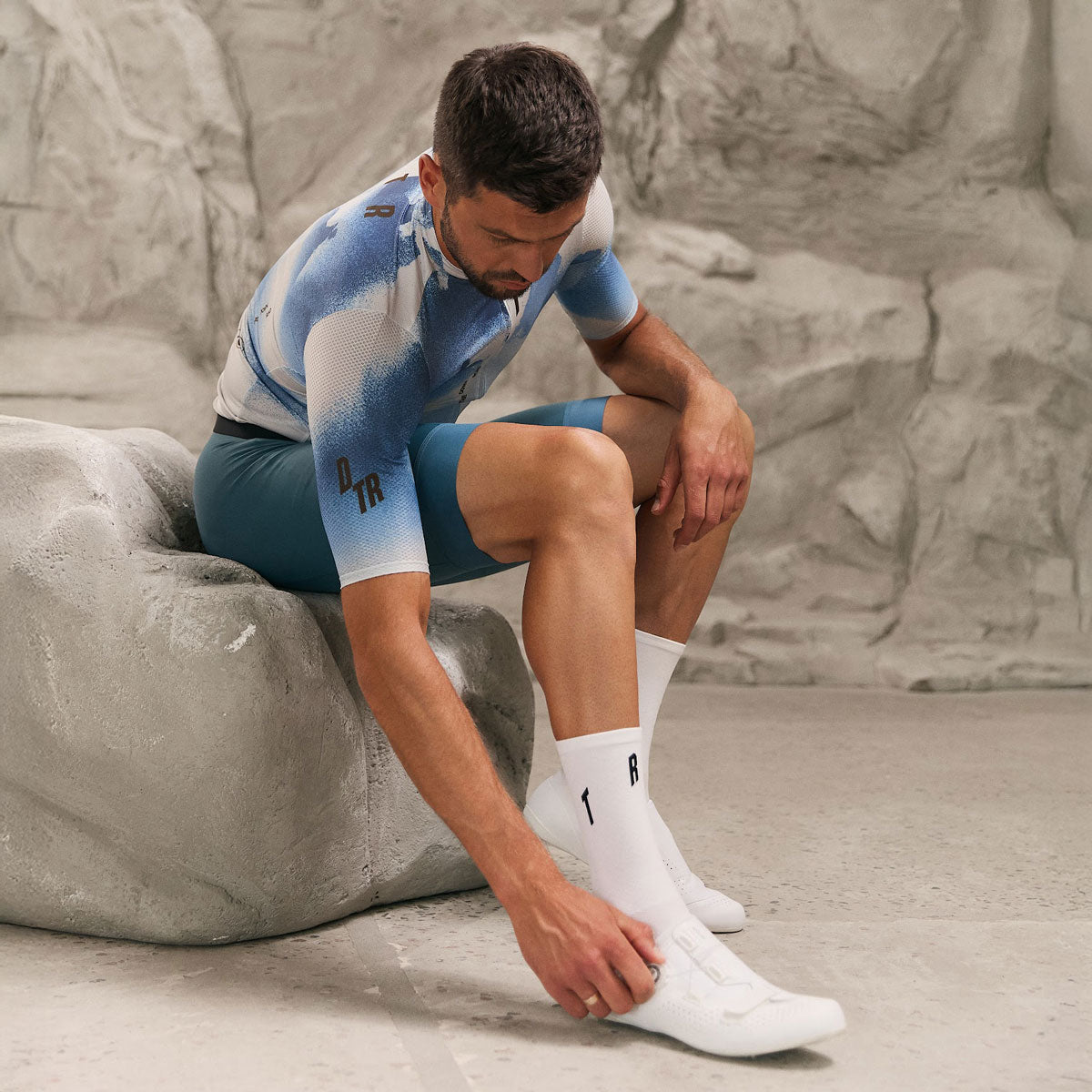
A cycling jersey should sit close to your body in your riding position: sleeves snug to mid-bicep without digging in, hem anchored at the hips, no loose fabric flapping at the chest or armpits, and loaded pockets that don't drag the back down. Standing in front of a mirror tells you very little — the jersey is cut for the bike.
This guide covers the riding-position test, what sleeves and hems should do, pocket sag as a fit signal, choosing between sizes, and race versus club cuts.
Test it in your riding position
Judge a jersey with your hands on the hoods, hips hinged, elbows bent — not standing upright. Cycling cuts use a longer back, shorter front and pre-angled sleeves, so a jersey that wrinkles slightly at the stomach when you stand can be exactly right on the bike. If it's smooth standing up, it's probably pulling across the shoulders when riding.
What the sleeves and hem should do
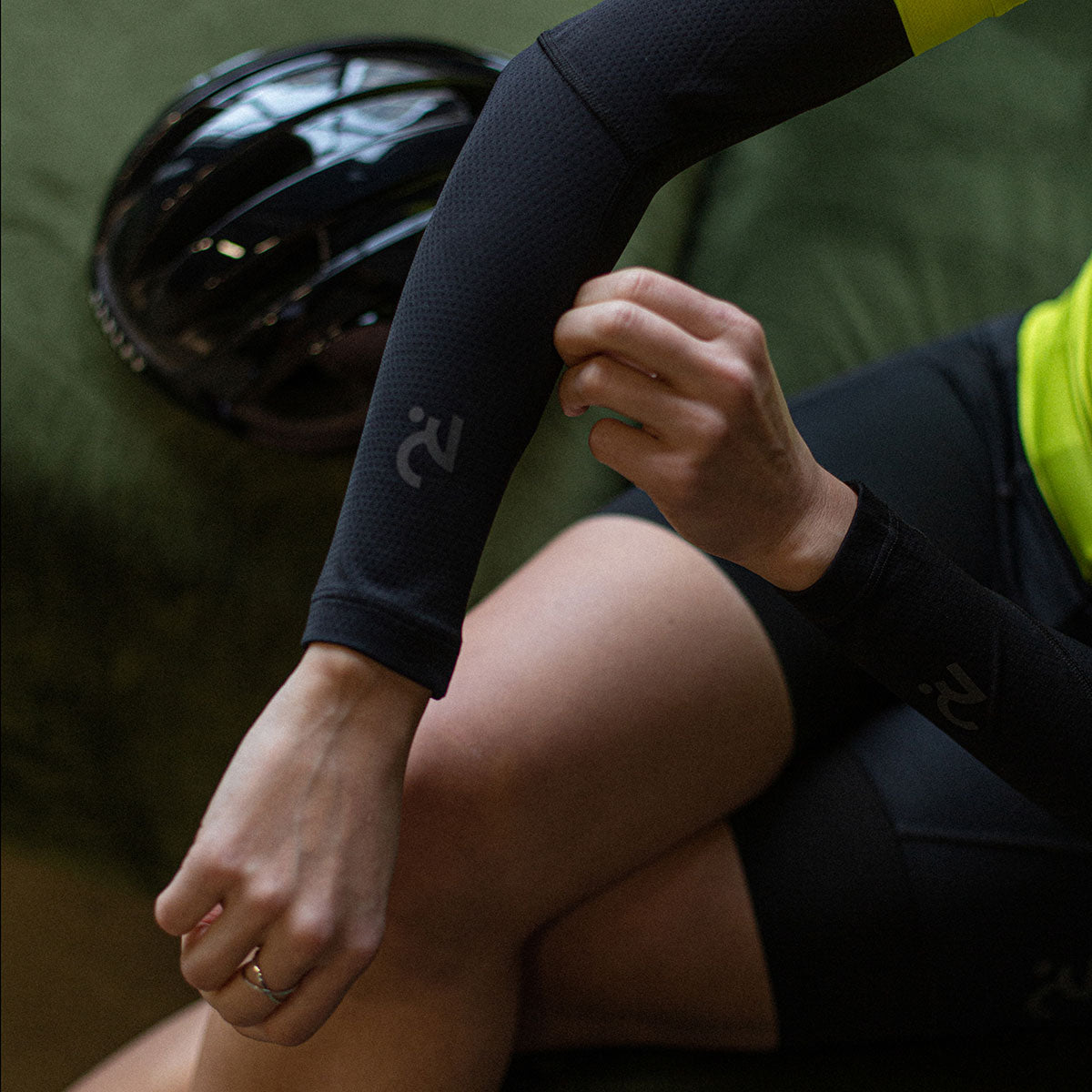
Sleeves should end around mid-bicep and lie flat against the arm — snug enough that they don't flutter, never so tight they leave deep marks. The hem should sit at the hip bones and stay put when you reach forward; a silicone gripper holds it against the movement of pedalling. A front that bunches badly when seated is fabric you'll fight all ride.
Pocket sag: the signal most riders miss
Load the rear pockets when you try a jersey — phone, pump, two gels. If the whole back drops and swings, the jersey is too big or the fabric too light for how you pack. A well-fitted jersey carries loaded pockets against your lower back without pulling the collar backwards or the hem upwards.
Between sizes: go up or down?
Size for your chest measurement first, then let riding style decide ties. If you're between sizes and ride fast in a low position, size down — the stretch is built for it. If you sit more upright, ride long distances, or plan to layer over a base layer in winter, take the larger size. A jersey you have to wrestle over your shoulders is too small regardless of chart position.
Race fit or club fit?
Race-fit cut is cut close through the torso and sleeves for a low, stretched position — it feels compressive standing still and right at speed. A more relaxed cut gives the same technical fabric with room through the chest and waist for longer, less aggressive riding. Neither is a level statement; it's a position statement. Match the cut to how low you actually ride.
FAQ
Should a cycling jersey be tight?
Close, not compressive. The fabric should follow your torso with no free material flapping, but you should breathe deeply, reach the drops and load pockets without strain. If seams dig in at the shoulders or the zip gapes open under tension, it's a size too small.
Why does my jersey ride up?
Usually one of three things: the jersey is too big so the hem has no tension, the gripper has worn out, or the cut is too short in the back for your position. Check size first — a properly fitted hem with a functional silicone gripper stays anchored through a full ride.
Do cycling jerseys stretch out over time?
Technical four-way stretch fabric recovers its shape wash after wash, but grippers and elastics do age. A jersey that fit for two seasons and now creeps up has usually lost gripper tack, not fabric tension. Buy for fit today, not for imagined shrink or stretch later.
Find your cut: DTR jerseys — and pair the fit check with how tight bib shorts should be.
DTR — performance cycling and triathlon apparel, designed and developed in Ukraine.

Leave a comment
This site is protected by hCaptcha and the hCaptcha Privacy Policy and Terms of Service apply.