


A women's base layer isn't a smaller men's cut — the torso length, bust construction, and fabric weight are engineered separately, because a base layer sits directly against the skin under everything else and a bad fit there shows up in every layer on top of it. This guide covers what's actually different, not just resized.
Why fit is engineered, not just scaled down
A men's base layer pattern and a women's pattern start from different measurements, not the same block shrunk down. Torso length, shoulder width, and where the hem sits relative to the waist are all cut for a different body, and a base layer that's just a smaller men's size tends to run short in the torso and tight across the bust — exactly the fit problems that make a base layer feel like it's fighting you instead of disappearing under the jersey. Engineered properly, a women's base layer sits flat with no bunching, riding up, or gaping at the neckline — the same principle behind why women's bib shorts aren't a downsized men's pattern either.
Bust construction
This is the part a resized men's pattern gets wrong most often. A women's base layer needs room through the bust without adding bulk elsewhere, and the fabric and seam placement have to flex with the body in a riding position — leaned forward, not standing upright. Get this wrong and the base layer either compresses uncomfortably or bags out, both of which defeat the point of a layer that's supposed to be forgotten about for the whole ride.
Fabric weight: lightweight vs thermal
The same lightweight-vs-thermal decision applies to women's base layers as men's — a summer weight for heat management and moisture-wicking, a thermal weight for real cold. What differs is how that weight interacts with a woman's build: a thermal base layer needs to insulate without adding bulk under a race-fit jersey, and a lightweight one needs genuine breathability rather than just being a thinner version of the same knit. See our lightweight vs thermal base layer guide for the full temperature breakdown.
Do you need a base layer every ride?
Not always — a lightweight base layer earns its place even in summer by wicking sweat off the skin before it reaches the jersey, while a thermal one is a genuine cold-weather requirement rather than an optional extra. Our do you need a base layer guide and do you need one in summer cover when it's worth wearing one at all.
Sleeve length
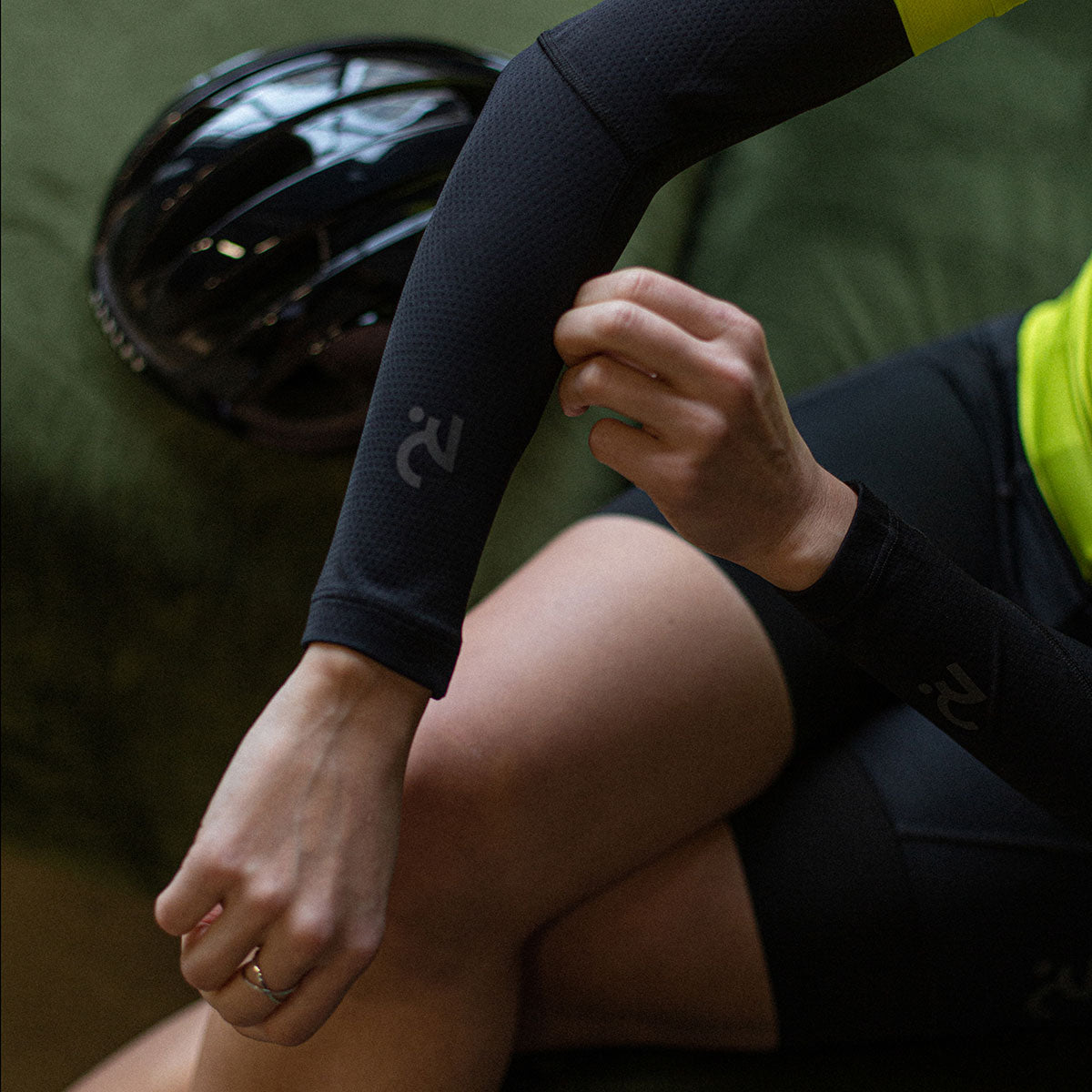
Sleeveless and short-sleeve base layers work under a jersey in warm conditions without adding heat at the arms; long-sleeve versions add a layer of warmth that pairs with arm warmers rather than duplicating them. The choice comes down to temperature and what else is already in the layering system, not a fixed rule — our long sleeve vs short sleeve guide walks through it.
FAQ
Is a women's base layer really different from a men's?
Yes — torso length, bust construction, and fit through the shoulders are engineered separately, not a resized men's pattern. The difference shows up most in how the base layer sits under a race-fit jersey.
What weight of base layer should I choose?
Lightweight for summer heat management and moisture-wicking; thermal for genuine cold. Most riders in a temperate climate get more use out of the lightweight option across the season.
Does a base layer need to be tight?
Close-fitting, not compression-tight — it needs to sit flat against the skin without bunching, but shouldn't restrict breathing or movement in a riding position.
Can I wear a women's base layer under a trisuit?
A trisuit is designed to be worn directly against the skin, so a base layer underneath isn't standard — save the base layer for road and gravel kit.
See DTR's women's base layers: women's base layers.
DTR — performance cycling and triathlon apparel, designed and developed in Ukraine.

Leave a comment
This site is protected by hCaptcha and the hCaptcha Privacy Policy and Terms of Service apply.