
Triathlon Kit for Beginners: What to Buy First and How to Build Your Setup
Triathlon has a reputation for expensive kit. Some of that reputation is earned — a full long distance setup can run into thousands of euros if you buy everything at once. But most beginners make the mistake of buying too much too soon, in the wrong order. The result is money spent on kit you don't need yet and not enough spent on the items that actually matter.
This guide is built around a simple principle: buy what makes your training better first, and build toward race day progressively. With a focus on long distance triathlon — Ironman 140.6 and Ironman 70.3 — where the demands on your kit are significantly higher than in sprint or Olympic racing.
Understanding Long Distance Triathlon
Before buying any kit, it helps to understand what long distance triathlon actually demands of your equipment.
An Ironman 140.6 consists of a 3.8km open water swim, a 180km bike ride, and a full marathon — 42.2km run. An Ironman 70.3 covers half those distances: 1.9km swim, 90km bike, 21.1km run. Both are completed without changing clothes between disciplines — every piece of kit has to function across all three.
The extreme version of long distance triathlon is represented by events like the Norseman Xtreme — a full distance event starting with a jump from a ferry into a Norwegian fjord at 5am, followed by 180km of mountain cycling with 3,800 metres of elevation gain, and a marathon finishing at the summit of Mount Gaustatoppen at 1,880 metres altitude. DTR athlete Julia Skala won Norseman 2025 in 11:00:23, setting a new women's course record by 16 minutes — finishing sixth overall across all competitors.
The demands of long distance triathlon mean your kit needs to work for 5 to 17 hours of continuous effort. This changes everything about what you buy and how you prioritise it.
The Priority Order — What to Buy First
Priority 1 — The Trisuit
The trisuit is the single most important piece of kit for any triathlete and the first thing you should buy. Everything else can wait. Without the right trisuit, nothing else matters.
A long distance trisuit must perform across all three disciplines without a change. In the water it needs to be hydrodynamic — a front panel that doesn't absorb water, a construction that doesn't restrict your stroke. On the bike it needs a chamois adequate for 90km to 180km in the saddle — this is where most beginners make their first serious mistake. On the run it needs to be light enough to forget.
The chamois is the critical factor for long distance. A sprint or Olympic distance trisuit has a thin chamois designed for 45 minutes to 2 hours on the bike. A long distance trisuit needs a denser, multi-density chamois calibrated for 3 to 6 hours in the saddle. Using a short distance trisuit for an Ironman is one of the most common and painful mistakes in long course racing.
DTR trisuits use an anatomical multi-density chamois specifically designed for long distance triathlon — multi-density construction positioned for the riding position, quick-dry construction that drains within minutes of the swim exit, and gender-specific geometry for both men and women. The same chamois worn by professional athletes racing Ironman World Championship and Norseman.
What to look for in your first long distance trisuit:
- A multi-density chamois built specifically for long distance riding
- Hydrophobic front panel for swim drag reduction
- Quick-dry construction — should feel dry within 10 minutes on the bike
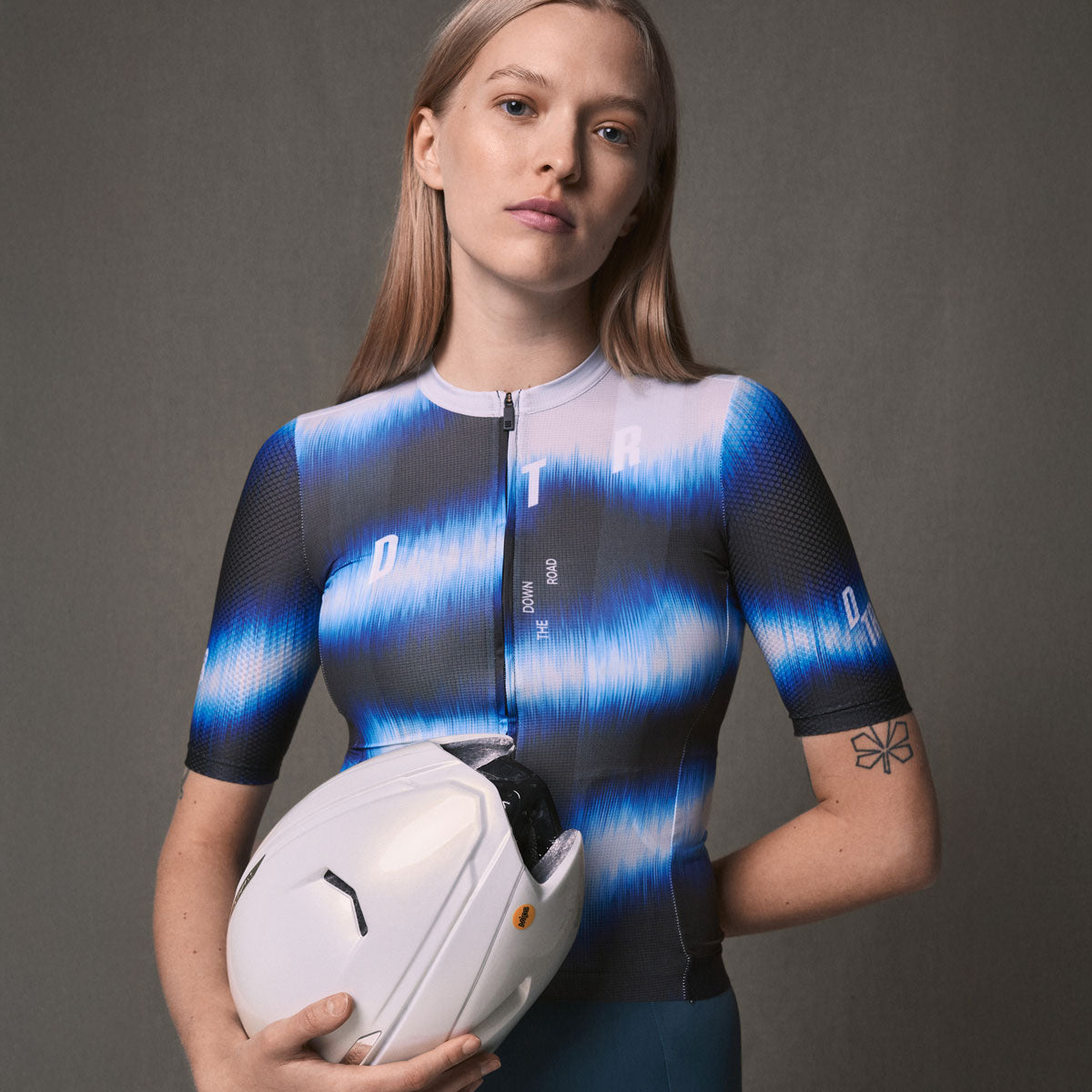
- Gender-specific fit — women's trisuits require different chamois geometry, strap construction, and compression levels to men's
- Rear pockets — minimum two for 70.3, three for Ironman
- Aero tested construction — the same standard worn by professional athletes
Men's Long Distance Trisuits — Women's Long Distance Trisuits
Priority 2 — Training Bib Shorts
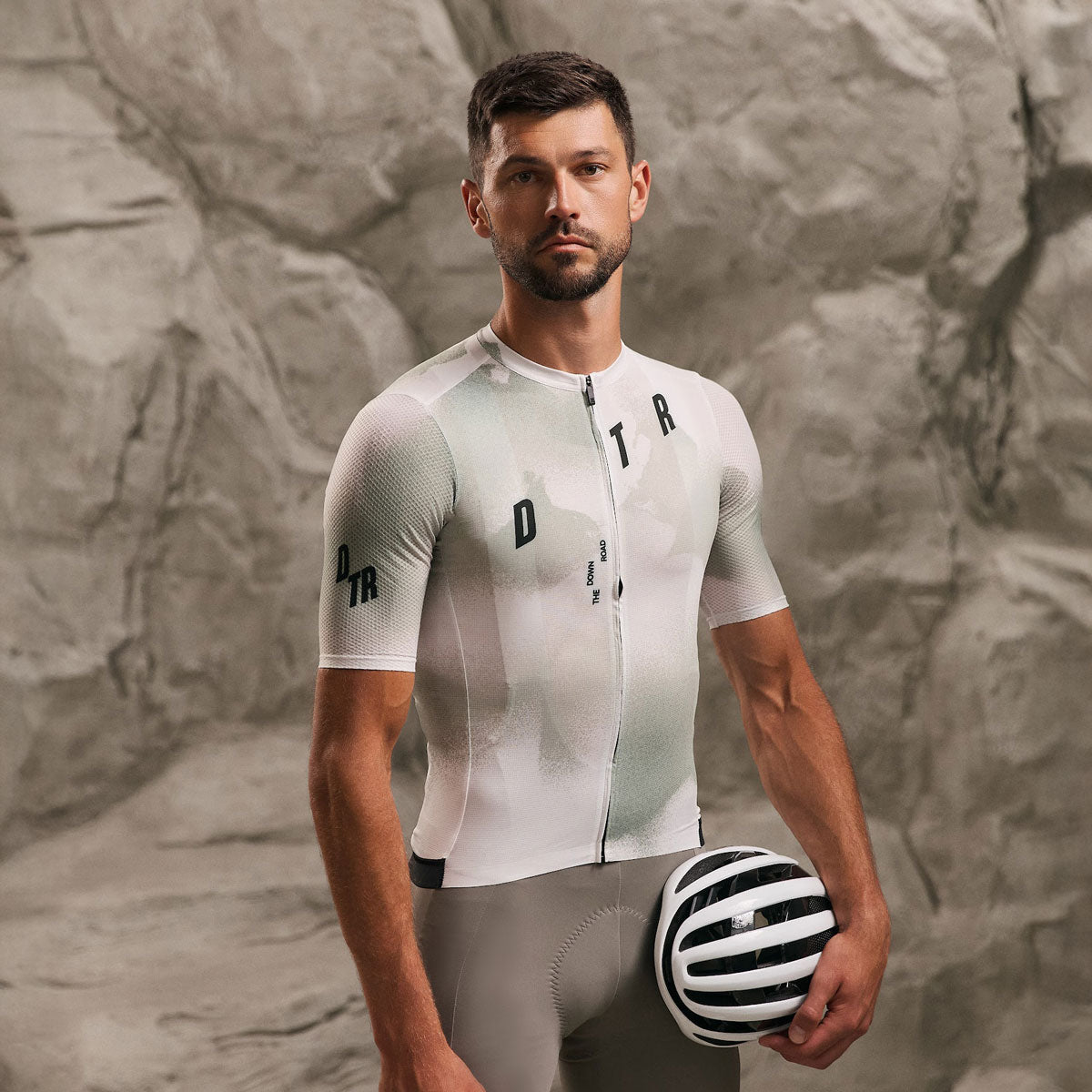
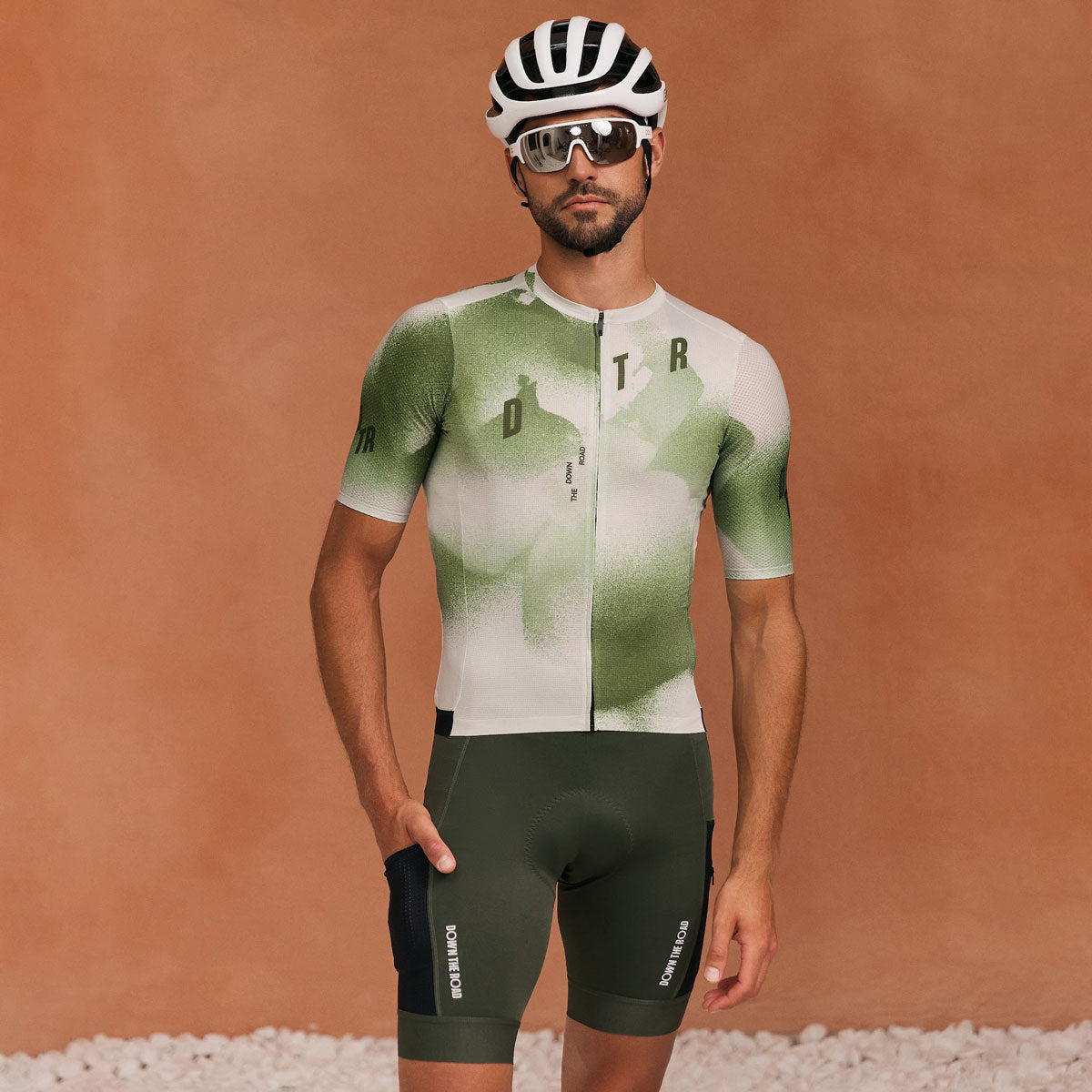
You will spend far more time training on the bike than racing. For training rides of two hours or more — which will represent the majority of your bike training as you build toward a 70.3 or Ironman — a quality pair of cycling bib shorts is more comfortable than training in a trisuit.
The trisuit chamois is designed to drain quickly after a swim — it's thinner and denser than a dedicated cycling chamois. For standalone bike sessions, standard bib shorts with a road cycling chamois provide significantly more comfort over 3, 4, and 5 hour training rides.
Buy one quality pair of training bib shorts early. Your legs will thank you.
Men's Training Bib Shorts — Women's Training Bib Shorts
Priority 3 — Base Layer
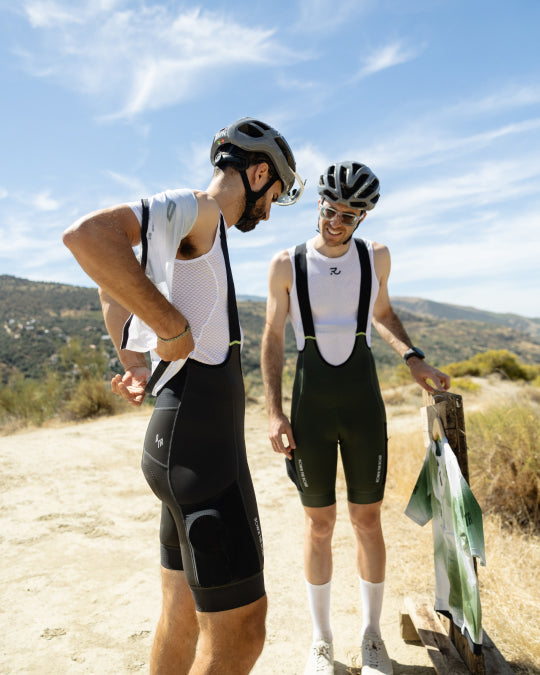
A cycling base layer is not just for winter. For long distance triathlon training, a technical base layer worn under your jersey manages moisture more effectively than a jersey alone — keeping you drier and more comfortable across 4 and 5 hour training sessions.
In summer, an ultralight mesh base layer wicks moisture away from your skin and increases airflow — keeping you cooler than riding without one. In winter or early spring training blocks, a thermal base layer provides essential warmth without restricting movement.
For triathlon training specifically, a base layer also reduces skin irritation from prolonged sweat contact during back-to-back training days — a factor that becomes significant as training volume increases in the build toward race day.
Men's Base Layers — Women's Base Layers
Priority 4 — Warmers
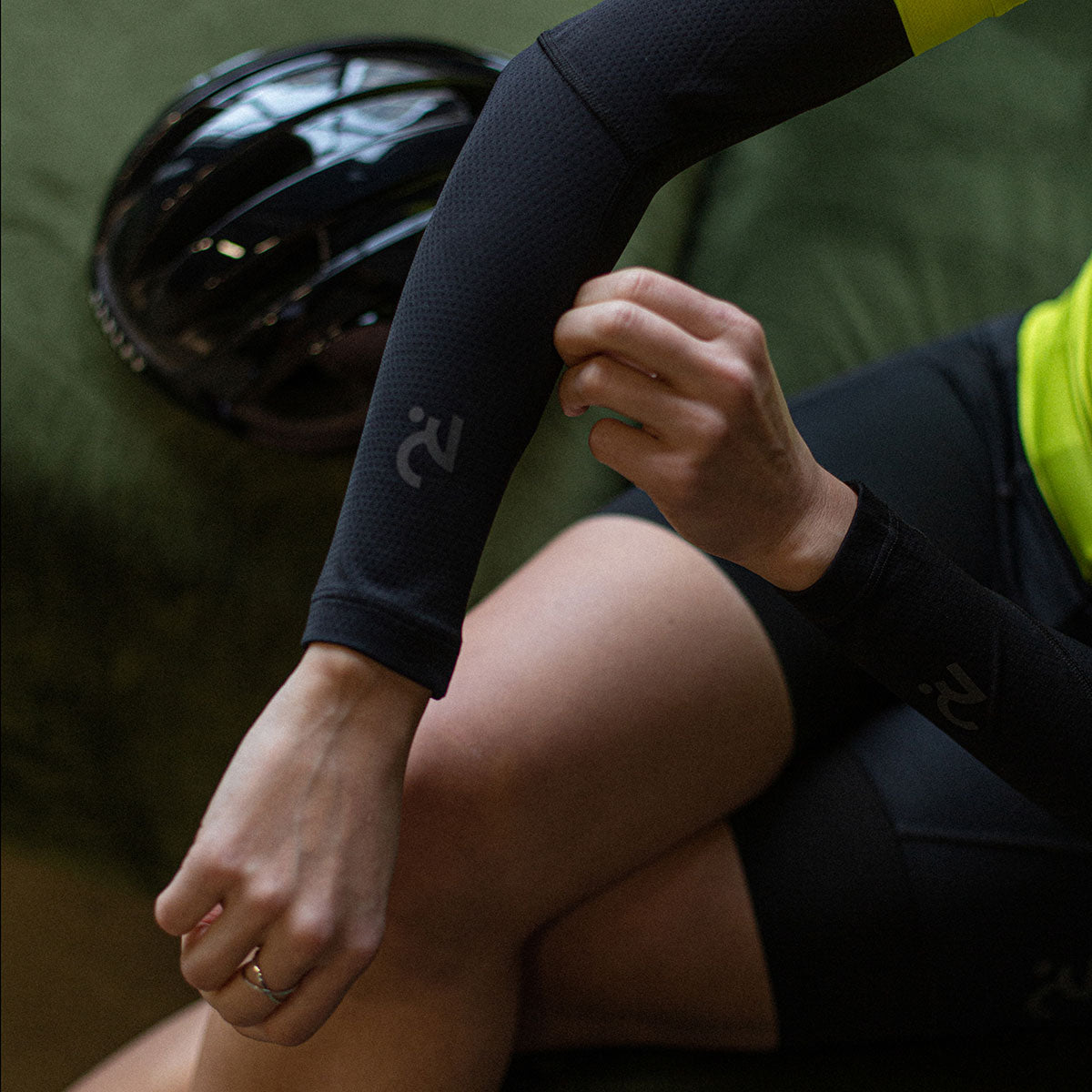
Arm and leg warmers are the most practical accessory for any triathlete in training. They weigh almost nothing, pack into a jersey pocket, and cover the temperature gap between summer kit and full winter clothing.
For triathlon training specifically, early morning brick sessions — bike immediately followed by run — frequently start in cool conditions and warm up significantly during the session. Arm warmers you can remove and pocket mid-ride are the practical solution that a long sleeve jersey or full jacket can't provide.
Buy arm warmers and leg warmers separately. If you train through winter, fleece versions of both add meaningful warmth without the bulk of thermal tights.
What Can Wait
Not everything needs to be bought before your first training block. Here's what can be deferred:
Aero helmet — useful for racing, not necessary for training. Buy when you're racing seriously, not when you're starting out.
Carbon race wheels — the biggest performance gains in triathlon come from fitness, not equipment. Standard training wheels are fine for all but the most competitive age groupers.
Triathlon-specific wetsuit — important for open water racing, but standard training in a pool doesn't require one. Buy when you're doing open water training or racing in a wetsuit-legal event.
Cycling shoes and clipless pedals — these improve efficiency significantly but add transition complexity. Many beginners race their first 70.3 on flat pedals. Add these once you're comfortable with the race format.
GPS watch — useful but not essential for training. A basic sports watch or phone-based tracking works for the early months.
Building Your Kit Over Time
The most common mistake in triathlon kit is trying to buy a complete setup before you've trained in anything. The better approach is progressive:
Months 1–3 — Foundation kit Trisuit, training bib shorts, base layer, warmers. This covers all your training needs and gets you to the start line of a first 70.3 comfortably.
Months 3–6 — Race preparation Wetsuit if racing in open water, cycling shoes and clipless pedals, race belt, elastic laces. The functional race day additions.
Month 6+ — Performance optimisation Aero helmet, race wheels, additional kit as training volume increases. The performance additions that make sense only once you're racing regularly.
Kit Worn by Professional Long Distance Triathletes
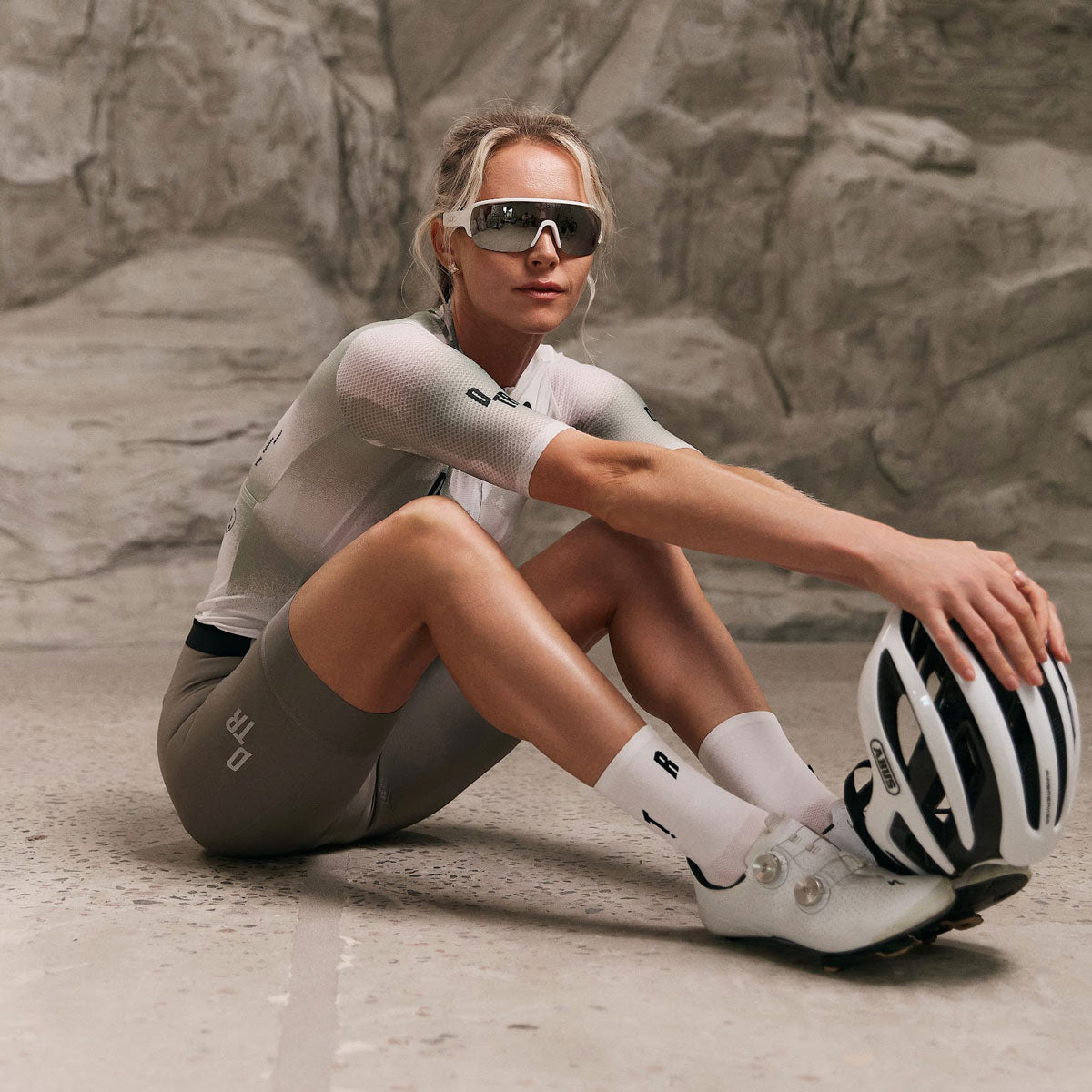
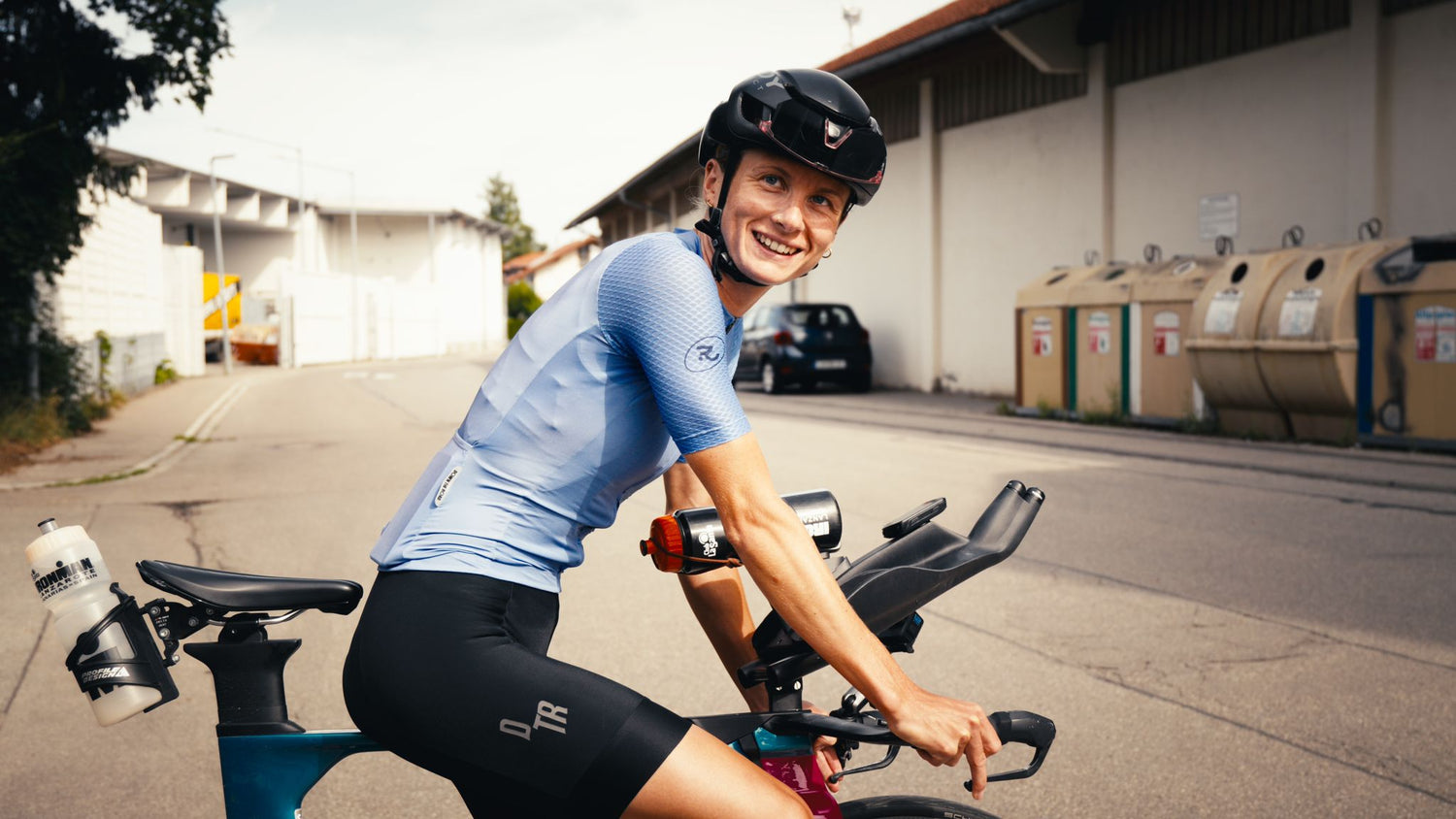
The best reference point for what kit actually matters at long distance is what professional athletes choose to wear. DTR athlete Julia Skala — 2025 Norseman Xtreme Triathlon winner and women's course record holder, top 20 Ironman World Championship Nice 2024, top 10 Challenge Roth — races in DTR kit including a long distance trisuit with an anatomical multi-density chamois, aero-tested construction, and gender-specific fit.
The equipment a professional chooses for a race that takes over 11 hours across some of the most demanding terrain in the world is the same equipment available to every DTR customer. Not a different version. Not a special pro edition. The same trisuit.
FAQ
What is the most important piece of triathlon kit for a beginner? The trisuit — and specifically the chamois inside it. For long distance triathlon (70.3 and Ironman), the chamois needs to be a long distance specific multi-density pad designed for 3 to 6 hours in the saddle. Using a sprint or Olympic distance trisuit for a 70.3 or Ironman is one of the most common comfort mistakes in long course racing.
What is Ironman distance triathlon? Ironman 140.6 consists of a 3.8km open water swim, a 180km bike ride, and a full marathon (42.2km). Ironman 70.3 covers half those distances — 1.9km swim, 90km bike, 21.1km run. Both are completed without changing clothes between disciplines.
Do I need a different trisuit for long distance vs short distance triathlon? Yes — significantly. Long distance trisuits have a denser, thicker chamois calibrated for hours in the saddle, more rear pockets for nutrition, and often more durable construction. A short course trisuit has a thinner chamois optimised for speed over shorter distances. Never use a sprint or Olympic trisuit for a 70.3 or Ironman.
Should I train in my trisuit or in cycling bib shorts? Both. For race simulation and brick sessions, train in your trisuit regularly — you need to know how it performs before race day. For standalone long bike training sessions of 3 hours or more, cycling bib shorts with a road cycling chamois are more comfortable than a trisuit chamois.
What does gender-specific trisuit mean? Women's trisuits require different chamois geometry, strap construction, and compression levels to men's. The chamois is positioned for women's wider sit bone geometry. The straps are designed around female upper body anatomy. A genuinely gender-specific trisuit is designed from the ground up for female athletes — not a men's suit scaled down in size and recoloured.
How do I know if my trisuit fits correctly? In the riding position — not standing upright. The chamois should sit correctly without shifting, the shoulder straps should be flat without pulling at the crotch, and you should be able to take a full deep breath with the zip closed. If any of these fail, the fit is wrong.
What kit do professional Ironman athletes wear? Professional long distance triathletes prioritise trisuit construction, chamois quality, and aerodynamic testing above almost everything else. DTR athlete Julia Skala — 2025 Norseman Xtreme Triathlon winner, women's course record holder — races in DTR kit built to the same specification available to all customers.

Leave a comment
This site is protected by hCaptcha and the hCaptcha Privacy Policy and Terms of Service apply.