

Everesting is riding one hill repeatedly, in a single ride, until you have climbed 8,848 metres — the elevation of Mount Everest. This guide covers how the rules work, how to choose your climb, what the day actually demands, and what to wear when you are climbing hot and descending cold for the best part of a day.
What the rules actually say
One hill, one ride, 8,848 metres of vertical gain, no sleep. You can stop as often as you like — to eat, to change kit, to sit down — but the attempt has to be a single continuous activity on a single climb, ridden in the same direction every lap. The descents are your only recovery.
The ride is governed by Hells 500, who maintain the rule set and the Hall of Fame, and verification comes from your GPS file. A few details catch people out: you cannot combine two different hills, you cannot split the effort across two days, and you cannot bank elevation from a warm-up ride. Half Everesting — 4,424 metres — is its own recognised ride, and it is a sensible first target if you have never gone past eight hours in the saddle.
How to choose the hill
Gradient decides your day more than anything else. A climb averaging 8-10% reaches the target in the fewest kilometres but loads the same muscles for hours. Something shallower means more distance and more time seated. Most riders settle between 5% and 9%, on a road with a descent they trust in the dark.
Work the arithmetic before you commit. Divide 8,848 by the elevation of one lap and you have your repeat count: a climb with 150 metres of gain needs 59 laps. Then look at the things that do not show up in the numbers — traffic, junctions you have to cross, whether there is a safe place to turn at both ends, and how far it sits from your car or your front door. A hill you can resupply at is worth more than a hill with perfect gradient.
How long does it take?
Most completed attempts run 12 to 20 hours including stops. The number that governs it is vertical ascent rate — metres climbed per hour. Around 800 m/h is a strong, sustainable rate for a fit amateur; 1,000 m/h is quick; below 600 m/h the day stretches long enough that fatigue and darkness start making decisions for you.
At 800 m/h you are looking at roughly eleven hours of moving time. Stops add up faster than people expect — five minutes a lap across fifty laps is four hours. Plan the stops you actually want and keep the rest brief.
Pacing and fuelling through the day
Ride the first half slower than feels right. The effort that feels comfortable at hour two is usually too hard to hold at hour twelve, and there is no way to recover from going out hot other than losing hours later.
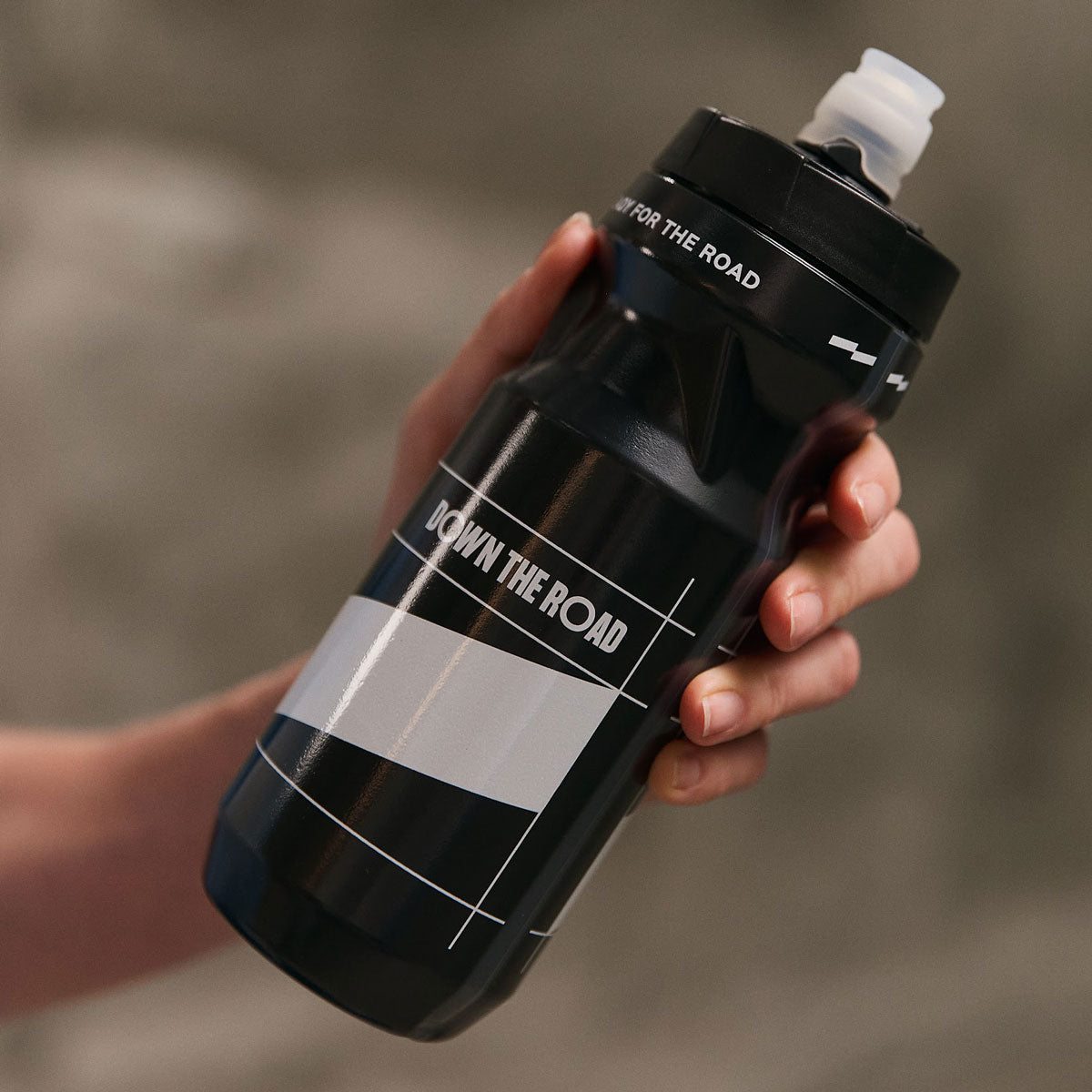
Eat before you are hungry and keep drinking through the cool hours when thirst drops off. Most riders manage real food early and move to simpler, sweeter things as the day goes on and appetite fades. An effort this long is a genuine physiological load — if you have any medical concerns, or anything that persists beyond normal post-ride fatigue, speak to a doctor rather than riding through it.
Can you do it indoors?
Yes. Virtual attempts follow the same 8,848 metre target on a single climb, most often Alpe du Zwift, and are recognised separately from outdoor rides. Indoors removes traffic, navigation and the descent risk, which makes it safer and easier to resupply.
It also removes the descents as recovery, so you are pedalling almost continuously. Heat becomes the limiting factor long before your legs do — a fan matters more than any other piece of equipment, and saddle pressure builds faster without the position changes a real descent forces on you.
What to wear for a full day of repeats
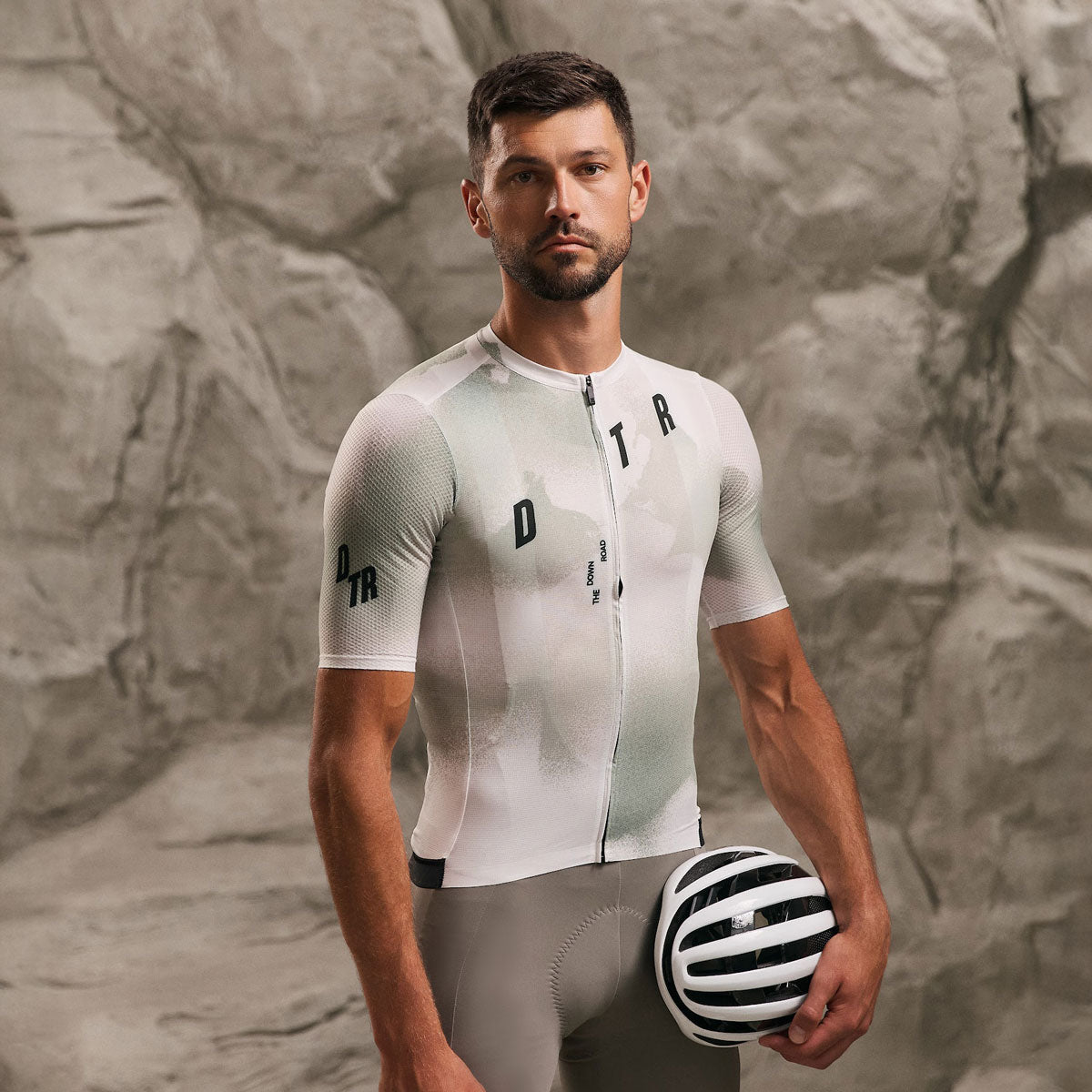
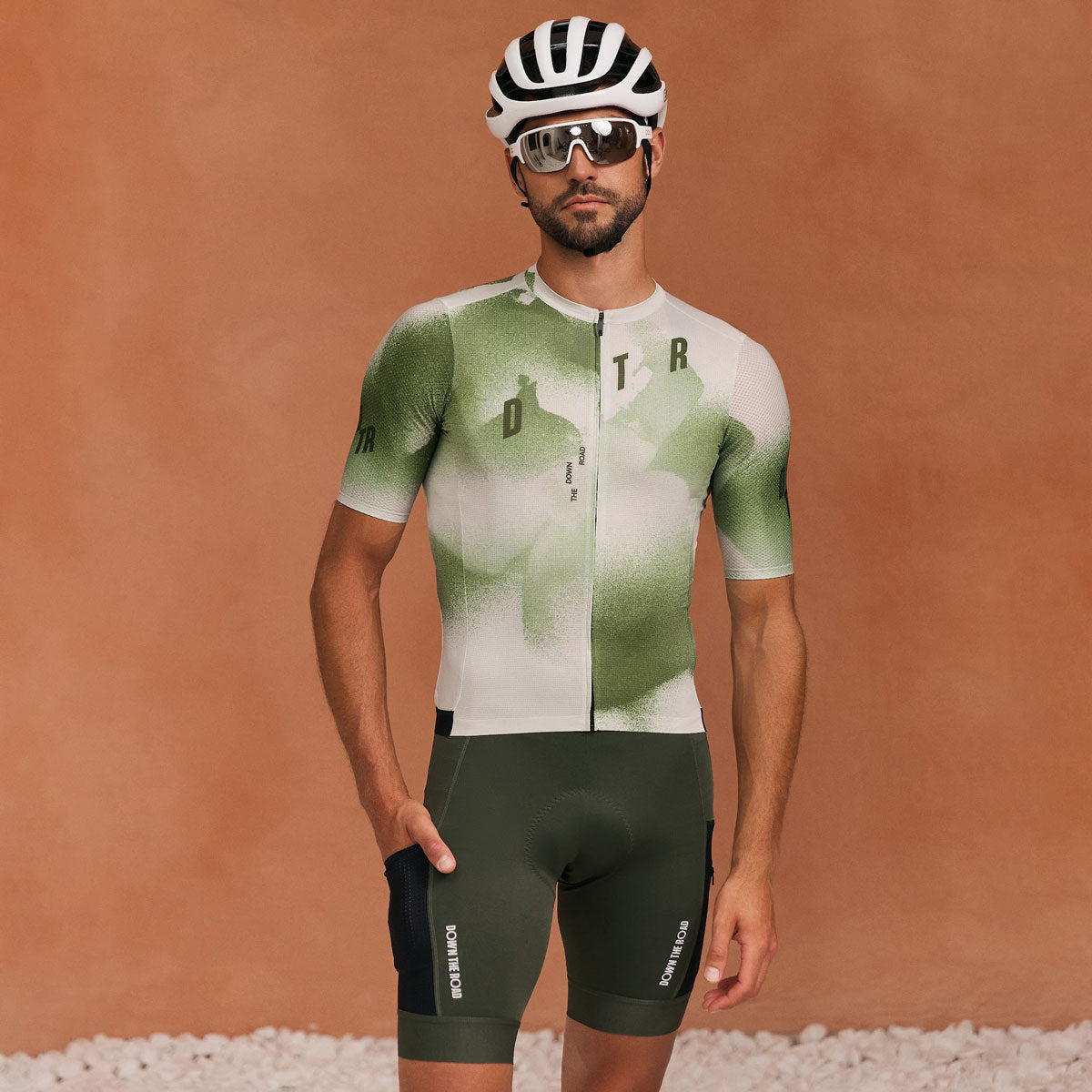
Kit for Everesting solves one problem: you are hot on every climb and cold on every descent, dozens of times, for as long as the attempt takes. That means layers you can add and remove in seconds, and a chamois that is still comfortable at hour twelve.
Bib shorts. This is the decision that matters most. Over twelve hours or more, a multi-density chamois earns its place — the varied densities support you where the pressure sits without adding bulk, and more density does not mean more thickness. Many riders bring a second pair and change at the halfway point; it is the single most effective comfort intervention available on the day.
Base layer. Worth wearing even in summer. Its job is moving sweat off your skin so you are not starting each descent in a wet jersey, which is where the cold gets into you.
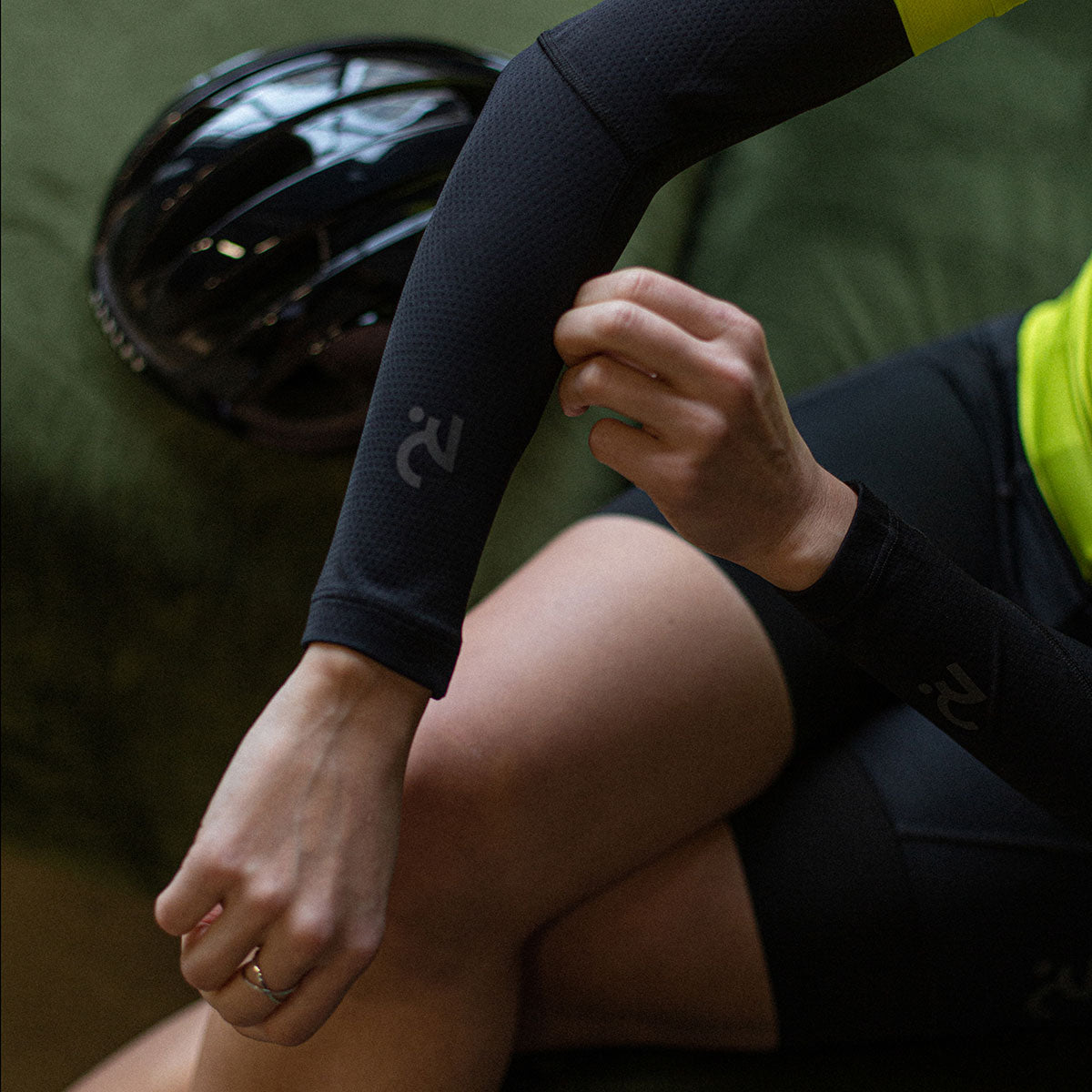
Arm and leg warmers. The reason they belong here rather than a jacket is speed — on at the top, off at the bottom, no stopping and no unpacking. A silicone gripper that holds without restricting circulation matters over this many hours, and anatomically cut warmers sit better on the leg across a long day than a symmetrical tube.
A packable windbreaker or gilet. Lives in a rear pocket, comes out for the descents and for the night hours when temperatures drop. On a long climb-and-descend cycle this is often the difference between finishing and quitting cold.
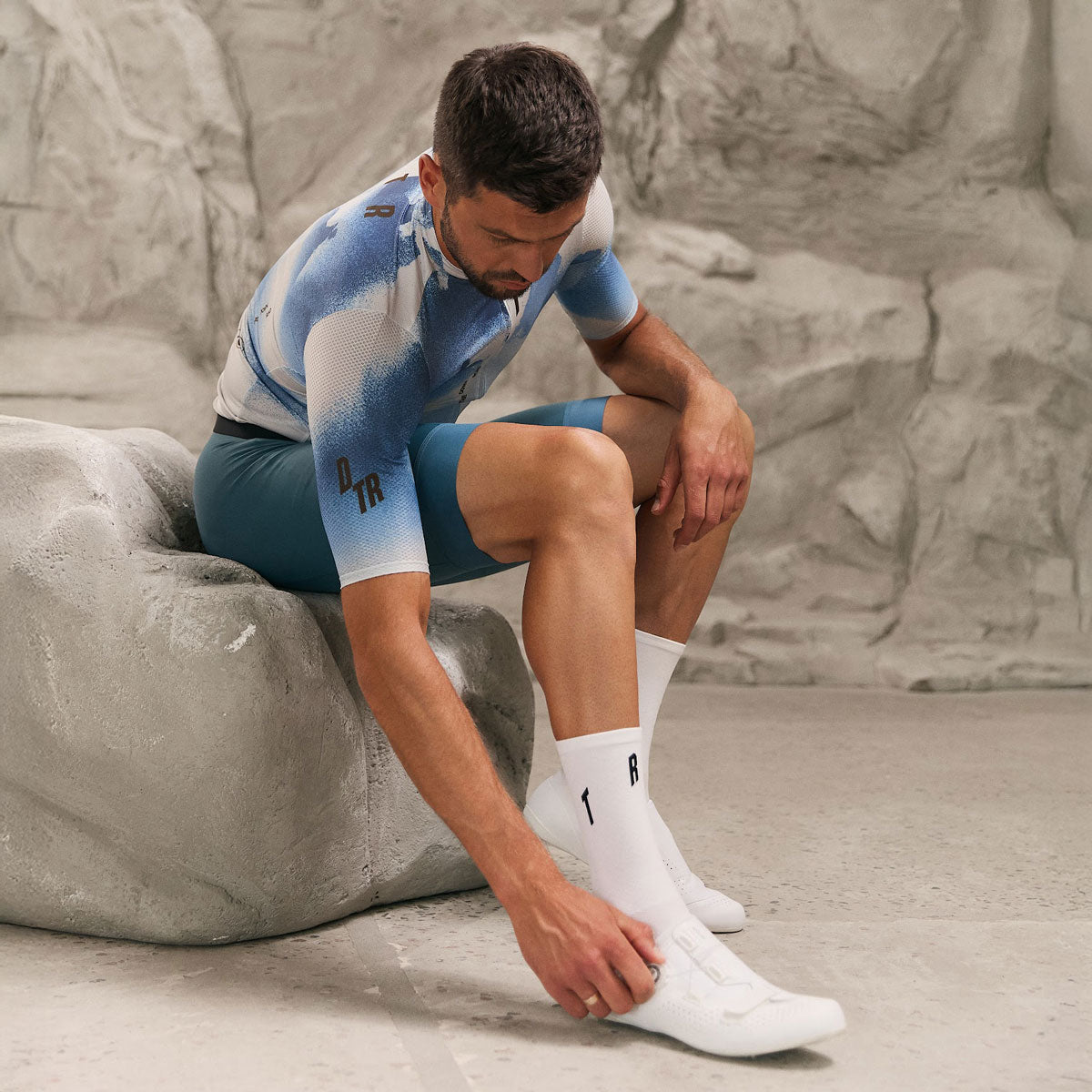
Socks, cap and lights. A cap under the helmet holds a surprising amount of warmth once it is dark. If your attempt runs into the night — most do — bring more battery than you think you need.
Where attempts usually fall apart
Very few failed attempts come down to fitness. They come down to decisions made in the first four hours and problems that were allowed to compound.
- Starting too fast. The most common cause by a distance.
- Under-eating early. By the time you feel the deficit, you cannot eat your way out of it.
- Getting cold on descents. Small at lap ten, decisive at lap forty.
- A hill with a bad descent. Poor surface or heavy traffic turns your recovery into a stressor.
- Saddle discomfort left unmanaged. Chamois choice, a spare pair of bib shorts, and getting out of the saddle regularly all help.
- No plan for darkness. Lights, batteries, and warm layers staged where you can reach them.
FAQ
How much climbing is an Everesting? 8,848 metres, the elevation of Mount Everest, in a single ride on a single hill.
Can you sleep during an attempt? No. You can rest as long as you like, but sleeping ends the attempt.
Can you stop for food or a kit change? Yes. Stops are unlimited as long as the ride stays one continuous activity.
Is Half Everesting recognised? Yes — 4,424 metres, under the same single-hill rules.
Does it have to be outdoors? No. Virtual attempts are recognised separately from outdoor ones.
How is it verified? By submitting the GPS file from the ride for review.
Kit that handles a full day of climbing and descending: the DTR range is at /collections/mens-cycling-triathlon-apparel.
DTR — performance cycling and triathlon apparel, designed and developed in Ukraine.

Dejar un comentario
Este sitio está protegido por hCaptcha y se aplican la Política de privacidad de hCaptcha y los Términos del servicio.